
Natural Remedies for Sugar Addiction
Sugar addiction is a serious, often underestimated pattern that can quietly shape your health, mood, and daily behavior. In simple terms, sugar addiction refers to a compulsive craving for sugary foods, where you feel you “can’t stop” even when you know it’s harming your body or weight. Unlike casual sweet-loving, addiction-level sugar use shares features with classic behavioral addictions: loss of control, continued use despite negative consequences, and even withdrawal-like symptoms when you cut back. That’s why you may feel irritable, shaky, or foggy when you suddenly remove sweets—your brain and metabolism are reacting to a familiar “reward” being taken away. Recognizing sugar addiction as a real condition, not just “weak willpower,” is the first step toward sustainable change 1, 2, 3, 4.
What is sugar addiction? (150–200 words)
Sugar addiction is a pattern of compulsive overconsumption of sugary, high-calorie foods that follows a cycle similar to substance addictions. It is classified medically as a type of behavioral addiction, where the brain’s reward system is repeatedly hijacked by intense sweetness, leading to cravings, tolerance (needing more for the same pleasure), and difficulty cutting down. When you eat a lot of sugar, dopamine and opioid-like chemicals surge in brain regions tied to pleasure and habit, which can rewire motivation and make you feel “wired” to crave sweets. Over time, this can lead to physical symptoms such as headaches, fatigue, and mood swings when sugar is reduced, plus long-term risks like obesity, type 2 diabetes, fatty liver, and heart disease 5, 2, 4, 1.
If you often eat sweets even when you’re not hungry, feel out of control around desserts, or use sugar to soothe stress, boredom, or sadness, experts may describe your relationship with sugar as addictive-like. The key is the pattern: frequent cravings, repeated failed attempts to cut back, and continued use despite knowing sugar is harming your body or emotions. Understanding this cycle helps you see sugar addiction as a treatable condition, not a moral failing 3, 4, 1.
Types of sugar addiction (list format)
1. Emotional sugar addiction
You reach for sweets whenever you feel stressed, sad, lonely, or anxious, using sugar as a quick emotional “band‑aid.” This pattern often leads to nighttime binges or using desserts as a core part of your routine 6, 5, 3.
2. Stress‑driven sugar addiction
Chronic stress or burnout pushes you toward sugar because it temporarily lowers cortisol and gives a burst of energy and comfort. Over time, your brain starts expecting sugar as a stress-relief tool, making cravings spike when you feel pressure 7, 4.
3. Habit-based sugar addiction
Sugary snacks or drinks are so woven into your day that you eat them without thinking—morning coffee with sugar, afternoon soda, or dessert after every meal. The habit itself becomes the trigger, not hunger or mood 4, 1, 3.
4. Reward-seeking sugar addiction
You treat sugar as a reward for work, exercise, or small wins, gradually raising the amount and frequency to feel “rewarded” enough. This rewards-based pattern can merge with emotional and habit-based cravings over time 5, 3, 4.
5. Dieting and binge–restriction sugar addiction
You cycle between strict low-sugar diets and explosive sugar binges, which resets your cravings and makes sugar feel more “forbidden” and powerful. This pattern often leaves you feeling out of control and guilty, yet trapped in the same loop 6, 3, 4.
Causes of sugar addiction (list format)
1. Brain-reward system hijacking
Sugar activates the same brain circuits as addictive drugs, flooding reward areas with dopamine and opioid-like signals that make you crave it again. Repeated use can dull your natural reward response, so you need more sugar to feel the same satisfaction 2, 4, 5,
2. Emotional self-medication
Many people use sugar to numb stress, anxiety, or low mood because it temporarily boosts pleasure and energy. Over time, this teaches your brain to automatically reach for sweets when emotions feel overwhelming 3, 4, 5,
3. Blood-sugar instability
High-sugar meals and snacks cause rapid spikes and crashes in blood glucose, which can trigger hunger, fatigue, and cravings for more sugar. These crashes make you feel “needy” for sweets, even if you just ate a large sugary meal 1, 4, 6.
4. Genetic and metabolic sensitivity
Some people are genetically more sensitive to sugar’s rewarding effects or have slower breakdown of glucose, making them more prone to cravings and overconsumption. Family history of obesity, diabetes, or eating disorders can also increase vulnerability 4, 1.
5. Environment and marketing
Ultra‑sweet processed foods are cheap, heavily marketed, and constantly visible, which normalizes high sugar intake and makes avoidance harder. Easy access to sugary drinks, snacks, and “treats” keeps your brain expecting sugar as a default 8, 1, 4.
6. Sleep and hormones
Poor sleep and irregular sleep patterns raise hunger hormones and blunt satiety signals, increasing cravings for high‑sugar, high‑fat foods. Hormonal shifts (such as during menstrual cycles, perimenopause, or chronic stress) can also make sugar feel more irresistible 7, 5, 4.
Sugar addiction facts table (bullet columns)
| Symptoms | * You feel strong cravings for sweets, even when not hungry 1, 4. * You keep eating sugary foods after you know you’ve had “enough 4, 3. * You feel irritable, shaky, or foggy when you cut out sugar 2, 4. * You hide or feel guilty about how much sugar you consume 3, 4. * You organize your day around sugar or plan “cheat days” just to binge 6, 4. |
| Causes | * Overstimulation of brain reward pathways by frequent sugar intake 5, 2. * Emotional reliance on sugar to manage stress, sadness, or boredom 5, 3. * Blood‑sugar spikes and crashes that drive hunger and cravings 6, 1. * Genetic or metabolic predisposition to sugar sensitivity 1, 4. * Easy access and constant marketing of sugary foods 1, 8. |
| Types of sugar addiction | * Emotional sugar addiction (using sweets to cope with feelings) 5, 3.* Stress‑driven sugar addiction (sugar as a tension reliever) 5, 4. * Habit‑based sugar addiction (routine, automatic sugar use) 1, 4. * Reward‑seeking sugar addiction (using sweets as a personal reward) 5, 4. * Binge–restriction sugar addiction (dieting followed by sugar binges) 6, 4. |
| How it spreads / escalates | * Initial use of sugar for pleasure or stress relief turns into a habitual pattern 1, 4. * Repeated sugar binges desensitize reward pathways, so you need more for the same effect 5, 2.* Social and cultural norms normalize sugary drinks, desserts, and snacks, making restraint harder 1, 8. * Emotional events (breakups, work stress, burnout) can trigger relapse or worsening of sugar use 5, 3. |
| Age group | * Candy and soda often start in childhood, but addiction‑like patterns can appear in teens through adulthood 1, 4. * Young adults and adults with high stress, busy lifestyles, or obesity are particularly vulnerable 1, 3. * Older adults may struggle if sugar is used to manage pain, loneliness, or low energy 1, 4. |
| Higher‑risk situations | * You are more at risk if you have anxiety, depression, or a history of substance use 5, 3. * People with insulin resistance, prediabetes, or obesity are more likely to develop sugar‑related problems 1, 4. * Repeated dieting and constant sugar restriction–binge cycles also increase addiction risk 6, 4. * Shift workers or those with chronic sleep deprivation often lean more heavily on sugar for energy 5, 7. |
| How doctors diagnose | * Clinicians may use behavioral‑addiction or food‑addiction criteria to assess loss of control, cravings, and continued use despite harm 1, 4. * They review diet history, emotional patterns, and medical history (diabetes, obesity, mood disorders) 1, 3. * Formal questionnaires related to food addiction or binge‑eating behavior can help clarify severity 4, 3. |
| Remedies for sugar addiction | * Dietary changes that stabilize blood sugar and reduce refined sugar intake 6, 1. * Cognitive and behavioral strategies to manage cravings and emotional triggers 5, 4. * Natural and herbal supports that may help modulate sweetness perception or cravings 9, 10. * Professional counseling, therapy, or addiction support if sugar use is severe 3, 4. |
| Other key facts | * Sugar addiction is not yet a formal diagnostic term in all systems, but experts widely recognize the pattern. * It often overlaps with obesity, metabolic syndrome, and eating‑disorder‑like behaviors 1, 4. * Recovery is possible through gradual reduction, not overnight “cold‑turkey” failure cultures 6, 4. * Combining lifestyle, natural supports, and medical guidance gives the best long‑term outcomes 3, 4. |
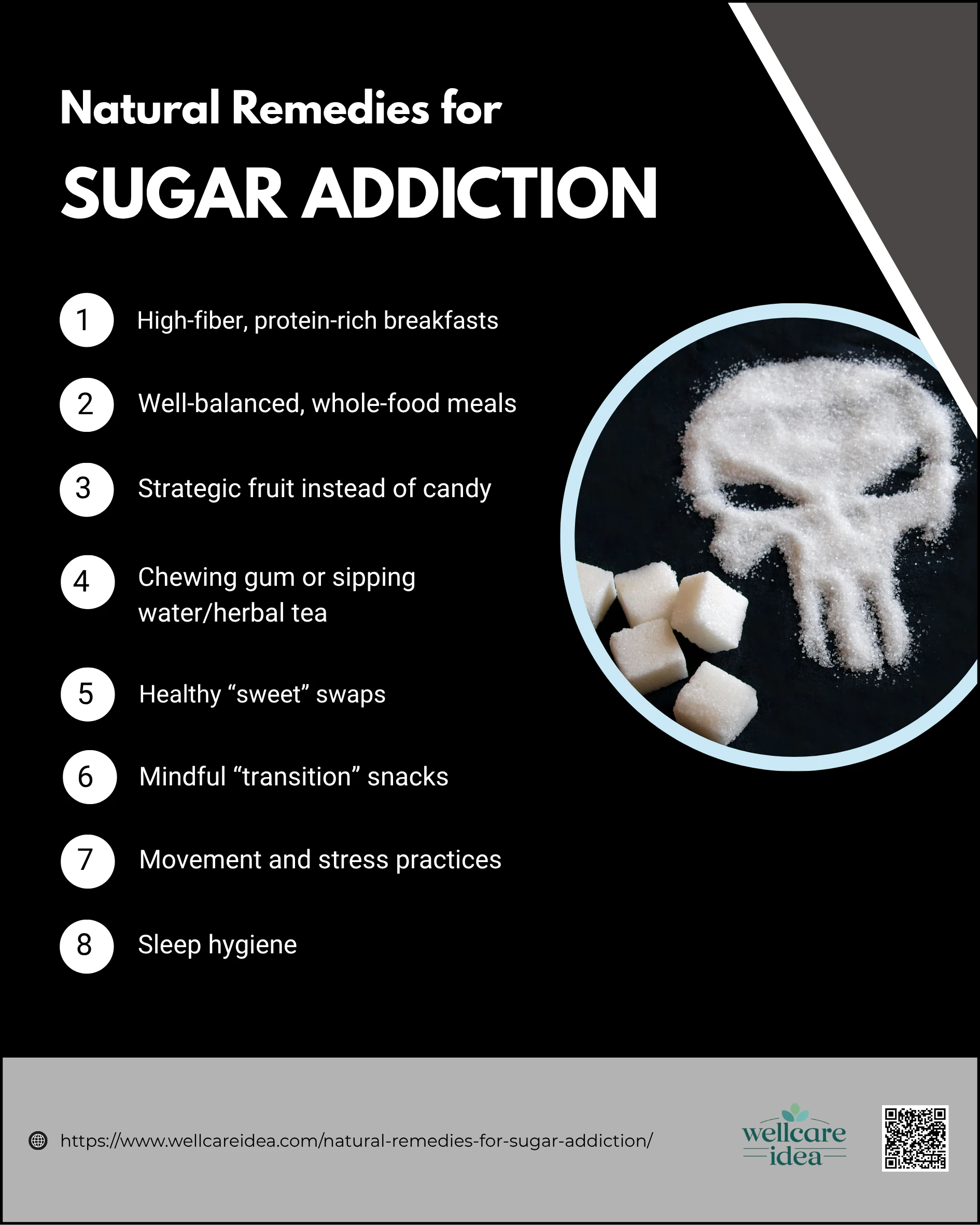 Natural remedies for sugar addiction (list format)
1. High‑fiber, protein‑rich breakfasts
Starting the day with eggs, Greek yogurt, nuts, seeds, or lentils slows digestion and stabilizes blood sugar, reducing mid‑morning sugar cravings. This helps you avoid the “crash‑and‑crave” cycle that often drives afternoon sugar binges 11, 12, 6, 1.
2. Well‑balanced, whole‑food meals
Plates that include complex carbs (oats, quinoa, sweet potatoes), healthy fats (avocado, olive oil), and protein (beans, tofu, fish, chicken) keep energy steady and cravings low. This pattern mimics the way traditional diets naturally limit extreme sugar spikes 12, 1, 4.
3. Strategic fruit instead of candy
Using berries, apples, or oranges when a sweet urge hits gives you natural sugar plus fiber, vitamins, and phytonutrients, which blunts the rush and crash. Whole fruit is less likely to drive addictive‑like patterns than refined sucrose or fructose in processed sweets 11, 6, 1.
4. Chewing gum or sipping water/herbal tea
Sugar‑free gum has been shown to reduce food and sugar cravings, especially when you’re between meals. Sipping water or herbal teas (such as peppermint, ginger, or chamomile) can also distract your brain from craving sweets 10, 12.
5. Healthy “sweet” swaps
Using small amounts of stevia, monk fruit, or raw honey instead of table sugar can help you retrain your palate without the same blood‑sugar spike. Dark chocolate (70% cocoa or higher) in controlled portions can also satisfy a sweet tooth with antioxidants and less sugar 10, 12, 6.
6. Mindful “transition” snacks
Keeping nuts, seeds, or yogurt with a few berries on hand gives you a sweet‑tasting option that still stabilizes blood sugar. This reduces the urge to reach for chips, cookies, or soda when you feel “sugar‑starved 12, 6, 11, 1.
7. Movement and stress practices
Short walks, stretching, yoga, or quick breathing exercises can lower stress hormones that often trigger sugar cravings. Regular physical activity also improves insulin sensitivity, making your body less reactive to sugar spikes 10, 11, 5, 7.
8. Sleep hygiene
Prioritizing regular sleep, limiting screens before bed, and creating a calm wind‑down routine can reduce the hormonal swings that make sugar attractive. Better‑quality sleep is linked to fewer cravings and more self‑control around food 5, 7, 4.
Traditional and Ayurvedic herbal practices (list format)
1. Gymnema sylvestre (“Gurmar,” “sweet destroyer”)
This Ayurvedic herb contains gymnemic acids that temporarily blunt the taste of sweetness, making sugary foods less rewarding and easier to resist. Some research suggests it may also support healthier blood‑sugar responses and reduce overall sugar intake 13, 14.
2. Cinnamon for blood‑sugar support
Cinnamon is reported to help modulate blood‑glucose levels and may reduce sweet cravings when added to meals or drinks. Its warm, naturally sweet flavor can make oatmeal, coffee, or yogurt feel more satisfying without added sugar 13, 12, 10.
3. Bitter‑taste herbs to reduce cravings
Ayurveda teaches that daily intake of bitter herbs such as neem, kutki, and triphala churna can help “cool” cravings, support digestion, and balance appetite. Bitter tastes may also shift the palate away from constant sweetness toward a more varied, less sugar‑driven diet 15, 16, 13.
4. Fenugreek seeds for blood‑sugar balance
Soaked fenugreek seeds are traditionally used to support healthy blood‑sugar regulation and reduce sugar cravings. This aligns with modern findings that fenugreek can influence glucose metabolism and insulin sensitivity in some people 16, 17, 18.
5. Triphala for digestion and detox
Triphala, a blend of three fruits, is used in Ayurveda to support digestion, detoxification, and gentle cleansing of the gut. Healthy digestion may indirectly reduce cravings triggered by sluggish gut or blood‑sugar imbalance 17, 16.
6. Herbs for emotional regulation (Ayurvedic)
Ayurvedic practitioners often use herbs such as Brahmi, Jatamansi, Shankapushpi, and Vacha to calm the mind and support emotional stability. By reducing anxiety and restlessness, these herbs may lower the urge to self‑soothe with sugar 15, 17, 5.
7. Karela (bitter gourd) for metabolic support
Karela is traditionally used to support liver health and help regulate sugar absorption and metabolism. Some clinical data suggest it may modestly support glucose‑control pathways, which can reduce strong sugar pulls 18, 17.
8. Jamun (Indian blackberry) and other sweet‑management herbs
Jamun and related Ayurvedic plants are used for long‑term sugar management and metabolic balance. These herbs are usually combined into mixtures rather than taken alone, under guidance from an Ayurvedic or integrative practitioner 17, 18.
Precautions before using natural remedies (list format)
1. Talk to a doctor before starting herbs or supplements
Especially if you have diabetes, heart disease, pregnancy, or breastfeeding status, you should discuss any herbal product with a licensed clinician. Some natural remedies can interact with blood‑sugar‑lowering drugs or blood‑pressure medications 19, 18.
2. Avoid self‑medicating if you take insulin or diabetes drugs
REFERENCES
- https://www.ebsco.com/research-starters/health-and-medicine/sugar-addiction
- https://pmc.ncbi.nlm.nih.gov/articles/PMC4361030/
- https://www.addictioncenter.com/behavioral-addictions/sugar-addiction/
- https://pmc.ncbi.nlm.nih.gov/articles/PMC5174153/
- https://www.sciencedirect.com/science/article/pii/S0149763418308613
- https://www.naturalnews.com/2025-12-04-science-backed-guide-to-overcoming-sweet-cravings.html
- https://hms.harvard.edu/news-events/publications-archive/brain/sugar-brain
- https://en.wikipedia.org/wiki/Sugar_Addiction
- https://pmc.ncbi.nlm.nih.gov/articles/PMC12257121/
- https://www.newnanfamilymedicine.com/blog/how-to-stop-sugar-cravings-instantly
- https://www.uclahealth.org/news/article/kicking-your-sugar-addiction-will-lead-to-better-health
- https://www.webmd.com/diet/features/13-ways-to-fight-sugar-cravings
- https://ayurvedapractice.com/sugar-cravings/
- https://pmc.ncbi.nlm.nih.gov/articles/PMC9788288/
- https://svasthaayurveda.com/ask-ayurveda-addressing-sugar-addiction-with-ayurveda/
- https://www.ayurvedaluxembourg.com/post/understanding-nighttime-sugar-cravings-and-ayurvedic-solutions
- https://vitronaturals.com/blogs/ayurveda-simplified/ayurvedic-diabetic-juice-sugar-control
- https://www.healthline.com/nutrition/gymnema-sylvestre-benefits
- https://www.webmd.com/vitamins/ai/ingredientmono-841/gymnema
- https://www.attainbh.com/blog-post/how-to-break-sugar-addiction-naturally
- https://drchristinemaren.com/sugar/
- https://www.robinrecovery.com/post/how-to-break-sugar-addiction-naturally?23f44429_page=13
- https://www.yourbrainonporn.com/pa/relevant-research-and-articles-about-the-studies/food-addiction/the-impact-of-sugar-consumption-on-stress-driven-emotional-and-addictive-behaviors-2019/
- https://www.dummies.com/article/sugar-addict-type-the-sad-eater-151028
- https://draxe.com/nutrition/gymnema-sylvestre/