
What is Acne?
Perhaps nothing is quite as universally frustrating as waking up to discover a new, painful breakout right in the middle of your face. You are not alone in this experience; acne vulgaris is an incredibly common inflammatory skin condition that affects hundreds of millions of people worldwide, from young teenagers navigating puberty to adults dealing with unexpected hormonal shifts 1 At its most basic level, acne occurs when the tiny holes on the surface of your skin, known as pores or hair follicles, become firmly plugged with a mixture of natural oils and dead skin cells 2. However, beneath the surface of that simple explanation lies a highly complex, microscopic battleground driven by your body’s hormones, immune system, and unique genetic makeup 3
| Symptoms |
|
| Causes | Excessive sebum (oil) production by hyperactive sebaceous glands 2. Accumulation and clumping of dead skin cells within the hair follicle (hyperkeratinization) 4. Rapid proliferation and colonization by Cutibacterium acnes bacteria inside the plugged pore 3. A robust inflammatory immune response triggered by the bacterial presence 5. |
| Types | Non-inflammatory acne (comprising mostly blackheads and whiteheads with minimal redness) 6. Inflammatory acne (characterized by red, swollen papules and pustules) 7. Nodulocystic acne (the most severe variant involving deep-seated, painful nodules and cysts) 6. |
| How does spread | Acne is fundamentally non-contagious; you cannot catch it from or pass it to another person 8. It does not biologically “spread” like a viral or bacterial infection across your body 7. However, picking, squeezing, or aggressively popping existing pimples can force infected debris deeper into the skin, rupturing the follicle wall and creating new breakouts in adjacent pores 8.Touching your face with unwashed hands or dirty makeup brushes can physically transfer excess oils and bacteria, contributing to new pore blockages https://curology.com/blog/is-acne-infectious-heres-what-the-experts-say/}. |
| Regions where it is found | The face (the most common and highly visible location). The back (affecting approximately 90% of severe cases). The chest (affecting approximately 70% of severe cases) {9. The shoulders and upper arms 1. |
| You might be at a higher risk for exposure of this disease if you: | Are a teenager going through puberty, experiencing massive surges in androgen hormones 2. Are a woman experiencing midlife hormonal changes, pregnancy, or premenstrual fluctuations 10. Have a strong family history of the condition; genetics heavily influence how your skin behaves {2. Consume a highly processed, high-glycemic Western diet rich in refined carbohydrates and dairy products 11. Take certain prescription medications, including systemic corticosteroids, testosterone, or lithium. Regularly experience friction or pressure on your skin from tight collars, heavy backpacks, helmets, or cell phones 2. |
| How doctors diagnose | Dermatologists rely entirely on a visual clinical examination of your skin. They assess the exact types of lesions present (comedones vs. cysts) and map out their physical distribution across your body 12. Physicians use specialized grading scales, such as the Global Acne Grading System (GAGS), to objectively determine the overall severity 13. Crucially, they must rule out look-alike conditions that require entirely different treatments, such as rosacea, perioral dermatitis, or hidradenitis suppurativa 12. |
| Treatment and Medications | Topical retinoids (like adapalene or tretinoin) to forcefully normalize how your skin sheds cells and prevent clogged pores 4. Topical antimicrobial agents, including benzoyl peroxide and topical antibiotics (like clindamycin), to reduce bacterial loads on the skin 12. Oral systemic antibiotics (such as doxycycline or minocycline) to combat moderate-to-severe systemic inflammation and deeply rooted bacteria. Hormonal therapies for women, including specific combined oral contraceptives or anti-androgen drugs like spironolactone. Oral isotretinoin (a powerful vitamin A derivative) reserved strictly for severe, recalcitrant, scarring nodulocystic acne 2. |
| Methods of Prevention | Gently washing your face no more than twice daily using warm water and a mild, non-irritating cleanser to remove excess oils without stripping the skin barrier 14. Exclusively using makeup, sunscreens, and moisturizers labeled as “noncomedogenic,” which guarantees they are formulated not to clog pores 14. Vigorously avoiding the temptation to pick, rub, or rest your hands against your face throughout the day. Showering immediately after heavy sweating or strenuous physical activities to prevent trapped sweat and oil from triggering body acne 2. |
Section 2.5: The Hidden Drivers of Your Acne (Diet, Gut, and Stress)
Before diving into specific natural treatments, it is vitally important that you understand the hidden lifestyle factors secretly driving your breakouts. Modern dermatological research has unveiled a fascinating concept known as the gut-brain-skin axis 15. This simply means that your psychological stress levels, the health of your digestive system, and the appearance of your skin are all engaged in a constant, multidirectional conversation.
Consider what happens when you observe isolated populations that live completely outside of modern Western society. A famous study conducted by researcher Staffan Lindeberg spent 843 days examining the Kitavan islanders of Papua New Guinea and the Aché hunter-gatherers of Paraguay 16. Out of the roughly 1,300 subjects examined, including hundreds of teenagers, the researchers did not find a single case of active acne 16. These populations consume a traditional diet completely devoid of refined sugars, processed flours, and dairy products; instead, they eat fresh fruits, vegetables, lean meats, and seafood 17 When similar traditional populations, like the Inuit or Okinawan islanders, transition to a Westernized diet, their acne rates skyrocket to match those of the Western world 18.
The science behind this is directly tied to how your cells process nutrition. When you consume high-glycemic foods—like white bread, sugary sodas, or heavily processed snacks—your body pumps out excessive amounts of insulin and a hormone called Insulin-like Growth Factor 1 (IGF-1) 19. This hormonal spike acts like a master switch inside your cells, hyperactivating a complex known as mTORC1, which in turn commands your sebaceous glands to drastically increase oil production. Furthermore, this poor diet can disrupt the trillions of bacteria living in your gut. When your gut microbiome becomes unbalanced, a state known as dysbiosis, your intestinal lining can leak microscopic inflammatory markers into your bloodstream, which ultimately travel to your skin and make your breakouts significantly more red and painful 18.
Beyond what you eat, you must also look at how you sleep and handle stress. While stress itself does not directly create a pimple out of nowhere, it operates as a powerful accelerant for existing skin issues 2. When you are deeply stressed, your body releases cortisol. Your sebaceous glands actually have receptors for these stress hormones, meaning anxiety can physically instruct your skin to become oilier. Stress also ruins your sleep quality, and a lack of sleep impairs your skin’s natural ability to heal, making it much harder for your body to recover from an inflamed cyst without leaving a scar behind 20. Taking care of your internal health, therefore, is an indispensable part of treating your skin naturally.
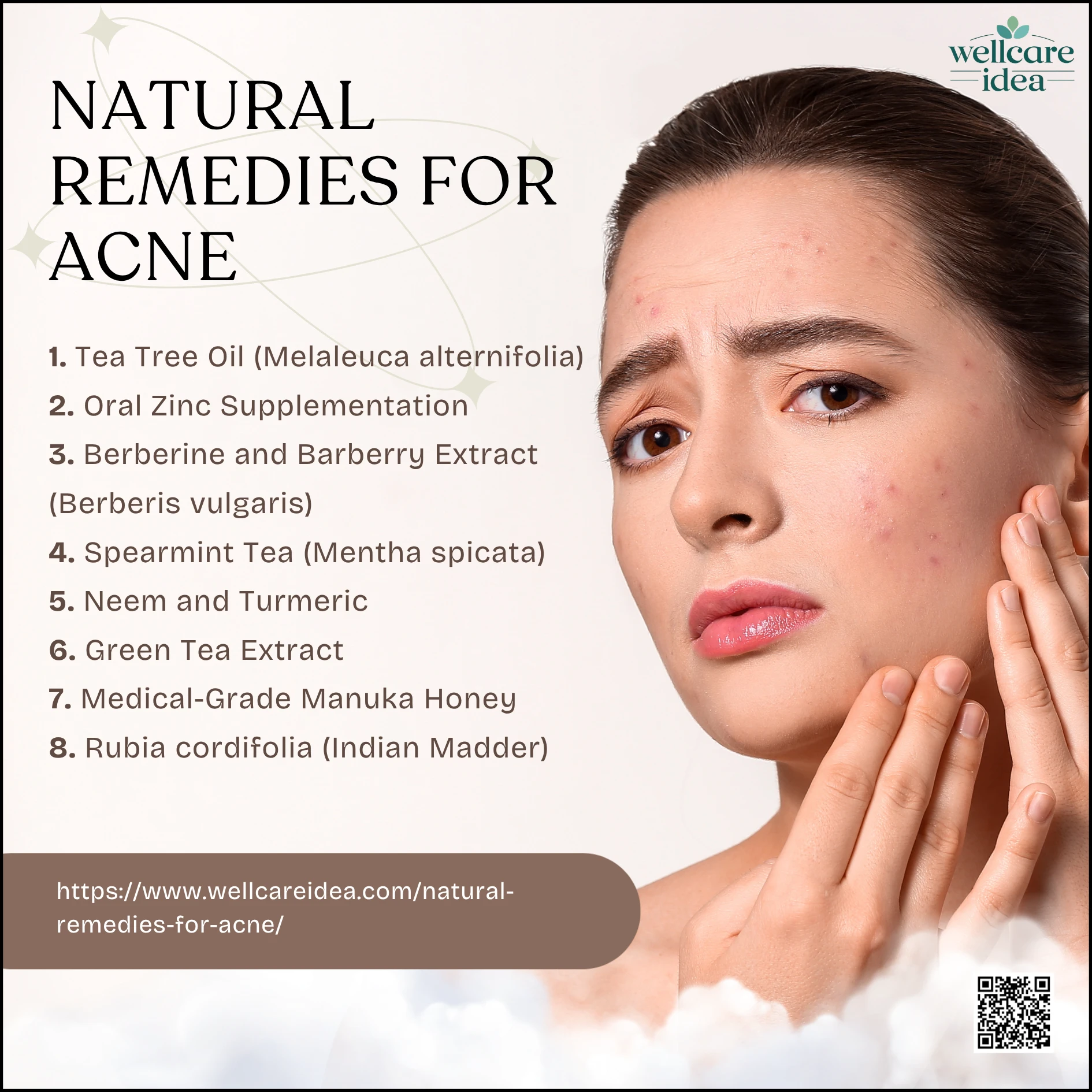 Section 3: Natural Remedies for Acne
When standard over-the-counter washes leave your skin feeling dry, tight, and irritated, or when the prospect of systemic antibiotics feels too extreme, turning toward natural and botanical remedies is a highly logical step. Thankfully, modern clinical trials have begun to heavily scrutinize traditional herbal medicines, proving that many of these natural compounds possess serious pharmacological power 21. Below is a detailed listicle of the most rigorously researched natural treatments available to you.
1. Tea Tree Oil (Melaleuca alternifolia)
If there is one natural remedy that has achieved near-legendary status in the skincare community, it is tea tree oil. Extracted from the leaves of a tree native to Australia, this potent essential oil has been used for centuries by Aboriginal populations as a topical antiseptic for treating cuts, burns, and infections 22. Its secret lies in a specific active compound called terpinen-4-ol, which possesses aggressive antibacterial properties capable of destroying the Cutibacterium acnes bacteria that thrive in your clogged pores 23.
You do not just have to take traditional wisdom’s word for it; the clinical evidence is incredibly robust. In a famous single-blind, randomized clinical trial, researchers tested a 5% tea tree oil gel against a standard 5% benzoyl peroxide lotion (the most common active ingredient in pharmacy acne washes) on 124 patients with mild to moderate acne. The results showed that both treatments significantly reduced the number of inflamed pimples and non-inflamed blackheads 24. While the tea tree oil took a little bit longer to show its full effect, it was a clear winner when it came to patient comfort. The individuals using the tea tree oil experienced far fewer harsh side effects, avoiding the severe peeling, stinging, and burning that frequently accompanied the benzoyl peroxide treatment 25. If your skin is sensitive but you still need heavy-duty antibacterial action, applying a diluted 5% tea tree oil gel twice daily is an excellent, science-backed option 2.
2. Oral Zinc Supplementation
You might already be familiar with zinc as an immune-boosting lozenge you take when you feel a cold coming on, but this essential trace mineral is arguably one of the most important systemic nutrients for clear skin. Your epidermal cells (keratinocytes) require zinc to function and heal properly 26. When taken orally, zinc exhibits profound anti-inflammatory properties and actually has an anti-androgenic effect, meaning it helps to naturally calm the hormonal spikes that enlarge your oil glands 26.
Clinical trials have repeatedly proven its worth as an oral acne treatment. In one double-blind study, patients suffering from acne were given either a daily dose of oral zinc sulfate or a placebo pill over the course of 12 weeks. The results were striking: 58% of the patients taking the zinc experienced a statistically significant decrease in the number of papules, cysts, and deep skin infiltrates. Interestingly, blood tests revealed that the zinc treatment actually caused the patients’ serum vitamin A levels to rise, suggesting that zinc helps your body naturally mobilize its own internal vitamin A reserves to heal the skin from the inside out 27. Another massive multicenter trial comparing zinc gluconate to the powerful prescription antibiotic minocycline found that while the antibiotic was ultimately stronger, the zinc was still able to successfully reduce superficial inflammatory lesions by more than two-thirds in over 30% of the patients, making it an incredible non-prescription alternative 28.
3. Berberine and Barberry Extract (Berberis vulgaris)
The Berberis family of plants, particularly the European barberry, contains a brilliant yellow compound called berberine, which has been prized in Middle Eastern traditional medicine and Ayurveda for thousands of years. While modern medicine usually looks at berberine for its ability to lower blood sugar in diabetics, dermatological researchers became highly interested in it after animal studies showed it had an intense “antilipogenic” effect—meaning it specifically targets and shrinks the sebaceous glands, forcing them to produce less oil 29.
To see if this translated to human skin, researchers conducted a meticulously controlled clinical trial on adolescents aged 12 to 17 who were struggling with moderate to severe acne 29. Half the group was given an oral gelatin capsule containing 600 milligrams of an aqueous extract of dried barberry every day for four weeks, while the other half received a placebo. After just one month, the teenagers taking the barberry extract saw their inflamed pimples, non-inflamed blackheads, and overall acne severity scores plummet by an astonishing 44-45%30. Most impressively, this massive improvement occurred without any reported side effects, proving that natural alkaloid extracts can safely rival the effectiveness of synthetic chemical drugs 29.
4. Spearmint Tea (Mentha spicata)
If you are an adult woman who consistently breaks out along the jawline and chin, particularly right around the time of your menstrual cycle, you are likely dealing with hormonally driven acne 10. This type of acne is notoriously stubborn because it is fueled by elevated levels of circulating androgens (male hormones like testosterone) that overstimulate your oil glands. While doctors frequently prescribe oral contraceptives to manage this, drinking spearmint tea has emerged as a scientifically validated, natural anti-androgen therapy 31.
In a fascinating 30-day clinical trial conducted in Turkey, women suffering from polycystic ovarian syndrome (PCOS) and unexplained excess hair growth (hirsutism)—conditions both driven by the exact same high testosterone levels that cause hormonal acne—were instructed to drink a cup of herbal tea steeped with Mentha spicata twice a day. Blood tests taken before and after the trial confirmed that the spearmint tea caused a significant, measurable drop in the women’s free and total testosterone levels, while simultaneously boosting beneficial hormones like estradiol. The patients also reported highly significant subjective improvements in their dermatological symptoms on their quality of life questionnaires 31. Incorporating two cups of spearmint tea into your daily routine is a gentle, soothing way to biologically turn down the volume on the hormones causing your deepest breakouts.
5. Neem and Turmeric
In the realm of traditional Indian Ayurvedic medicine, the combination of Neem (Azadirachta indica) and Turmeric (Curcuma longa) is considered the gold standard for purifying the blood and healing skin infections. Neem leaves possess extraordinary antimicrobial compounds that naturally fight off a wide variety of bacteria, while Turmeric is incredibly rich in curcumin, a vibrant yellow polyphenol that acts as a powerhouse antioxidant and anti-inflammatory agent, calming angry, red tissue 32.
To test if these ancient herbs could hold up in a modern clinical setting, researchers evaluated a soap-free, herbal purifying face wash containing both Neem and Turmeric on 120 healthy adults who suffered from mild to moderate acne. The participants simply washed their faces with the herbal product twice daily for 28 days. Using specialized dermatological equipment, the researchers discovered that the herbal wash resulted in a statistically significant decrease in the total amount of oil sitting on the skin’s surface, while simultaneously increasing the skin’s overall moisture and hydration levels. By the end of the four weeks, nearly 80% of the participants showed a noticeable reduction in inflammatory pimples, with absolutely zero reported side effects like the extreme dryness that usually accompanies harsh chemical acne cleansers 32.
6. Green Tea Extract
You already know that drinking green tea is fantastic for your internal health, but applying its extract topically is a highly effective way to manage an oily, acne-prone complexion. Green tea leaves are packed with antioxidant molecules called polyphenols, the most famous of which is epigallocatechin-3-gallate (EGCG) 33. When you have acne, the excess oil trapped in your pores is frequently subjected to oxidative stress from the environment, causing the oil to spoil and become highly irritating to the surrounding skin tissue. EGCG stops this process dead in its tracks.
Systematic reviews examining clinical data have revealed that formulating these green tea polyphenols into a topical gel or lotion can directly intervene in how much oil your skin produces 32. In multiple studies, patients applying a topical green tea extract saw a measurable reduction in their sebum secretion rates. Because green tea shrinks your oil production while simultaneously neutralizing free radicals, it helps prevent the initial micro-plugs from forming in your pores, drastically cutting down on the number of inflamed spots you have to deal with down the line 33.
7. Medical-Grade Manuka Honey
Honey has been used as a wound dressing since ancient times, but Manuka honey—produced exclusively by bees pollinating the Leptospermum scoparium tree in New Zealand—is entirely different from what you buy in the grocery store. It possesses incredibly high levels of a compound called methylglyoxal (MGO), giving it an unparalleled, non-peroxide antibacterial strength that even modern hospitals rely upon to treat severe, drug-resistant wound infections 33.
Because acne is essentially a series of small, infected wounds on your face, applying medical-grade Manuka honey makes perfect biological sense. In a randomized controlled trial analyzing 136 patients with facial acne, researchers tested a specific topical formulation containing 90% medical-grade kanuka honey and 10% glycerine (known as Honevo) against a standard antibacterial soap 34. While the strict medical grading scores did not declare the honey a massive, sweeping cure compared to the heavy-duty soap, a closer look at the data showed that the patients using the honey formulation reported significant subjective improvements in their global acne severity between weeks 5 and 11, and they required fewer daily applications to feel comfortable 33. Today, scientists are pushing the boundaries even further by developing high-tech Manuka honey “nano-formulations” designed to push these powerful healing compounds deeper into the pore than standard topical honey ever could 35.
8. Rubia cordifolia (Indian Madder)
The perennial climbing vine known as Rubia cordifolia is a cornerstone of Traditional Chinese Medicine and Ayurveda, historically utilized to purify the blood, improve circulation, and treat inflammatory skin diseases 34. The root of this plant is exceptionally rich in complex phytochemicals, specifically a type of anthraquinone known as alizarin 33.
Recent advanced pharmacological studies have mapped out exactly how this ancient herb works on a molecular level. Alizarin acts as a profound immunomodulator; when applied to inflamed skin, it forcefully suppresses the chemical signals (cytokines and chemokines) that your immune system uses to call in inflammatory white blood cells. By blocking the recruitment of these aggressive macrophages and neutrophils, Rubia cordifolia stops the massive swelling and redness associated with cystic acne. Furthermore, it actually stops keratinocytes (your skin cells) from hyper-proliferating, meaning it addresses the root cause of the sticky dead skin cells that plug the pore in the first place 36.
Section 4: Precaution Before Use of Natural Remedies
There is a highly dangerous misconception in the wellness community that just because a product is “natural,” it is inherently safe, gentle, and incapable of causing harm. In reality, many botanical extracts are incredibly potent pharmacological agents that carry serious risks of toxicity, allergic reactions, and severe drug interactions if used improperly 37. Before overhauling your skincare routine with herbal interventions, you must be aware of the following critical precautions.
First, you must treat essential oils with absolute respect. Tea tree oil, despite being excellent for topical spot treatments, can be intensely irritating if applied to your skin at full, undiluted strength. It frequently causes a condition known as contact dermatitis, resulting in intense redness, stinging, scaly patches, and chemical burns, particularly if you have underlying barrier issues like eczema or rosacea 22. Furthermore, tea tree oil is extraordinarily toxic if swallowed. Ingesting even a tiny amount by mouth can lead to disastrous neurological consequences, including severe confusion, an inability to control your muscles (ataxia), respiratory failure, and even slipping into a coma 38. It must be kept strictly away from children and pets.
Systemic supplements also demand careful dosage monitoring. While oral zinc is heavily supported by clinical data for treating acne, you cannot simply take massive handfuls of the mineral. The safe therapeutic dose for adults is generally between 15 and 30 milligrams of elemental zinc per day. If you exceed these recommended guidelines and ingest supratherapeutic doses, you risk severe gastrointestinal toxicity, which can manifest as intense nausea, vomiting, and bloody diarrhea. Moreover, zinc shares a digestive pathway with other vital minerals like copper; taking excessively high doses of zinc over a long period can block your body from absorbing copper, leading to secondary nutritional deficiencies that can cause serious neurological and blood-related complications 26.
Finally, you must confront the reality of the supplement industry. Unlike prescription medications like isotretinoin or topical clindamycin, herbal and dietary supplements are remarkably under-regulated by agencies like the FDA. This means that the bottle of barberry extract or specialized “acne-clearing” botanical blend you purchase online may contain highly variable concentrations of the active ingredient, or worse, harbor undeclared contaminants 26. Additionally, herbal supplements can drastically interact with the conventional medications you are already taking. For example, certain herbs can induce enzymes in your liver that speed up how fast your body clears out oral contraceptives, completely ruining your birth control’s effectiveness and leading to both unintended pregnancies and massive hormonal acne flares 39. You must prioritize evidence-based information and always consult with a dermatologist or healthcare provider before adding potent systemic herbs to your daily regimen.