
Malaria is a severe, life-threatening, and highly complex infectious disease that continues to represent a profound global public health crisis. The disease is caused by obligate intracellular protozoan parasites belonging to the genus Plasmodium, which are transmitted to human hosts almost exclusively through the bite of infected female Anopheles mosquitoes 1 While the disease has been eliminated in many temperate climates, it remains widely endemic in tropical and subtropical regions, particularly across sub-Saharan Africa, South and Southeast Asia, the Middle East, and parts of Central and South America 2 The 1 (CDC) and the (https://www.who.int/news-room/fact-sheets/detail/malaria) (WHO) estimate that nearly 290 million individuals contract malaria annually, resulting in between 400,000 and 600,000 fatalities, with the vast majority of these deaths occurring among young children and pregnant women 3
The pathophysiology of malaria is inextricably linked to the intricate, multi-stage life cycle of the Plasmodium parasite within both the mosquito vector and the human host. Infection is initiated when an infected female Anopheles mosquito takes a blood meal, simultaneously injecting saliva that contains anticoagulant proteins and motile, thread-like parasitic forms known as sporozoites directly into the human dermis and bloodstream 4 These sporozoites exhibit a remarkable tropism for the liver, rapidly navigating the circulatory system to invade host hepatocytes. Once inside the liver cells, the parasites enter a clinically asymptomatic phase known as exoerythrocytic schizogony, where they undergo massive asexual replication over the course of one to several weeks. During this incubation period, a single sporozoite can multiply into tens of thousands of merozoites 5 Notably, certain species, particularly Plasmodium vivax and Plasmodium ovale, possess the unique biological capability to enter a state of dormancy within the liver, forming hypnozoites that can reactivate months or even years later, causing delayed clinical relapses without a new mosquito bite 3
Malaria Facts, Diagnostics, and Conventional Protocols
To establish a comprehensive understanding of the disease before exploring botanical and home-based interventions, the following table synthesizes the critical clinical, diagnostic, and preventative facts regarding malaria.
| Category | Clinical, Epidemiological, and Diagnostic Details |
| Symptoms | Uncomplicated: Fever, shaking chills, profuse sweating, generalized discomfort, headache, profound fatigue, muscle and joint pain, nausea, vomiting, diarrhea, rapid heart rate, and cough 1.
Severe/Complicated: Impaired consciousness, multiple convulsions, respiratory distress, acute kidney failure, dark or bloody urine, jaundice (yellowing of the skin and sclera), severe anemia, coma, and abnormal bleeding 6 |
| Causes | Infection by protozoan parasites of the genus Plasmodium 4 The parasites invade and systematically destroy human red blood cells 7 |
| Types of Parasites |
|
| How it Spreads | Transmission occurs via the bite of an infected female Anopheles mosquito during a blood meal 4
On rare occasions, transmission can occur congenitally (from mother to fetus), or via blood transfusions, organ transplantation, and the sharing of contaminated needles or syringes 4 It is not spread directly from person to person like a respiratory virus 1. |
| Regions Where it is Found | Endemic in 83 countries across tropical and subtropical climates 8 Regions with the highest burden include sub-Saharan Africa, the Indian subcontinent, Southeast Asia, Oceania, the Middle East, and parts of Central and South America 2. |
| Higher Risk for Exposure and Severe Disease | Individuals living in or traveling to endemic regions without adequate chemoprophylaxis are at high risk 4. Populations at higher risk for severe, life-threatening disease include infants, children under the age of five, pregnant women, immunocompromised individuals (such as those with HIV/AIDS), and immunologically naive travelers originating from non-endemic countries 6 |
| How Doctors Diagnose | Clinical diagnosis must be confirmed via parasitological laboratory testing 2 The gold standard is microscopic examination of thick and thin peripheral blood smears to identify the parasite species and quantify parasitemia. Rapid Diagnostic Tests (RDTs) that detect specific parasite antigens in the blood are widely utilized when high-quality microscopy is unavailable 6. |
| Treatment and Medications | Uncomplicated P. falciparum: Artemisinin-based Combination Therapies (ACTs) are the global first-line standard 9
Uncomplicated P. vivax/P. ovale: Chloroquine or an ACT for the blood stage, followed necessarily by primaquine or tafenoquine to eradicate dormant liver hypnozoites 10. Severe Malaria: Immediate administration of intravenous (IV) artesunate, followed by a full course of an oral ACT once the patient is clinically stabilized [https://www.cdc.gov/malaria/hcp/clinical-guidance/malaria-treatment-tables.html} |
| Methods of Prevention | Vector Control: Universal use of Long-Lasting Insecticidal Nets (LLINs) and Indoor Residual Spraying (IRS) 3.
Chemoprophylaxis: Pre-travel prescription of antimalarials such as atovaquone-proguanil, doxycycline, mefloquine, or tafenoquine 3. Vaccination: WHO-recommended malaria vaccines for children residing in high-transmission regions 3. |
 Evidence-based Natural Remedies for Malaria
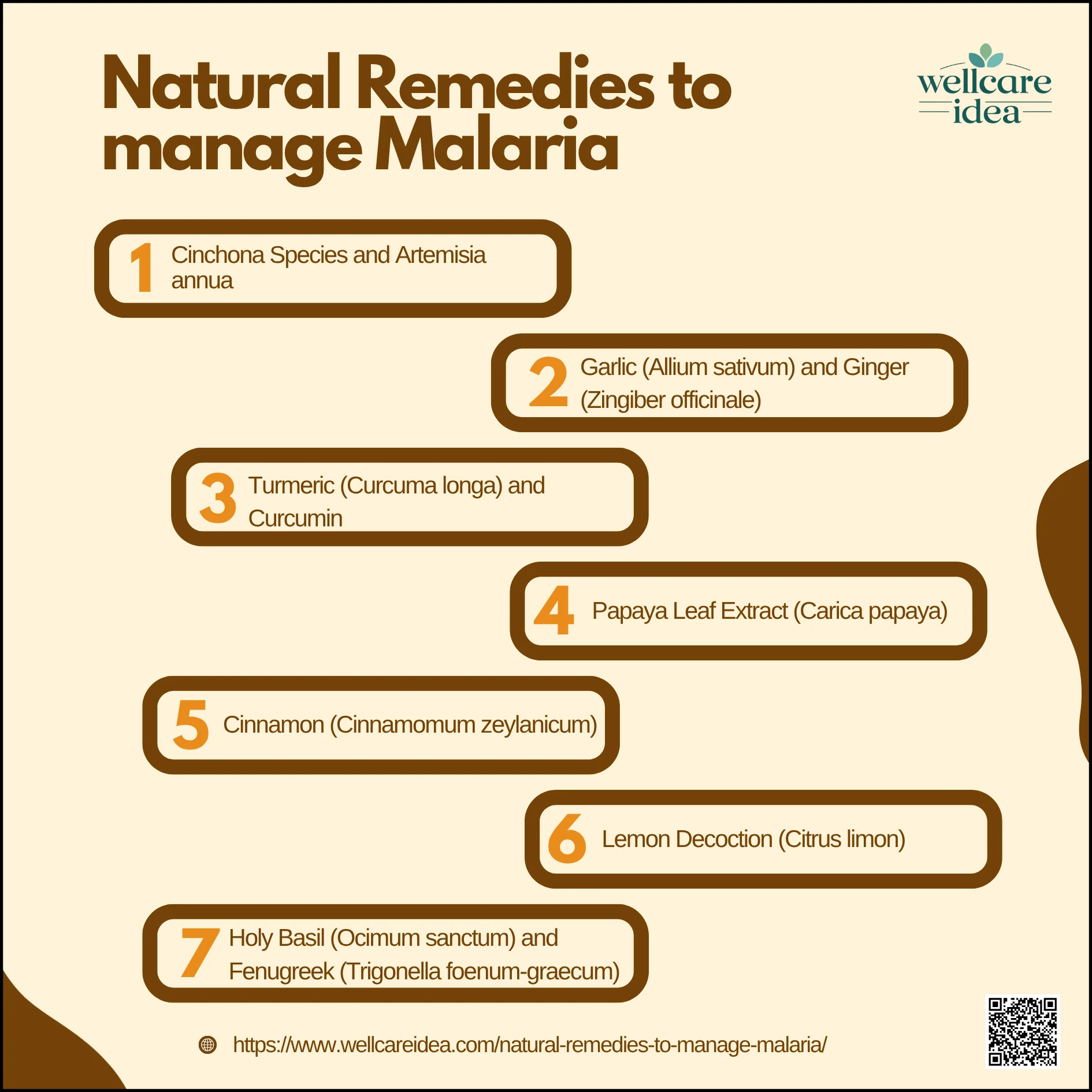
Cinchona Species and Artemisia annua
The legacy of natural antimalarials begins with the bark of the Cinchona tree, a remedy utilized for centuries by the indigenous Quechua healers of Peru and Bolivia to treat severe, shivering fevers. In 1820, European chemists successfully isolated the active alkaloid, quinine, from Cinchona bark, providing the medical community with its first targeted, highly effective antimalarial agent 11 Quinine and its subsequent synthetic derivatives, such as chloroquine, revolutionized global malaria management until the widespread emergence of chloroquine-resistant P. falciparum strains in the late 20th century 12.
Concurrently, traditional Chinese medicine had relied on infusions made from the leaves of Artemisia annua (Sweet Wormwood), known as Qinghao, for over two millennia to manage intermittent fevers. In the 1970s, facing an epidemic of drug-resistant malaria during the Vietnam War, a secretive Chinese military research program known as Project 523, led by the Nobel laureate Tu Youyou, successfully extracted the bioactive compound artemisinin from A. annua 11 Artemisinin and its derivatives currently form the backbone of modern ACTs, functioning by interacting with heme molecules inside the parasite to generate lethal free radicals 13. While A. annua teas and whole-plant extracts are still widely consumed as home remedies, the14 as monotherapies 9 The artemisinin content in natural teas is highly variable and frequently subtherapeutic, which fails to clear the infection entirely and acts as a primary evolutionary driver for the development of artemisinin-resistant malaria parasites 14
Garlic (Allium sativum) and Ginger (Zingiber officinale)
Garlic and ginger are ubiquitous in culinary traditions and form the cornerstone of numerous traditional home remedies for infectious diseases 15. The potent antimalarial efficacy of garlic is primarily attributed to allicin, a reactive organosulfur compound that is rapidly synthesized when fresh garlic cloves are crushed or chewed. Mechanistic research has identified allicin as a powerful cysteine protease inhibitor. The Plasmodium parasite relies heavily on cysteine proteases to facilitate host cell invasion and to degrade host hemoglobin. During the initial pre-erythrocytic stage, allicin effectively inhibits the proteolytic cleavage of the protein (CSP), thereby neutralizing the sporozoite’s ability to invade host hepatocytes 16 Furthermore, in vivo murine models demonstrate that the administration of allicin significantly decreases blood-stage parasitemia and prolongs host survival, proving its efficacy across multiple stages of the parasite’s life cycle 17.
Ginger, which is rich in bioactive phenolic compounds such as gingerols and shogaols, acts as a potent antioxidant and anti-inflammatory agent. When utilized in combination, garlic and ginger extracts display remarkable synergistic activity. Scientific evaluations using DPPH and FRAP antioxidant assays confirm that the combined extracts yield significantly higher free radical scavenging capabilities than either extract used in isolation. This synergistic formulation is highly beneficial in a clinical context, as it helps mitigate the severe oxidative stress and erythrocyte destruction provoked by the multiplying Plasmodium parasites 15
Turmeric (Curcuma longa) and Curcumin
Turmeric, a bright yellow spice derived from the rhizomes of Curcuma longa, is universally recognized in Ayurvedic medicine for its profound anti-inflammatory properties 18. The primary bioactive constituent, curcumin, has recently emerged as a highly promising, multifaceted antimalarial agent 19 The primary mechanism by which curcumin eradicates the malaria parasite involves the targeted inhibition of PfATP6, which is the Plasmodium falciparum orthologue of the mammalian sarcoplasmic-endoplasmic reticulum calcium ATPase (SERCA) pump. Advanced molecular docking studies reveal that curcumin binds to PfATP6, inducing a conformational change that strictly impedes the attachment of adenosine triphosphate (ATP). By disabling this critical calcium pump, curcumin disrupts the parasite’s intracellular calcium homeostasis, leading to rapid parasitic death 20.
In vivo experimental models indicate that the oral administration of curcumin to malaria-infected subjects can reduce blood parasitemia by an astonishing 80% to 90%, significantly enhancing overall survival rates. Moreover, curcumin exhibits a potent synergistic effect when co-administered with artemisinin derivatives, suggesting it could play a vital role in combination therapies designed to outmaneuver drug-resistant strains 20 However, the therapeutic application of raw turmeric powder is severely limited by curcumin’s low aqueous solubility and poor systemic bioavailability. To overcome these pharmacokinetic hurdles, contemporary research is heavily focused on the development of lipid-based nano-formulations and structural modifications to enhance the clinical delivery of curcumin 19.
Papaya Leaf Extract (Carica papaya)
The utilization of Carica papaya leaf extracts is widespread across Asian and African ethnomedicine, frequently employed to treat febrile illnesses including dengue fever, chikungunya, and malaria 21 The leaves of the papaya plant are a dense reservoir of active phytochemicals, including specialized alkaloids (such as carpaine and pseudocarpaine), flavonoids, phenolics, and proteolytic enzymes like papain. These bioactive compounds actively interfere with the metabolic processes of the Plasmodium parasite, significantly reducing both the severity of the infection and the circulating parasite load 22.
Extraction methodology profoundly influences the antimalarial potency of papaya leaves. Research indicates that ethyl acetate fractions of C. papaya exhibit vastly superior anti-plasmodial activity compared to traditional hot aqueous extracts, suggesting that the most effective parasiticidal compounds are highly lipophilic {https://pmc.ncbi.nlm.nih.gov/articles/PMC3228370/ 23 Clinically, papaya leaf extract offers immense adjunctive value; when combined with the conventional antimalarial drug artesunate in Plasmodium berghei murine models, the combination displayed the greatest reduction in parasitemia and successfully prevented disease recrudescence 24 Furthermore, C. papaya extracts possess well-documented hematoprotective properties, rapidly increasing platelet counts and mitigating the profound anemia and bodily weakness characteristic of severe malaria.25.
Cinnamon (Cinnamomum zeylanicum)
Cinnamon is not only a ubiquitous culinary spice but also a potent botanical therapeutic with demonstrated in vitro anti-plasmodial activity. Advanced chemometric analyses and metabolomic profiling studies have revealed that cinnamon extracts possess a 50% inhibitory concentration (IC50) of 1.25 mg/mL against Plasmodium falciparum. The mechanism of action involves the direct disruption of the parasite’s internal metabolic cycles. Specifically, the administration of cinnamon extract alters crucial parasitic metabolites, including succinic acid, L-aspartic acid, beta-alanine, and 2-methylbutyryl glycine 26.
The most profound impact of cinnamon is its severe interference with the parasite’s glutathione metabolism. During the erythrocytic stage, the parasite consumes host hemoglobin, releasing massive quantities of free, toxic heme. Glutathione is absolutely vital for the parasite to detoxify this heme and survive the resulting oxidative stress By disrupting glutathione synthesis, alongside pantothenate and coenzyme A biosynthetic pathways, cinnamon extracts effectively cripple the parasite’s primary oxidative defense mechanisms, resulting in parasitic death.26
Lemon Decoction (Citrus limon)
Citrus plant concoctions, particularly decoctions made from boiling whole lemons (Citrus limon), are deeply entrenched in the traditional medicine practices of various malaria-endemic regions. Experimental trials utilizing Rane’s curative test on Plasmodium berghei ANKA-infected murine models have provided empirical validation for this practice. The oral administration of a Citrus limon extract successfully suppressed parasitemia by 39% when compared to a placebo control group, and simultaneously increased the mean survival time of the infected subjects from 8.6 days to 11 days 27
The antimalarial efficacy of the lemon decoction is attributed to its dense profile of bioactive phenolic compounds and essential minerals. While the study concluded that lemon decoction is insufficient to act as a standalone curative monotherapy, its true clinical potential was revealed when used as an adjunctive treatment. When co-administered with the standard ACT artemether-lumefantrine, the lemon decoction significantly accelerated the clearance of the parasite, reducing the lag time required to clear 99% of parasites to just 58.8 hours, while also yielding the highest improvements in host hematocrit and hemato-immunological parameters 27
Holy Basil (Ocimum sanctum) and Fenugreek (Trigonella foenum-graecum)
Ocimum sanctum, commonly known as Holy Basil or Tulsi, holds a venerated status in traditional Ayurvedic and Siddha medical systems 28 It is widely celebrated for its robust adaptogenic, antipyretic, and immunomodulatory activities 29 Rich in potent phytochemicals such as eugenol, rosmarinic acid, apigenin, and luteolin, Tulsi extracts systematically upregulate the host’s innate antioxidant defenses. By scavenging free radicals, Tulsi effectively protects host erythrocytes and hepatic tissues from the severe oxidative damage inflicted during malarial infection 28 By directly mitigating the physiological and metabolic stress of the disease, Tulsi decoctions help alleviate the severity of malarial fevers and bolster the immune system’s capacity to combat the parasite 30
Similarly, Fenugreek seeds (Trigonella foenum-graecum) are utilized extensively as a supportive metabolic therapy 31 While fenugreek is not recognized as a direct anti-plasmodial agent like Artemisia or Cinchona, it provides a vast reservoir of bioactive compounds, including saponins, alkaloids, and polyphenols. Its primary benefit during a malaria infection lies in its well-documented antioxidant, anti-inflammatory, and hepatoprotective properties, which are crucial for mitigating the collateral hepatic damage caused during the exoerythrocytic replication phase of the parasite 32.
Debunking Home Remedy Myths: The Apple Cider Vinegar Fallacy
As the popularity of alternative wellness trends expands, it is imperative to distinguish scientifically validated botanical interventions from unsubstantiated, and potentially dangerous, health myths. A prominent example is the modern promotion of Apple Cider Vinegar (ACV) as a miraculous cure-all for various severe ailments, including malaria 33 While ACV does contain acetic acid, trace probiotics, and polyphenols, and exhibits mild generalized antibacterial properties at full strength, there is an absolute lack of empirical, peer-reviewed evidence supporting its efficacy against Plasmodium parasites. Medical professionals and clinical dietitians explicitly state that ACV cannot treat, cure, or manage malaria.65 Relying on ACV in place of proven antimalarials is highly dangerous, offering a false sense of security that significantly increases the risk of severe disease progression, organ failure, and mortality 34
Hydration and Temperature Control
Vigilant fluid replacement is absolutely critical to patient survival and recovery. Patients must continually consume clean, boiled water fortified with oral rehydration salts (such as Oresol or Hydrite) to restore essential electrolytes, maintain blood volume, and facilitate the renal clearance of massive amounts of parasitic toxins and metabolic waste. During acute febrile spikes exceeding 39°C, hyperpyrexia must be managed using physical cooling techniques, such as tepid sponging and ensuring the patient is resting in a clean, well-ventilated, and airy environment. Standard antipyretics like paracetamol are utilized if temperatures approach 40°C to reduce discomfort and prevent febrile delirium or convulsions 35.
Nutritional Optimization
The massive, synchronized destruction of erythrocytes during the malarial blood stage rapidly leads to severe hemolytic anemia, while the systemic inflammatory response induces hypoproteinemia.8 Nutritional support must therefore be highly targeted to replenish these profound deficits without overburdening a compromised digestive system 35
- Micronutrient Replenishment: Diets should be highly enriched with foods containing bioavailable iron, zinc, folic acid, and Vitamin A to aggressively stimulate erythropoiesis (the production of new red blood cells) 35.
- Vitamin C Integration: The inclusion of citrus fruits (such as oranges, grapefruits, and lemon juice) provides high concentrations of Vitamin C, which fundamentally enhances the intestinal absorption of non-heme iron from plant-based dietary sources 35
- Easily Digestible Proteins: Soft, protein-rich foods such as lean poultry broths, beef soups, legumes, dairy products, and seaweed are necessary to repair systemic tissue damage and support immune function 35
- Strict Dietary Restrictions: Patients must strictly avoid high-fat and greasy meals, which exacerbate nausea, cause indigestion, and provoke loose stools. Furthermore, the consumption of highly spicy foods, caffeine, and alcoholic beverages is heavily contraindicated; these substances elevate body heat, cause further dehydration, and place unnecessary metabolic stress on a liver that is already heavily compromised by parasitic invasion and the processing of antimalarial drugs. Interestingly, traditional nutritional paradigms also advise against the consumption of chicken eggs during acute malaria, asserting that they artificially increase core body temperature 35
Environmental Hygiene
Patients must maintain strict personal hygiene, cleaning their body and teeth regularly to prevent secondary opportunistic infections {https://www.vinmec.com/eng/blog/care-and-nutrition-for-malaria-patients-en Bedding and pillows must be laundered frequently, and the patient must sleep under an insecticide-treated bed net to prevent local mosquitoes from biting the infected individual and subsequently transmitting the parasite to healthy family members and the broader community 3
Precautions Before Use of Natural Remedies and
Modulation of CYP450 Enzymes by Botanicals
When a patient consumes potent herbal remedies concurrently with prescribed drugs, unpredictable Herb-Drug Interactions (HDIs) can fundamentally alter the drug’s pharmacokinetic profile. If a plant compound induces (accelerates the activity of) CYP450 enzymes, the antimalarial drug is metabolized and cleared from the bloodstream far too rapidly, leading to subtherapeutic drug levels. This not only results in catastrophic treatment failure but exposes the surviving parasite population to low, non-lethal drug concentrations, which acts as the primary evolutionary driver for the emergence of highly resistant Plasmodium strains 9. Conversely, if a plant compound inhibits the enzyme, the drug cannot be cleared; it accumulates in the body, rapidly reaching highly toxic concentrations that can lead to organ failure 36
Artemisia annua extracts perfectly exemplify this severe pharmacokinetic risk. Comprehensive in vitro studies demonstrate that methanolic extracts of A. annua act as potent, irreversible inhibitors of the enzymes CYP2B6 (inhibiting activity by nearly 90%) and CYP3A4 (inhibiting activity by nearly 70%). This irreversible, metabolism-dependent inhibition occurs due to the physical destruction of the enzyme’s heme group by the active phytochemicals (specifically coumarins and flavonoids) within the extract.72 Because CYP3A4 is the most crucial drug-metabolizing enzyme in the human body—responsible for clearing approximately 33% of all clinical drugs, including statins, antivirals, and specific ACT partner drugs—consuming high doses of Artemisia tea concurrently with these medications can precipitate severe systemic toxicity 37.
Similarly, chronic consumption of standardized Carica papaya leaf extracts, while generally recognized as safe for short durations (less than five days) to manage acute fevers and thrombocytopenia, has demonstrated the potential to cause hepatotoxicity and reproductive toxicity over long-term usage in animal models. Furthermore, papaya extracts have documented unfavorable interactions with a variety of common medications, including metformin, glimepiride, digoxin, ciprofloxacin, and crucially, artemisinin derivatives, necessitating strict medical supervision during co-administration 38
The Grapefruit Juice Anomaly
In the context of CYP450 modulation, grapefruit juice is universally recognized as a potent inhibitor of intestinal CYP3A4, causing dangerous interactions with over 85 common medications by drastically increasing their systemic absorption and preventing breakdown 39 Given that the foundational antimalarial drug quinine is primarily metabolized by CYP3A4, researchers anticipated a severe, potentially toxic HDI between grapefruit juice and quinine therapies 40 However, randomized cross-over clinical trials yielded highly paradoxical results: the concomitant intake of grapefruit juice does not significantly alter the oral pharmacokinetics of quinine 41 Because quinine is a low-clearance drug possessing naturally high oral bioavailability, the inhibition of CYP3A4 localized in the gut by grapefruit juice fails to clinically impact systemic quinine levels 40 Consequently, it is uniquely unnecessary to advise patients against consuming grapefruit juice while undergoing quinine therapy, highlighting the highly specific and unpredictable nature of HDIs 41.
Global Public Health Warnings and Contraindications
The WHO actively intervenes regarding the unregulated use of herbal antimalarials to protect global health security. Specifically, the https://www.who.int/news/item/10-10-2019-the-use-of-non-pharmaceutical-forms-of-artemisia of non-pharmaceutical forms of Artemisia annua—including teas, crude extracts, and capsules—for the prevention or treatment of malaria 9 The rationale is founded on empirical evidence showing that the artemisinin content in these unstandardized herbal preparations varies substantially and is almost always insufficient to eliminate the parasitic reservoir within the patient 14 Relying on these herbal forms heavily promotes the survival of mutant parasites, expediting the global spread of artemisinin resistance, which currently represents the single greatest threat to malaria eradication efforts worldwide 9
Furthermore, extreme caution must be exercised by specific vulnerable demographics before utilizing any natural remedies. Pregnant women must consult physicians before consuming high doses of medicinal herbs; for instance, the consumption of fenugreek in amounts greater than those typically found in food has been directly linked to increased risks of severe birth defects 31 Additionally, patients must never substitute conventional prophylaxis or treatment with botanical remedies without prior medical authorization, particularly concerning the absolute necessity of clinical G6PD testing before the administration of oxidative antimalarial drugs or potentially oxidative high-dose phytochemicals 42
Works cited
- About Malaria – CDC, accessed April 1, 2026, https://www.cdc.gov/malaria/about/index.html
- How Malaria Spreads – CDC, accessed April 1, 2026, https://www.cdc.gov/malaria/causes/index.html
- Malaria – CDC, accessed April 1, 2026, https://www.cdc.gov/malaria/index.html
- Malaria – Symptoms & causes – Mayo Clinic, accessed April 1, 2026, https://www.mayoclinic.org/diseases-conditions/malaria/symptoms-causes/syc-20351184
- Treatment of malaria – World Health Organization (WHO), accessed April 1, 2026, https://www.who.int/teams/global-malaria-programme/case-management/treatment
- Quest for malaria management using natural remedies – PMC, accessed April 1, 2026, https://pmc.ncbi.nlm.nih.gov/articles/PMC11247327/
- Malaria in the US: A Mayo Clinic expert offers insight, tips on prevention, accessed April 1, 2026, https://newsnetwork.mayoclinic.org/discussion/malaria-in-the-us-a-mayo-clinic-expert-offers-insight-tips-on-prevention/
- Symptoms of Malaria – CDC, accessed April 1, 2026, https://www.cdc.gov/malaria/symptoms/index.html
- Malaria in U.S.: Insights & Prevention – Mayo Clinic Health System, accessed April 1, 2026, https://www.mayoclinichealthsystem.org/hometown-health/speaking-of-health/malaria-in-the-us
- Malaria in Nepal: A Spatiotemporal Study of the Disease Distribution …, accessed April 1, 2026, https://pmc.ncbi.nlm.nih.gov/articles/PMC11860284/
- Epidemiology of Plasmodium vivax Malaria Infection in Nepal – PMC – NIH, accessed April 1, 2026, https://pmc.ncbi.nlm.nih.gov/articles/PMC6169153/
- Traditional Beliefs, Practices, and Migration: A Risk to Malaria Transmission in Rural Nepal, accessed April 1, 2026, https://pmc.ncbi.nlm.nih.gov/articles/PMC9779137/
- Traditional Beliefs, Practices, and Migration: A Risk to Malaria Transmission in Rural Nepal, accessed April 1, 2026, https://www.mdpi.com/1660-4601/19/24/16872
- Malaria – World Health Organization (WHO), accessed April 1, 2026, https://www.who.int/news-room/fact-sheets/detail/malaria
- Yellow Fever Vaccine and Malaria Prevention Information, by Country – CDC, accessed April 1, 2026, https://www.cdc.gov/yellow-book/hcp/preparing-international-travelers/yellow-fever-vaccine-and-malaria-prevention-information-by-country.html
- Mefloquine (oral route) – Side effects & dosage – Mayo Clinic, accessed April 1, 2026, https://www.mayoclinic.org/drugs-supplements/mefloquine-oral-route/description/drg-20067686
- Malaria – Diagnosis & treatment – Mayo Clinic, accessed April 1, 2026, https://www.mayoclinic.org/diseases-conditions/malaria/diagnosis-treatment/drc-20351190
- Choosing a Drug to Prevent Malaria – CDC, accessed April 1, 2026, https://www.cdc.gov/malaria/hcp/drug-malaria/index.html
- Appendix A: Malaria in the United States: Treatment Tables – CDC, accessed April 1, 2026, https://www.cdc.gov/malaria/hcp/clinical-guidance/malaria-treatment-tables.html
- The prevention and treatment of Plasmodium vivax malaria – PMC – NIH, accessed April 1, 2026, https://pmc.ncbi.nlm.nih.gov/articles/PMC8064578/
- General Approach to Treatment | Malaria – CDC, accessed April 1, 2026, https://www.cdc.gov/malaria/hcp/clinical-guidance/general-treatment.html
- Malaria | Yellow Book – CDC, accessed April 1, 2026, https://www.cdc.gov/yellow-book/hcp/travel-associated-infections-diseases/malaria.html
- What Are Malaria Pills and What Do They Do? – WebMD, accessed April 1, 2026, https://www.webmd.com/a-to-z-guides/malaria-pills
- Traditional herbal medicines for malaria – PMC – NIH, accessed April 1, 2026, https://pmc.ncbi.nlm.nih.gov/articles/PMC527695/
- Self-Treatment Practices for Perceived Symptoms of Malaria in Ethiopia – PMC, accessed April 1, 2026, https://pmc.ncbi.nlm.nih.gov/articles/PMC7444995/
- Efficacy of antimalarial herbal medicines used by communities in malaria affected regions globally: a protocol for systematic review and evidence and gap map – PMC, accessed April 1, 2026, https://pmc.ncbi.nlm.nih.gov/articles/PMC10335494/
- Forests as pharmacopoeia: identifying new plant-based treatments for malaria, accessed April 1, 2026, https://www.fao.org/4/a0789e/a0789e06.htm
- Quest for malaria management using natural remedies – Frontiers, accessed April 1, 2026, https://www.frontiersin.org/journals/pharmacology/articles/10.3389/fphar.2024.1359890/full
- Therapeutic application of Carica papaya leaf extract in the management of human diseases, accessed April 1, 2026, https://pmc.ncbi.nlm.nih.gov/articles/PMC7704890/
- The History of Malaria Treatment | ISGlobal, accessed April 1, 2026, https://malariatreatment.isglobal.org/
- Old drug, new discovery: Scientists find novel use for ancient malaria remedy, accessed April 1, 2026, https://med.stanford.edu/news/insights/2024/10/cardiac-fibrosis-malaria-drug-ancient-origins.html
- From bark to weed: The history of artemisinin – PMC, accessed April 1, 2026, https://pmc.ncbi.nlm.nih.gov/articles/PMC3671478/
- Plant Packs More Punch Against Malaria | Scientific Discoveries – USDA, accessed April 1, 2026, https://scientificdiscoveries.ars.usda.gov/tellus/stories/articles/plant-packs-more-punch-against-malaria
- History of antimalarial drugs – Medicines for Malaria Venture, accessed April 1, 2026, https://www.mmv.org/malaria-medicines/history-antimalarials-drugs
- The plant-based immunomodulator curcumin as a potential candidate for the development of an adjunctive therapy for cerebral malaria – PMC, accessed April 1, 2026, https://pmc.ncbi.nlm.nih.gov/articles/PMC3059458/
- The use of non-pharmaceutical forms of Artemisia – World Health Organization (WHO), accessed April 1, 2026, https://www.who.int/news/item/10-10-2019-the-use-of-non-pharmaceutical-forms-of-artemisia
- Antioxidant, antibacterial and antiviral effects of the combination of ginger and garlic extracts, accessed April 1, 2026, https://pubmed.ncbi.nlm.nih.gov/38352909/
- Previously published ethno-pharmacological reports reveal the potentiality of plants and plant-derived products used as traditional home remedies by Bangladeshi COVID-19 patients to combat SARS-CoV-2 – PMC, accessed April 1, 2026, https://pmc.ncbi.nlm.nih.gov/articles/PMC8285211/
- Antimalarial Activity of Allicin, a Biologically Active Compound from Garlic Cloves – PMC, accessed April 1, 2026, https://pmc.ncbi.nlm.nih.gov/articles/PMC1472199/
- Antimalarial activity of allicin, a biologically active compound from garlic cloves – PubMed, accessed April 1, 2026, https://pubmed.ncbi.nlm.nih.gov/16641443/
- Allicin enhances host pro-inflammatory immune responses and protects against acute murine malaria infection – PMC, accessed April 1, 2026, https://pmc.ncbi.nlm.nih.gov/articles/PMC3472178/
- Curcumin and Its Derivatives as Potential Antimalarial and Anti-Inflammatory Agents: A Review on Structure–Activity Relationship and Mechanism of Action – PMC, accessed April 1, 2026, https://pmc.ncbi.nlm.nih.gov/articles/PMC10146798/
- Curcumin and Its Derivatives as Potential Antimalarial and Anti-Inflammatory Agents: A Review on Structure-Activity Relationship and Mechanism of Action – PubMed, accessed April 1, 2026, https://pubmed.ncbi.nlm.nih.gov/37111366/
- Antimalarial potential of curcumin derivatives evaluated through experimental and computational approaches – PMC, accessed April 1, 2026, https://pmc.ncbi.nlm.nih.gov/articles/PMC12819389/
- The Potential use of a Curcumin-Piperine Combination as an Antimalarial Agent: A Systematic Review – PMC, accessed April 1, 2026, https://pmc.ncbi.nlm.nih.gov/articles/PMC8523290/
- Inhibition of P. falciparum PFATP6 by curcumin and its derivatives: a bioinformatic study, accessed April 1, 2026, https://pubmed.ncbi.nlm.nih.gov/23273210/
- Antimalarial Activity of Orally Administered Curcumin Incorporated in Eudragit®-Containing Liposomes – PMC, accessed April 1, 2026, https://pmc.ncbi.nlm.nih.gov/articles/PMC5983818/
- Leaf Decoction of Carica papaya Combined with Artesunate …, accessed April 1, 2026, https://pubmed.ncbi.nlm.nih.gov/31216580/
- The Future of Carica papaya Leaf Extract as an Herbal Medicine Product – PubMed, accessed April 1, 2026, https://pubmed.ncbi.nlm.nih.gov/34834014/
- Carica papaya L. Leaves: Deciphering Its Antioxidant Bioactives, Biological Activities, Innovative Products, and Safety Aspects – PMC, accessed April 1, 2026, https://pmc.ncbi.nlm.nih.gov/articles/PMC9203216/
- (PDF) A review on pharmacological activity of carica papaya – ResearchGate, accessed April 1, 2026, https://www.researchgate.net/publication/396483910_A_review_on_pharmacological_activity_of_carica_papaya
- Antiplasmodial Properties and Bioassay-Guided Fractionation of Ethyl Acetate Extracts from Carica papaya Leaves – PMC, accessed April 1, 2026, https://pmc.ncbi.nlm.nih.gov/articles/PMC3228370/
- Carica papaya L. Leaf: A Systematic Scoping Review on Biological Safety and Herb-Drug Interactions – PMC, accessed April 1, 2026, https://pmc.ncbi.nlm.nih.gov/articles/PMC8121580/
- The Effect of Aqueous Extract of Cinnamon on the Metabolome of Plasmodium falciparum Using 1HNMR Spectroscopy – PMC, accessed April 1, 2026, https://pmc.ncbi.nlm.nih.gov/articles/PMC4745969/
- Cinnamon as a Useful Preventive Substance for the Care of Human and Plant Health – PMC, accessed April 1, 2026, https://pmc.ncbi.nlm.nih.gov/articles/PMC8433798/
- Effects of lemon decoction on malaria parasite clearance and …, accessed April 1, 2026, https://pmc.ncbi.nlm.nih.gov/articles/PMC7076818/
- Effects of lemon decoction on malaria parasite clearance and selected hematological parameters in Plasmodium berghei ANKA infected mice – PubMed, accessed April 1, 2026, https://pubmed.ncbi.nlm.nih.gov/32020885/
- Ocimum sanctum L (Holy Basil or Tulsi) and its phytochemicals in the prevention and treatment of cancer – PubMed, accessed April 1, 2026, https://pubmed.ncbi.nlm.nih.gov/23682780/
- The Clinical Efficacy and Safety of Tulsi in Humans: A Systematic Review of the Literature, accessed April 1, 2026, https://pmc.ncbi.nlm.nih.gov/articles/PMC5376420/
- Tulsi – Ocimum sanctum: A herb for all reasons – PMC – NIH, accessed April 1, 2026, https://pmc.ncbi.nlm.nih.gov/articles/PMC4296439/
- Harnessing the Antibacterial, Anti-Diabetic and Anti-Carcinogenic Properties of Ocimum sanctum Linn (Tulsi) – PMC, accessed April 1, 2026, https://pmc.ncbi.nlm.nih.gov/articles/PMC11678315/
- Fenugreek: Usefulness and Safety | NCCIH – NIH, accessed April 1, 2026, https://www.nccih.nih.gov/health/fenugreek
- A small plant with big benefits: Fenugreek (Trigonella foenum-graecum Linn.) for disease prevention and health promotion – PubMed, accessed April 1, 2026, https://pubmed.ncbi.nlm.nih.gov/28266134/
- The multifaceted potential of fenugreek seeds: From health benefits to food and nanotechnology applications – PMC, accessed April 1, 2026, https://pmc.ncbi.nlm.nih.gov/articles/PMC11016425/
- “Debunking The Health Myths Surrounding Apple Cider Vinegar” | Mount Sinai – New York, accessed April 1, 2026, https://www.mountsinai.org/about/newsroom/2017/abc-news-debunking-the-health-myths-surrounding-apple-cider-vinegar
- Authenticating apple cider vinegar’s home remedy claims: antibacterial, antifungal, antiviral properties and cytotoxicity aspect – PubMed, accessed April 1, 2026, https://pubmed.ncbi.nlm.nih.gov/29224370/
- What are the health benefits of apple cider vinegar? – MD Anderson Cancer Center, accessed April 1, 2026, https://www.mdanderson.org/cancerwise/what-are-the-health-benefits-of-apple-cider-vinegar.h00-159696756.html
- Care and nutrition for patients with malaria | Vinmec, accessed April 1, 2026, https://www.vinmec.com/eng/blog/care-and-nutrition-for-malaria-patients-en
- Pharmacokinetic Interactions of Herbs with Cytochrome P450 and P-Glycoprotein – PMC, accessed April 1, 2026, https://pmc.ncbi.nlm.nih.gov/articles/PMC4302358/
- Modulation of Cytochrome P450, P-glycoprotein and Pregnane X Receptor by Selected Antimalarial Herbs—Implication for Herb-Drug Interaction – PMC, accessed April 1, 2026, https://pmc.ncbi.nlm.nih.gov/articles/PMC6150001/
- Hazardous Interactions Between Food, Herbs, and Drugs in the First Stage of Biotransformation: Case Reports of Adverse Drug Interactions in Humans – PMC, accessed April 1, 2026, https://pmc.ncbi.nlm.nih.gov/articles/PMC12155451/
- Artemisia annua L. Extracts Irreversibly Inhibit the Activity of CYP2B6 and CYP3A4 Enzymes – PMC, accessed April 1, 2026, https://pmc.ncbi.nlm.nih.gov/articles/PMC9855681/
- Grapefruit–medication interactions: Forbidden fruit or avoidable consequences? – PMC, accessed April 1, 2026, https://pmc.ncbi.nlm.nih.gov/articles/PMC3589309/
- Medicinal importance of grapefruit juice and its interaction with various drugs – PMC, accessed April 1, 2026, https://pmc.ncbi.nlm.nih.gov/articles/PMC2147024/
- Grapefruit juice has no effect on quinine pharmacokinetics – PubMed, accessed April 1, 2026, https://pubmed.ncbi.nlm.nih.gov/10456490/
- Pharmacokinetic interactions between ritonavir and quinine in healthy volunteers following concurrent administration – PMC, accessed April 1, 2026, https://pmc.ncbi.nlm.nih.gov/articles/PMC2829696/