If you have ever been told that your blood pressure is too high, you are far from alone. High blood pressure, also known as hypertension, affects an estimated 1 and the numbers continue to rise. In the United States alone, 2 , and many of them do not even know it. Often called “the silent killer,” hypertension usually shows no obvious symptoms until it causes serious damage to your heart, brain, kidneys, or eyes. The good news? Along with medical treatment, there are a number of 3 you can adopt at home to help bring your numbers down.
This article explores what high blood pressure is, the key facts you need to know about it, and a thorough list of research-backed home remedies, herbs, and natural approaches you can discuss with your doctor.
What Is High Blood Pressure?
Blood pressure is the 4 as your heart pumps it around your body. It is measured in millimeters of mercury (mm Hg) and recorded as two numbers: systolic pressure (when the heart beats) over diastolic pressure (when the heart rests between beats). A normal reading is 4
When your blood pressure stays consistently elevated, it is diagnosed as hypertension. According to the 5 , hypertension is defined as a reading of 130/80 mm Hg or higher. The 1 uses a threshold of 140/90 mm Hg for its global recommendations.
Over time, uncontrolled high blood pressure damages your arteries, making them less elastic. This 4 increasing your risk of heart attack, stroke, heart failure, kidney disease, vision loss, and cognitive decline.
High Blood Pressure Facts at a Glance
Symptoms: High blood pressure 1 , which is why regular screening is critical. Very high blood pressure (usually 180/120 mm Hg or above) may cause headaches, blurred vision, chest pain, dizziness, nosebleeds, or shortness of breath. Measuring your blood pressure is the 4 if you have it.
Causes: High blood pressure usually 4 such as a high-sodium diet, lack of physical activity, excessive alcohol intake, and tobacco use. Certain conditions like 1 also raise your risk. Genetics and family history play a role too.
Types: There are two main types. Primary (essential) hypertension develops gradually over many years with no single identifiable cause and accounts for the vast majority of cases. Secondary hypertension is caused by an underlying condition — such as kidney disease, thyroid disorders, or certain medications — and tends to appear suddenly with higher readings.
How It Spreads: Hypertension is not contagious or infectious — you cannot “catch” it from another person. It is a chronic, non-communicable disease driven by genetic, lifestyle, and environmental factors. However, 1 like unhealthy diets, physical inactivity, tobacco, and alcohol use contribute to its widespread prevalence.
Global and Regional Prevalence: The 6 , yet only about one in five have it under control. The 1 while the Western Pacific Region has the lowest (29%). Over 82% of people with hypertension live in low- and middle-income countries7 In the United States, the highest concentrations of hypertension are found in southeastern states5 including Alabama, Arkansas, Georgia, Kentucky, Louisiana, and Mississippi.
You May Be at Higher Risk If You: Are over the age of 65, have a family history of high blood pressure, are overweight or obese, eat a diet high in sodium and low in potassium, are physically inactive, drink alcohol excessively, smoke or use tobacco, have diabetes or chronic kidney disease, or belong to certain demographic groups — for example, hypertension is more common in non-Hispanic Black adults (58%) compared to non-Hispanic white adults (49%) 5
How Doctors Diagnose It: A healthcare professional measures your blood pressure using a cuff device (sphygmomanometer or an automated oscillometric device). Hypertension is diagnosed when readings on two separate occasions consistently show elevated levels1 Home monitoring and ambulatory 24-hour blood pressure monitoring may also be recommended.
Treatment and Medications: Common medications include ACE inhibitors (like enalapril, lisinopril), ARBs (like losartan, telmisartan), calcium channel blockers (like amlodipine), and diuretics (like hydrochlorothiazide) 1 Treatment often combines medication with lifestyle modifications. The Cleveland Clinic notes that blood pressure management is often “70% lifestyle and 30% medications 8
Methods of Prevention: The WHO and major health organizations recommend eating a healthier diet low in salt and saturated fat, quitting tobacco, being more physically active, maintaining a healthy weight, and limiting alcohol consumption 1 Regular blood pressure screening is essential for early detection.
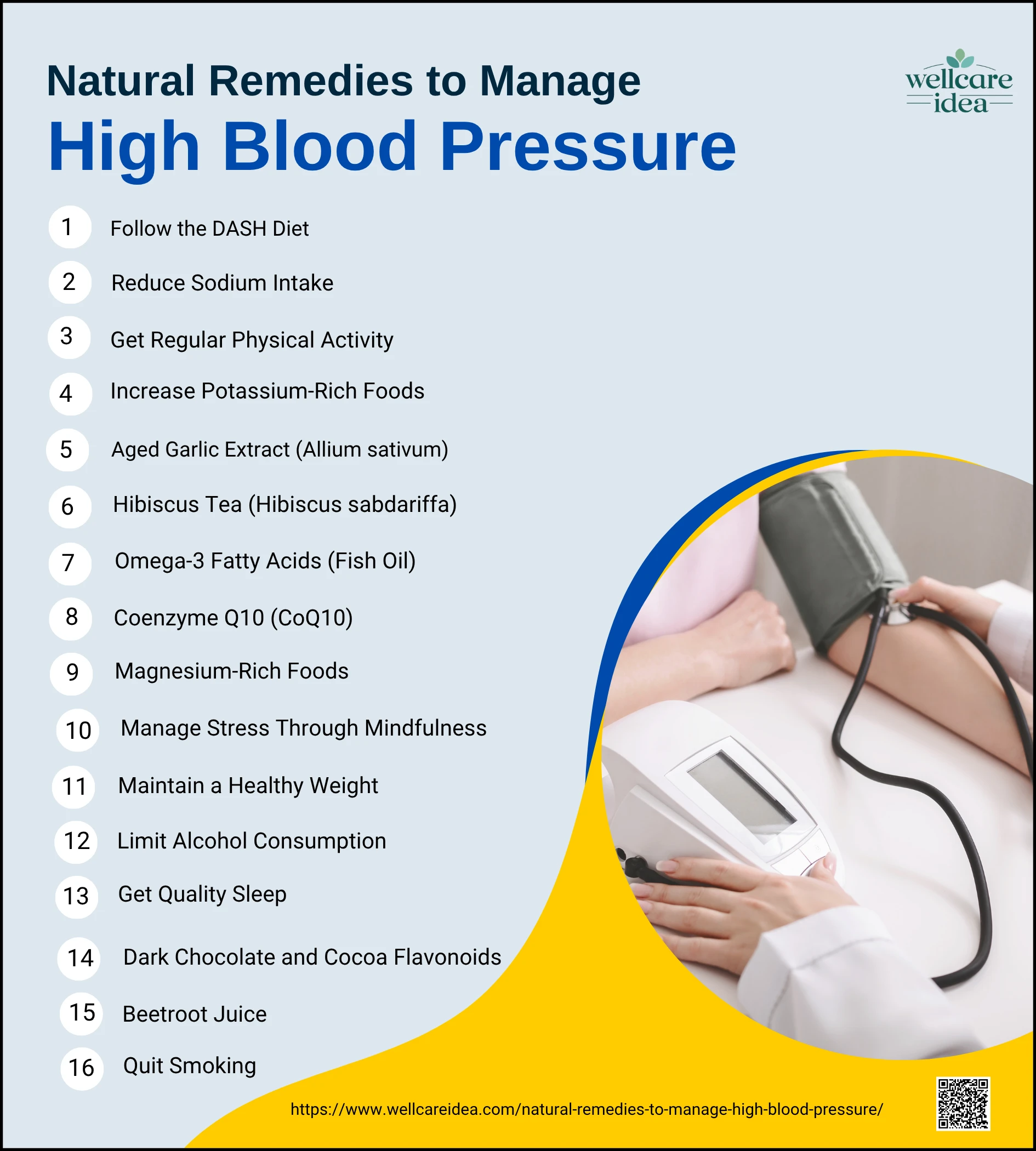 Natural Remedies to manage High Blood Pressure
While these approaches are not a substitute for medical treatment, research shows they can meaningfully lower your blood pressure — in some cases, by as much as a first-line medication. Always talk to your doctor before making significant changes.
1. Follow the DASH Diet
The Dietary Approaches to Stop Hypertension (DASH) diet is one of the most thoroughly researched dietary strategies for lowering blood pressure. It emphasizes fruits, vegetables, whole grains, lean proteins, and low-fat dairy products while reducing sodium, saturated fat, and added sugars 9 Published originally in the New England Journal of Medicine in 1997 10, the original DASH trial found significant blood pressure reductions in adults with borderline hypertension. According to the NCBI StatPearls review 9 , the 2025 AHA/ACC guidelines endorse the DASH eating plan, with clinical evidence showing average systolic blood pressure reductions of 1 to 13 mm Hg and diastolic reductions of 1 to 10 mm Hg. Harvard Health reports that a low-sodium DASH diet was as effective as a first-line blood pressure medication 11
2. Reduce Sodium Intake
Cutting back on salt is one of the simplest and most effective changes you can make. The American Heart Association recommends no more than 1,500 mg of sodium per day 12 for people with high blood pressure, while the general guideline is under 2,300 mg. Reducing dietary sodium helps decrease extracellular fluid volume and vascular resistance, which directly lowers blood pressure 9
3. Get Regular Physical Activity
The American Heart Association recommends at least 150 minutes per week of moderate-intensity aerobic activity 9 — such as brisk walking, cycling, or swimming — to help control blood pressure. The Mayo Clinic explains that regular exercise strengthens the heart so it can pump blood with less effort, reducing the force on your blood vessels 13 Research published in the AHA journal Hypertension 14 confirms that for people with mildly elevated blood pressure, physical activity is a recommended first-line treatment. Even a daily 20-minute walk can make a measurable difference.
4. Increase Potassium-Rich Foods
Potassium helps your body excrete excess sodium and relaxes blood vessel walls. Foods high in potassium include bananas, sweet potatoes, spinach, avocados, beans, and salmon. The Cleveland Clinic recommends focusing on potassium-rich whole foods for blood pressure reduction, noting that these foods aid in relaxing blood vessel walls and helping your body remove excessive sodium 15 Always consult your doctor before significantly increasing potassium, especially if you take blood pressure medication or have kidney problems.
5. Aged Garlic Extract (Allium sativum)
Garlic is perhaps the most extensively studied herbal remedy for blood pressure. A meta-analysis published in PMC 16 of 17 randomized controlled trials found that garlic intake caused an average systolic reduction of 3.75 mm Hg and a diastolic reduction of 3.39 mm Hg, with greater effects observed in hypertensive patients. A review in PMC on the potential of garlic 17 found that garlic supplements have demonstrated blood pressure reductions of about 10 mm Hg systolic and 8 mm Hg diastolic in people with uncontrolled hypertension, comparable to standard blood pressure medications. An updated meta-analysis confirms that garlic supplements, particularly aged garlic extract containing S-allylcysteine, also improve arterial stiffness and gut microbiota in hypertensive individuals 18
6. Hibiscus Tea (Hibiscus sabdariffa)
Drinking hibiscus tea (sour tea) has shown promising blood pressure-lowering effects. A randomized clinical trial published in PubMed found that three servings per day of brewed hibiscus tea for six weeks lowered systolic blood pressure by 7.2 mm Hg in pre-hypertensive and mildly hypertensive adults 19 A systematic review and meta-analysis published in PubMed found that hibiscus produced systolic blood pressure reductions of about 7.10 mm Hg compared to placebo {20 A clinical trial reviewed in PMC found that consuming sour tea twice daily for one month effectively lowered blood pressure in patients with stage 1 hypertension 21 A PMC review of nutraceuticals noted that two to four cups daily for four to eight weeks is associated with significant blood pressure reductions 22
7. Omega-3 Fatty Acids (Fish Oil)
The omega-3 fatty acids EPA and DHA, found abundantly in fatty fish like salmon, mackerel, and sardines, support heart health. A PMC review classifies fish oil among the supplements with “some evidence of benefit” for treating hypertension, noting documented blood pressure reductions in peer-reviewed trials 23 Fish oil works through multiple mechanisms including enhancing nitric oxide production, reducing inflammation, and suppressing the renin-angiotensin-aldosterone system 22
8. Coenzyme Q10 (CoQ10)
CoQ10 is a naturally occurring antioxidant that supports cellular energy production, particularly in the heart. The Mayo Clinic reports that although findings are mixed, CoQ10 might help lower blood pressure 24 The Cleveland Clinic confirms that CoQ10 can lower blood pressure and notes it may be helpful if you have a CoQ10 deficiency 25 A PMC review lists CoQ10 among five supplements — alongside fish oil, garlic, vitamin C, and L-arginine — with some evidence of benefit in treating hypertension 23
9. Magnesium-Rich Foods
Magnesium acts as a natural calcium channel blocker, promoting vasodilation and improving endothelial function 9 Good dietary sources include whole grains, leafy greens, nuts, and seeds. While clinical evidence for magnesium supplements alone has been less conclusive, maintaining adequate magnesium intake through your diet is considered important for cardiovascular health.
10. Manage Stress Through Mindfulness and Deep Breathing
Chronic stress keeps your body in a constant fight-or-flight mode, leading to a faster heart rate and constricted blood vessels. The American Heart Association recommends managing stress as part of blood pressure control 12 Practices like meditation and deep breathing activate the parasympathetic nervous system, which helps slow your heart rate and lower blood pressure. The Cleveland Clinic emphasizes that living with high levels of stress takes a toll on both physical and mental health, and makes it harder to maintain the healthy habits that keep blood pressure in check 8
11. Maintain a Healthy Weight
Losing even a modest amount of weight can meaningfully lower your blood pressure. The Mayo Clinic lists weight management as one of the most effective lifestyle changes for controlling hypertension 3 As your weight increases, your blood pressure often rises along with it, and carrying excess weight can also disrupt your breathing during sleep (sleep apnea), which further raises blood pressure.
12. Limit Alcohol Consumption
While small amounts of alcohol may have modest heart benefits, drinking too much can raise your blood pressure significantly. The WHO identifies excessive alcohol consumption as a key modifiable risk factor for hypertension 1 The general recommendation is to limit yourself to no more than one drink per day for women and two for men.
13. Get Quality Sleep
Sleep is a critical but often overlooked factor. The Cleveland Clinic recommends six to eight hours of uninterrupted sleep per night to help prevent high blood pressure 8 Poor sleep quality or sleep disorders like sleep apnea can contribute to sustained elevated blood pressure.
14. Dark Chocolate and Cocoa Flavonoids
Cocoa flavonoids found in dark, minimally processed chocolate may support blood vessel function. A PMC review of nutraceuticals with blood-pressure-lowering effects includes cocoa flavonoids among agents with supporting evidence 22 The key is choosing high-cocoa dark chocolate (70% or higher) in moderate amounts — not sugary milk chocolate.
15. Beetroot Juice
Beetroot is rich in dietary nitrates, which your body converts to nitric oxide — a molecule that relaxes and dilates blood vessels. The PMC nutraceutical review lists beetroot juice among the supplements with a relatively large body of evidence supporting blood pressure-lowering effects 22
16. Quit Smoking
Smoking harms the lining of your blood vessels and accelerates arterial damage. The Cleveland Clinic notes that while there is less direct evidence of smoking cessation immediately lowering blood pressure numbers, quitting will do wonders for your overall cardiovascular health and reduce your risk of complications 8
Other Herbs and Natural Supplements Under Investigation
Several other natural substances have been studied for potential blood pressure benefits, though the evidence for many is still preliminary:
1. L-Arginine: This amino acid is a precursor to nitric oxide and is listed among supplements with some evidence of benefit in a PMC review 23.
2. Vitamin C: Also included among the five supplements showing some evidence for blood pressure reduction in the same PMC review 23.
3. Berberine: Some studies suggest it could help lower blood pressure, though more research is needed.
4. Controlled-Release Melatonin: Included in the PMC nutraceutical review as having supporting evidence for blood pressure lowering 22.
5. Green Tea: Contains polyphenols and antioxidants that may modestly contribute to blood pressure management when consumed regularly.
6. Flaxseed: Rich in alpha-linolenic acid and fiber, flaxseed has shown modest blood pressure benefits in some clinical trials.
Important Precautions Before Using Natural Remedies
Before you start any home remedy, herbal supplement, or natural approach to manage your blood pressure, keep these essential precautions in mind:
Always consult your healthcare provider. Never start or stop any supplement or dramatically change your diet without talking to your doctor first, especially if you are currently taking blood pressure medications. For example, the Cleveland Clinic warns that CoQ10 can lower blood pressure and blood glucose, which could cause dangerous interactions with existing medications. Similarly, garlic supplements can interact with blood-thinning medications 25.
Do not replace prescribed medications with natural remedies. While lifestyle changes and supplements can be effective adjuncts to treatment, the American Heart Association makes clear that while there is no cure for high blood pressure, medications as prescribed and lifestyle changes together can enhance your quality of life and reduce your risk of serious complications 12 Never stop taking prescribed medication on your own.
Be cautious with potassium supplementation. If you have kidney disease or take certain medications (such as ACE inhibitors or potassium-sparing diuretics), increasing potassium could be harmful. Ask your doctor what level is safe for you.
Be skeptical of unverified online claims. A PMC review noted that 12 of 14 herbs listed online as effective remedies for high blood pressure have actually been shown to raise blood pressure in valid scientific studies. Always look for evidence from reputable sources like the NIH, Mayo Clinic, or AHA before trying a new remedy 23.
Watch for interactions with other medications. Herbal supplements like garlic, ginseng, and licorice can interact with blood pressure drugs, blood thinners, and diabetes medications. Let your healthcare provider know about every supplement you take.
Quality and dosage matter. Herbal supplements are not regulated with the same rigor as pharmaceutical drugs. The Cleveland Clinic advises that getting nutrients from whole foods is best, and you should think twice before relying solely on supplements for blood pressure management 15
Monitor your blood pressure regularly. Whether you are using natural remedies or medications, keep track of your numbers at home and share them with your doctor. This is the only way to know if your approach is working.
Pregnancy considerations. Many herbal supplements have not been tested for safety during pregnancy or breastfeeding. If you are pregnant, planning to become pregnant, or nursing, talk to your healthcare provider before using any supplements.
Final Thoughts
Managing high blood pressure is a lifelong commitment, but it does not have to be overwhelming. By combining proven lifestyle changes — such as following the DASH diet, staying physically active, maintaining a healthy weight, reducing sodium, and managing stress — with carefully selected, evidence-backed supplements like garlic extract, hibiscus tea, and omega-3 fatty acids, you can take meaningful steps toward protecting your heart and overall health.
The key is working closely with your healthcare team. No single home remedy is a magic bullet, but together, these strategies can make a real difference. As the WHO reminds us, lifestyle changes can help anyone with hypertension — and they are a vital complement to medical treatment. Your heart is counting on you 1.