
When you or a loved one are facing dengue fever, the sudden high temperatures, profound fatigue, and intense body aches can be incredibly overwhelming. Because there is no specific antiviral medication designed to cure the illness, the focus shifts entirely to symptom management, hydration, and supporting your body’s immune response. It is completely natural to look for ways to manage these symptoms at home. However, it is vital to approach natural remedies with a scientific lens, ensuring that what you consume is safe, evidence-based, and complementary to professional medical care.
This comprehensive guide explores the medical facts surrounding dengue and delves into the research-backed home remedies that can help you manage your recovery.
Section 1: What is Dengue?
Dengue is a mosquito-borne viral infection that causes a severe flu-like illness and, in some cases, can escalate into a potentially lethal complication known as severe dengue 1 The disease is caused by the dengue virus (DENV), which belongs to the Flaviviridae family 2 There are four distinct, but closely related, serotypes of the virus that cause dengue (DENV-1, DENV-2, DENV-3, and DENV-4) 3 Recovery from infection by one provides lifelong immunity against that particular serotype, but it provides only partial and transient protection against subsequent infections by the other three serotypes 4
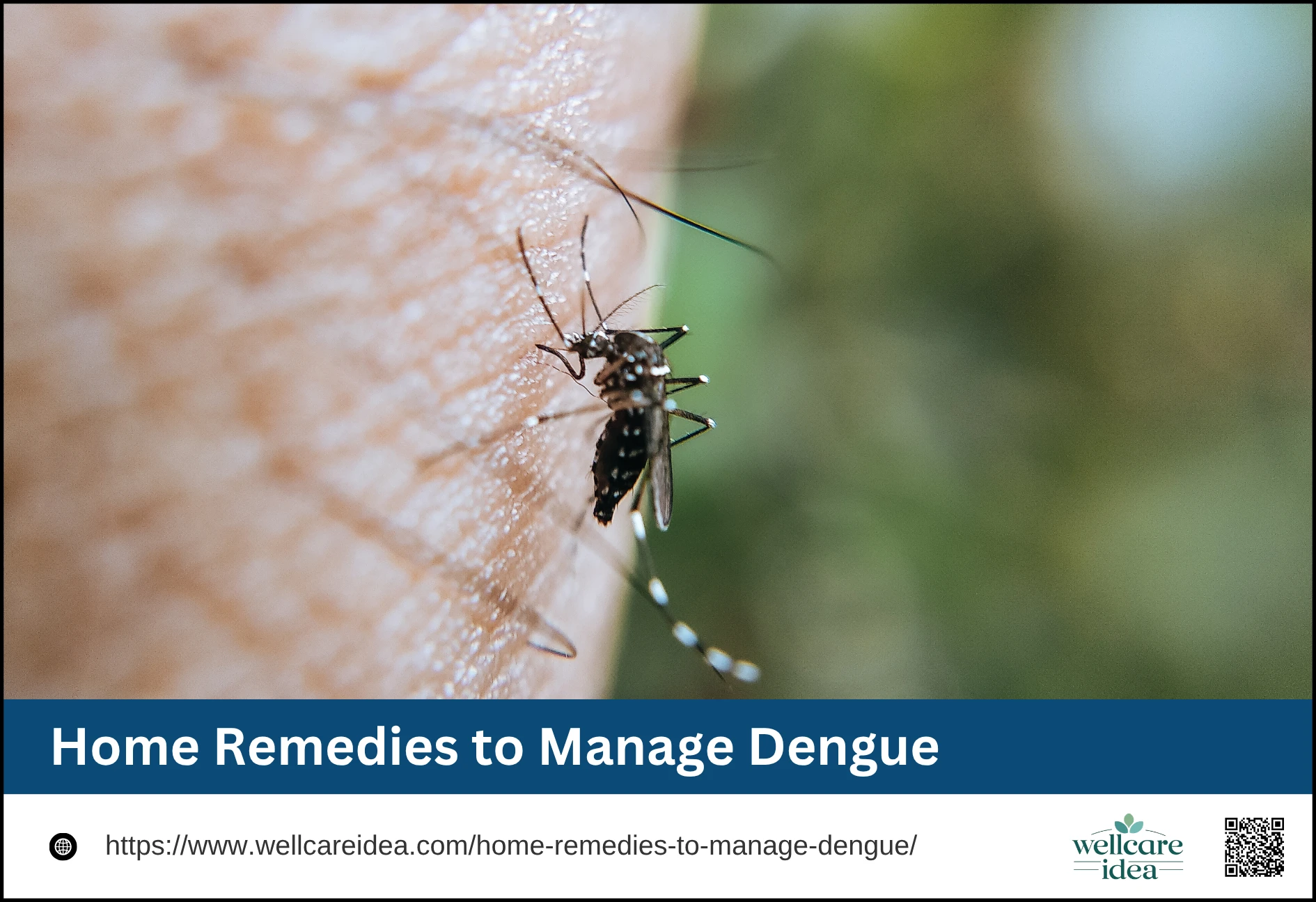
The virus is transmitted to humans primarily through the bites of infected female mosquitoes, primarily the Aedes aegypti mosquito, and to a lesser extent, Aedes albopictus 1 These mosquitoes are highly adapted to urban environments and typically bite during the daylight hours, with peak activity occurring in the early morning and late afternoon 5 When an infected mosquito bites you, the virus enters your bloodstream, binds to your white blood cells, and begins to replicate, eventually leading to the systemic inflammation and vascular leakage characteristic of the disease 6
While the majority of dengue cases are asymptomatic or present with mild symptoms, the virus can severely impact your blood’s ability to clot. It does this by directly suppressing your bone marrow’s ability to produce platelets and by triggering the destruction of existing platelets in your peripheral blood, a condition known as thrombocytopenia 3 Because platelets are essential for blood clotting, a significant drop can lead to the hemorrhagic (bleeding) complications associated with severe forms of the disease.
Section 2: Dengue Facts
Understanding the basic facts, symptoms, and clinical management of dengue is your first line of defense. The table below outlines the critical information you need to know.
| Feature | Medical Facts and Details |
| Symptoms | Symptoms typically begin 4 to 10 days after you are bitten and last for 2 to 7 days 1 Common signs include sudden high fever (often up to 104°F/40°C), severe frontal headache, pain behind the eyes (retro-orbital pain), severe joint and muscle pain (giving it the nickname “breakbone fever”), nausea, vomiting, swollen glands, and a widespread macular skin rash 7 |
| Causes | The disease is caused by one of four dengue virus serotypes: DENV-1, DENV-2, DENV-3, or DENV-4 8 It is not contagious directly from person to person; it requires the Aedes mosquito vector to transmit the virus from an infected individual to a healthy one 9 |
| Types | 1. Classic Dengue Fever: The standard, non-severe form characterized by fever and body aches.
2. Dengue Hemorrhagic Fever (DHF): A severe form marked by bleeding from the gums or nose, blood in vomit or stool, and a critical drop in blood platelets 10 3. Dengue Shock Syndrome (DSS): The most severe form, featuring massive fluid leakage from blood vessels leading to a dangerous drop in blood pressure, shock, and potentially death without immediate emergency care 11 |
| How it Spreads | The primary transmission cycle is human-to-mosquito-to-human. A mosquito becomes infected when it takes a blood meal from a person infected with the virus. After viral replication within the mosquito (extrinsic incubation period of 8-12 days), it can transmit the virus to a healthy person for the rest of its life 1 |
| Regions Found | Dengue is endemic in over 100 countries across tropical and subtropical climates worldwide. The highest risk zones include Southeast Asia, the Americas, the Western Pacific, Africa, and South Asia (including endemic urban and semi-urban hubs like Kathmandu, Nepal) |
| Higher Risk Factors | You are at a much higher risk for developing severe dengue if you have previously been infected with a different serotype of the virus. This phenomenon, called Antibody-Dependent Enhancement (ADE), occurs when existing antibodies from a past infection bind to the new virus serotype but fail to neutralize it, instead helping the virus enter immune cells more efficiently 3 |
| Diagnosis | Doctors diagnose dengue through a combination of clinical symptoms and blood tests. Early in the illness (first 1-5 days), a PCR test or an NS1 antigen test is used to detect the virus itself 12 Later in the illness, doctors use MAC-ELISA blood tests to detect IgM and IgG antibodies, which represent your immune system’s response to the virus 13 |
| Treatment | There is no specific antiviral medicine for dengue. Treatment consists of supportive care: immense fluid replacement (oral or intravenous) to prevent dehydration from plasma leakage, and pain control 1 You must use Acetaminophen (Paracetamol) for fever and pain 10 Never take NSAIDs like aspirin, ibuprofen, or naproxen, as these thin the blood and dramatically increase the risk of severe hemorrhage. |
| Prevention | Prevention relies entirely on mosquito control and bite prevention. Use EPA-registered insect repellents (containing DEET, Picaridin, or Oil of Lemon Eucalyptus), wear long-sleeved shirts and long pants, sleep under mosquito nets if air conditioning or window screens are unavailable, and meticulously remove any standing water around your home where mosquitoes breed 14 |
 Section 3: Evidence-Based Home Remedies for Dengue
While conventional medicine provides the necessary supportive care (like IV fluids and fever reducers), numerous traditional remedies have been scrutinized by modern science to determine their efficacy. When managing dengue at home, your primary goals are to stay hydrated, support your immune system, and help your body stabilize its plummeting platelet counts.
Below is a detailed list of natural remedies and herbs that are supported by peer-reviewed research and pharmacological studies.
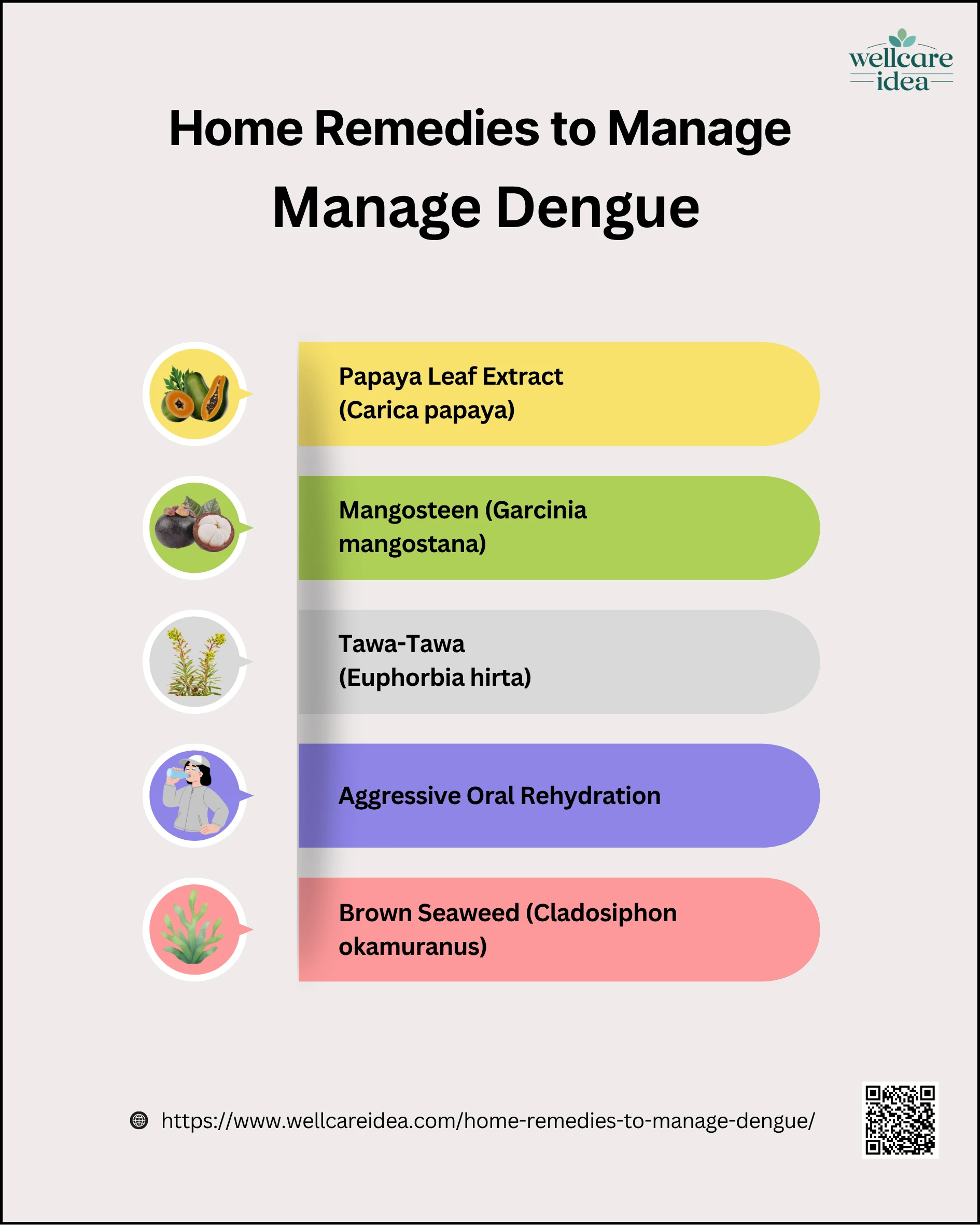
1. Papaya Leaf Extract (Carica papaya)
Papaya leaf extract is perhaps the most heavily researched and scientifically validated natural remedy for dengue fever. In many parts of Asia, the juice extracted from crushed papaya leaves is considered a standard complementary treatment for preventing severe thrombocytopenia (low platelets) 3
- The Science: Studies demonstrate that Carica papaya leaf juice significantly accelerates the rate of increase in platelet counts among patients with both classic dengue fever and dengue hemorrhagic fever 15 Research indicates that the extract works by upregulating the expression of the ALOX 12 and PTAFR genes, which are directly responsible for increased platelet production in the bone marrow 15 Furthermore, papaya leaves contain membrane-stabilizing properties that prevent blood cells from being easily destroyed by the virus 16
- How to Use: The traditional preparation involves taking fresh, healthy papaya leaves, washing them thoroughly, and crushing or grinding them without adding synthetic chemicals. Because the extract is incredibly bitter, a small amount of sugar or fruit juice can be added for palatability 17 Clinical studies often administer about 25 to 30 milliliters of the fresh juice twice daily for five consecutive days during the acute phase of the infection 17
2. Mangosteen (Garcinia mangostana)
The mangosteen is a tropical fruit highly prized for its antioxidant properties. Recent virology studies have begun isolating its specific phytochemicals to test against vector-borne viruses, and the results regarding dengue are highly promising.
- The Science: The pericarp (the thick, purple rind) of the mangosteen fruit is rich in a specific xanthone compound called α-mangostin. A breakthrough study found that α-mangostin serves a dual purpose: it acts as a potent antiviral and a powerful anti-inflammatory agent 18 Severe dengue is largely driven by a “cytokine storm”—a massive, uncontrolled inflammatory response by your immune system. Researchers discovered that α-mangostin suppresses this cytokine storm by inhibiting the NF-κB signaling pathway 18 Furthermore, it actively inhibits the viral replication step of the dengue life cycle by blocking the RNA-dependent RNA polymerase (RdRp) activity 18
- How to Use: While pharmaceutical isolation of α-mangostin is still in clinical development, consuming the fruit or drinking high-quality mangosteen rind teas and extracts can provide you with these beneficial xanthones naturally, supporting your body’s ability to limit viral replication.
3. Tawa-Tawa (Euphorbia hirta)
Euphorbia hirta, commonly known as Tawa-Tawa, is a hairy herb that grows in open grasslands and is widely used in the traditional folklore medicine of the Philippines to treat dengue.
- The Science: Systematic reviews of scientific evidence have validated its ethnopharmacological use. In both in vitro and in vivo models, the administration of E. hirta extract resulted in a significant increase in platelet counts and decreased bleeding and clotting times 16 The plant is rich in flavonoids like quercetin, which molecular docking studies show exhibits a very strong binding affinity with dengue virus proteases, essentially neutralizing the virus’s ability to infect host cells 16
- How to Use: Tawa-Tawa is typically prepared as a decoction. The fresh whole plant (leaves and stems) is boiled in water to make a medicinal tea, which is then consumed incrementally throughout the day to alleviate viral infection symptoms and stabilize platelets 16
4. Aggressive Oral Rehydration
While herbs and extracts target the virus and blood cells, the most lethal mechanism of dengue is vascular leakage—where fluid leaks out of your blood vessels into your tissues, causing your blood pressure to crash. Therefore, meticulous hydration is the most critical home remedy of all 1
- Oral Rehydration Salts (ORS): Plain water is insufficient because it lacks the electrolytes your body is rapidly losing. You must consume ORS solutions, which contain the precise balance of sodium, potassium, and glucose needed to maximize fluid absorption in the gut.
- Coconut Water: Young coconut water is an excellent natural alternative to synthetic ORS. It is naturally rich in essential electrolytes, particularly potassium, and is generally well-tolerated by patients experiencing the severe nausea typical of a dengue infection 19
5. Brown Seaweed (Cladosiphon okamuranus)
Marine environments also offer natural antivirals. Certain polysaccharides found in brown seaweed have shown direct activity against the dengue virus.
- The Science: Fucoidans are a group of sulfated polysaccharides derived mainly from brown seaweed. Research demonstrates that fucoidan extracted from Cladosiphon okamuranus effectively inhibits DENV-2 infection 8 In cellular assays, treating the virus with these marine compounds reduced its infectivity by 80%, indicating a strong potential for reducing the overall viral load in your body 8
Section 4: Precautions Before Use of Natural Remedies
While the research supporting the remedies above is robust, it is absolutely crucial to exercise caution and pragmatism when treating a disease as volatile as dengue. The transition from mild dengue fever to life-threatening dengue hemorrhagic fever can happen incredibly rapidly—often within a matter of hours as the fever begins to break.
1. Never Replace Medical Monitoring
Natural remedies like papaya leaf extract or mangosteen should be used as complementary therapies, not replacements for allopathic medical care. You cannot accurately gauge your platelet counts or your hematocrit levels (the volume percentage of red blood cells, which indicates plasma leakage) by how you feel 1 Daily, or even twice-daily, Complete Blood Count (CBC) tests at a clinic are non-negotiable for ensuring your safety 13
2. Beware of Drug Interactions and Liver Stress
The dengue virus places an immense strain on your liver; in fact, elevated liver enzymes are a hallmark clinical sign of the infection. Forcing your liver to process highly concentrated, unstandardized herbal decoctions can occasionally cause additional hepatotoxicity. Always inform your doctor about exactly what herbs or extracts you are taking at home, as they may interfere with standard care protocols.
3. Strict Avoidance of Blood Thinners
If you are integrating natural remedies, ensure none of them possess blood-thinning properties. As mentioned earlier, avoiding NSAIDs like aspirin and ibuprofen is a golden rule in dengue management 20 Certain natural supplements, such as high doses of garlic extract, ginkgo biloba, or willow bark, also inhibit platelet aggregation and must be strictly avoided during a dengue infection to prevent catastrophic internal bleeding.
4. Know the Warning Signs of Severe Dengue
Regardless of the home remedies you are employing, you must immediately abandon home care and rush to an emergency room if you experience any of the following warning signs. These typically manifest 24 to 48 hours after your fever has gone down:
1. Severe and continuous abdominal pain 21
2. Persistent vomiting (at least 3 times in 24 hours) 1
3. Bleeding from your gums, nose, or blood in your vomit/stool 9
4. Rapid breathing or extreme fatigue and restlessness 7
5. Pale, cold, or clammy skin (indicating shock) 10
Managing dengue is a delicate balance of patience, hydration, and vigilant observation. By utilizing evidence-based natural supports while maintaining strict medical oversight, you can give your body the tools it needs to navigate the viral storm and recover safely.