
What Is Mumps?
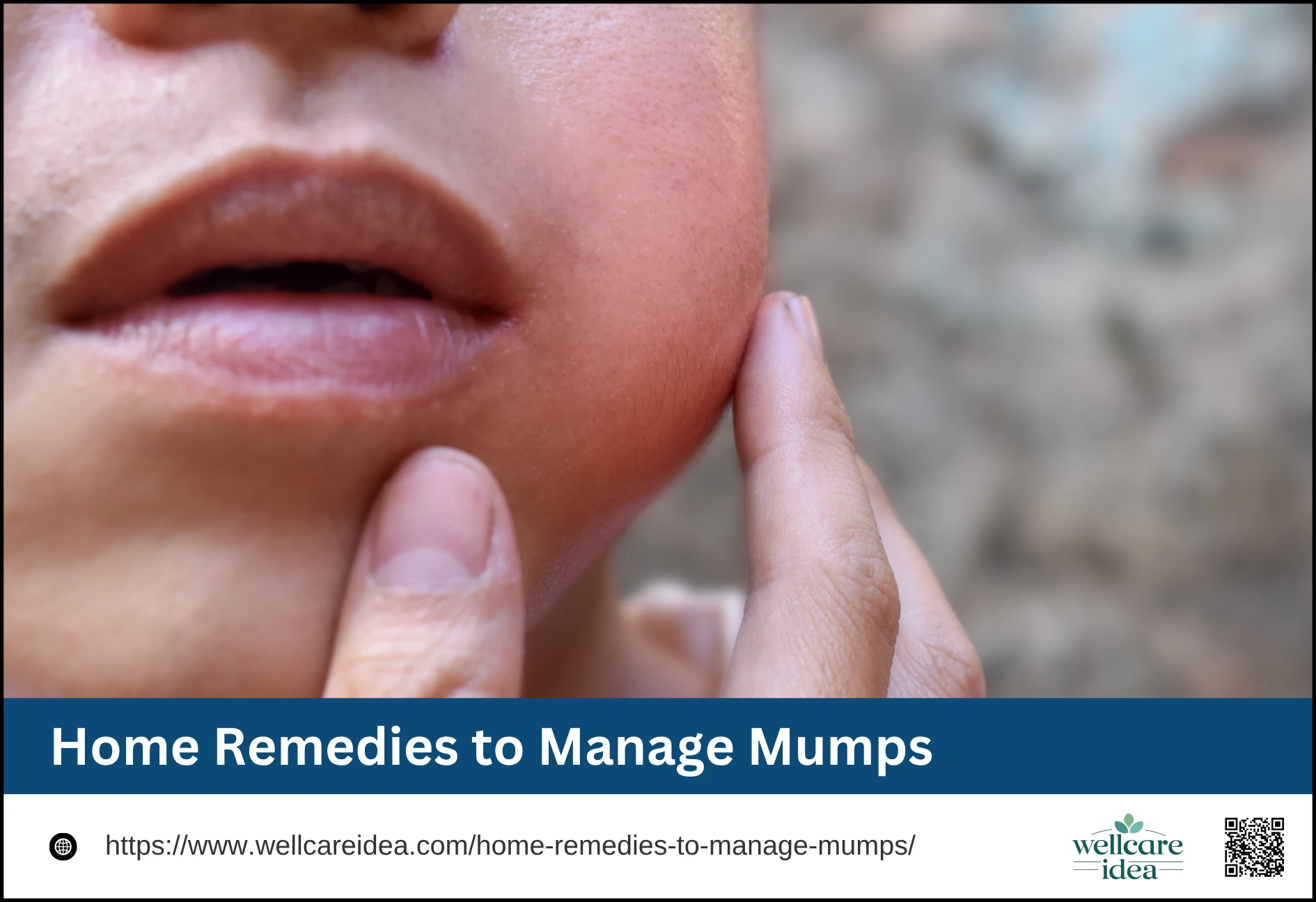
Mumps is a contagious viral illness caused by a paramyxovirus, a member of the Rubulavirus family. It primarily attacks the parotid salivary glands, which are located just below and in front of each ear, leading to the hallmark symptom of puffy, swollen cheeks and a tender, swollen jaw 1 The virus spreads through direct contact with saliva or respiratory droplets from an infected person’s mouth, nose, or throat 2
Before the introduction of the mumps vaccine in 1967, about 186,000 cases were reported in the United States each year, with many more going unreported. Following the routine two-dose MMR vaccination program, there has been a greater than 99% decrease in mumps cases (2 Despite this progress, outbreaks continue to occur worldwide, particularly in crowded settings such as college campuses, close-knit communities, and correctional facilities 3
The incubation period for mumps is typically 16 to 18 days after exposure, though it can range from 12 to 25 days 4 The disease is generally self-limiting, meaning your body clears the virus on its own, and most people make a full recovery 5 There is currently no specific antiviral medication for mumps; treatment focuses on relieving symptoms and managing discomfort 6
Globally, mumps remains an important childhood infectious disease. While the incidence has dropped sharply in countries with strong vaccination programs, a resurgence has been noted in recent years even in developed nations, driven by waning vaccine immunity and outbreaks in congregate settings 7 The WHO tracks mumps cases worldwide through its Joint Reporting Form on Immunization 8
Mumps Facts at a Glance
| Category | Details |
| Symptoms | Swollen, tender parotid glands (puffy cheeks); fever; headache; muscle aches; fatigue; loss of appetite. Some people have very mild or no symptoms {https://www.cdc.gov/mumps/signs-symptoms/index.html ; https://www.mayoclinic.org/diseases-conditions/mumps/symptoms-causes/syc-20375361} |
| Causes | Infection with the mumps virus, a paramyxovirus of the Rubulavirus family {https://www.ncbi.nlm.nih.gov/books/NBK534785/ ; https://my.clevelandclinic.org/health/diseases/15007-mumps} |
| Types/Genotypes | 12 recognized genotypes (A to N, excluding E and M). Genotype G is considered a global genotype; C, D, H, J are common in the western hemisphere; F, G, I are common in Asia. Only one serotype exists 7 |
| How Does It Spread | Through respiratory droplets (coughs, sneezes) and direct contact with saliva from an infected person. Infectious from 2 days before to 5 days after swelling onset{https://www.cdc.gov/mumps/about/index.html ; https://www.hopkinsmedicine.org/health/conditions-and-diseases/mumps-in-adults} |
| Regions Where Found | Worldwide. The Western Pacific, Africa, Americas, Europe, and South-East Asia all report cases. Higher rates persist in countries without routine vaccination. Outbreaks are resurging in vaccinated populations due to waning immunity{https://immunizationdata.who.int/global/wiise-detail-page/mumps-reported-cases-and-incidence ; https://www.ecdc.europa.eu/sites/default/files/documents/mumps-annual-epidemiological-report-for-2022.pdf} |
| Higher Risk If You… | Are unvaccinated or under-vaccinated; live or work in crowded settings (dorms, barracks, correctional facilities); travel to areas where mumps is common; have a weakened immune system; are a healthcare worker exposed to infected patients {https://www.cdc.gov/mumps/hcp/clinical-overview/index.html ; https://my.clevelandclinic.org/health/diseases/15007-mumps} |
| How Doctors Diagnose | Clinical evaluation of symptoms (parotid swelling + history of exposure); RT-PCR testing from buccal swabs; serum IgM antibody testing; viral culture. Buccal specimens should ideally be collected within 3 days of swelling onset {https://www.cdc.gov/mumps/communication-resources/mumps-clinical-diagnosis.html ; https://www.ncbi.nlm.nih.gov/books/NBK534785/} |
| Treatment & Medications | No specific antiviral medication exists. Treatment is supportive: rest, hydration, OTC pain relievers (ibuprofen, acetaminophen), warm or cold compresses for swelling. Do NOT give aspirin to children. Isolate for 5 days after swelling begins {https://www.mayoclinic.org/diseases-conditions/mumps/diagnosis-treatment/drc-20375366 ; https://www.cdc.gov/mumps/about/index.html} |
| Possible Complications | Orchitis (testicular swelling) in post-pubertal males; oophoritis; mastitis; meningitis; encephalitis; pancreatitis; hearing loss (sometimes permanent). Complications are more common in adults {https://www.hopkinsmedicine.org/health/conditions-and-diseases/mumps-in-adults ; https://www.cdc.gov/mumps/hcp/clinical-signs/index.html} |
| Prevention | MMR vaccine (2 doses: first at 12–15 months, second at 4–6 years). Two doses are about 86% effective. Good hand hygiene, covering coughs/sneezes, avoiding close contact with infected individuals {https://www.cdc.gov/mumps/hcp/clinical-overview/index.html ; https://www.mayoclinic.org/diseases-conditions/mumps/symptoms-causes/syc-20375361} |
 Evidence-Based Home Remedies for Mumps
Since there is no antiviral cure for mumps, your primary goal during infection is to manage symptoms and support your body’s natural healing process. The following home remedies are backed by scientific research on their anti-inflammatory, immune-supporting, or antiviral properties. While none of these remedies have been specifically studied as treatments for mumps in large clinical trials, their evidence-based mechanisms may help you find comfort during recovery.
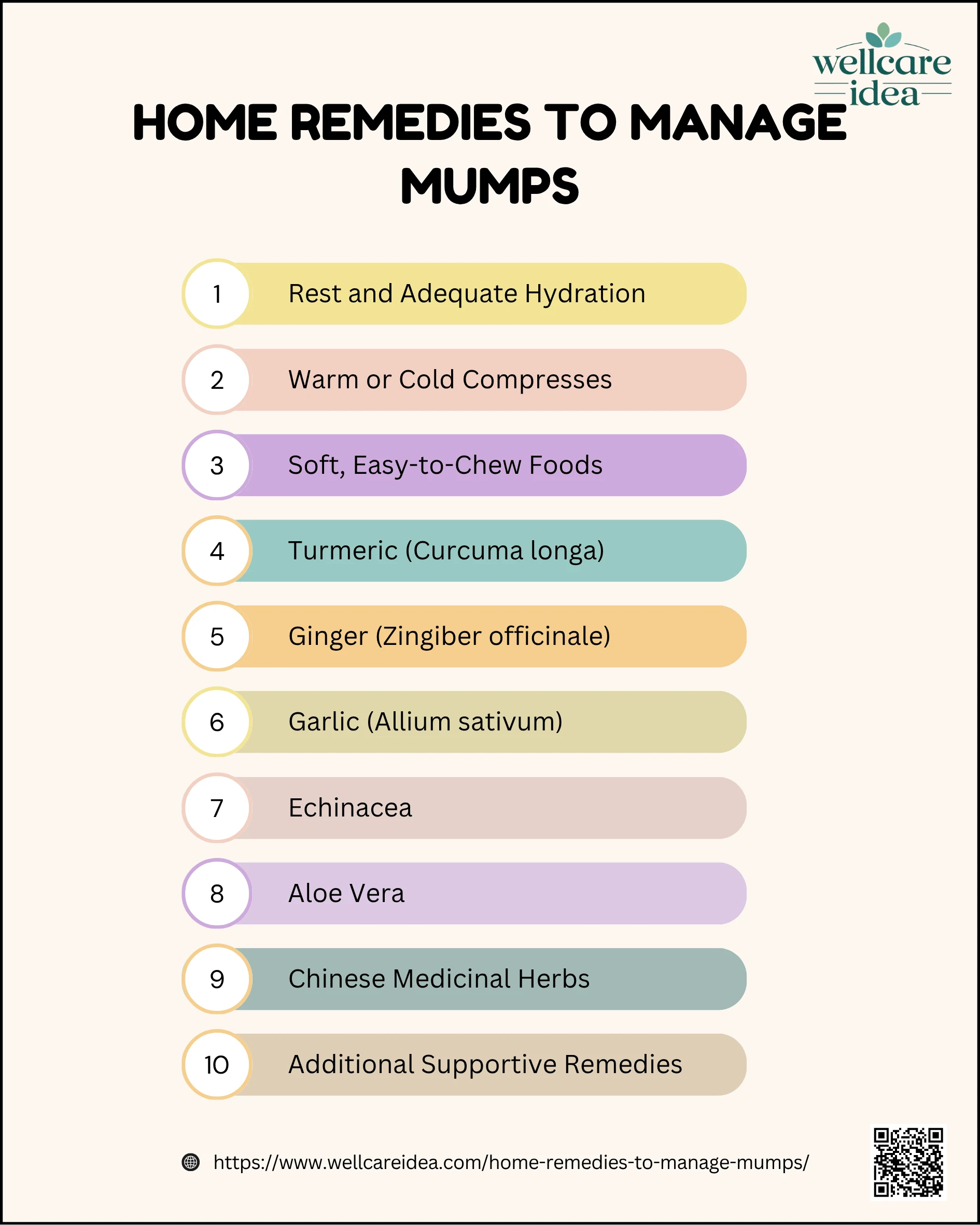
1. Rest and Adequate Hydration
Rest is one of the most important things you can do when you have mumps. Your immune system works harder during sleep and recovery, so getting plenty of rest helps your body fight the virus more effectively. The CDC recommends that you stay home for at least five days after swelling begins and avoid contact with others to prevent spreading the infection 3
Staying well-hydrated is equally crucial. Drink plenty of water, broths, and non-acidic fluids throughout the day. Avoid sour or acidic beverages such as citrus juices, as these can stimulate the salivary glands and worsen pain. The Mayo Clinic advises drinking plenty of fluids as part of the standard home care for mumps 6
2. Warm or Cold Compresses
Applying a warm or cold cloth to the swollen salivary glands is one of the most widely recommended home care measures for mumps. The Mayo Clinic specifically lists warm or cold compresses as a helpful step for relieving parotid gland discomfort 6 Similarly, the NCBI StatPearls review on mumps notes that analgesic medications along with cold or warm compresses for parotid swelling are beneficial for symptom relief 5 You can wrap an ice pack or a bag of frozen peas in a towel and apply it for 15 to 20 minutes at a time, several times a day, to reduce pain and inflammation.
3. Soft, Easy-to-Chew Foods
Because swollen parotid glands make chewing painful, switching to a soft diet can significantly reduce your discomfort. Opt for foods like soups, mashed potatoes, yogurt, smoothies, oatmeal, and scrambled eggs. Avoid tart, sour, or spicy foods that can stimulate your salivary glands and intensify the pain. A light, soft diet is commonly recommended during mumps recovery to minimize jaw strain {https://my.clevelandclinic.org/health/diseases/15007-mumps ; https://www.mayoclinic.org/diseases-conditions/mumps/symptoms-causes/syc-20375361}
4. Turmeric (Curcuma longa)
Turmeric has been used in traditional medicine for nearly 4,000 years and has gained significant scientific attention for its anti-inflammatory, antiviral, and antioxidant properties. The active compound in turmeric, curcumin, has been extensively studied and shown to reduce inflammatory markers such as C-reactive protein (CRP) and interleukin-6 9 Research published in PMC has also demonstrated that curcumin possesses broad-spectrum antiviral properties, inhibiting the replication of several types of viruses including dengue, hepatitis B, and Zika virus 10
A triple-blind randomized controlled trial published in Nature’s Scientific Reports found that turmeric supplementation significantly reduced CRP and ESR levels in viral infection patients compared to placebo 11 You can consume turmeric by adding it to warm milk (“golden milk”), mixing it into soups, or taking it as a supplement. You may also apply a turmeric paste topically over the swollen area for local soothing relief.
5. Ginger (Zingiber officinale)
Ginger belongs to the same plant family as turmeric and has been widely studied for its anti-inflammatory, antiviral, and immunomodulatory effects. Research shows that ginger contains phenolic compounds such as gingerol and shogaol, which have documented anti-inflammatory properties including the ability to suppress the activation of pro-inflammatory immune cells 12 Ginger also has anti-influenza factors and may stimulate mucosal interferon β secretion, potentially helping to alleviate fever and cough associated with viral infections 13
You can drink ginger tea by simmering fresh ginger slices in hot water, which may help soothe throat discomfort and promote digestion during illness. Research published in PMC also found that a combination of ginger and turmeric at certain ratios showed synergistic anti-inflammatory effects that were greater than either ingredient alone 14
6. Garlic (Allium sativum)
Garlic has been used since ancient times for its medicinal properties, particularly its antimicrobial effects. The key bioactive compound in garlic, allicin, is produced when raw garlic is crushed or chopped. A systematic review published in PMC confirmed that garlic and its organosulfur compounds demonstrate antiviral activity against multiple virus families, including both DNA and RNA viruses 15 Additionally, allicin has been shown to possess broad-spectrum antimicrobial activity including antibacterial, antifungal, antiparasitic, and antiviral effects 16
During mumps recovery, you can incorporate raw or lightly cooked garlic into your meals. Some traditional practices involve applying a diluted garlic paste externally on the swollen area; however, be cautious with topical garlic application as concentrated garlic can cause skin irritation or burns 17
7. Echinacea
Echinacea is among the most widely used herbal medicines for supporting the immune system during infections. Research demonstrates that Echinacea species have broad immunomodulatory properties, enhancing the activity of macrophages, natural killer cells, and T-cells while stimulating cytokine production 18 Studies also show that extracts of Echinacea purpurea possess antiviral activity against several membrane-containing viruses, including influenza, herpes simplex, and respiratory syncytial virus 19
While Echinacea has not been specifically tested against the mumps virus, its demonstrated ability to modulate both innate and adaptive immune responses may support your body’s defense during infection. You can take Echinacea as a tea, liquid extract, or capsule. However, the NIH notes that while short-term use appears to be safe, the effects of long-term use are unclear 20 People with autoimmune conditions or allergies to plants in the daisy family should avoid Echinacea.
8. Aloe Vera
Aloe vera has long been valued for its anti-inflammatory, antimicrobial, antiviral, and wound-healing properties. A systematic review of clinical trials confirmed the effectiveness of aloe vera in reducing inflammation and promoting tissue repair 21 The gel contains mannose-6-phosphate, which has been identified as a key growth substance with anti-inflammatory activity 21
For mumps, applying pure aloe vera gel directly over the swollen glands may provide a cooling and soothing sensation and help reduce localized inflammation. A pharmacological review further confirmed that aloe vera exhibits broad biological activities including anti-inflammatory and antiviral effects through its active compounds such as aloe-emodin, aloin, and acemannan 22 Oral aloe vera gel has also been shown to stimulate cell-mediated immunity and antibody production in animal models 22
9. Chinese Medicinal Herbs
Traditional Chinese medicine has a long history of treating mumps using herbal preparations. A Cochrane systematic review examined the use of Chinese medicinal herbs for mumps and noted that Chinese physicians have traditionally used over 100 varieties of herbal preparations to manage the condition, though high-quality randomized controlled trials are still needed to confirm their effectiveness 23 Some commonly referenced herbs include curcuma oil and Shuanghuanglian preparations. If you are interested in exploring traditional Chinese herbal remedies, you should do so only under the guidance of a qualified practitioner.
10. Additional Supportive Remedies
1. Salt Water Gargle: If you experience throat discomfort along with mumps, gargling with warm salt water can provide temporary relief by soothing irritated tissues and reducing mild inflammation.
2. Chamomile Tea: Chamomile (Matricaria chamomilla) has gentle anti-inflammatory and calming properties that may help ease general discomfort and promote restful sleep during your recovery.
3. Over-the-Counter Pain Relievers: While not strictly a “home remedy,” ibuprofen and acetaminophen are commonly recommended by medical professionals to reduce fever and alleviate pain associated with mumps. Never give aspirin to children or teenagers with viral infections due to the risk of Reye’s syndrome 6
When to See a Doctor
While mumps is usually mild and resolves within one to two weeks, you should seek medical attention immediately if you or your child experiences any of the following: a fever of 103°F (39°C) or higher, difficulty eating or drinking, confusion or disorientation, severe abdominal pain, or pain and swelling of the testicles 24 These symptoms may indicate a serious complication such as meningitis, encephalitis, orchitis, or pancreatitis, which require prompt medical evaluation {https://www.hopkinsmedicine.org/health/conditions-and-diseases/mumps-in-adults ; https://www.cdc.gov/mumps/hcp/clinical-signs/index.html}
Precautions Before Using Natural Remedies
While the remedies discussed above are generally considered safe for most people when used appropriately, it is important to exercise caution. Here are essential precautions you should follow:
1. Consult Your Doctor First: Always talk to your healthcare provider before using any herbal supplement or natural remedy, especially if you are pregnant, breastfeeding, taking prescription medications, or managing a chronic health condition. Herbal products can interact with medications and alter their effectiveness.
2. Children Require Special Care: Many herbal remedies are not well-studied in children. Do not give herbal supplements to children without medical guidance. The Cleveland Clinic notes that mumps is most common in children aged 2 to 12 who have not been vaccinated 25 so proper pediatric care is essential.
3. Avoid Unproven Topical Treatments: Some traditional practices involve applying ink, ointments, or untested plant leaves directly to swollen areas. Medical professionals caution against these methods because they can cause skin burns, irritate sensitive areas, and introduce secondary bacterial infections that may worsen the condition
4. Be Aware of Allergic Reactions: Herbs such as Echinacea belong to the daisy (Asteraceae) family and may cause allergic reactions in people with known sensitivities to plants in this group. Turmeric supplements in high doses may have blood-thinning effects and should be avoided before surgery 9
Do Not Rely on Remedies Alone: Home remedies should complement, not replace, standard medical care. Mumps can cause serious complications including permanent deafness, meningitis, and inflammation of the testicles or ovaries. If your symptoms worsen or new symptoms develop, seek medical attention immediately.
Quality and Dosage Matter: If you choose to use herbal supplements, purchase them from reputable sources. The potency of herbal products can vary significantly between brands and batches. A Cochrane review on Chinese medicinal herbs for mumps noted that while no adverse events were reported in reviewed studies, high-quality trials are needed to establish definitive safety and effectiveness {https://pmc.ncbi.nlm.nih.gov/articles/PMC7198052/
Vaccination Remains the Best Protection: The MMR vaccine is the most effective way to prevent mumps. The CDC states that two doses of MMR vaccine are about 86% effective at preventing the disease 2 If you or your family members are not up to date on vaccinations, talk to your doctor about getting vaccinated.