
What Is Diphtheria?
Diphtheria is a serious and potentially life-threatening bacterial infection caused by the bacterium Corynebacterium diphtheriae. It primarily affects the mucous membranes of your nose and throat, and in some cases, the skin 1 The bacteria produce a dangerous toxin that kills healthy tissue in your respiratory system, forming a thick, gray coating called a pseudomembrane across the back of your throat. This membrane can make it extremely difficult for you to breathe and swallow 2 Symptoms typically appear two to five days after exposure and may include sore throat, mild fever, difficulty swallowing, and swollen glands in your neck 3 Although now rare in countries with high vaccination rates, diphtheria remains endemic in many developing regions around the world 4 Even with treatment, the fatality rate ranges from 5% to 10%, and it is higher in young children under five and adults over forty 5
Diphtheria Facts at a Glance
The table below provides a quick-reference summary of essential facts about diphtheria, drawn from major health organizations.
| Symptoms | Sore throat, mild fever, difficulty swallowing, swollen lymph nodes, thick gray pseudomembrane in the throat, nasal discharge, hoarseness, rapid breathing, malaise, and general weakness. Skin diphtheria may show ulcers with gray covering. |
| Causes | Infection by the toxin-producing bacterium Corynebacterium diphtheriae. The toxin damages tissues in the nose, throat, and sometimes skin. |
| Types | Respiratory diphtheria (nose and throat) and cutaneous diphtheria (skin). Respiratory diphtheria is more severe and can be fatal. |
| How It Spreads | Person-to-person through respiratory droplets from coughing or sneezing. Also spread by touching infected skin sores or contaminated objects. |
| Endemic Regions | South-East Asia (India, Nepal, Indonesia), Sub-Saharan Africa, Haiti, Eastern Europe, the Middle East, and tropical regions. Outbreaks have occurred in Bangladesh, Yemen, Venezuela, and Myanmar. |
| Higher Risk If You… | Are unvaccinated or under-vaccinated; live in crowded conditions; travel to endemic regions; have a weakened immune system; have not received a booster shot in the past 10 years. |
| Diagnosis | Doctors examine symptoms and swab the back of the throat or skin sore. The sample is tested in a lab to identify toxin-producing C. diphtheriae bacteria. Treatment may begin before results return. |
| Treatment | Diphtheria antitoxin (DAT) to neutralize the toxin, plus antibiotics (penicillin or erythromycin) to kill the bacteria. Hospitalization and isolation are standard. |
| Prevention | Vaccination with DTaP (children) or Tdap (adolescents and adults) is the most effective prevention. Booster doses every 10 years are recommended. Proper hygiene and avoiding contact with infected individuals also help. |
| Incubation Period | Usually 2 to 5 days after exposure, with a range of 1 to 10 days. |
| Fatality Rate | 5–10% with treatment; up to 50% without treatment. Higher mortality in children under 5 and adults over 40. |
Sources: 2 , 1 , 3 , 4 , 6 , 7
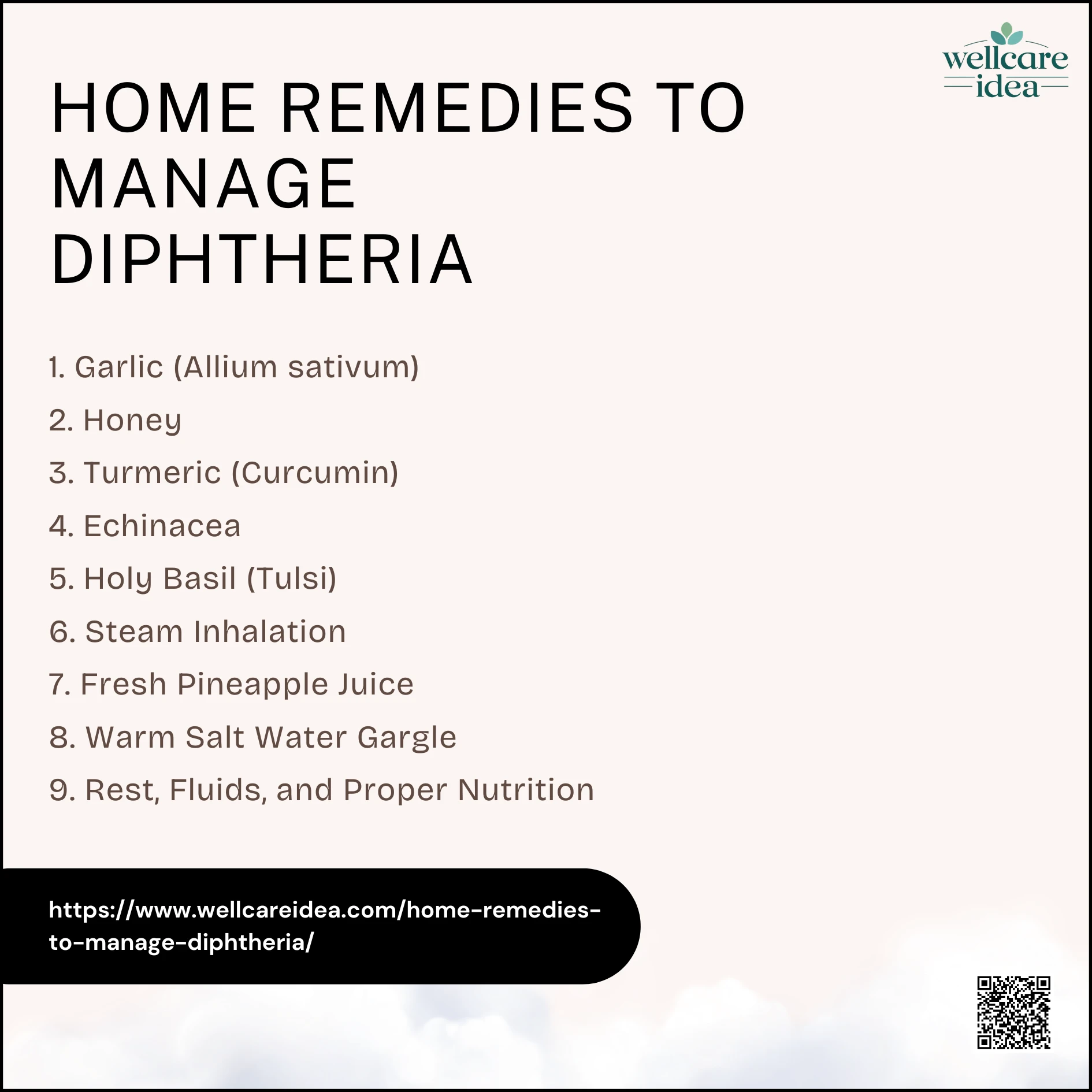 Evidence-Based Home Remedies for Diphtheria
Important: Diphtheria is a medical emergency that requires professional treatment with antitoxin and antibiotics 8 The following home remedies are intended only as supportive measures to help ease symptoms and strengthen your body during recovery, alongside your prescribed medical treatment. They are not substitutes for conventional medical care.
1. Garlic (Allium sativum)
Garlic is one of the most widely studied natural antimicrobial agents. Its key compound, allicin, has demonstrated activity against a broad range of both Gram-positive and Gram-negative bacteria 9 A comprehensive review published in Frontiers in Microbiology confirmed that garlic possesses antibacterial, antiviral, antifungal, and antiprotozoal properties 10 While no clinical trial has tested garlic specifically against C. diphtheriae, its broad-spectrum antimicrobial profile and traditional use in managing respiratory infections suggest it can serve as a helpful supportive remedy. You can chew a small clove of fresh garlic or add crushed garlic to warm water and consume it several times a day.
2. Honey
Honey has been used for centuries to soothe sore throats and support healing. A systematic review and meta-analysis published in BMJ Evidence-Based Medicine found that honey was superior to usual care for improving symptoms of upper respiratory tract infections, including cough frequency and severity 11 Research published in the National Institutes of Health confirms that honey has well-documented antibacterial properties due to its hydrogen peroxide content, high osmolarity, and low pH 12 Mixing one to two tablespoons of raw honey into warm water or herbal tea can help soothe your irritated throat and provide comfort during diphtheria recovery. Do not give honey to children under one year of age due to the risk of botulism.
3. Turmeric (Curcumin)
Turmeric’s active compound, curcumin, is one of the most thoroughly studied natural anti-inflammatory agents. Research published in the Journal of Clinical Immunology demonstrated that curcumin can modulate the activation of T cells, B cells, macrophages, neutrophils, and natural killer cells, making it a potent immunomodulatory agent 13 A meta-analysis of randomized controlled trials confirmed that turmeric supplementation significantly reduces levels of inflammatory markers including CRP, TNF-α, and IL-6 14 You can add half a teaspoon of turmeric powder to a glass of warm milk or water and drink it once or twice daily to help reduce throat inflammation during your recovery.
4. Echinacea
Echinacea is one of the most popular herbal immune stimulants. According to the National Center for Complementary and Integrative Health (NCCIH), research suggests that echinacea supplementation may slightly reduce the chances of catching a cold and decrease the duration and severity of respiratory tract infections 15 A meta-analysis of six clinical studies with 2,458 participants found that echinacea use was associated with a significantly reduced risk of recurrent respiratory infections and related complications including pharyngitis 16 Preclinical studies have also demonstrated that echinacea extracts enhance natural killer cell activity and macrophage function 17 You may take echinacea supplements or echinacea tea to help boost your immune response during recovery, but limit use to two weeks at a time unless advised by your healthcare provider.
5. Holy Basil (Tulsi)
Holy basil (Ocimum tenuiflorum), commonly known as tulsi, has long been valued in Ayurvedic medicine for its antibacterial, anti-inflammatory, and immunomodulatory properties. Published research supports its traditional use in managing respiratory ailments and infections. Drinking water infused with tulsi leaves at regular intervals can help soothe your respiratory system and support your body’s natural defenses during diphtheria recovery. You can prepare this by boiling a handful of fresh tulsi leaves in water, straining, and drinking the infusion warm.
6. Steam Inhalation
Steam inhalation with hot water infused with eucalyptus, chamomile, or peppermint oil is a time-tested approach for easing nasal congestion and soothing irritated airways. The warm moisture helps loosen mucus, reduce congestion, and provide temporary relief from the breathing difficulties associated with diphtheria. While this does not treat the underlying infection, it can help you feel more comfortable while you recover under medical care.
7. Fresh Pineapple Juice
Pineapple contains bromelain, a group of proteolytic enzymes with documented anti-inflammatory and mucolytic properties. These enzymes may help break down and remove the throat deposits associated with diphtheria. Pineapple juice is also rich in vitamin C, which supports immune function. Drinking fresh pineapple juice throughout the day can help soothe your throat and may aid in reducing the discomfort caused by the pseudomembrane.
8. Warm Salt Water Gargle
Gargling with warm salt water is a simple, widely recommended remedy for sore throat. It helps reduce swelling in the throat, loosens mucus, and can flush out irritants and bacteria from the surface of the throat. Dissolve half a teaspoon of salt in a glass of warm water and gargle several times a day for relief. While this does not address the deeper bacterial infection, it is a safe supportive practice during your treatment.
9. Rest, Fluids, and Proper Nutrition
Recovering from diphtheria requires extensive bed rest, especially if your heart has been affected by the toxin 1 You may need to consume your nutrition through liquids and soft foods for some time because of pain and difficulty swallowing. A diet rich in fresh fruits, vegetables, and whole grains provides essential vitamins and minerals that support immune function. Staying well-hydrated with water, broths, herbal teas, and fresh juices like orange juice is equally important to help your body fight the infection and recover more effectively.
When to Seek Emergency Medical Help
Diphtheria is not a condition you should attempt to manage solely at home. According to the CDC, prompt diagnosis and treatment are critical because of the high risk of severe complications and death 18 You should call emergency services or visit the emergency room immediately if you or someone in your household experiences any of the following:
1. A thick, gray membrane visible in the throat or tonsils
2. Severe difficulty breathing or swallowing
3. Rapid heartbeat or signs of heart distress
4. High fever with worsening throat pain and swelling
5. Signs of paralysis or extreme muscle weakness
Known exposure to someone diagnosed with diphtheria, especially if you are unvaccinated
The Cleveland Clinic notes that hospitalization and isolation are standard for diphtheria patients to prevent spreading the infection to others 3 Treatment typically includes diphtheria antitoxin and antibiotics, and patients generally become non-contagious about 48 hours after starting antibiotics 2
Precautions Before Using Natural Remedies
While the natural remedies described above are generally considered safe for most adults, you should keep the following precautions in mind before using them:
1. Never replace medical treatment: Diphtheria requires antitoxin and antibiotics. No herbal remedy or home treatment can neutralize the diphtheria toxin. Use natural remedies only alongside your prescribed treatment 8
2. Consult your doctor first: Always talk to your healthcare provider before starting any home remedy, especially if you are taking prescription medications. Some natural substances can interact with antibiotics or other drugs.
3. Watch for allergic reactions: Herbs like echinacea can trigger allergic reactions, particularly in people with allergies to plants in the daisy family 15 Start with a small amount of any new remedy and watch for reactions such as rash, itching, or breathing difficulties.
4. Do not give honey to infants: Honey should never be given to children under one year of age because of the risk of infant botulism.
5. Pregnancy and breastfeeding: Many herbal supplements, including echinacea and high-dose turmeric, have not been adequately studied in pregnant or breastfeeding women. Avoid these remedies unless explicitly approved by your obstetrician or midwife.
6. Limit duration of herbal use: Immune-stimulating herbs like echinacea should generally be used for periods of two weeks or less to avoid disrupting the balance of your immune system.
7. Quality of products: When purchasing herbal supplements, choose reputable brands that provide third-party testing and standardization. The potency and purity of herbal products can vary significantly between manufacturers.
8. Turmeric and blood thinners: Curcumin may have blood-thinning effects. If you are taking anticoagulant medications (such as warfarin), consult your physician before consuming turmeric supplements.
9. Keep isolation protocols: If you are diagnosed with diphtheria, strict isolation is necessary to prevent spread. Careful hand-washing by everyone in your household is essential 1
Conclusion
Diphtheria remains a serious and potentially fatal bacterial infection, even though vaccination has dramatically reduced its incidence worldwide. If you or anyone you know contracts diphtheria, immediate medical attention is non-negotiable. The antitoxin and antibiotic therapies prescribed by your doctor are the cornerstone of treatment. However, the evidence-based home remedies discussed in this article—including garlic, honey, turmeric, echinacea, tulsi, steam inhalation, pineapple juice, salt water gargles, and proper rest and nutrition—can serve as valuable complementary measures to support your comfort and recovery.
Always consult with your healthcare provider before incorporating any natural remedy into your recovery plan, and remember that the single most effective way to protect yourself and your family from diphtheria is through timely and complete vaccination 19
References
1. Mayo Clinic. Diphtheria – Symptoms & Causes.
2. CDC. About Diphtheria.
3. CDC. Diphtheria Symptoms and Complications.
4. CDC. Clinical Overview of Diphtheria.
5. CDC. Clinical Guidance for Diphtheria.
6. CDC Yellow Book. Diphtheria.
7. Cleveland Clinic. Diphtheria: Causes, Symptoms, Treatment & Prevention.
8. Medscape. Diphtheria: Background, Pathophysiology, Epidemiology.
9. Clarke KEN et al. (2019). Global Epidemiology of Diphtheria, 2000–2017.
10. Ankri S, Mirelman D. (1999). Antimicrobial properties of allicin from garlic.
11. Shang A et al. (2019). Antibacterial Properties of Organosulfur Compounds of Garlic.
12. Nakamoto M et al. (2020). Antimicrobial properties of hydrophobic compounds in garlic.
13. Abuelgasim H et al. (2021). Effectiveness of honey for symptomatic relief in URTIs.
14. Honey as a Natural Antimicrobial.
15. Jagetia GC, Aggarwal BB. (2007). “Spicing up” of the immune system by curcumin.
16. Dehzad MJ et al. (2023). Antioxidant and anti-inflammatory effects of curcumin supplementation.
17. -Wu N. (2003). Safety and anti-inflammatory activity of curcumin.
18. NCCIH. Echinacea: Usefulness and Safety.
19. Schapowal A et al. (2015). Echinacea reduces the risk of recurrent RTIs.
20. Zhai Z et al. (2007). Enhancement of Innate and Adaptive Immune Functions by Echinacea.