
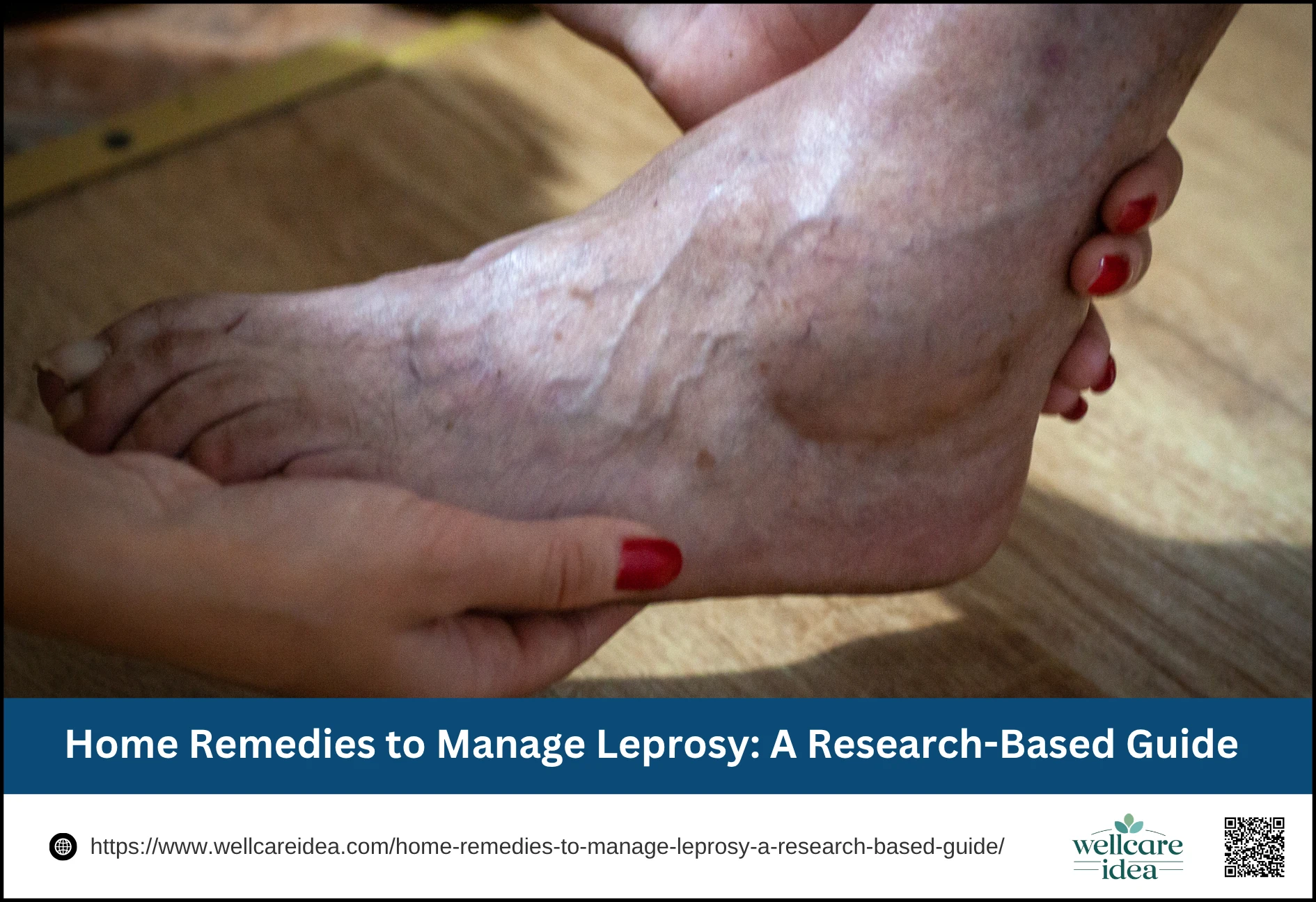
Leprosy, also known as Hansen’s disease, is a long-lasting infectious disease caused by slow-growing bacteria called Mycobacterium leprae and Mycobacterium lepromatosis 1 The disease mainly targets your skin, peripheral nerves, the lining of your nose, and your eyes 2 If you don’t get treatment early enough, it can lead to permanent nerve damage, muscle weakness, numbness, and visible deformities in your hands, feet, and face 3 The good news is that leprosy is completely curable with a combination of antibiotics known as multi-drug therapy (MDT), which the World Health Organization has been providing free of cost since 1995 4 Around 95% of people exposed to the bacteria never develop the disease because their immune system can fight it off 5 Despite being hard to catch and easily treatable, leprosy still carries significant social stigma in many parts of the world.
Leprosy Facts
| Symptoms 6 ; 7 | Pale or reddish skin patches with loss of sensation; numbness or tingling in hands and feet; muscle weakness; dry skin and hair loss in affected areas; thickened peripheral nerves; eye problems such as reduced blinking and dryness; nasal congestion and nosebleeds |
| Causes 8 | Infection by the bacteria Mycobacterium leprae or Mycobacterium lepromatosis, which multiply very slowly, dividing roughly once every 13 days |
| Types {https:// www.webmd.com/skin-problems-and-treatments/leprosy-symptoms-treatments-history} | Tuberculoid (paucibacillary) – milder form with fewer skin lesions; Lepromatous (multibacillary) – more severe with widespread skin bumps, rashes, and nerve damage; Borderline – features of both forms |
| How It Spreads 2 | Through respiratory droplets (coughs and sneezes) from an untreated person during prolonged, close contact over many months. It does not spread through casual contact such as handshakes, hugging, or sharing meals |
| Regions Where It Is Found 2 | Found in over 120 countries worldwide. Brazil, India, and Indonesia report the highest numbers. Other affected countries include Bangladesh, the Democratic Republic of the Congo, Ethiopia, Madagascar, Mozambique, Myanmar, Nepal, Nigeria, the Philippines, Somalia, Sri Lanka, and Tanzania |
| You May Be at Higher Risk If You 1 | Live in or have prolonged stays in countries where leprosy is common; have close, frequent contact with an untreated person; have a weakened immune system; handle nine-banded armadillos (in the southern United States) |
| How Doctors Diagnose 2 ; 9 | Clinical examination for cardinal signs: skin lesions with definite loss of sensation, thickened peripheral nerves, and detection of acid-fast bacilli in a slit-skin smear. Skin biopsy and lepromin skin tests may also be used |
| Treatment and Medications 8 | Multi-drug therapy (MDT) combining dapsone, rifampicin, and clofazimine. Treatment lasts 6 months for paucibacillary and 12 months for multibacillary cases. Other antibiotics such as moxifloxacin, minocycline, and clarithromycin may also be used |
| Methods of Prevention 4 | Early detection and prompt treatment of cases; contact tracing; preventive single-dose rifampicin for close contacts; BCG vaccination has shown some protective effect |
| Incubation Period (10 | Typically 3 to 5 years, but can range from a few months to as long as 20 years |
| Global Cases (2024) 4 | Approximately 172,717 new cases reported from 188 countries |
 Evidence-Based Home Remedies for Leprosy
Important disclaimer: No home remedy can replace proper medical treatment for leprosy. The multi-drug therapy (MDT) prescribed by your doctor is the only proven way to cure the infection. The natural remedies discussed below are based on traditional use and preliminary scientific research, and they may serve as supportive or complementary measures alongside your prescribed medical treatment — never as a substitute. Always consult your healthcare provider before using any herbal or natural remedy.
Research published in Frontiers in Pharmacology notes that plant-based medicinal substances have the potential to support leprosy management, and multiple studies have shown results that could complement approved treatments 11 A computational study published in PubMed also found that phytochemicals from several traditional plants showed promising activity against the enzymes targeted by standard leprosy drugs 12
Here are some of the most commonly referenced natural remedies in scientific literature:
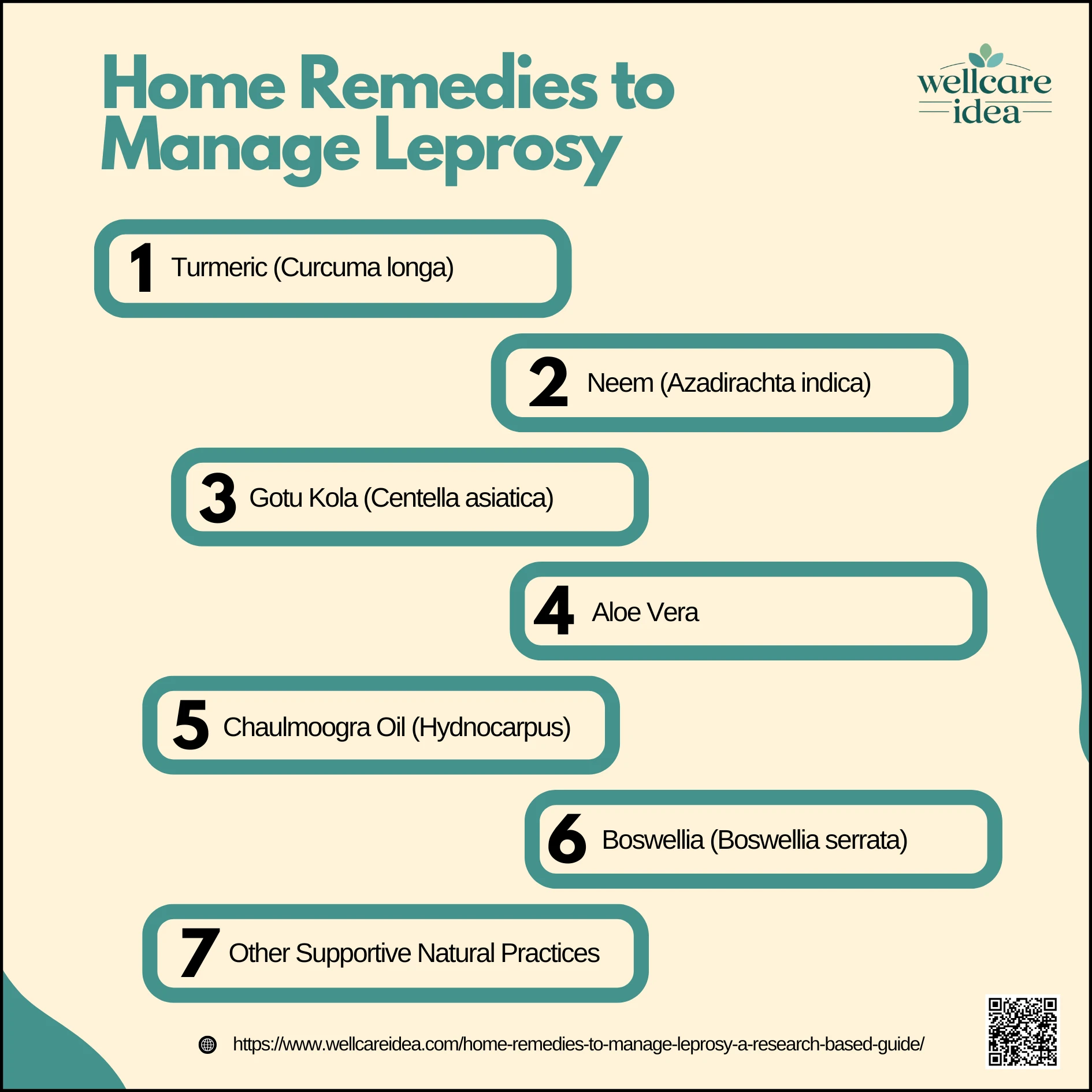
1. Turmeric (Curcuma longa)
Turmeric has been one of the most widely studied natural compounds for its antimicrobial, anti-inflammatory, and antioxidant properties. The active ingredient curcumin has demonstrated activity against mycobacterial species in laboratory settings 13 Research published in PMC showed that curcumin can help modulate the immune response and reduce inflammation, which is particularly relevant for leprosy patients who often experience painful inflammatory reactions 14 One notable challenge with curcumin is its poor oral bioavailability, meaning your body has difficulty absorbing it efficiently. Combining turmeric with black pepper (which contains piperine) can improve absorption significantly 15 You can incorporate turmeric into your daily diet through golden milk, turmeric tea, or as a spice in your cooking.
2. Neem (Azadirachta indica)
Neem has been used in traditional Ayurvedic medicine for centuries to manage leprosy and other skin conditions. Extracts from neem bark, leaves, and oil have been utilized in folk medicine to address skin infections, leprosy, and wound healing 16 A comprehensive review published in PMC confirms that neem possesses broad-spectrum antibacterial, anti-inflammatory, antioxidant, and immunomodulatory properties, making it a valuable supportive agent for skin disorders 17 Another review published in PMC described neem oil as effective for managing leprosy-related skin conditions and various dermatological issues 18 Neem leaves can be boiled into a bath water for topical skin relief, or neem oil can be applied to affected skin areas after dilution.
3. Gotu Kola (Centella asiatica)
Gotu kola is perhaps one of the most historically significant herbs in leprosy care. The Indian Pharmacopoeia has recommended it for treating various skin conditions including leprosy, lupus, eczema, and psoriasis 19 Its active compounds — asiaticoside, madecassoside, asiatic acid, and madecassic acid — promote collagen synthesis, reduce inflammation, and enhance wound healing 20 A computational study found that asiaticoside, an active saponin from gotu kola, showed the strongest binding activity against leprosy drug targets, outperforming the standard drug dapsone in molecular docking scores 12 The NCBI Bookshelf notes that gotu kola has been traditionally used for leprosy, wounds, ulcers, and various other conditions, with demonstrated anti-inflammatory and wound healing properties 21 You can consume gotu kola as a tea or take standardized extracts in capsule form.
4. Aloe Vera
Aloe vera is well known for its skin-soothing, anti-inflammatory, and wound-healing properties. While it has not been specifically studied for leprosy, its ability to help heal skin wounds and ulcers makes it a useful supportive remedy for managing leprosy-related skin lesions. A systematic review published in PMC found that aloe vera has been used effectively to prevent skin ulcers and treat chronic wounds, including pressure ulcers and burn wounds 22 Its active compounds — including acemannan, aloe-emodin, and aloin — have been shown to reduce inflammation, inhibit bacterial growth, and stimulate new cell production and collagen formation 23 Applying fresh aloe vera gel directly to affected skin areas can help soothe irritation, keep the skin moisturized, and support the healing of lesions and ulcers.
5. Chaulmoogra Oil (Hydnocarpus)
Chaulmoogra oil holds a unique place in the history of leprosy treatment. Before modern antibiotics were developed, it was the primary treatment for leprosy for centuries, used in traditional Indian, Chinese, and Southeast Asian medicine. In 1915, chemist Alice Ball developed an injectable preparation of chaulmoogra oil that became the standard treatment for Hansen’s disease until sulfonamide drugs replaced it in the 1940s 24 Research reviewed in Springer found that chaulmoogra oil-based preparations are still being explored through modern nanotechnology to improve drug delivery for leprosy treatment 25 While not widely available commercially today, chaulmoogra oil remains a historically significant natural remedy.
6. Boswellia (Boswellia serrata)
Boswellia, commonly known as Indian frankincense, has demonstrated anti-inflammatory and antimycobacterial potential. A docking study found that boswellic acid showed strong binding activity against the enzyme targeted by dapsone, the frontline leprosy drug 12 Boswellia extracts are available as supplements and topical creams, and may help manage the inflammatory reactions that often accompany leprosy.
7. Other Supportive Natural Practices
Several other natural approaches may offer general supportive benefits during leprosy management:
- Coconut oil: Regular application can help moisturize dry, cracked skin caused by nerve damage and prevent secondary infections.
- Garlic: Known for its natural antimicrobial properties, adding raw or cooked garlic to your diet may support your immune system.
- Vitamin-rich diet: Consuming foods high in vitamins A, C, D, and E supports immune function and skin repair. Include leafy greens, citrus fruits, nuts, and oily fish in your daily meals.
- Proper wound care: Since leprosy causes loss of sensation, you may not notice injuries on affected limbs. Regularly inspecting your hands and feet and cleaning any wounds promptly helps prevent infections and complications.
When to See a Doctor
You should seek medical attention immediately if you notice unexplained skin patches that have lost sensation, persistent numbness or tingling in your hands or feet, or muscle weakness that develops gradually. Leprosy is fully curable when caught early, and treatment prevents further nerve damage and disability 1 Delaying treatment is the primary reason some patients develop permanent disabilities 2 Once you begin your prescribed MDT, you are no longer considered infectious to others.
Precautions Before Using Natural Remedies
Before you try any home remedy or herbal supplement for leprosy, keep these important precautions in mind:
1. Never replace prescribed medication: Leprosy requires multi-drug therapy with antibiotics. No herb, supplement, or natural product can kill Mycobacterium leprae effectively enough to cure the disease on its own. Stopping or delaying prescribed treatment can lead to drug resistance, disease progression, and permanent disabilities 2
2. Consult your doctor first: Some herbal remedies can interact with leprosy medications. For example, turmeric and certain other herbs can affect liver metabolism and may alter how your body processes drugs like rifampicin and dapsone. Your doctor can advise you on which supplements are safe to use alongside your treatment.
3. Watch for allergic reactions: When applying any natural product to your skin for the first time — such as neem oil, aloe vera, or turmeric paste — do a small patch test on unaffected skin and wait 24 hours. If you notice redness, swelling, or irritation, discontinue use immediately.
4. Be aware of liver toxicity: Some herbal products, including gotu kola (Centella asiatica), have been linked in rare cases to liver injury when taken in large amounts or over extended periods 21 If you experience abdominal pain, dark urine, or yellowing of the skin while using any supplement, stop taking it and consult your doctor right away.
5. Be cautious with dosage: There are no universally established dosage guidelines for most herbal remedies in the context of leprosy. Researchers have noted that stringent assessment of safety, toxicity, and proper dosing is needed before these natural agents can be widely recommended 11
6. Consider the source and quality: If you choose to use herbal supplements, purchase them from reputable suppliers who follow good manufacturing practices. Contaminated or adulterated herbal products can do more harm than good.
7. Do not use natural remedies to self-diagnose or self-treat: If you suspect you may have leprosy, the most important step you can take is to visit a healthcare provider for a proper diagnosis and begin treatment as soon as possible. Early treatment prevents nearly all complications of the disease.
This article is for informational purposes only and does not constitute medical advice. Always consult a qualified healthcare professional for diagnosis and treatment of leprosy or any medical condition.