
What is Lithium Orotate?
Lithium orotate is a nutritional supplement consisting of elemental lithium bound to orotic acid, a natural compound produced by the human body. Unlike the high-dose lithium carbonate commonly prescribed for severe psychiatric conditions, lithium orotate is typically consumed in micro-doses to support general brain health and emotional balance. Research suggests that the orotic acid carrier may enhance the transport of lithium ions across cell membranes, potentially allowing for effective results at much lower concentrations { 1. This form of lithium is gaining attention in the wellness community for its ability to provide neuroprotective benefits without the severe side effects often associated with high-dose pharmaceutical lithium.
 Science-Backed Health Benefits of Lithium Orotate
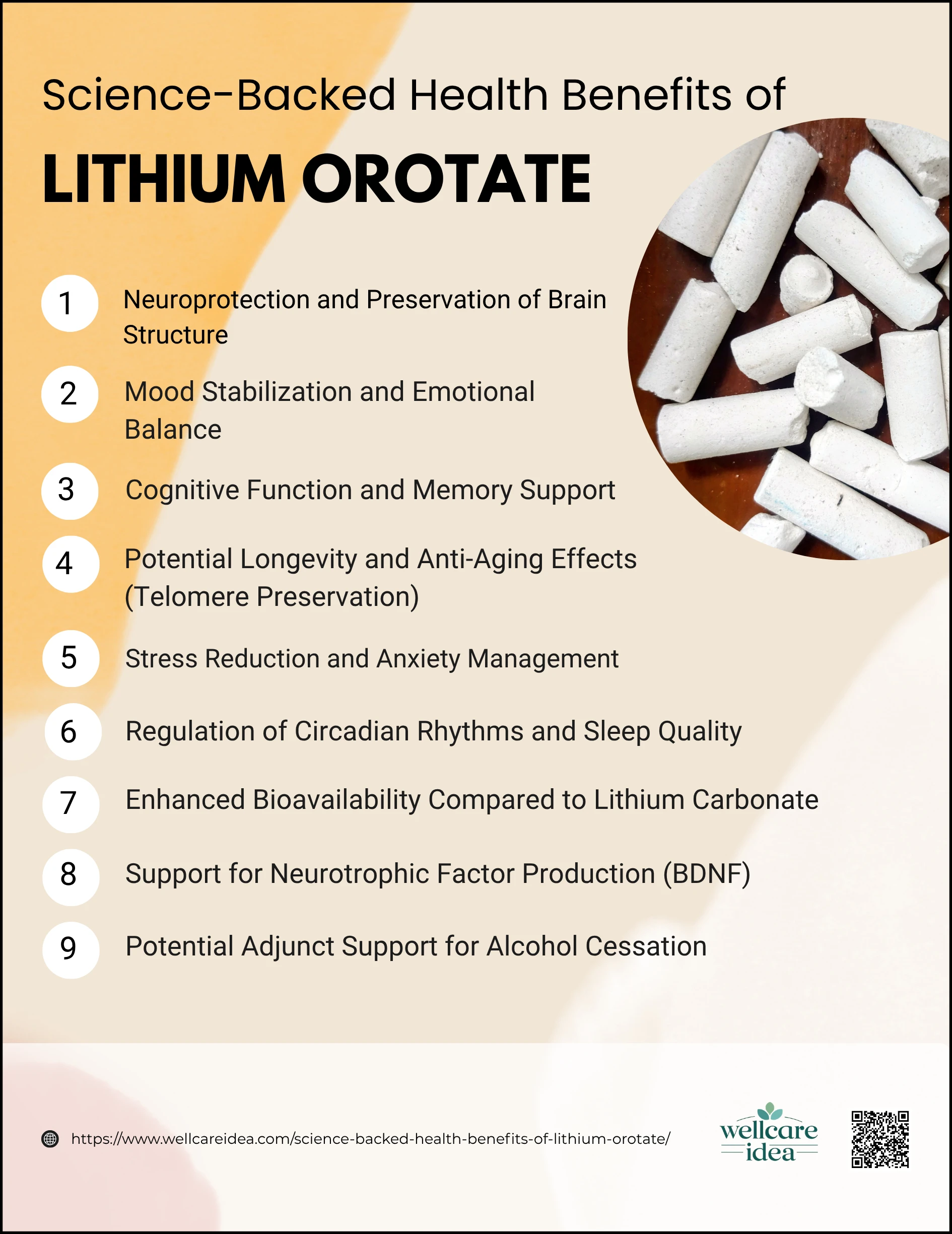
1. Neuroprotection and Preservation of Brain Structure
Maintaining the physical integrity of brain cells is essential for preventing degeneration as we age. Research indicates that lithium exerts powerful neuroprotective effects by inhibiting enzymes that contribute to cell death and brain shrinkage. For instance, studies have shown that lithium treatment can prevent the loss of neurons and preserve the structure of the hippocampus, the area of the brain responsible for memory and learning 2 By blocking glutamate-induced toxicity—a process where overexcited brain cells sustain damage—lithium orotate may act as a shield for neural tissue against environmental and internal stressors.
2. Mood Stabilization and Emotional Balance
Many individuals seek natural methods to smooth out emotional highs and lows. Lithium has a well-documented history of stabilizing mood by modulating neurotransmitters, the chemical messengers in the brain. Clinical evidence supports the idea that even at lower doses, lithium can reduce impulsivity and stabilize emotional volatility by influencing the release of serotonin and norepinephrine 3 , 4 This regulation helps create a more consistent emotional state, allowing individuals to handle daily challenges with greater resilience and less reactive distress.
3. Cognitive Function and Memory Support
Cognitive decline is a major concern for aging adults, but lithium may offer a strategy for maintaining mental sharpness. Scientific investigations have found that lithium can reduce the accumulation of beta-amyloid plaques and hyperphosphorylated tau proteins, which are hallmarks of Alzheimer’s disease and cognitive deterioration 5 Furthermore, experimental models suggest that lithium treatment improves short-term memory and locomotion, indicating its potential to support clear thinking and physical coordination in aging populations 6
4. Potential Longevity and Anti-Aging Effects (Telomere Preservation)
One of the most exciting areas of lithium research involves its impact on cellular aging. Telomeres are protective caps at the end of our chromosomes that shorten as we age; their length is a key biomarker of biological age. A study involving lymphoblastoid cell lines revealed that lithium treatment significantly increased telomere length, suggesting it may slow down the cellular aging process 7 This “anti-aging” effect suggests that lithium does not just protect the brain, but may also contribute to the longevity of cells throughout the body.
5. Stress Reduction and Anxiety Management
Chronic stress disrupts the body’s hormonal balance, often leading to persistent anxiety. Lithium orotate appears to mitigate this by interacting with the hypothalamic-pituitary-adrenal (HPA) axis, the body’s primary stress response system. Research highlights that lithium can enhance the activity of GABA, a calming neurotransmitter, while balancing excitatory chemicals like glutamate, thereby reducing anxiety-like behaviors 8 This biochemical modulation helps the nervous system return to a state of calm more efficiently after stressful events.
6. Regulation of Circadian Rhythms and Sleep Quality
Disrupted sleep cycles are often linked to mood disorders and poor health. Lithium has been shown to directly influence the “clock genes” that control the body’s circadian rhythms. A study examining the effects of lithium on rest-activity cycles found that it increases the “volatility” or flexibility of these rhythms, allowing the body to reset and synchronize its internal clock more effectively 9 This adaptation can lead to improved sleep quality and a more consistent sleep-wake cycle, which is fundamental for overall wellness.
7. Enhanced Bioavailability Compared to Lithium Carbonate
The efficiency with which a supplement enters the brain determines its effectiveness and safety. Historical and modern comparisons suggest that lithium orotate may have superior bioavailability compared to lithium carbonate, meaning it can deliver lithium ions to the brain more effectively at lower doses.
8. Support for Neurotrophic Factor Production (BDNF)
Brain-Derived Neurotrophic Factor (BDNF) is often described as “fertilizer” for the brain because it stimulates the growth of new neurons and synapses. Lithium stimulates the production of BDNF, promoting neurogenesis (the birth of new brain cells) and synaptic plasticity 10 , 11 By upregulating this vital protein, lithium orotate helps the brain repair itself and adapt to new information, which is crucial for recovering from neurological stress and maintaining high-level cognitive function.
9. Potential Adjunct Support for Alcohol Cessation
Struggling with alcohol dependency involves both chemical cravings and mood instability. Lithium orotate has been investigated for its specific utility in alcohol rehabilitation. A study published in Alcohol found that patients treated with lithium orotate showed significant improvements in maintaining sobriety and reducing relapses over a six-month to ten-year follow-up period 12 The compound helps stabilize the mood swings that often trigger relapse, providing a biological support system for those seeking to cease alcohol consumption.
Conclusion
Lithium orotate represents a promising, science-backed option for individuals looking to enhance their mental and cellular health naturally. From protecting brain structure and boosting BDNF to stabilizing mood and potentially lengthening telomeres, the benefits of this trace mineral extend far beyond its traditional psychiatric uses. While further research continues to explore its full potential, current evidence suggests that low-dose lithium orotate offers a unique combination of neuroprotection and emotional support with a high safety profile.