
What is Chronic Stress?
Physiological reactions to challenges are a normal part of life, often triggering the “fight-or-flight” response where hormones like cortisol and adrenaline prepare the body for action. However, when these pressures become constant and the body remains in a state of heightened alertness for extended periods, it develops into chronic stress 1 This prolonged activation of the stress response system can disrupt almost all of the body’s processes, shifting from a helpful adaptive mechanism to a harmful state that increases the risk of numerous health problems 2 Unlike acute stress, which resolves quickly, chronic stress can wear down the body’s natural defenses over time.
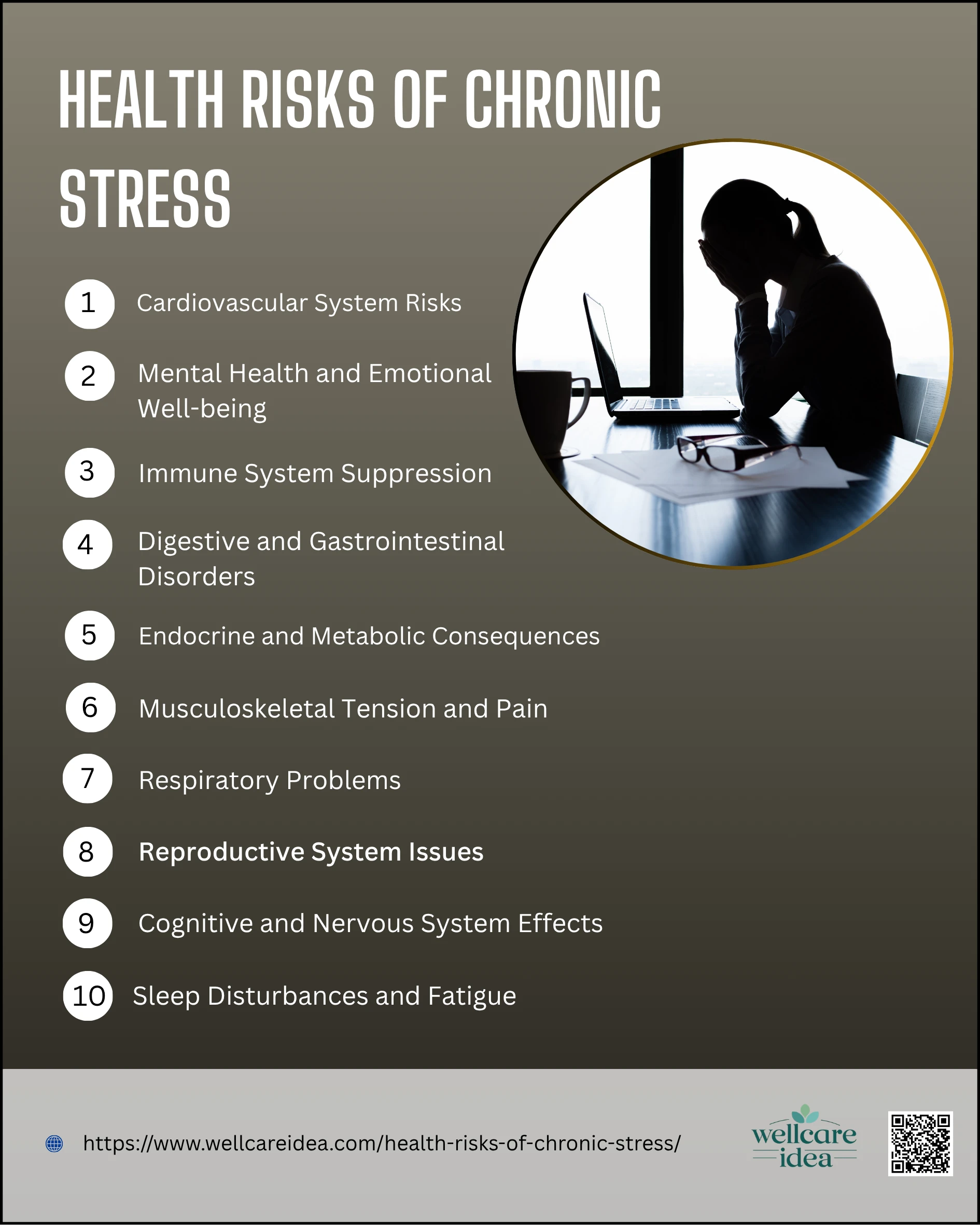 1. Cardiovascular System Risks
Long-term exposure to stress hormones can severely impact the heart and blood vessels, leading to a higher risk of hypertension, heart attack, and stroke. Studies indicate that persistent stress contributes to inflammation in the circulatory system and can increase cholesterol levels, which promotes the buildup of plaque in arteries 3 Furthermore, research has found a significant link between anxiety, depression, and adverse cardiovascular events, suggesting that emotional stress is a critical driver of heart disease 4
2. Mental Health and Emotional Well-being
The continuous pressure of chronic stress is a well-established catalyst for developing mood disorders and emotional instability. Prolonged elevated cortisol levels can alter brain function and structure, significantly increasing the likelihood of developing anxiety and depression 1 In many cases, stress creates a cycle where emotional distress exacerbates physical symptoms, further deepening the impact on overall mental well-being 5
3. Immune System Suppression
While short-term stress can temporarily boost immune activity, chronic stress has the opposite effect, often suppressing the immune system’s ability to fight off infections. Prolonged release of glucocorticoids, such as cortisol, can inhibit the function of immune cells, making individuals more susceptible to the common cold, flu, and other infections 6 Additionally, this dysregulation can lead to a state of chronic low-grade inflammation, which is associated with various autoimmune and inflammatory diseases 7
4. Digestive and Gastrointestinal Disorders
The gut and the brain are intimately connected, meaning that constant stress can easily disrupt the digestive system. The “fight-or-flight” response often slows down digestion, which can lead to symptoms such as bloating, stomach pain, and changes in appetite 8 Over time, chronic stress can worsen functional gastrointestinal disorders like Irritable Bowel Syndrome (IBS) and may contribute to inflammation in the gut 9
5. Endocrine and Metabolic Consequences
Persistent stress can wreak havoc on the body’s metabolism and hormone balance, significantly increasing the risk of type 2 diabetes and obesity. The release of cortisol triggers the release of glucose into the bloodstream for energy, but when this glucose is not used for physical activity, it can lead to insulin resistance and elevated blood sugar levels 10 Furthermore, stress hormones can alter eating behaviors and promote the accumulation of visceral fat, particularly around the abdomen, which is a key risk factor for metabolic syndrome 11
6. Musculoskeletal Tension and Pain
Muscles naturally tense up during stressful situations to protect the body from injury, but chronic stress causes them to remain in a constant state of guardedness. This persistent tension can lead to chronic conditions such as tension headaches, migraines, and severe back or neck pain 12 If the body does not get a chance to relax and recover, this muscle tightness can result in long-term musculoskeletal disorders and atrophy 5
7. Respiratory Problems
For individuals with pre-existing respiratory conditions, stress can be a dangerous trigger that exacerbates symptoms. Strong emotions and stress can cause rapid, shallow breathing or hyperventilation, which can constrict airways and trigger asthma attacks or worsen chronic obstructive pulmonary disease (COPD) 12 Even in those without prior lung issues, chronic stress is associated with increased inflammation in the respiratory tract, potentially compromising lung function over time 13
8. Reproductive System Issues
The reproductive system is highly sensitive to the hormonal imbalances caused by prolonged stress, affecting both men and women. In women, chronic stress can disrupt the menstrual cycle, lead to absent or irregular periods, and negatively impact fertility by interfering with the hormones needed for ovulation 14 Similarly, stress can suppress libido and has been linked to reproductive dysfunctions, as the body prioritizes survival functions over reproduction during times of perceived crisis 15
9. Cognitive and Nervous System Effects
Chronic exposure to stress hormones can damage the brain’s structure, specifically affecting areas responsible for memory and learning. Research has shown that high levels of cortisol can impair the hippocampus, leading to difficulties with memory retrieval, concentration, and decision-making 16 This structural change can result in long-term cognitive impairment and reduced mental flexibility 17
10. Sleep Disturbances and Fatigue
One of the most immediate and debilitating effects of chronic stress is the disruption of normal sleep patterns. Hyperarousal caused by stress makes it difficult to fall asleep or stay asleep, often leading to chronic insomnia 18 The lack of restorative sleep creates a vicious cycle where fatigue lowers the threshold for stress, making the body even more reactive to future stressors 19