
Imagine you are standing perfectly still, yet you feel a sudden, jarring sensation in your chest that resembles a fluttering bird or a skipped beat. This experience is the hallmark of a heart arrhythmia, a condition where the electrical impulses that coordinate your heartbeats do not function properly, causing your heart to beat too fast, too slow, or in an inconsistent and erratic pattern 1. You should understand that your heart is essentially a bioelectrical pump, and any deviation in the signals starting from the sinus node can lead to these rhythmic disruptions. While many of these sensations are harmless, some arrhythmias indicate a serious underlying problem that could hinder your heart’s ability to pump enough blood to the rest of your body, depriving your organs of necessary oxygen. Because your heart supplies nutrients and oxygen through the blood it pumps, maintaining a normal, organized rhythm is a foundational requirement for your long-term survival and quality of life.
Understanding the Landscape of Heart Arrhythmia
When you begin to investigate the specific nature of your heart’s rhythm, you will find that medical professionals categorize these events based on where they originate and the speed of the heart rate. Tachycardia is the term used when your resting heart rate exceeds 100 beats per minute, whereas bradycardia occurs when your rate falls below 60 beats per minute 1. You may also experience premature heartbeats, which are extra beats that occur one at a time, often feeling like a “skipped” beat even though they are actually an added contraction 2. In the United States, atrial fibrillation (AFib) is recognized as the most common sustained cardiac arrhythmia you are likely to encounter, involving rapid and uncoordinated electrical signals in the heart’s upper chambers 3.
Detailed Types of Heart Arrhythmia
If you are diagnosed with a supraventricular arrhythmia, the problem begins in your atria, the upper chambers of your heart 3. Atrial fibrillation causes these chambers to quiver chaotically rather than contracting in sync with the lower chambers, which can lead to blood clots and an elevated risk of stroke for you 4. Atrial flutter is a similar condition, but your heartbeats are more organized and rhythmic than in AFib, though the risk of stroke remains high 2. You might also experience paroxysmal supraventricular tachycardia (PSVT), which causes sudden, rapid episodes of heart pounding that can start and end without warning 5.
Ventricular arrhythmias are generally considered more dangerous because they originate in the heart’s lower chambers, which do the primary work of pumping blood to your lungs and body 6. Ventricular tachycardia involves rapid electrical signals that prevent your ventricles from filling with enough blood, potentially causing a life-threatening drop in your blood pressure 1. Even more severe is ventricular fibrillation, where your lower chambers quiver ineffectively, leading to sudden cardiac arrest if you do not receive immediate emergency care 2. Long QT syndrome is another ventricular concern that you might be born with, involving a genetic mutation that increases your risk of fast, chaotic heartbeats and sudden death 7.
Slow heart rhythms, or bradycardias, often result from issues with your sinus node, which is your heart’s natural pacemaker 3. Sick sinus syndrome occurs when this node is scarred or damaged, causing your heart rate to alternate between too slow and too fast 1. Conduction blocks are another form of bradyarrhythmia where the electrical signals are delayed or stopped as they move through your heart’s pathways 2. You should be aware that while a heart rate below 60 is usually considered slow, it may be perfectly normal for you if you are physically fit and have an efficient cardiovascular system 6.
Major Causes and Triggers of Rhythmic Irregularity
Your heart’s rhythm can be disrupted by a wide range of factors, ranging from structural damage to the choices you make in your daily lifestyle 1. Coronary artery disease and heart attacks are primary causes, as the resulting scar tissue can interfere with how electrical signals travel through your heart 7. If you have high blood pressure, your left ventricle may become stiff and thick, which changes the conduction properties of your cardiac tissue 4. Congenital heart defects that you were born with can also predispose you to arrhythmias by creating abnormal electrical pathways or affecting the built-in pacemaker system 8.
Medical and Metabolic Influences
You should also consider the impact of your metabolic health, as thyroid problems—both overactive and underactive—can significantly raise your risk of developing an irregular heartbeat 3. Diabetes is another critical factor, as it increases your likelihood of developing coronary artery disease and hypertension, both of which are risk factors for AFib 4. Electrolyte imbalances in your blood, specifically involving minerals like potassium, sodium, calcium, and magnesium, are frequent causes of rhythm disturbances because these substances conduct the electrical impulses your heart relies on 9. Furthermore, obstructive sleep apnea is a growing concern for many, as the pauses in your breathing during sleep can trigger both slow and irregular heartbeats 1.
The Critical Role of Substance Use and Addiction
It is vital for you to recognize that the use of various substances—legal or illegal—can have immediate and devastating effects on your heart’s rhythm 10. Stimulants like cocaine and methamphetamine are particularly dangerous; they activate your sympathetic nervous system, causing an intense release of adrenaline that can lead to lethal rhythms like ventricular fibrillation 11. Cocaine also acts as a sodium channel blocker, which can prolong the electrical intervals in your heart and trigger sudden cardiac arrest 12. If you use these substances, you are essentially increasing your heart’s demand for oxygen while simultaneously causing your arteries to spasm, which creates a high-risk environment for a heart attack 13.
Alcohol consumption is another frequent trigger, especially when it involves “binge drinking” episodes that lead to what is known as “Holiday Heart Syndrome” 14. Even minimal alcohol consumption is now linked by researchers to long-term damage like cardiomyopathy and heart arrhythmias 10. Tobacco use also contaminates your blood with chemicals that promote the buildup of waxy plaque in your arteries, eventually leading to heart failure or irregular heart function 13. If you struggle with substance use disorder, you should be aware that complete abstinence is often necessary to reverse some of these cardiac issues 10.
Heart Arrhythmia Facts and Statistical Table
To provide you with a clearer understanding of the clinical landscape, the following table summarizes the key facts, statistics, and diagnostic parameters related to heart arrhythmias.
| Fact Category | Clinical Data and Observations |
| Core Symptoms | • Feeling like your heart is racing or fluttering 1.
• Chest pain, tightness, or pressure 3. • Shortness of breath and difficulty catching your breath 6. • Dizziness, lightheadedness, or feeling faint 15. • Sudden and unexplained fatigue or weakness 16. |
| Primary Causes | • Coronary heart disease and previous heart attacks 7.
• High blood pressure (Hypertension) 4. • Chronic kidney disease and diabetes 16. • Obstructive sleep apnea 1 • Thyroid gland dysfunction (Hyperthyroidism) 3. |
| Types of Arrhythmia | • Atrial Fibrillation (AFib) – most common 16.
• Supraventricular Tachycardia (SVT) 5. • Ventricular Fibrillation (Life-threatening) 1. • Sick Sinus Syndrome (Sinus node failure) 3. • Premature Atrial/Ventricular Contractions 2. |
| How It Spreads | • Arrhythmia is not infectious; it is a metabolic and electrical malfunction within your own body 3.
• It is often caused by cumulative damage from aging, diet, and lifestyle choices 7. |
| Affected Age Groups | • The risk increases dramatically as you age 17.
• It is rare in children but can occur due to congenital defects 7. • 10% of people over 80 years old have AFib 18. |
| Higher Risk Factors | • Using tobacco or nicotine vaping products 10.
• Excessive consumption of caffeine or alcohol 9. • Being overweight or having obesity 16 • Dealing with chronic high stress or surprise 19. • Having a family history of heart rhythm problems 20. |
| Diagnostic Tools | • Electrocardiogram (ECG or EKG) 3
• Holter and Event Monitors for long-term tracking 8. • Echocardiogram (Heart ultrasound) 3. • Electrophysiology (EP) Study to map signals 1. |
| Potential Remedies | • Magnesium and Potassium mineral support 21.
• Vagal maneuvers like the Valsalva technique • Stress reduction through yoga and meditation 22. • Specialized Hawthorn herbal extracts 23. • Omega-3 fatty acids from fish oil 24. |
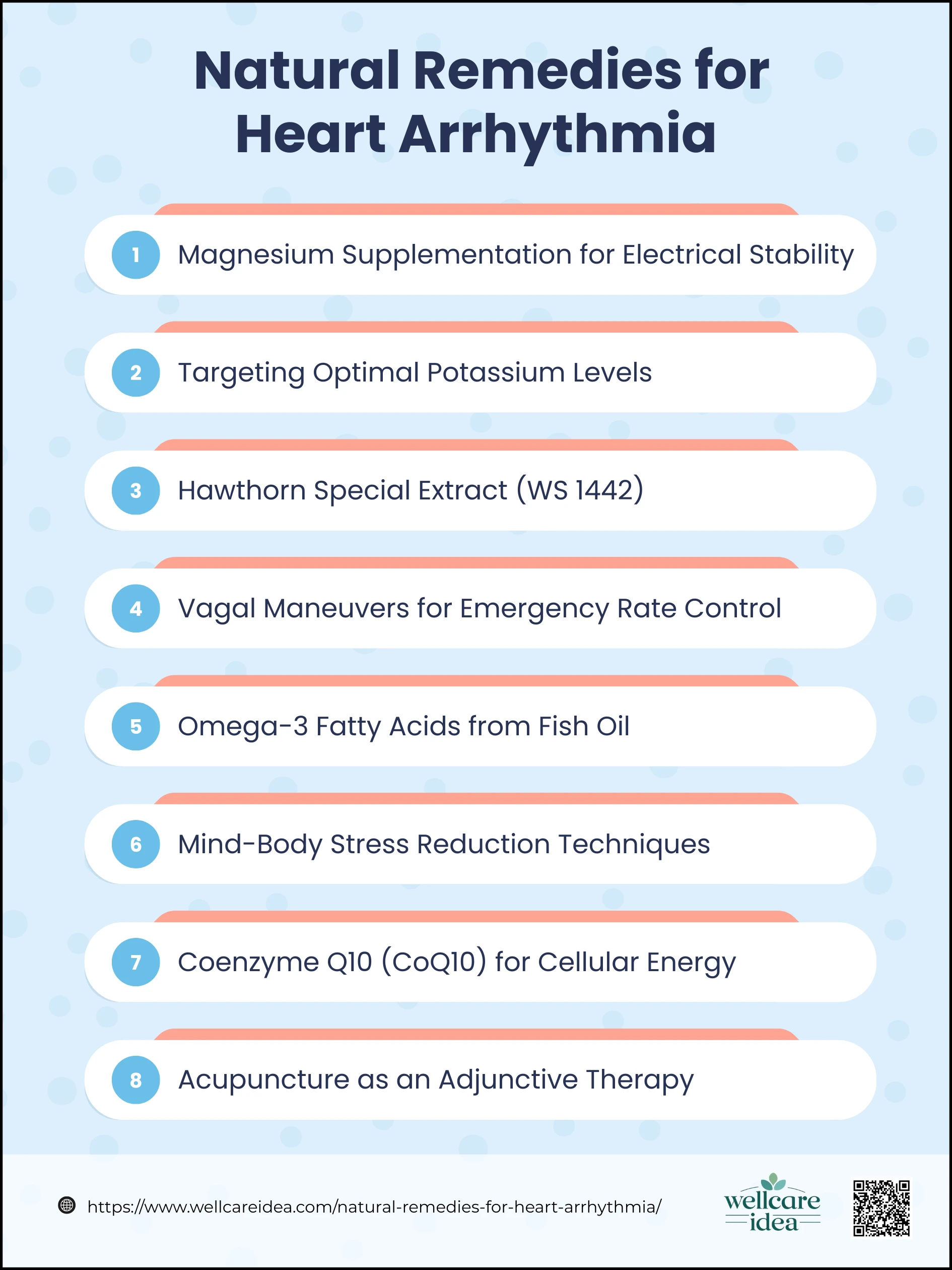 Exhaustive List of Natural Remedies for Heart Arrhythmia
When you are looking for ways to manage your heart’s rhythm naturally, you will discover several evidence-based strategies that focus on mineral balance, autonomic nervous system regulation, and herbal support 25. While these natural interventions can be highly effective for you, they should always be implemented under the supervision of a healthcare professional who is knowledgeable in cardiology 24.
1. Magnesium Supplementation for Electrical Stability
You should know that magnesium is involved in over 300 biochemical reactions in your body and is essential for the stabilization of your heart’s electrical activity 25. Clinical research has demonstrated that magnesium sulfate can significantly decrease the incidence of both ventricular and supraventricular arrhythmias compared to placebos 21. In fact, one study showed that people taking oral magnesium had between 23% and 52% fewer arrhythmic occurrences over a six-week period 24. If you have low magnesium levels, your heart may become more sensitive to early beats, which can trigger more sustained rhythm problems 26. Experts suggest that you consider magnesium glycinate or magnesium citrate because they are easily absorbed by your body 25.
2. Targeting Optimal Potassium Levels
Potassium is another cornerstone of your heart’s health, as it is critical for the proper conduction of electrical signals through your myocardial tissue 27. Recent late-breaking research from the 2025 POTCAST trial indicates that if you can target a high-normal plasma potassium level—specifically between 4.5 and 5.0 mmol/L—you can significantly reduce your arrhythmia burden and risk of hospitalization 28. Low levels of this mineral are known to cause muscle weakness and can directly trigger dangerous ventricular alterations for you 29. You can naturally boost your intake by consuming potassium-rich foods like bananas, avocados, spinach, and sweet potatoes 25.
3. Hawthorn Special Extract (WS 1442)
If you are looking for herbal support, hawthorn extract—derived from the flowering tops of the plant—has been used for centuries to support cardiovascular health 30. Modern studies on the specific extract WS 1442 have shown it can prolong the action potential and the refractory period of your heart cells, which helps prevent premature beats from starting a larger arrhythmia 23. In large outpatient groups, the intake of this specialized extract was associated with a significantly lower incidence of atrial fibrillation and tachycardia 31. You may also find that hawthorn improves your exercise tolerance and reduces common symptoms like shortness of breath and fatigue 32.
4. Vagal Maneuvers for Emergency Rate Control
You can use simple physical actions known as vagal maneuvers to stimulate your vagus nerve and naturally slow your heart rate when it is beating too fast 33. The Valsalva maneuver is one of the most effective techniques for you; it involves holding your breath and straining, as if you were having a bowel movement, for about 10 to 15 seconds 34. A “modified” version of this maneuver—where your legs are raised immediately after the strain—has been found to have a success rate of over 40% in restoring a normal sinus rhythm 35. Another option for you is the “diving reflex,” which you can trigger by plunging your face into ice-cold water for several seconds 36.
5. Omega-3 Fatty Acids from Fish Oil
The American Heart Association suggests that you supplement your diet with omega-3 fatty acids, which are proven to promote general cardiac health and may help prevent arrhythmias 26. Higher whole blood levels of these fatty acids are associated with a roughly 30 percent lower risk of you developing atrial fibrillation 37. Omega-3s help by reducing systemic inflammation and supporting the stability of your heart cell membranes 38. You should aim to eat at least two servings of fatty fish per week—such as salmon, mackerel, or sardines—to get these benefits naturally 29.
6. Mind-Body Stress Reduction Techniques
Because stress creates adrenaline that can contribute to your arrhythmias, incorporating mind-body therapies like yoga and meditation is exceptionally important for you 22. These techniques help regulate your autonomic nervous system and can calm your mind and body, which in turn stabilizes your heartbeat 25. You might find that mindfulness meditation or guided imagery empowers you with sustainable habits that lower your overall cardiovascular risk (https://drcynthia.com/blog/holistic-treatment-for-atrial-fibrillation-natural-ways-to-support-a-healthy-heart-rhythm/}. Deep breathing exercises, like alternate nostril breathing, can specifically help balance your nervous system and quiet a racing heart 25
7. Coenzyme Q10 (CoQ10) for Cellular Energy
You should consider CoQ10 as a supplement that supports cellular energy production within your heart’s mitochondria 38. Studies have indicated that in patients who have experienced heart attacks, CoQ10 supplementation lowered the occurrence of subsequent arrhythmias 27.This antioxidant protects your cardiovascular system against oxidative stress, which is a major contributor to the electrical instability that causes rhythm problems 22.
8. Acupuncture as an Adjunctive Therapy
If you are open to traditional practices, acupuncture involves the stimulation of specific points on your body with needles to influence your heart’s rhythm 27. Some small promising studies have shown that acupuncture can help some people living with arrhythmia, especially as an “adjunctive” therapy used alongside primary treatments (https://www.massgeneralbrigham.org/en/about/newsroom/articles/natural-remedies-for-arrhythmia). Research published in specialized cardiology journals suggests that acupuncture may help prevent the recurrence of abnormal heart rhythms after you have undergone a medical procedure to reset your heart 29.
Precautions and Safety Guidelines for Natural Treatments
You must approach natural remedies with a high degree of caution, as “natural” does not always mean “safe” when it comes to your heart 39. Herbal supplements can strongly affect your body and often interact poorly with prescription medicines you may already be taking 40. If you are using blood thinners like warfarin, you should be extremely careful with herbs like Danshen, Ginkgo biloba, and Garlic, as they can significantly raise your risk of dangerous bleeding 39.
Critical Drug Interactions
If you are taking Digoxin for a heart condition, you need to be aware that herbs like Hawthorn, Ginseng, and Licorice can interfere with its effects or cause its levels to become toxic for you 41. St. John’s Wort is another supplement you should use with caution; it speeds up your liver’s processes and can decrease the effectiveness of many heart medications, including beta-blockers and blood thinners 42. Even common minerals like potassium can be dangerous if you take too much, especially if you are also taking certain blood pressure medications like ACE inhibitors or ARBs, which can cause your potassium levels to spike to fatal levels 43.
Avoiding Stimulant-Based Herbs
You should strictly avoid certain herbal stimulants if you have a history of palpitations or arrhythmias 26. Ephedra and Yohimbe are known to stimulate your heart rate and can cause high blood pressure and rapid heartbeats 44. Even natural sources of caffeine, such as guarana or cola nuts, can be enough to trigger an episode for you 26. Before you start any new supplement, you should always bring a written list of everything you take to your doctor to ensure you are not creating a life-threatening interaction 42.
The Importance of Lifestyle Modification
When you are dealing with arrhythmia, your lifestyle habits often form the foundation of your recovery and prevention plan. Quitting smoking and avoiding all tobacco products is one of the single most important steps you can take to lower your risk 3. Reducing your intake of alcohol and caffeine is also highly recommended, as both can interfere with your heart’s electrical signals and trigger irregular patterns 1.
Nutrition and Physical Activity
You should strive to eat a heart-healthy diet, such as the Mediterranean diet, which emphasizes fruits, vegetables, whole grains, and lean proteins while limiting salt and saturated fats 19. Maintaining a healthy body weight is critical; if you are overweight, losing just 10% of your weight can significantly lower your risk of AFib 20. You should also aim for at least 30 minutes of regular physical activity on most days, such as brisk walking, swimming, or cycling, to keep your heart muscle strong and efficient 25.
Addressing Sleep and Environment
If you suspect you have sleep apnea, you must seek treatment, as using a CPAP machine can often improve your heart’s rhythm significantly 20. You should also consider your home environment, using air purifiers to reduce pollution and creating a stress-free space with relaxation techniques to support your autonomic balance 25. By managing your blood pressure, blood sugar, and cholesterol levels through these comprehensive lifestyle changes, you are addressing the root causes of most heart rhythm disorders 1.
Clinical Outcomes and Future Outlook
You can expect that with proper treatment and lifestyle modification, you can live a full and active life despite having a heart arrhythmia 3. However, you must remain vigilant and act immediately if you suspect you are experiencing a heart attack or a life-threatening rhythm like ventricular fibrillation 4. Symptoms such as sudden collapse, loss of consciousness, or severe chest pain require you to call for emergency help right away 45.
As research continues to evolve, new therapies—ranging from more effective vagal maneuvers to advanced herbal extracts—are becoming available to help you manage your condition naturally 46. You should feel encouraged that the medical community is increasingly recognizing the powerful link between mineral balance, stress management, and cardiac stability 22. By combining the best of conventional medicine with evidence-based natural remedies, you are taking a proactive and empowered role in your own cardiovascular health journey 38.
The statistics remind you that while the incidence of rhythm disorders is rising as the population ages, your individual risk can be dramatically influenced by the choices you make every day regarding nutrition, substance use, and stress 16. Understanding the specific type of arrhythmia you have and working closely with your cardiologist is the most effective way for you to ensure that your heart remains in rhythm for many years to come 3.