
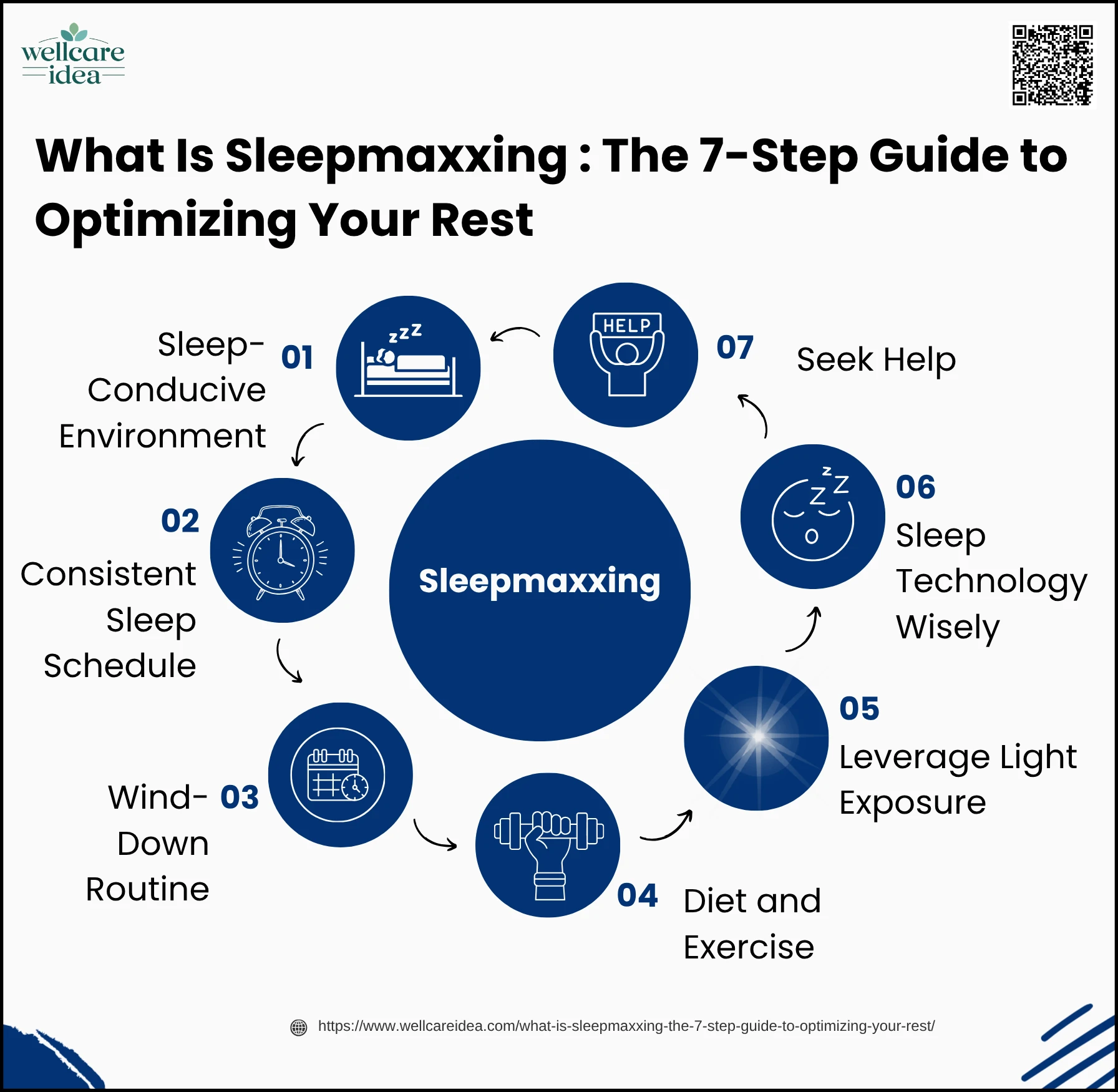
In today’s always-connected world, a new wellness trend called “sleepmaxxing” is capturing attention across social media platforms. This concept represents a systematic approach to maximizing sleep quality and duration for improved overall functioning. The term itself combines “sleep” with “maxxing,” borrowed from internet subcultures focused on self-optimization, and reflects a growing recognition that quality sleep serves as the foundation for mental clarity, physical recovery, and emotional balance 1 Current evidence indicates that more than one-third of adults in the U.S. don’t get sufficient sleep, with similar patterns observed worldwide 2. As modern lifestyles filled with screens, stressful workloads, and irregular schedules continue to erode sleep quality, a counter-movement focused on sleep optimization has emerged, offering hope for those seeking to reclaim their restorative rest.
Sleepmaxxing has gained significant traction, with TikTok posts tagged #sleepmaxxing accumulating millions of views. While the term itself is new, many of its recommended practices overlap substantially with what sleep experts have long advocated as proper sleep hygiene 3 What sets sleepmaxxing apart is its packaging of these recommendations as a comprehensive system for achieving peak performance through better rest, often with an emphasis on consumer products and tracking devices 4 This article explores the science behind sleep optimization and presents a practical, evidence-based guide to help you master your rest like a pro.
The Science Behind Sleep: Why It Matters
Understanding why sleep matters begins with recognizing its complex architecture and profound impact on nearly every bodily system. Sleep consists of multiple cycles, each containing different stages that serve distinct restorative functions. Two of the most critical stages are rapid eye movement (REM) sleep and deep sleep (also known as slow-wave sleep) 1 During REM sleep, brain activity increases to levels similar to wakefulness, facilitating vivid dreams, memory consolidation, and emotional processing 5 Deep sleep, in contrast, is when the body focuses on physical repair, tissue growth, immune function strengthening, and clearing waste products from the brain 6
The benefits of quality sleep extend far beyond simply not feeling tired. Research has shown that during sleep, the body undergoes crucial cellular repair and hormonal regulation, including the release of growth hormone essential for tissue restoration 7 Meanwhile, the brain actively processes information from the day, strengthening important neural connections while discarding unnecessary ones 8 This cognitive maintenance is essential for learning, problem-solving, and maintaining emotional stability 9 Insufficient sleep, particularly lack of deep and REM stages, undermines these processes, leading to difficulties with concentration, memory lapses, mood disturbances, and reduced immune function 10 Over the long term, chronic sleep deficiency elevates the risk of serious health conditions including heart disease, diabetes, depression, and neurodegenerative disorders 11
The 7-Step Guide to Optimizing Your Sleep
1. Create a Sleep-Conducive Environment
Crafting the ideal sleep environment begins with optimizing three key environmental factors: temperature, light, and noise. Experts consistently recommend keeping your bedroom temperature between 60-67°F (15-19°C) to support the body’s natural cooling process that occurs during sleep 12 A cool room environment facilitates the core body temperature drop necessary for initiating and maintaining deep sleep 13
Light exposure management represents another critical element. Darkness triggers the production of melatonin, the hormone responsible for sleep initiation, while even dim artificial light can suppress its production and disrupt sleep quality 14 Implement practical solutions such as blackout curtains, eye masks, and removing electronic devices that emit light 15 For those who need some illumination during the evening hours, red or orange-tinted lights have minimal impact on melatonin production compared to blue light from screens and LED bulbs 16
Noise control completes the trio of environmental optimizations. Sudden or disruptive sounds can fragment sleep cycles even if you don’t fully wake up 17 Consider using white noise machines, fans, or earplugs to mask unpredictable noises 18 Beyond these core factors, invest in comfortable, supportive bedding—a medium-firm mattress typically provides the best support for spinal alignment—and reserve your bed primarily for sleep to strengthen the mental association between your bedroom and rest 19
3. Establish a Consistent Sleep Schedule
Maintaining a consistent sleep-wake schedule represents one of the most powerful yet underutilized tools for optimizing sleep quality. Going to bed and waking up at roughly the same time every day—including weekends—reinforces your body’s circadian rhythm, the internal 24-hour clock that regulates sleepiness and alertness 20 This consistency helps stabilize hormonal fluctuations and makes falling asleep and waking up feel more natural over time.
If you need to adjust your schedule, make gradual shifts of no more than 1-2 hours per night to allow your body to adapt without disrupting its natural rhythms 21 Additionally, be mindful about napping habits. While short naps of 15-30 minutes early in the afternoon can provide a cognitive boost, longer or later naps can interfere with nighttime sleep by reducing your sleep drive 22 For those struggling with nighttime sleep, eliminating naps altogether may help strengthen the homeostatic sleep pressure that makes falling asleep easier at bedtime 23
Table: Ideal Sleep and Wake Windows Based on Sleep Science
| Practice | Recommended Timing | Key Benefit |
| Consistent Wake-up Time | Same time daily, even weekends 21 | Stabilizes circadian rhythm |
| Bedtime | 7-9 hours before target wake time 24 | Ensures sufficient sleep duration |
| Daylight Exposure | Within 1 hour of waking 14 | Reinforces natural wake signals |
| Afternoon Naps | Before 3 PM, max 30 minutes 22 | Prevents interference with nighttime sleep |
| Evening Exercise | Completes 2+ hours before bed {https://journals.humankinetics.com/view/journals/jsm/28/11/article- p1157.xml} | Allows body temperature to normalize |
3. Develop a Wind-Down Routine
A consistent pre-sleep routine signals to your brain and body that it’s time to transition from wakefulness to rest. This wind-down period should begin approximately 30-60 minutes before your target bedtime. During this window, engage in calming activities that promote relaxation, such as reading a physical book (in soft lighting), taking a warm bath, practicing gentle stretching, or engaging in meditation or deep breathing exercises 25 These activities help activate the parasympathetic nervous system, responsible for the body’s “rest and digest” functions, thereby counteracting the stress and stimulation of daily life 26
A critical component of any effective wind-down routine involves disconnecting from electronic devices. The blue light emitted by smartphones, tablets, and computers suppresses melatonin production by tricking your brain into thinking it’s still daytime 16 Beyond the light exposure, the engaging and often stressful nature of digital content—from work emails to social media—creates mental stimulation that directly opposes the state of relaxation needed for sleep 27 Establish a digital curfew at least 30 minutes before bed, keeping electronic devices out of the bedroom entirely to eliminate temptation. If you use your phone for relaxation sounds or meditation, set it to airplane mode with Do Not Disturb activated and place it across the room.
4. Mind Your Diet and Exercise
Daily habits regarding nutrition and physical activity significantly influence sleep architecture and quality. Caffeine consumption deserves particular attention, as its stimulating effects can persist in your system for many hours. Limit caffeine intake to the morning hours and avoid it altogether in the afternoon and evening 28 Similarly, while alcohol may initially make you feel drowsy, it metabolizes into stimulating compounds that disrupt sleep later in the night, particularly interfering with REM sleep 29 Heavy meals close to bedtime can also cause discomfort and indigestion that interferes with sleep, so aim to finish larger meals at least three hours before retiring for the night 30
Regular physical activity consistently demonstrates sleep-improving benefits, helping to reduce sleep onset latency and decrease nighttime awakenings 31 However, timing matters—intense exercise too close to bedtime may elevate core body temperature and stimulate the nervous system, potentially making falling asleep more difficult for some individuals 32 Most people benefit from completing vigorous workouts at least two hours before bedtime, though gentle exercises like yoga or stretching in the evening can actually promote relaxation. Listen to your body’s responses to determine the ideal exercise timing for your unique physiology.
5. Leverage Light Exposure
Strategic light exposure throughout the day represents one of the most powerful yet overlooked methods for optimizing sleep-wake cycles. Your circadian rhythm depends heavily on light cues to synchronize with the 24-hour day 14 Seek bright light exposure, preferably natural sunlight, during the morning and early afternoon hours. This practice reinforces alertness during the day while strengthening your natural circadian signals, making it easier to fall asleep at night 33 Even on overcast days, outdoor light intensity far exceeds typical indoor lighting, so making time for a morning walk can yield significant benefits 34
As evening approaches, the strategy reverses. Reduce light exposure in the 2-3 hours before bedtime, with particular emphasis on minimizing blue light from electronic screens 35 Many devices now offer “night mode” settings that reduce blue light emissions, though the most effective approach is to avoid screens altogether during your wind-down period 36 If you need illumination in the evening, opt for dim, warm-toned lights (red, orange, or yellow hues) that have minimal impact on melatonin production 16 This careful management of light exposure throughout the day and night provides robust support for your natural sleep-wake cycle.
6. Use Sleep Technology Wisely
The proliferation of sleep tracking technology from wearables like Fitbit, Apple Watch, and Oura Ring has created unprecedented access to personal sleep data 4 These devices can offer valuable insights into your sleep patterns over time, helping identify trends and potential areas for improvement. However, this constant monitoring comes with a significant caveat—an emerging phenomenon called orthosomnia, where people develop an unhealthy preoccupation with achieving perfect sleep scores 37 This performance anxiety around sleep can ironically worsen sleep quality, as the pressure to sleep perfectly creates tension that interferes with natural sleep onset.
Instead of fixating on daily scores, use sleep trackers to identify broader patterns over weeks and months. If you notice consistent issues despite implementing healthy sleep practices, this data can provide valuable information to share with healthcare providers. Remember that consumer sleep trackers are not as accurate as the polysomnography used in sleep clinics, and their algorithms for detecting sleep stages can sometimes be misleading 38 Treat them as general guides rather than absolute truth, and prioritize how you actually feel upon waking rather than what your device reports. If tracking your sleep causes more anxiety than insight, consider taking a break from the technology altogether 39
7. Know When to Seek Help
Despite implementing optimal sleep practices, some individuals continue to experience persistent sleep difficulties that warrant professional attention. If you regularly experience trouble falling asleep (taking 30 minutes or more), struggle with maintaining sleep (waking for 30 minutes or more during the night), or wake up feeling unrefreshed despite adequate time in bed—and these issues occur at least three times per week for several weeks—it may be time to consult a healthcare provider 17 These patterns could indicate underlying sleep disorders such as sleep apnea, restless legs syndrome, or chronic insomnia that require targeted treatment 40
Effective treatments are available for these conditions, including Cognitive Behavioral Therapy for Insomnia (CBT-I), which addresses the thoughts and behaviors that perpetuate sleep problems 41 Unlike sleep hygiene alone, which provides the foundation for good sleep, CBT-I and other evidence-based treatments target the psychological and physiological mechanisms that maintain chronic sleep issues. If you suspect you have a sleep disorder, don’t hesitate to seek evaluation from a sleep specialist who can provide proper diagnosis and create an appropriate treatment plan tailored to your specific needs 42
Conclusion
The sleepmaxxing trend, despite its trendy name, ultimately points toward the timeless importance of prioritizing quality rest as the foundation of overall health and performance. By implementing these evidence-based strategies—creating an optimal sleep environment, maintaining consistency, developing wind-down routines, managing diet and exercise, leveraging light exposure, using technology wisely, and seeking help when needed—you can move beyond viral trends to establish sustainable practices that support restorative sleep. Remember that perfect sleep is neither achievable nor necessary; the goal is consistent, quality rest that leaves you feeling refreshed and functioning at your best.