

Navigating life with dietary restrictions can feel like walking through a minefield every single day, where a simple meal out with friends turns into a stressful interrogation of the waitstaff. You might be constantly reading labels, double-checking ingredients, and carrying emergency medication just in case a hidden ingredient sneaks its way onto your plate. Living with these sensitivities is an exhausting reality that affects millions of people globally, completely altering how you interact with the world around you. Fortunately, you do not have to rely solely on avoidance and emergency treatments forever, as modern holistic practices are unearthing incredible ways to support your body’s defenses. By exploring natural, at-home remedies, you can actively work toward calming your hyperactive system and reclaiming a sense of freedom and peace of mind in your daily life.
Breaking it down to the biological basics, a food allergy is essentially a massive misunderstanding by your own body, where your immune system mistakenly identifies a harmless protein as a dangerous invader. Your body reacts by creating specific antibodies known as Immunoglobulin E (IgE), which act like wanted posters that flag the food protein for immediate destruction 1. The moment you eat that specific food again, these antibodies signal your cells to release a flood of defensive chemicals, including massive amounts of histamine, which causes the immediate swelling, itching, and digestive distress you experience 2. Ultimately, your immune system is simply trying to protect you, but its overzealous reaction is what triggers the uncomfortable, and sometimes life-threatening, symptoms you have to manage.
List of Major Foods Which Trigger Allergies
1. Peanuts: The unique biological structure of peanut proteins fiercely resists your digestive enzymes, allowing large, intact fragments to cross into your bloodstream and trigger an aggressive immune response 3. When your body detects these stubborn proteins, it releases a flood of inflammatory chemicals that can instantly cause hives, severe breathing difficulties, and whole-body anaphylactic shock.
2. Tree Nuts: Walnuts, almonds, cashews, and pecans share remarkably similar protein families, meaning that if your immune system recognizes one as a threat, it will likely misidentify and attack the others through a process called cross-reactivity 1. Eating even a tiny fragment of these nuts signals your mast cells to degranulate, resulting in immediate throat swelling, intense itching, and dangerous drops in your blood pressure.
3. Milk: Cow’s milk contains specific proteins like whey and casein that your immune system can easily confuse for hostile bacteria, especially during infancy and early childhood when your gut is still developing 4. Consuming dairy prompts your body to initiate a defensive inflammatory cascade, leading to severe abdominal cramps, skin rashes, and chronic digestive upset.
4. Eggs: Your body primarily reacts to proteins found in the egg white, such as ovomucoid, which your immune system tags with specialized antibodies upon your first exposure 5. Once you consume eggs again, those vigilant antibodies trigger the release of histamine into your tissues, causing immediate skin flare-ups, wheezing, and sometimes vomiting.
5. Fin Fish: Finned fish like salmon, tuna, and halibut contain a highly stable muscle protein called parvalbumin that does not break down during the cooking process, remaining fully capable of triggering your immune defenses 6. Your body treats this heat-resistant protein as a severe threat, launching an attack that typically results in lifelong allergic reactions ranging from intense nausea to life-threatening respiratory distress.
6. Shellfish: Tropomyosin is the dominant protein in shrimp, crab, and lobster that causes your immune system to overreact, making it the most common culprit for adult-onset dietary allergies 7. When you ingest this crustacean protein, your sensitized immune cells dump vasoactive chemicals into your bloodstream, which can swiftly cause cardiovascular collapse and severe facial swelling.
7. Wheat: Unlike autoimmune disorders, a true wheat allergy involves your body producing specific IgE antibodies against the natural proteins found in wheat grains 5. Eating a piece of bread causes your immune system to launch an immediate counterattack, resulting in acute asthma symptoms, digestive spasms, and widespread hives.
8. Soy: Soybeans are packed with complex proteins that your immune system can mistakenly flag as harmful, setting off a chain reaction of inflammation within your gastrointestinal tract 4. Consuming hidden soy in processed foods prompts your body to flush out the perceived toxin, leaving you with chronic stomach pain, diarrhea, and exacerbated eczema flare-ups.
9. Sesame: The proteins packed into tiny sesame seeds provoke an incredibly aggressive immune response that is biologically comparable to the severe reactions caused by tree nuts [https://acaai.org/allergies/allergic-conditions/food/}. Eating foods containing hidden sesame oil or tahini tricks your body into launching a massive chemical defense, rapidly leading to airway constriction, systemic shock, and severe skin irritation.
Food Allergies Facts Table
| Symptoms{https://www.fda.gov/food/buy-store-serve-safe-food/food-allergies-what-you-need-know}. |
|
| Causes |
|
| Types of Food Allergies |
|
| How does spread |
|
| List of major foods which triggers Allergies |
|
| Age Group |
|
| You might be at a higher risk for exposure of this disease if you: |
|
| How doctors diagnose |
|
| Natural Remedies for Food Allergies |
|
| Other facts |
|
The Hidden Connection: Mental Health, Addiction, and Your Diet
Have you ever considered how your physical dietary restrictions might be silently rewiring your mental state and behavioral habits? The reality of living with a severe dietary sensitivity goes far beyond the physical threat of hives or a swollen throat; it completely dominates your psychological landscape. When you are forced to be hyper-vigilant about every single morsel of food that enters your mouth, the constant state of alertness inevitably breeds chronic anxiety. Research reveals that roughly two-thirds of individuals and caregivers dealing with dietary allergies report significant mental health concerns directly related to their condition 10. You might find yourself withdrawing from social gatherings, skipping dinner parties, or feeling sheer panic when someone else prepares your meal. This relentless psychological burden isn’t just in your head; clinical findings show that individuals who have experienced severe anaphylaxis possess a 43% increased risk of developing broader mental health issues, including a staggering 137% higher risk of developing obsessive-compulsive disorder 11.
Gut Health and the “Leaky Gut” Phenomenon
Imagine your gastrointestinal tract as an incredibly sophisticated security checkpoint, selectively allowing life-sustaining nutrients into your bloodstream while firmly blocking dangerous toxins and massive, unbroken food proteins. This biological border wall is made of a single layer of specialized epithelial cells tightly bound together. However, modern environmental stressors, a diet heavy in processed foods, and chronic anxiety can severely degrade this barrier, causing the tight junctions between your cells to loosen and separate. This structural breakdown results in increased intestinal permeability, a condition that functional medicine experts commonly refer to as “leaky gut syndrome” 12. When your gut is leaking, your internal security checkpoint has essentially failed.
What happens next is the primary driver of your systemic allergic reactions. Because the barrier is compromised, large, undigested proteins from the foods you eat slip directly through the gaps in your intestinal wall and plunge into your bloodstream 13. Your immune system, which heavily patrols the areas just beneath your gut lining, immediately spots these foreign proteins floating where they absolutely do not belong. Sensing an invasion, your immune cells sound the alarm, shifting your body into a highly reactive state and pumping out massive amounts of inflammatory chemicals. You experience this internal chaos on the outside as severe stomach cramps, widespread skin hives, or sudden airway constriction.
The Sunshine Factor: How Vitamin D Shapes Your Immunity
It might surprise you to learn that the severity of your immune reactions could be directly tied to how much time you spend outdoors in the sun. For decades, the medical community viewed Vitamin D merely as a nutrient required for building strong bones, but recent immunological breakthroughs have revealed its profound ability to regulate and calm an overactive immune system. Your body naturally synthesizes this crucial hormone when your bare skin is exposed to direct ultraviolet radiation (UVR) from sunlight. Inside your body, Vitamin D acts as a master switch, helping to maintain the integrity of your intestinal walls and preventing your immune cells from launching unwarranted attacks against harmless dietary proteins 14.
Diving into the geographical data uncovers a fascinating, undeniable trend regarding how environment dictates your health. Populations living farther away from the equator, where ambient sunlight is significantly weaker for most of the year, suffer from dramatically higher rates of severe childhood dietary allergies and related hospital admissions 15. In fact, the season you were born in can impact your lifelong immunity; babies born during the darker autumn and winter months face a statistically higher risk of developing life-threatening anaphylaxis as they grow older. This “sunshine deficit” leaves your immune system lacking the regulatory instructions it needs to differentiate between a dangerous pathogen and a simple peanut.
Taking proactive steps to correct this deficiency is a powerful, natural way to support your daily health. If you are struggling with chronic hives, persistent eczema, or intense dietary sensitivities, evaluating your serum levels of this vital hormone is an essential first step. Clinical researchers urgently emphasize that optimal Vitamin D supplementation holds incredible promise not just for preventing the initial onset of allergic diseases, but for actively treating and suppressing the severity of existing atopic conditions 16. Whether you choose to incorporate more fatty fish into your safe diet, take a high-quality daily supplement, or simply dedicate time to safe, consistent sun exposure, giving your body the sunshine it craves can fundamentally recalibrate your reactive immune system.
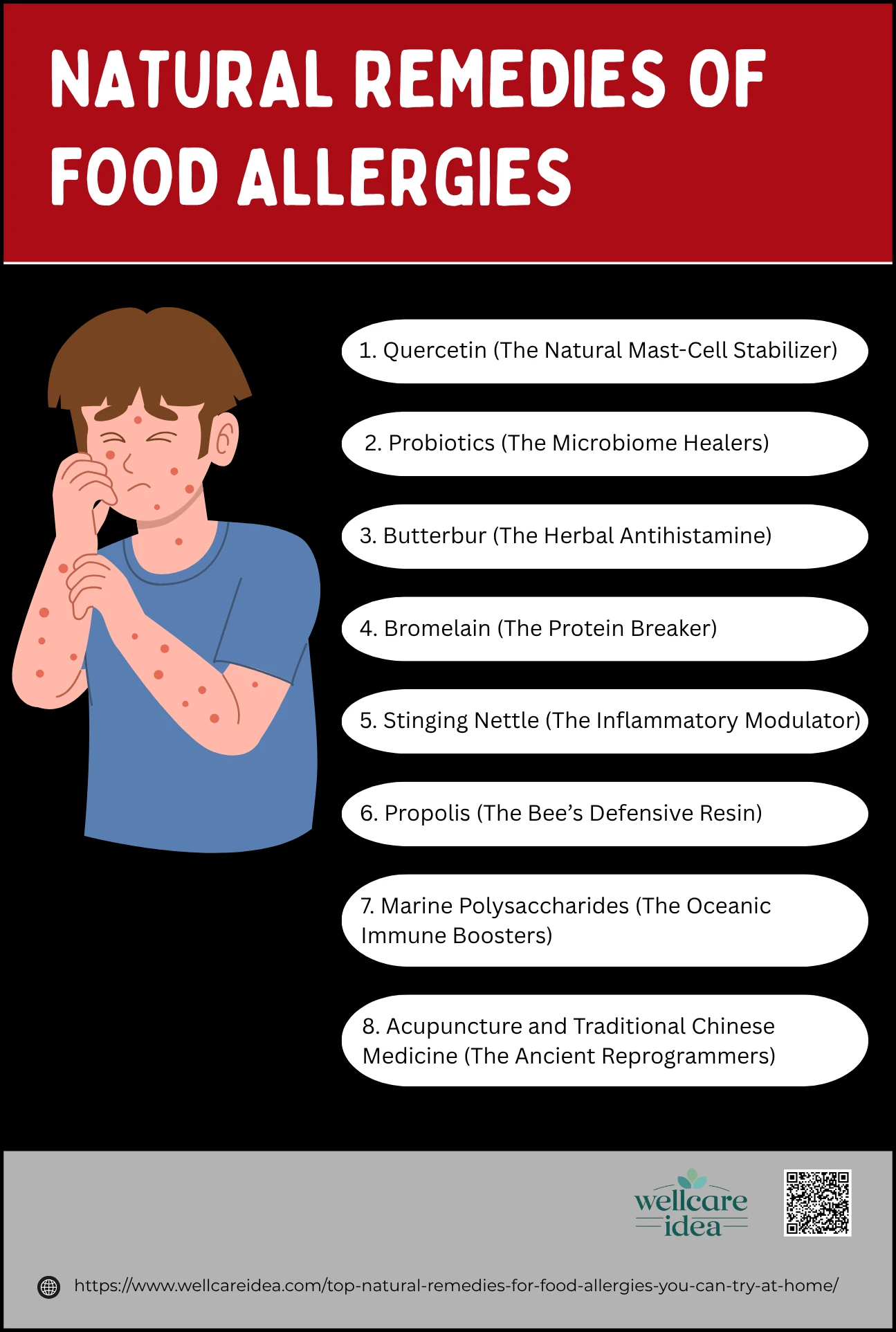 Natural Remedies of Food Allergies
1. Quercetin (The Natural Mast-Cell Stabilizer)
Found naturally in the skins of apples, red onions, and capers, quercetin is a highly potent antioxidant flavonoid that acts directly on your hyperactive immune system. When you consume this compound, it actively prevents your body from producing the specific IgE antibodies that tag foods as dangerous 17. More importantly, quercetin physically stabilizes the membranes of your mast cells—the tiny alarm bells in your tissues—so they cannot burst open and dump symptom-causing histamine into your bloodstream. Clinical research highlights that supplementing with quercetin significantly improves chronic asthmatic reactions and reduces the inflammatory cells circulating in the blood, providing deep relief for hypersensitive airways 18.
2. Probiotics (The Microbiome Healers)
Introducing beneficial, living bacteria into your digestive system is one of the most effective ways to heal a leaky gut and stop allergic reactions at their source. Probiotics from the Lactobacillus and Bifidobacterium families set up camp in your intestines, where they ferment dietary fibers into protective chemicals that physically repair the gaps in your intestinal wall 19. As they heal your gut, these friendly microbes actively communicate with your local immune cells, commanding them to release calming, anti-inflammatory signals that suppress violent allergic cascades. Scientific evaluations prove that consistent probiotic supplementation effectively reduces the severity of allergic dermatitis and shifts the entire immune system away from a highly reactive state toward a state of peaceful tolerance 20.
3. Butterbur (The Herbal Antihistamine)
Extracted from a resilient shrub native to Europe, butterbur (Petasites hybridus) has been utilized for centuries to combat respiratory distress and systemic swelling. The unique biological compounds locked inside this plant act as powerful natural antagonists against both histamine and leukotrienes, the exact chemicals that cause your throat to swell and your nose to run during an allergy attack 21. When tested against mainstream pharmaceutical antihistamines, human clinical trials confirmed that butterbur provides highly significant relief from inflammatory allergy symptoms without causing the debilitating drowsiness or extreme fatigue associated with over-the-counter allergy pills (22.
4. Bromelain (The Protein Breaker)
Derived directly from the stem and fruit of the pineapple plant, bromelain is a complex enzyme that specializes in breaking down tough, complex proteins. Because food allergies are triggered by your body’s inability to safely process specific dietary proteins, consuming bromelain helps physically dismantle these offending molecules in your stomach before they can cross into your bloodstream and cause chaos 23. Taking this enzyme with your meals aids your digestion, while taking it on an empty stomach allows it to enter your systemic circulation to reduce widespread tissue inflammation. Extensive toxicological research shows that daily administration of bromelain is incredibly safe, boasting therapeutic efficacy for soothing inflamed gastrointestinal tracts over long periods of use 24.
5. Stinging Nettle (The Inflammatory Modulator)
Despite its prickly exterior, the stinging nettle plant (Urtica dioica) is a gentle powerhouse when it comes to regulating your body’s immune flare-ups. The freeze-dried extract of its leaves works by actively blocking your cellular histamine receptors, ensuring that even if your body releases allergy chemicals, your tissues cannot physically respond to them 25. Furthermore, stinging nettle halts the production of enzymes that cause physical pain and chronic swelling. Clinical findings suggest that utilizing nettles, especially when combined with other natural compounds like quercetin, provides excellent clinical support for clearing up congestion and maintaining a balanced, healthy immune metabolism 26.
6. Propolis (The Bee’s Defensive Resin)
Long before modern medicine, ancient civilizations utilized propolis—a sticky, resinous mixture gathered by honeybees from tree buds—to heal wounds and fight off infections. Within your body, the vast array of natural antioxidants found in propolis works to suppress the late-phase reactions of your immune cells, drastically reducing the intense, prolonged itching associated with chronic allergic dermatitis 27. Taking this hive product orally also exerts profound benefits on your entire metabolic system. Clinical trials confirm that supplementing with propolis extract significantly improves overall physical functioning and enhances the daily quality of life for individuals struggling with chronic inflammatory conditions 28.
7. Marine Polysaccharides (The Oceanic Immune Boosters)
Deep beneath the ocean’s surface, marine algae and seaweeds naturally produce complex carbohydrates known as sulfated polysaccharides, which hold incredible promise for allergy sufferers. When you consume these oceanic compounds, the bacteria in your gut break them down into secondary metabolites that act as powerful immune potentiators, actively commanding your body to stop producing the IgE antibodies that drive allergic shock 29. In laboratory models, these marine derivatives have been proven to successfully suppress anaphylactic symptom scores, plummet histamine levels, and restore safe body temperatures during the middle of an allergic event.
8. Acupuncture and Traditional Chinese Medicine (The Ancient Reprogrammers)
Traditional Chinese Medicine (TCM) does not view an allergy as a permanent flaw, but rather as an energy and immune imbalance that can be systematically corrected through customized herbal formulas and targeted acupuncture. Specifically, a rigorously tested nine-herb blend known as Food Allergy Herbal Formula-2 (FAHF-2) has been shown to completely prevent severe anaphylaxis by rewiring the immune system to stop producing allergy-triggering cytokines 30. When paired with acupuncture, which involves placing tiny, painless needles at strategic energetic points on your body, patients experience a massive reduction in skin itching and a profound improvement in emotional well-being 31. Some specialized auricular (ear) acupuncture techniques have even resulted in complete, long-term remission of specific mammalian product allergies in a vast majority of treated individuals 32.
Understanding the Elimination Diet Protocol
Before you can actively heal your body, you must accurately identify the exact foods that are causing your internal turmoil. While sitting in a doctor’s office for a skin prick test or a blood draw can confirm if you have specific circulating antibodies, these clinical tests are notorious for giving false positive results, causing you to fear foods that you can actually eat perfectly fine 33. To truly understand how your body reacts in the real world, especially if you suffer from delayed gastrointestinal sensitivities that blood tests cannot detect, medical professionals highly recommend undertaking a structured elimination diet. This is not a weight-loss fad; it is a meticulous, step-by-step scientific experiment conducted on your own biology.
Precaution Before Use of Natural Remedies
Diving headfirst into the world of holistic healing is exciting, but it requires a solid foundation of common sense and profound respect for how powerful your immune system truly is. The most critical truth you must accept is that no herbal tea, enzyme, or probiotic capsule can stop a full-blown anaphylactic shock once it has started. If you accidentally ingest a known trigger and begin to feel your throat tightening, your chest wheezing, or a sudden, dizzying drop in your blood pressure, you must immediately use your prescribed epinephrine auto-injector and call emergency services 1. Natural remedies are fantastic tools for daily, long-term immune modulation, but they are absolutely useless during a life-threatening, acute biological crisis.
Furthermore, you must recognize that natural does not always mean entirely safe for every single human body. Because dietary supplements and botanical extracts are not subjected to the same rigorous, pre-market clinical testing as pharmaceutical drugs, the purity and concentration of the products you buy can vary wildly from brand to brand 23. A poorly manufactured herbal supplement could easily be cross-contaminated with the exact allergens you are trying to avoid, setting you up for a dangerous reaction. Always source your remedies from highly reputable companies that utilize third-party laboratory testing to verify their ingredients.
Finally, the bioactive chemicals found in nature can heavily interact with your existing medical conditions or prescription medications. Take propolis, for example; while it is a phenomenal anti-inflammatory agent, it contains specific chemical compounds that actively slow down your blood’s ability to clot 34. If you happen to suffer from a bleeding disorder, or if you are scheduled to undergo a surgical procedure, taking propolis could dramatically increase your risk of severe, uncontrollable bleeding. Always sit down with your allergist, a registered dietitian, or a functional medicine practitioner to discuss your holistic game plan. By combining the wisdom of natural remedies with the safety of modern medical oversight, you can confidently take control of your health and thrive despite your dietary restrictions.