
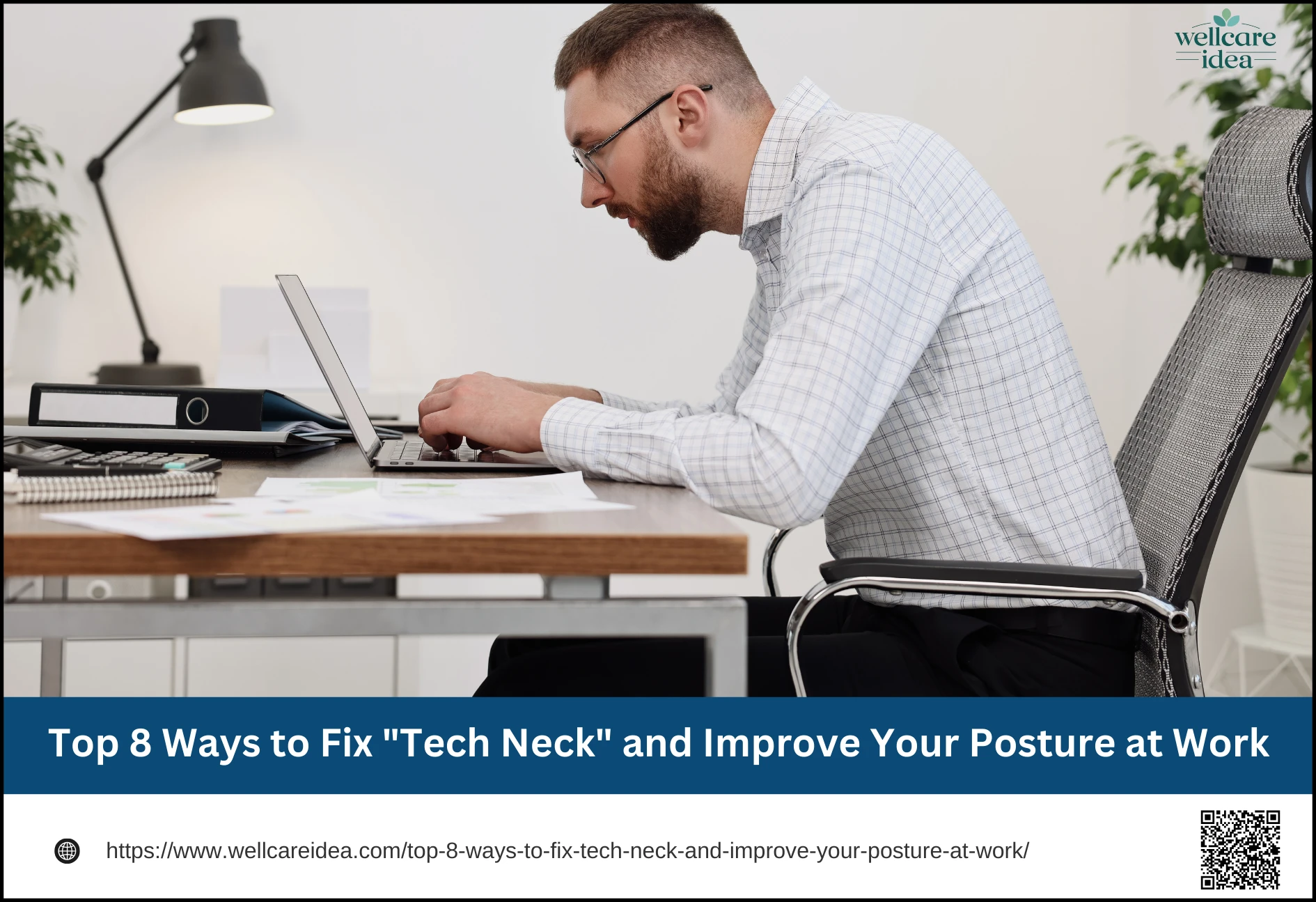
If you spend much of your day working at a computer or looking at a phone, you may be familiar with the dull ache in your neck and shoulders often called “tech neck.” This modern posture problem occurs when you spend long periods with your head tilted forward and down, away from its natural alignment with your spine. Every inch your head moves forward increases the weight your neck muscles must support. Tilting your head forward by just 30 degrees can more than triple the stress on your cervical spine. Over time, this can lead to more than just stiffness; it can contribute to neck and back pain, wear on your spine, decreased flexibility, and even impact your breathing and digestion. The good news is that tech neck is largely a habit, and habits can be changed. You do not need a complete lifestyle overhaul. Instead, consistent, small adjustments to your workspace, daily routine, and movement patterns can yield significant, long-term relief. By understanding the principles of good posture and implementing practical strategies, you can reverse the strain and feel better every day.
1. Adjust Your Desk and Screen to Support a Neutral Spine
The foundation of good posture at work is an ergonomically sound setup that allows your body to maintain its natural curves without strain. Your spine has three natural curves—at the neck, mid-back, and lower back—and good posture maintains these without exaggerating them. The most critical adjustment is your monitor height. Your screen should be positioned so you can look at it with your head level, not tilted up or down. A good guideline is to have the top of the monitor at or slightly below your eye level 1 This prevents you from constantly bending your neck forward. The ideal distance is about an arm’s length away. If you are using a laptop, a simple laptop riser or a stack of sturdy books can raise the screen to the proper height. Remember to pair this with an external keyboard and mouse so your arms can rest at a comfortable 90-degree angle, preventing your shoulders from hunching up.
2. Strengthen the Muscles That Pull You Back
Tech neck is not just about tight muscles in the front; it is equally about weak muscles in the back. A forward head posture stretches and weakens the important muscles between your shoulder blades (like the rhomboids and mid-traps) that are designed to pull your shoulders back 2 Strengthening these muscles provides the strength needed to hold a better position without constant conscious effort. Exercises like rows, either with resistance bands or light weights, are excellent for targeting this area. Simple, office-friendly versions include shoulder blade squeezes: sit or stand tall and gently squeeze your shoulder blades together as if you are trying to hold a pencil between them, hold for a few seconds, and release. Another effective movement is the “Y-T-W” series, which involves lying on your stomach and lifting your arms to form those letters, strengthening different parts of your upper back 3 Consistent strengthening helps your body naturally resist the pull toward slouching.
3. Gently Stretch Tight Neck and Chest Muscles
While strengthening provides support, stretching addresses the tightness that pulls you out of alignment. Hours spent leaning forward shorten the chest muscles (pectorals) and the muscles along the sides and back of the neck (like the upper trapezius and levator scapulae) 4 A simple and effective chest opener is the doorway stretch: place your forearms on either side of a door frame and step forward until you feel a stretch across your chest. To stretch the side of your neck, gently tilt your ear toward your shoulder until you feel a mild pull, holding for 20-30 seconds on each side. It is crucial to stretch gently and avoid bouncing or forcing the stretch, which can cause injury. Aim to incorporate these stretches for a few minutes several times a day, especially after long periods of sitting. Regular stretching improves flexibility and can relieve the muscle tension that contributes to headaches and stiffness.
4. Master the Art of Proper Sitting Posture
Knowing how to sit correctly turns your chair from a place of strain into a tool for support. Good sitting posture is not about sitting bolt upright like a soldier. Instead, visualize an invisible string pulling you up from the top of your head, aligning your ears over your shoulders and your shoulders over your hips. Your feet should rest flat on the floor (or on a footrest), with your knees at about the same level as your hips. Do not underestimate the importance of lumbar support. Your lower back has a natural inward curve; a small pillow or a chair with adjustable support in this area can help maintain that curve and prevent slouching 5 It is also helpful to sit back in your chair so the backrest can support you, and try to keep your shoulders relaxed, not hunched up toward your ears. The goal is a neutral, supported spine, not a rigid one.
5. Take Micro-Breaks to Reset Your Position
Perhaps the single most important habit you can build is to move frequently. Your body is designed for movement, not for holding static positions for hours. Prolonged sitting almost always leads to stiffness and a gradual slump into poor posture. Experts consistently recommend breaking up sitting time every 20 to 30 minutes. These breaks do not need to be long; just 30 seconds to two minutes is sufficient. Stand up, walk a few steps, roll your shoulders, or look away into the distance. This movement helps nourish the spinal discs, relieves muscle fatigue, and resets your posture. Setting a timer or using a smartphone app can help you remember to take these crucial micro-pauses. Not only do they benefit your posture, but they can also refresh your mind and improve focus for the task at hand.
6. Hold Your Phone at Eye Level
Our smartphones are a major culprit in tech neck. The act of looking down at a device in your lap creates that damaging forward head posture 6 To combat “text neck,” practice using your phone with your head in a neutral position. This means holding the device higher, at about eye level or chest level, so you can look at it by moving your eyes down, not by bending your neck. Tools like pop-sockets, phone rings, or a simple phone stand on your desk can make this much easier and prevent fatigue in your arms. Being mindful of your phone posture during commutes or while relaxing on the couch is just as important as during work hours. Reducing overall recreational screen time is a broader wellness goal that can also lessen the cumulative strain on your neck.
7. Build a Stable Foundation with Core Strength and Mobility
Good posture is a full-body endeavor. A strong core—which includes the muscles of your abdomen, back, and pelvis—acts as a natural corset, stabilizing your entire torso and spine 7 When your core is weak, other muscles, including those in your neck and shoulders, have to work overtime to keep you upright, leading to strain. Simple exercises like planks (on your knees or toes) and the bird-dog (alternately extending an arm and the opposite leg while on all fours) build functional core strength 8 Furthermore, incorporating gentle mobility work, like cat-cow stretches from yoga, helps maintain the health and movement capacity of your entire spine 9 A 5-minute daily routine focusing on core activation and spinal mobility can create a more resilient foundation that makes maintaining good posture throughout the day feel effortless.
8. Use Ergonomic Tools as Guides, Not Crutches
A variety of products are marketed to improve posture, from laptop risers and ergonomic chairs to wearable posture correctors. Accessories that improve your workspace setup, like monitor arms, supportive chairs, and external keyboards, are excellent investments as they facilitate a better position. Wearable posture correctors, however, require a more nuanced understanding. They generally fall into two categories: traditional braces that physically pull your shoulders back and electronic devices that vibrate when you slouch. Some evidence suggests they can increase body awareness and provide biofeedback 10 However, experts caution that braces can lead to muscle dependency if overused, as your muscles may weaken if the device does the work for them 11 The consensus is that these devices should be used as short-term training tools—like reminders to engage your own muscles—and never as a permanent substitute for building your own strength and good habits. Their best use is in combination with the exercises and stretches that address the root cause of poor posture.
Lifestyle Tweaks That Complement Your Efforts
Beyond your desk, small lifestyle choices can support your postural health. Staying well-hydrated is essential for maintaining the elasticity and health of your muscles and the discs in your spine 12 Your sleep posture matters, too; try to sleep on your back or side with a pillow that supports the natural curve of your neck 13 Incorporating light, daily full-body movement habits like walking, yoga, or tai chi can improve overall body awareness and flexibility. Finally, being intentional about reducing non-essential screen time can give your body a much-needed break from the postures that cause strain.
Consistency is Key
Correcting tech neck is not about finding a single magic solution but about building a series of sustainable, healthy micro-habits. The long-term benefits are substantial, including reduced pain, more energy, easier breathing, and even a potential boost in mood and confidence. Do not feel overwhelmed; start by picking just two or three changes from this list that seem most manageable for you. It could be adjusting your monitor height today, committing to taking micro-breaks tomorrow, and learning a simple stretch the next day. Lasting improvement comes from consistent, daily attention. By making these small investments in your physical well-being, you are building a foundation for a healthier, more comfortable, and vibrant life, both at work and beyond.