
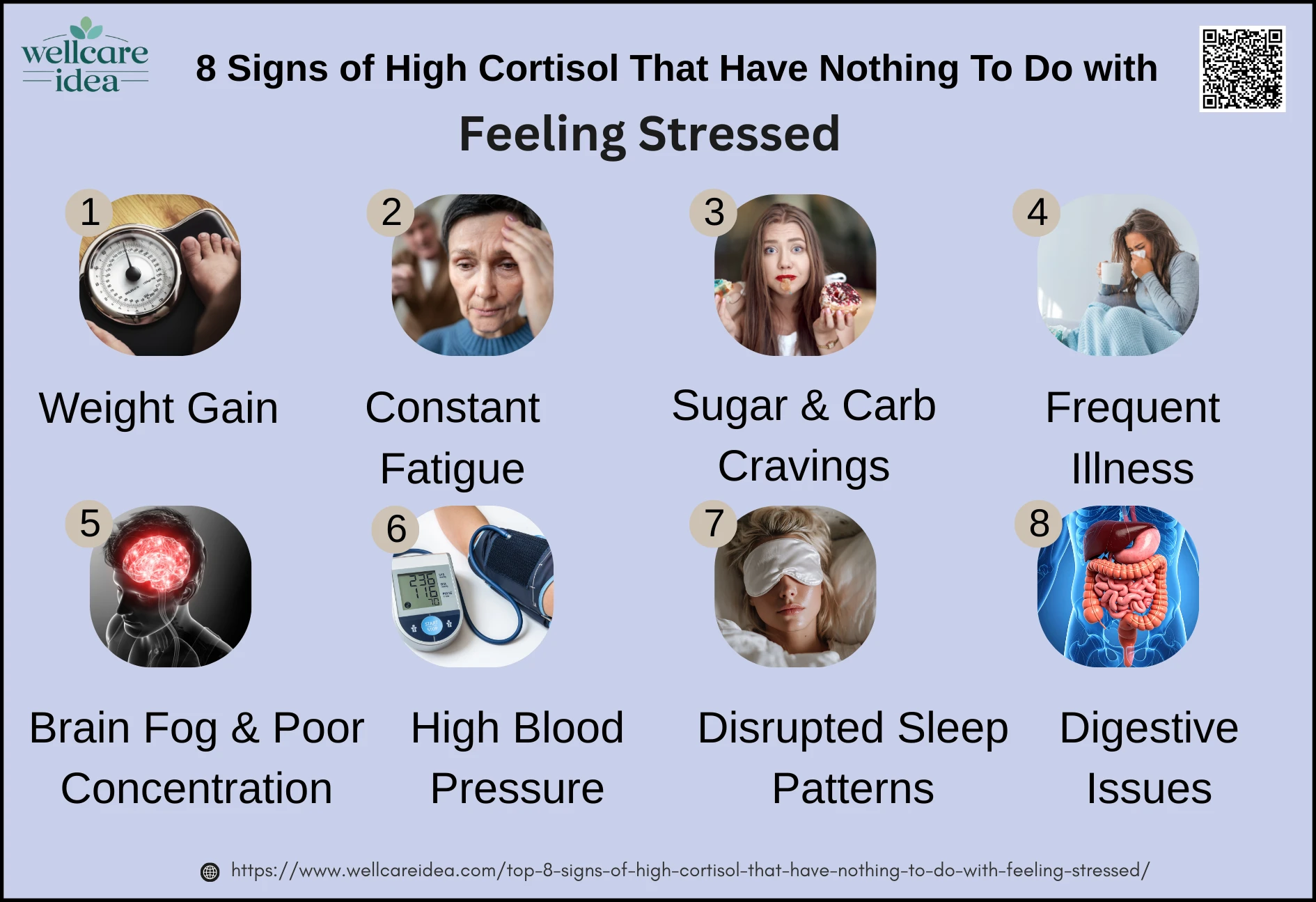
We often call cortisol the “stress hormone,” linking it directly to feelings of anxiety and overwhelm. However, this powerful hormone influences nearly every system in your body, and its levels can become elevated due to a variety of hidden factors, not just emotional stress 1 Recognizing the subtle and surprising signs of high cortisol is crucial for maintaining long-term health and wellness. This article explores eight physical signals your body might be sending you that have little to do with how stressed you feel.
What Is Cortisol and Why Does It Matter?
Cortisol is a vital hormone produced by your two adrenal glands, which are located on top of your kidneys 1 Think of it as your body’s built-in alarm system and energy manager. In healthy amounts and at the right times, it performs essential functions: it helps control blood sugar levels, regulates metabolism, reduces inflammation, and assists in managing blood pressure 2
A key feature of a healthy system is cortisol’s natural daily rhythm, also known as the diurnal cycle. Levels typically peak in the early morning to help you wake up and feel alert, then gradually decline throughout the day, reaching their lowest point around midnight to facilitate restful sleep 3 Problems arise when this cycle is disrupted—when cortisol remains elevated for prolonged periods or is high at the wrong times, such as at night. This long-term exposure can lead to a range of health issues that extend far beyond feeling “stressed out” 2
Top 8 Signs of High Cortisol (Not Related to Feeling Stressed)
When cortisol is chronically high, it manifests in distinct physical ways. The table below outlines eight common signs that may indicate elevated cortisol levels.
| Sign | How It Manifests | The Cortisol Connection |
| 1. Unexplained Weight Gain | Particularly around the abdomen and face, with thinner arms and legs. A fatty hump between the shoulders may develop. | Cortisol promotes the storage of visceral fat (belly fat) and can increase appetite, leading to weight gain that is difficult to lose through diet alone 4 |
| 2. Constant Fatigue | Feeling persistently tired and drained despite getting enough hours of sleep. Rest does not feel restorative. | Disrupts the natural sleep-wake cycle and energy metabolism. It can dysregulate other hormones, leaving you feeling “wired and tired” 5 |
| 3. Sugar & Carb Cravings | Intense cravings for sugary foods, bread, or pasta, especially in the afternoon or evening. | Cortisol directly influences blood sugar. When levels are imbalanced, your body seeks quick energy sources to compensate, driving these cravings 6 |
| 4. Frequent Illness | Catching colds more easily, or wounds and infections taking longer than usual to heal. | While cortisol is anti-inflammatory, chronic high levels can suppress the immune system’s effectiveness, making you more susceptible to infections 7 |
| 5. Brain Fog & Poor Concentration | Trouble focusing, forgetfulness, and a feeling of mental “haziness” or slow processing. | Elevated cortisol can affect the hippocampus, a brain region critical for memory and focus, and disrupt neurotransmitter balance 8 |
| 6. High Blood Pressure | Elevated blood pressure without a clear cause like diet or family history. | Cortisol can increase blood pressure by affecting fluid retention and the constriction of blood vessels 9 |
| 7. Disrupted Sleep Patterns | Difficulty falling asleep, staying asleep, or waking up too early. You may feel tired at bedtime but suddenly alert. | High nighttime cortisol directly opposes sleep hormones like melatonin. A flattened diurnal rhythm means your body lacks the clear signal that it’s time for deep rest 10 |
| 8. Digestive Issues | Experiencing bloating, pain, cramping, or irregularity similar to irritable bowel syndrome (IBS). | Cortisol can alter gut motility (the movement of food), compromise the gut lining, and negatively impact the balance of your gut microbiome 11 |
Hidden Causes of High Cortisol
Emotional stress is just one trigger. Your cortisol levels can be significantly influenced by other lifestyle and physiological factors, often without dramatic feelings of anxiety. Overtraining with intense, prolonged exercise without adequate recovery can keep cortisol elevated 12 Similarly, poor sleep habits, chronic insomnia, or working night shifts disrupt your natural circadian rhythm, telling your adrenal glands to produce cortisol at the wrong times 13
Dietary choices play a role, too. The overconsumption of caffeine, especially later in the day, can stimulate cortisol release 14 Underlying health conditions are common culprits; chronic inflammation from various sources, hormonal imbalances like thyroid disorders or Polycystic Ovary Syndrome (PCOS), and the long-term use of certain medications (such as corticosteroid pills, inhalers, or creams) can all lead to elevated cortisol 15 For some, a condition called Cushing’s syndrome, often caused by a benign tumor on the pituitary or adrenal gland, is the direct cause of excess cortisol production 15
How to Naturally Support Healthy Cortisol Levels
Managing cortisol is often about restoring balance through consistent, mindful habits. Prioritizing sleep quality and timing is foundational. Aim for 7-9 hours per night and try to maintain a consistent sleep schedule, even on weekends, to strengthen your circadian rhythm 13
Nutritionally, focus on stabilizing blood sugar. Incorporate protein, healthy fats, and fiber at every meal to avoid spikes and crashes that can trigger cortisol release and cravings 16 Re-evaluate your exercise routine by incorporating moderate, enjoyable movement like walking, yoga, or cycling instead of only extreme workouts, allowing your body proper recovery 12
Incorporate daily relaxation techniques that actively calm the nervous system. This can include deep breathing exercises, spending time in nature, or journaling 17 Some people find support from adaptogens, a class of herbs like ashwagandha and rhodiola rosea, which are researched for their potential to help the body adapt to stress and modulate the stress-response system 18 It’s advisable to consult a healthcare provider before starting any new supplement.
When to See a Doctor
If you are experiencing several of the signs mentioned above persistently and they are unexplained by other causes, it is important to consult a healthcare professional 15 This is especially crucial if you notice rapid weight gain centered on your torso, a rounder face, or easy bruising.
A doctor can evaluate your symptoms and, if indicated, order diagnostic tests. These may include blood tests, a 24-hour urine collection, or late-night saliva tests to measure your cortisol levels at different times and capture your diurnal rhythm 15 These tests help differentiate between lifestyle-related cortisol dysregulation and more serious conditions like Cushing’s syndrome. Self-diagnosis can be misleading, so a professional evaluation is key to getting the right help.
Listening to Your Hormones
Your hormonal health is a delicate balance, and cortisol is a master conductor. As we’ve seen, feeling mentally calm does not necessarily mean your cortisol levels are optimal 1 By tuning into the physical signals your body is sending—from stubborn weight gain and constant fatigue to brain fog and poor sleep—you can identify hidden imbalances.
Addressing high cortisol is less about panic and more about returning to foundational, supportive lifestyle practices. Through consistent attention to sleep, nutrition, movement, and stress management, you can help guide your body back to its natural state of balance and resilience 2