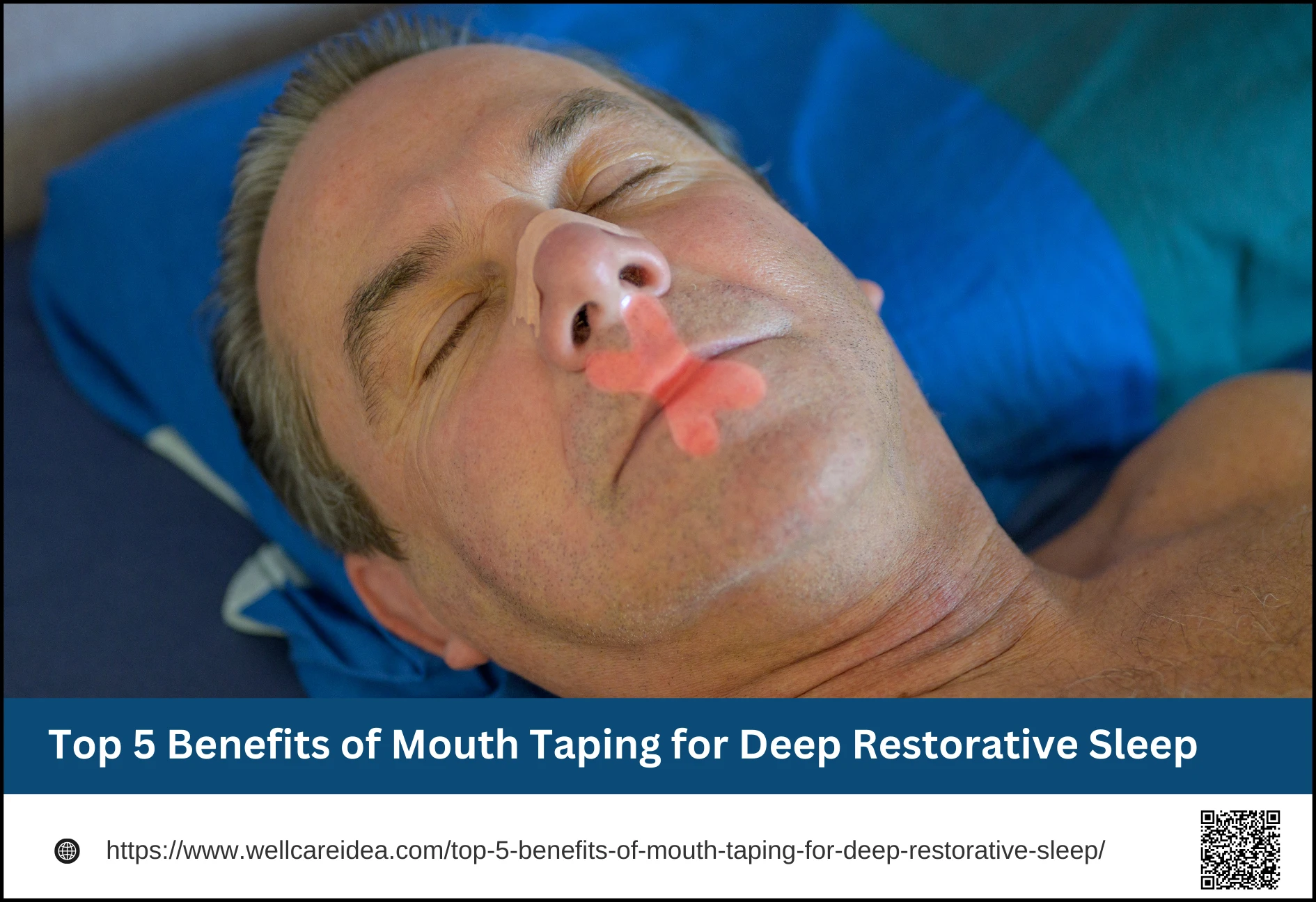
In the quest for better sleep, a simple and unexpected practice has surged in popularity across wellness circles and social media platforms like TikTok and YouTube: mouth taping. This technique involves gently applying a small, specialized tape over the lips at night to encourage breathing through the nose instead of the mouth. While it may sound unusual, its foundation lies in the well-established physiology of breathing and its profound impact on sleep quality. The core idea is that nasal breathing is our body’s intended pathway for rest, offering numerous advantages over mouth breathing, which is often linked to disrupted sleep patterns 1 This article explores the science behind this trend, detailing five key benefits that may contribute to deeper, more restorative sleep, from reducing snoring to enhancing morning mental clarity.
Many individuals breathe through their mouths at night without even realizing it, a habit that can significantly undermine sleep quality. Common triggers include nasal congestion from allergies or colds, the natural relaxation of jaw muscles during deep sleep, or even the structural shape of one’s airway. This open-mouth posture allows the tongue to fall back, partially obstructing the throat and contributing to vibrations known as snoring 2 More importantly, mouth breathing bypasses the nose’s natural air-conditioning system, leading to a dry mouth and throat, which can cause frequent awakenings for water. Crucially, breathing through the mouth is often less efficient, leading to faster, shallower breaths that can disrupt the optimal balance of oxygen and carbon dioxide in the blood. This pattern can activate the sympathetic nervous system—the body’s “fight or flight” response—instead of the restful state needed for sleep, increasing heart rate and fragmenting sleep throughout the night.
The benefits attributed to mouth taping are fundamentally linked to the advantages of nasal breathing. The science reveals that our nasal passages do much more than simply let air in; they produce a vital molecule called nitric oxide. When we inhale through the nose, this gas is carried into the lungs, where it helps to improve blood flow and increase the efficiency of oxygen uptake in the blood 3 Furthermore, the nose acts as a sophisticated filter, warming and humidifying incoming air to protect the delicate lungs and airways. Physiologically, the act of slow, deliberate nasal breathing stimulates the vagus nerve, a key component of the parasympathetic nervous system responsible for calming the body and promoting relaxation 4 This shift away from stress signals is essential for transitioning into and maintaining deep, restorative sleep cycles, allowing the body to properly repair and rejuvenate itself overnight.
Top 5 Benefits of Mouth Taping for Deep Restorative Sleep
1. Reduces Snoring and Sleep Apnea Symptoms
One of the most immediate benefits reported by users is a reduction in snoring. Snoring frequently occurs when airflow causes tissues in the relaxed throat to vibrate, a situation exacerbated by breathing through an open mouth. By gently keeping the lips closed, mouth taping encourages the tongue to maintain a forward position against the palate, which helps stabilize the airway and reduce these vibrations 1 For some individuals with mild sleep-disordered breathing or obstructive sleep apnea (OSA), this can lead to fewer breathing interruptions and less fragmented sleep. Small-scale studies and anecdotal reports suggest that promoting nasal breathing can decrease the frequency and intensity of snoring and hypopneas (shallow breaths). It is critical to note, however, that mouth taping is nota cure for clinically diagnosed sleep apnea. Individuals with severe OSA, chronic nasal blockage, or any respiratory condition must consult a doctor before trying this method, as it could be dangerous if the nasal airway is compromised.
2. Improves Oxygenation and Sleep Efficiency
By facilitating consistent nasal breathing, mouth taping can help manage airflow more effectively throughout the night. Nasal breathing promotes slower, deeper diaphragmatic breaths compared to the often shallow chest breathing associated with an open mouth. This efficient breathing pattern improves blood oxygen saturation, a key metric for cellular repair and brain function during sleep. With better oxygen exchange, the brain and body experience fewer subtle stressors that can cause micro-awakenings. This leads to improved sleep efficiency—meaning more time spent in deep, restorative slow-wave sleep and REM sleep, and less time tossing and turning or waking up briefly. The result is a more continuous, high-quality sleep architecture, which directly contributes to the feeling of being truly rested upon waking.
3. Prevents Dry Mouth and Oral Health Issues
Waking up with a parched, sticky mouth is a direct consequence of nighttime mouth breathing. This dryness is more than just an annoyance; it creates an environment where oral health can deteriorate rapidly. Saliva is essential for neutralizing acids produced by bacteria, washing away food particles, and remineralizing tooth enamel. When the mouth is dry all night, the risk for cavities, gum inflammation (gingivitis), and bad breath (halitosis) increases significantly 5 Mouth taping helps preserve the natural moisture in the oral cavity by keeping the lips sealed. This allows saliva to perform its protective functions throughout the sleep cycle, contributing to better long-term dental hygiene, fresher morning breath, and reduced irritation of the gums and throat tissues.
4. Promotes Deeper, Longer Sleep Cycles
The pathway of breath has a direct line to the nervous system. As mentioned, nasal breathing stimulates the parasympathetic nervous system, sending signals of safety and relaxation throughout the body. This state is a prerequisite for entering the deepest stages of sleep, known as slow-wave sleep, which is critical for physical recovery and immune function 4 By minimizing the sleep disruptions caused by snoring, dry mouth, and inefficient breathing, mouth taping can help consolidate sleep. This means experiencing longer, uninterrupted segments of both slow-wave and REM sleep (vital for memory and learning), while reducing the frequency of micro-awakenings that fragment the sleep cycle. The outcome is a more continuous and profoundly restorative night’s rest.
5. Enhances Morning Energy and Mental Clarity
The cumulative effect of improved sleep architecture and oxygenation is most palpable the next morning. When the brain receives a steady, optimal supply of oxygen throughout the night and is allowed to cycle properly through sleep stages, cognitive function upon waking is enhanced. Individuals often report a significant reduction in morning grogginess, known as sleep inertia, and a quicker path to alertness 3 The benefits extend to improved focus, sharper memory retention, and a more stable mood throughout the day. This increase in mental clarity and consistent energy levels can positively impact daily productivity, motivation, and overall sense of well-being, making the effort to improve sleep quality profoundly worthwhile.
How to Safely Try Mouth Taping
If you are considering trying mouth taping, a cautious and informed approach is essential. First, select a tape designed for skin, such as a gentle paper surgical tape or a product specifically marketed for sleep, which has a mild adhesive. Avoid standard duct or packing tape. The application method is simple: a small vertical strip in the center of the lips or a tiny horizontal strip is often sufficient to remind the lips to stay closed without feeling restrictive or causing discomfort. It is highly advisable to test the practice during a short daytime nap first to become accustomed to the sensation. The goal is not to seal the mouth tightly but to provide a gentle cue. You should always be able to open your mouth if needed. Immediately discontinue use if you experience any nasal congestion, anxiety, or difficulty breathing, and never use tape if you have consumed alcohol or sedatives.
Who Should NOT Use Mouth Taping
Mouth taping is not appropriate for everyone. It is contraindicated and potentially dangerous for individuals with diagnosed obstructive sleep apnea who are not using their prescribed CPAP machine, as well as those with asthma, chronic sinusitis, or severe nasal congestion from a deviated septum or allergies 1 It should not be used by people with conditions that cause nausea or vomiting risk, such as GERD, or by those with panic disorders or claustrophobia. Children should never use mouth tape without explicit guidance from a pediatrician or sleep specialist. The universal rule is to consult with a healthcare professional or a sleep doctor before beginning, especially if you have any underlying respiratory or sleep conditions.
Alternatives to Mouth Taping
For those who are not candidates for mouth taping or wish to explore other options, several effective alternatives exist. External nasal strips can help physically open the nasal passages, while saline sprays or rinses can clear congestion. Using a humidifier in the bedroom adds moisture to the air, counteracting the drying effects of mouth breathing. Practicing daytime breathing exercises, such as the Buteyko method, can strengthen nasal breathing habits and improve overall respiratory control 4 For some, positional therapy—such as sleeping on one’s side—can prevent the tongue from blocking the airway and reduce mouth breathing naturally.
Final Thoughts: Is Mouth Taping Worth Trying?
For individuals who are healthy nasal breathers but have developed a habitual open-mouth posture at night, mouth taping may offer a simple, low-cost intervention to enhance sleep quality. The potential benefits—from reduced snoring and dry mouth to deeper sleep and better morning alertness—are grounded in the well-documented superiority of nasal breathing for sleep physiology. However, it is crucial to emphasize that this practice is a behavioral aid, not a miracle cure for serious sleep disorders. Success depends on mindful experimentation, a steadfast commitment to safety, and professional medical consultation when needed. By prioritizing nasal breathing, you may unlock a more straightforward path to the deep, restorative sleep your body needs to thrive.