

“The gut isn’t just for digestion—it’s the foundation of your overall health, influencing everything from your immune system to your mood.” — Harvard Medical School
Our digestive system does far more than simply process the food we eat; it serves as a vital foundation for our overall well-being. Within our gut resides a complex ecosystem of microorganisms known as the gut microbiome, which plays a crucial role in nutrient absorption, immune function, and even mental health 1 The balance between beneficial and harmful bacteria in our gut directly influences multiple aspects of our health, from digestion to disease resistance.
The modern diet, often filled with processed and refined foods, has dramatically altered the quality of our food supply and consequently impacted our gut microbiome 2 Many common foods we consume daily contain elements that can disrupt this delicate bacterial balance, leading to a range of digestive issues and broader health concerns. What makes this particularly concerning is that many of these gut-harming foods appear harmless or are so commonplace that we rarely question their effects on our digestive system.
Why Your Gut Health Matters
The significance of gut health extends far beyond comfortable digestion. Approximately 70% of our immune system resides in the gut, making it our first line of defense against infections and illnesses 3 When our gut microbiome becomes unbalanced—a condition known as dysbiosis—it can weaken our immune response, leaving us more susceptible to infections and inflammation throughout the body 4
Furthermore, the gut communicates directly with the brain through what scientists call the “gut-brain axis.” This connection means that an unhealthy gut can contribute to mood disturbances, stress, and mental fog. Research has shown that our gut bacteria produce important neurotransmitters like serotonin and dopamine, which significantly influence our emotional state 5 This explains why persistent gut issues often coincide with fatigue, mood swings, and sleep problems, creating a cycle that further exacerbates both digestive and overall health concerns.
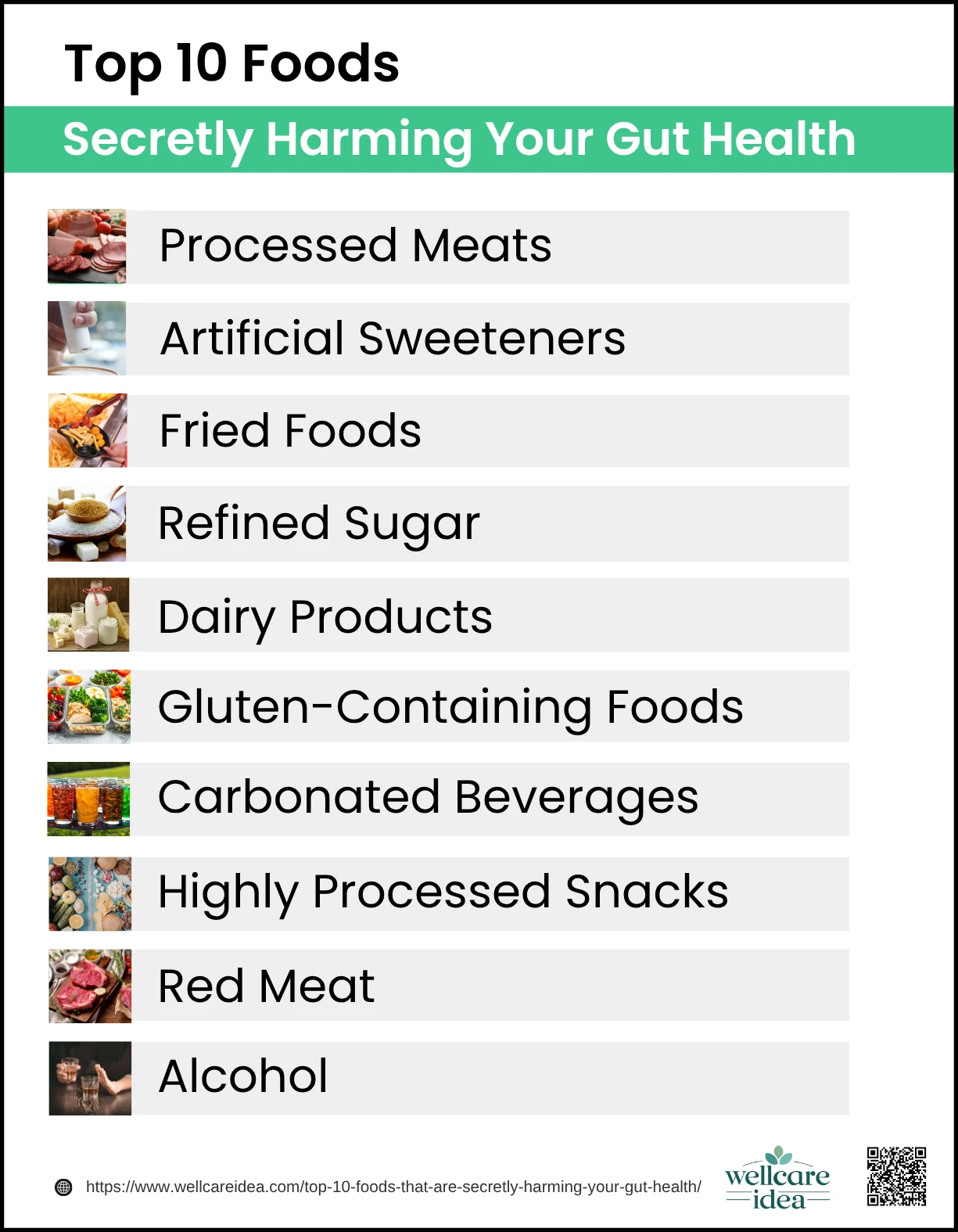 Top 10 Foods Secretly Harming Your Gut Health
1. Processed Meats
Processed meats like sausages, bacon, and deli meats often contain preservatives and additives that can disrupt your delicate gut bacteria balance 6 These products are typically high in saturated fats and contain compounds that may promote inflammation in the digestive tract, potentially leading to uncomfortable symptoms and long-term gut health issues. The curing agents and chemical additives in these meats can be particularly harsh on beneficial gut bacteria, creating an environment where harmful bacteria can thrive.
2. Artificial Sweeteners
Despite being marketed as healthy alternatives to sugar, artificial sweeteners like aspartame and sucralose may negatively impact your gut microbiota 7 Research suggests that these synthetic sweeteners can alter the composition of gut bacteria, potentially leading to glucose intolerance and metabolic changes 8 For some people, these sweeteners can cause bloating and gas as the gut struggles to process these unfamiliar chemical compounds that it cannot properly absorb or break down.
3. Fried Foods
Fried foods are typically high in saturated and trans fats, which can slow down digestion and promote the growth of harmful gut bacteria 9 The high temperatures used in frying can also create advanced glycation end products that may contribute to gut inflammation. These difficult-to-digest fats can overwhelm your digestive system, leading to discomfort, bloating, and potentially contributing to conditions like irritable bowel syndrome over time.
4. Refined Sugar
Refined sugars, found abundantly in sweets, pastries, and sugary drinks, act as fuel for harmful gut bacteria and yeast like Candida 10 This can lead to an overgrowth of these undesirable microorganisms, disrupting the natural balance of your gut microbiome 11 As harmful bacteria thrive on sugar, they can multiply more rapidly than beneficial strains, creating an imbalance that can trigger sugar cravings and make it challenging to maintain a healthy gut environment.
5. Dairy Products (For Some People)
For individuals with lactose intolerance, which affects a significant portion of the population, dairy products can trigger digestive distress including bloating, gas, and abdominal discomfort 12 This occurs when the body produces insufficient lactase enzyme to properly break down lactose, the natural sugar found in milk 13 Even for those without diagnosed intolerance, some people may experience inflammation and bloating from dairy consumption, particularly with conventional dairy that may contain hormones or antibiotics.
6. Gluten-Containing Foods
For individuals with gluten sensitivity or celiac disease, gluten-containing foods like wheat, barley, and rye can cause significant gut irritation and inflammation 14 In sensitive individuals, gluten can damage the intestinal lining, potentially leading to “leaky gut” where undigested particles pass into the bloodstream 15 Even for those without celiac disease, some people experience non-celiac gluten sensitivity with symptoms like bloating and abdominal pain after consuming gluten-rich foods.
7. Carbonated Beverages
The carbonation in sodas and sparkling drinks can introduce excess gas into your digestive system, leading to bloating and discomfort 16 Additionally, most carbonated beverages contain high amounts of added sugars or artificial sweeteners that can feed harmful gut bacteria and contribute to microbiome imbalance 17 The combination of carbonation, sugar, and often caffeine in these drinks can be particularly disruptive to sensitive digestive systems.
8. Highly Processed Snacks
Highly processed snacks including chips, crackers, and packaged baked goods often contain preservatives, emulsifiers, and artificial ingredients that may harm your beneficial gut bacteria 2 These products are typically low in dietary fiber, which is essential for feeding good bacteria and maintaining healthy digestion 18 Emulsifiers commonly found in these products have been shown in some studies to damage the protective mucus layer in the intestines, potentially contributing to inflammation 19
9. Red Meat (Excessive Consumption)
While red meat can be part of a balanced diet, excessive consumption may alter gut bacteria composition in ways that promote inflammation and negatively impact digestive health 20 Red meat is harder to digest than other protein sources, and some studies suggest that compounds produced during its digestion may damage the intestinal lining 21 High consumption of red meat has been linked to an increase in gut bacteria that produce metabolites associated with higher cardiovascular disease risk 22
10. Alcohol
Alcohol, particularly in excessive amounts, can damage the gut lining and reduce the population of beneficial bacteria 23 This disruption can lead to increased intestinal permeability, often called “leaky gut,” where toxins and undigested food particles pass through the intestinal wall into the bloodstream 19 Regular heavy alcohol consumption can significantly alter the composition of your gut microbiome, reducing microbial diversity which is a key indicator of gut health 24
*Table 1: Gut-Harming Foods and Their Effects*
| Food Category | Key Harmful Components | Potential Gut Impacts |
| Processed Meats | Preservatives, additives, saturated fats | Disrupted gut bacteria, inflammation |
| Artificial Sweeteners | Aspartame, sucralose | Altered microbiota, bloating, gas |
| Fried Foods | Saturated and trans fats | Slowed digestion, harmful bacteria growth |
| Refined Sugar | Simple carbohydrates | Feeds harmful bacteria and yeast |
| Dairy (for sensitive) | Lactose | Inflammation, bloating, digestive distress |
| Gluten (for sensitive) | Gluten proteins | Gut irritation, leaky gut symptoms |
Recognizing the Signs of an Unhealthy Gut
Pay attention to your body’s signals, as there are several common indicators that may suggest your gut health needs attention. Persistent digestive symptoms like frequent bloating, excessive gas, constipation, or diarrhea are among the most direct signs that your gut microbiome may be out of balance 25 These symptoms often indicate that your digestive system is struggling to process certain foods or that harmful bacteria have outstripped beneficial ones in your gut.
Beyond digestive issues, other less obvious signs may include unexplained fatigue, despite getting adequate sleep, which can occur when your gut isn’t properly absorbing nutrients needed for energy production 26 Skin problems like acne, eczema, or rashes can signal gut inflammation, as can frequent sugar cravings that are actually driven by harmful bacteria seeking their preferred fuel source 27 If you experience frequent illnesses or infections, this may indicate that your gut-based immune system isn’t functioning optimally 28
How to Protect and Nourish Your Gut
Fortunately, you can take several practical steps to support your gut health and counter the effects of problematic foods. Focus on incorporating both probiotic and prebiotic foods into your diet 1 Probiotic-rich foods like yogurt, kefir, sauerkraut, kimchi, and kombucha introduce beneficial bacteria directly into your system 29 Meanwhile, prebiotic foods such as garlic, onions, leeks, asparagus, bananas, and whole grains provide the necessary fiber to feed and nourish these good bacteria 30
Equally important are lifestyle factors that support gut health. Staying well-hydrated helps maintain healthy digestion and regular bowel movements 31 Managing stress through techniques like meditation, yoga, or deep breathing can significantly benefit your gut, as chronic stress disrupts the gut-brain axis 32 Regular exercise promotes healthy gut motility and microbial diversity (https://www.ncbi.nlm.nih.gov/pmc/articles/PMC5357536/), while prioritizing quality sleep allows your gut to repair and restore itself 33 Even simple changes like eating more slowly and chewing thoroughly can reduce the digestive burden on your system.
*Table 2: Gut-Friendly Foods to Incorporate*
| Food Type | Examples | Key Benefits |
| Probiotic Foods | Yogurt, kefir, sauerkraut, kimchi, kombucha, tempeh, miso | Introduce beneficial live bacteria to the gut |
| Prebiotic Foods | Garlic, onions, leeks, asparagus, bananas, chicory root, Jerusalem artichokes, whole grains | Provide fiber that feeds beneficial gut bacteria |
| Fiber-Rich Foods | Vegetables, fruits, beans, lentils, nuts, seeds | Support regular digestion and healthy gut flora |
Conclusion
Being mindful of the foods that can secretly harm your gut is the first step toward better digestive health and overall wellness. While it may seem challenging to avoid these common dietary elements, remember that even gradual changes can yield significant benefits over time 34 The journey to improved gut health doesn’t require perfection but rather a consistent commitment to nourishing your body with foods that support rather than undermine your digestive ecosystem.
By reducing your intake of these gut-harming foods while simultaneously incorporating more probiotic and prebiotic options, you can create an environment where beneficial bacteria thrive. Pay attention to how your body responds to different foods, as individual tolerances can vary significantly. Your gut health influences nearly every aspect of your wellbeing, making these dietary adjustments one of the most impactful investments you can make in your long-term health 35