
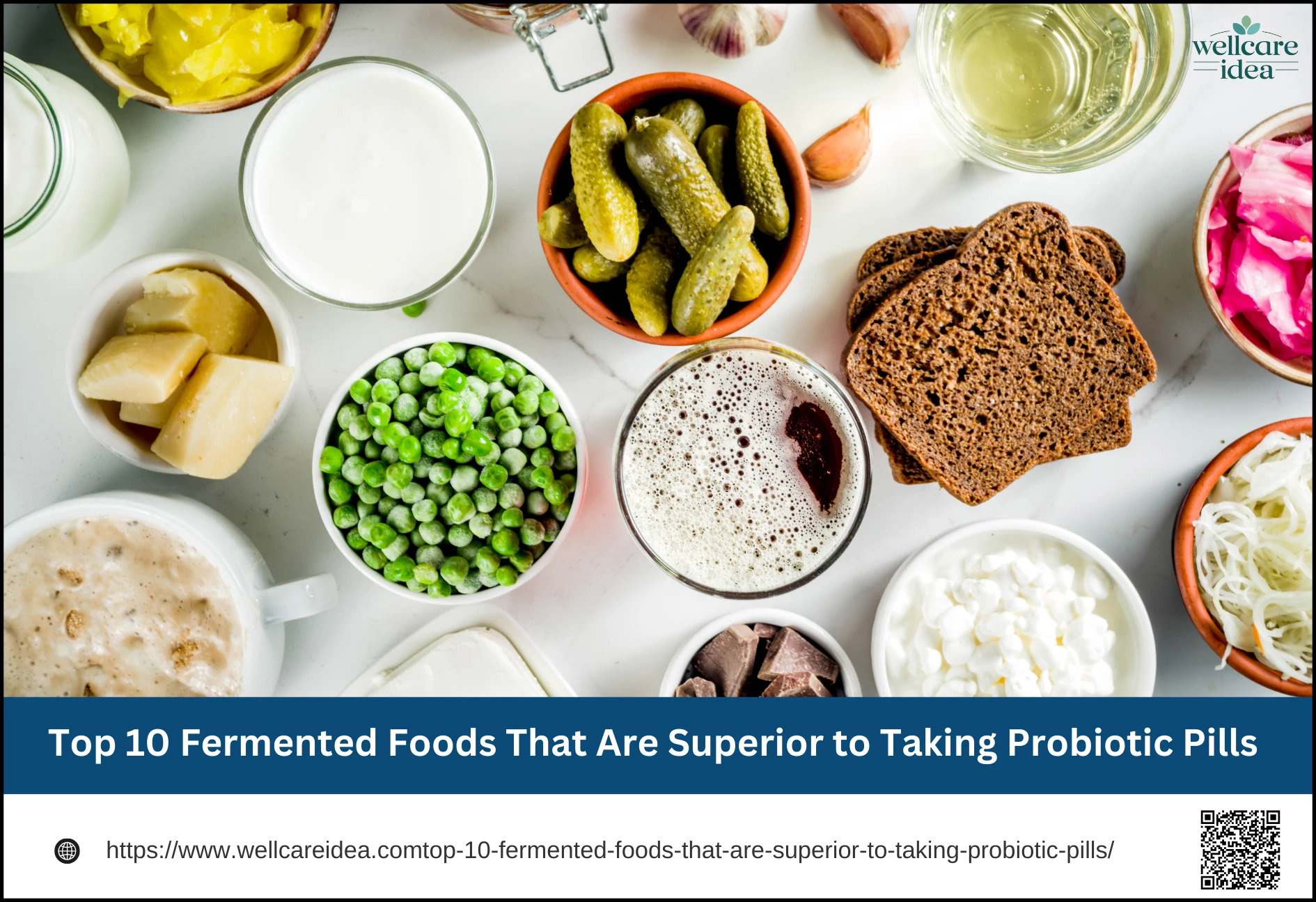
Why Fermented Foods Beat Probiotic Pills
In the pursuit of better gut health, many people turn directly to probiotic pills. However, a growing body of scientific research suggests that traditional fermented foods offer a far more comprehensive and effective solution. While probiotic supplements contain specific, isolated strains of bacteria intended to confer a health benefit, fermented foods provide a rich, complex ecosystem. This includes not only a diverse array of live microbes but also the beneficial byproducts they create during fermentation. These byproducts, known as postbiotics, include organic acids, enzymes, and vitamins that interact directly with your gut lining and immune cells 1 Furthermore, unlike pills which often have low survival rates through the digestive tract, the natural synergy in fermented foods—where microbes, nutrients, and prebiotic fibers work together—supports a healthier gut environment more effectively. In essence, consuming fermented foods is like introducing an entire supportive community to your gut, rather than just a few specialized workers.
How Fermented Foods Support Gut Health Better
The superiority of fermented foods lies in their multifaceted approach to wellness. First, they dramatically increase the diversity of your gut microbiome, which is a key marker of gut health. A landmark study from Stanford School of Medicine found that a diet high in fermented foods led to a significant increase in microbial diversity and a simultaneous decrease in numerous inflammatory proteins 2 This dual action is crucial because low microbiome diversity is linked to various chronic conditions. Second, these foods are a complete package. They deliver live microbes, prebiotics (which feed good bacteria), digestive enzymes, and bioactive metabolites like short-chain fatty acids all at once 3 This natural synergy enhances the bioavailability of nutrients and provides a broader range of health benefits than a single-strain probiotic supplement can offer.
Top 10 Fermented Foods Superior to Probiotic Pills
The following table outlines ten potent fermented foods, detailing their key beneficial components and the primary health advantages they offer, as supported by clinical and preclinical research.
| Fermented Food | Key Beneficial Components | Primary Health Benefits |
| Yogurt | Lactobacillus, Bifidobacterium, lactic acid, bioactive peptides | Improves lactose digestion, enhances gut barrier integrity, supports bone and heart health |
| Kefir | Diverse bacteria & yeasts (50+ strains), exopolysaccharides (EPS), organic acids | Boosts immune modulation, supports digestion, improves microbial diversity |
| Sauerkraut | Leuconostoc, Lactobacillus, fiber, vitamin C, enzymes | Inhibits pathogens, supports gut motility, provides anti-inflammatory benefits |
| Kimchi | Lactic acid bacteria (LAB), vitamins, short-chain fatty acids (SCFAs) | Powerful anti-inflammatory and immune-modulating effects, aids fiber digestion |
| Kombucha | Organic acids (acetic, gluconic), polyphenols from tea | Provides antioxidant support, may aid liver function and detoxification processes |
| Miso | Beneficial microbes from fermented soy, barley, or rice | Enhances digestibility of soy, contains bioactive compounds for gut and immune health |
| Tempeh | Whole fermented soybeans, bioactive oligosaccharides | Excellent plant-based protein, prebiotics support gut microbes, rich in B vitamins |
| Natto | Bacillus subtilis, vitamin K2, nattokinase enzyme | Notable for cardiovascular and bone health support due to high vitamin K2 content |
| Fermented Pickles | Lactobacillus from brine fermentation, electrolytes | Supports digestion and a healthy gut environment; distinct from vinegar-pickled versions |
| Aged, Raw Cheese | Beneficial bacteria from aging, bioactive peptides, nutrients | Contains microbial diversity; varieties like Gouda, Swiss, and Parmesan are good choices |
A Closer Look at the Top Choices
Yogurt and kefir are excellent starting points. Yogurt, especially varieties with live and active cultures, is well-studied for its ability to improve the digestion of lactose and support overall gut barrier function 4 Kefir, a fermented milk drink, is even more powerful due to its incredible microbial diversity, often containing over 50 different strains of bacteria and yeast working in synergy.
Vegetable-based ferments like sauerkraut and kimchi are nutritional powerhouses. The fermentation process breaks down the raw vegetables, making their nutrients more accessible and generating beneficial compounds like vitamin C and various organic acids 5 Research has specifically linked kimchi consumption to reduced levels of inflammatory markers in the body 6 It is critical for these foods to be raw and unpasteurized to retain their live cultures; look for them in the refrigerated section.
Kombucha, a fermented tea, has gained popularity for good reason. The fermentation, driven by a symbiotic culture of bacteria and yeast (SCOBY), produces organic acids and transforms tea polyphenols into more bioactive forms, offering antioxidant support. Be mindful to choose options with low sugar content. For those exploring plant-based proteins, tempeh and natto are outstanding. Tempeh, made from whole fermented soybeans, is a complete protein rich in prebiotic fibers that feed your gut bacteria 7 Natto, a Japanese staple, is unique for its production of vitamin K2, which is vital for heart and bone health 8
Even familiar foods like pickles and cheese can be probiotic sources, with important caveats. Only pickles fermented in salt brine (not vinegar) contain beneficial Lactobacillus 9 Similarly, certain aged, raw-milk cheeses like Gouda and Parmesan retain microbial communities from the fermentation and aging process 10
How to Add Fermented Foods to Your Daily Routine
Incorporating these foods into your diet can be simple and delicious. Start by adding a small spoonful of sauuerkraut or kimchi to salads, grain bowls, or sandwiches. Yogurt and kefir blend seamlessly into morning smoothies or can be used as a base for breakfast parfaits. Use miso to flavor soups, marinades, and salad dressings. For those new to fermented foods, the key is to begin slowly—with just a tablespoon or two per day—and gradually increase the amount over several weeks. This allows your digestive system to adjust without discomfort. For the greatest benefit, aim to consume a variety of different fermented foods throughout the week to expose your gut to the broadest spectrum of microbes and nutrients.
Safety Tips & Who Should Be Cautious
While fermented foods are safe for most people, some individuals should introduce them with care. Those with histamine intolerance may react to certain fermented products, particularly those involving aged proteins like cheese, fish sauce, or some cured meats 10 Interestingly, many vegetable-based ferments (like simple sauerkraut made only with cabbage and salt) are very low in histamine. People with compromised immune systems or serious underlying gut conditions like inflammatory bowel disease (IBD) should consult a doctor before making significant dietary changes. For everyone, choosing high-quality, unpasteurized products or making ferments at home ensures you receive the maximum live culture benefit.
Conclusion
The scientific evidence is compelling: incorporating a variety of traditionally fermented foods into your diet is a profoundly effective strategy for enhancing gut health and overall wellness. They outperform probiotic pills by delivering a synergistic mix of live microorganisms, digestive enzymes, prebiotic fibers, and bioactive postbiotic compounds (https://www.ncbi.nlm.nih.gov/pmc/articles/PMC8155853/). This comprehensive package has been proven to increase microbial diversity and reduce systemic inflammation—a foundation for preventing chronic disease (https://www.cell.com/cell/fulltext/S0092-8674(21)00754-6). By making fermented foods a regular part of your meals, you are investing in a time-tested, holistic approach to nurturing your body’s internal ecosystem.