
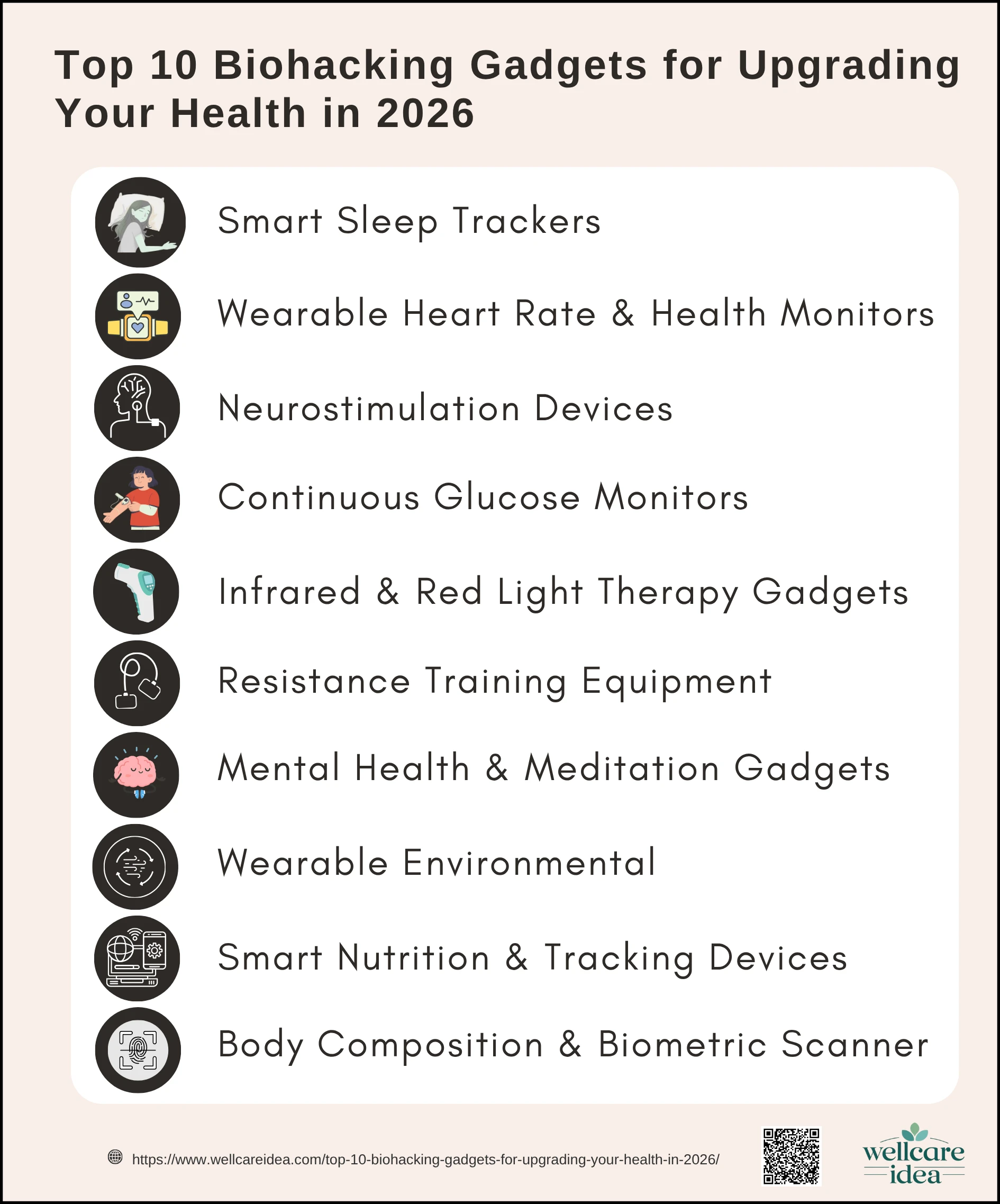
Biohacking represents a growing movement of individuals taking active control of their biology through technology, data, and lifestyle interventions. While once considered a fringe pursuit, biohacking has now entered the mainstream, with millions worldwide using various tools to optimize their physical, mental, and emotional well-being. The fundamental principle behind biohacking is simple: by making measured, targeted changes to your habits and environment, you can significantly improve your health outcomes and performance.
In 2026, biohacking technology has evolved beyond basic tracking to offer increasingly sophisticated, connected, and personalized health optimization solutions. These gadgets provide real-time insights into your body’s inner workings, enabling data-driven decisions about your health. From advanced sleep systems to metabolic monitors and neurostimulation devices, the latest innovations promise to make professional-grade health optimization accessible to everyone. This article explores the top ten biohacking gadgets poised to transform how we approach health and wellness in 2026, with a focus on technologies that have emerged from rigorous research and development.
1. Smart Sleep Trackers
Quality sleep is the foundation of optimal health, affecting everything from cognitive function and immune response to metabolic health and emotional regulation. Modern smart sleep trackers have evolved far beyond simple movement detection, now incorporating multiple sensors to provide comprehensive insight into your sleep architecture. The latest devices for 2026 combine accelerometers, heart rate monitoring, temperature sensors, and even sonar technology to accurately distinguish between light, deep, and REM sleep stages without requiring uncomfortable wearables.
The most advanced sleep tracking systems now provide actionable recommendations based on your data, such as ideal bedtime windows, environmental adjustments, and personalized wind-down routines. Research involving devices like the Oura Ring has demonstrated how tracking physiological data can help identify sleep disruptions and improve sleep efficiency. For those seeking more advanced intervention, smart mattresses and pads can automatically adjust temperature throughout the night to maintain optimal sleeping conditions, while smart sleep masks use gentle audio and light cues to enhance sleep quality and morning alertness.
2. Wearable Heart Rate & Health Monitors
Wearable heart rate monitors have evolved from simple fitness trackers to sophisticated health monitoring systems that provide continuous insights into your cardiovascular function and overall metabolic health. Modern devices including advanced smartwatches and chest straps now track Heart Rate Variability (HRV)—a key indicator of your autonomic nervous system function and recovery status. By monitoring subtle variations in the time intervals between heartbeats, these devices can detect early signs of stress, fatigue, or illness before obvious symptoms emerge, allowing for proactive health management.
The applications of these comprehensive health monitors extend far beyond basic fitness tracking. Athletes use HRV data to optimize their training intensity and recovery periods, while health-conscious individuals rely on continuous monitoring to track cardiovascular trends over time. Modern wearables can also detect abnormal heart rhythms like atrial fibrillation, providing early warning of potential cardiovascular issues. Companies like Whoop have pioneered this space with devices specifically designed for 24/7 recovery and performance monitoring, while Apple Watch and Fitbit have integrated similar functionality into their mainstream wearable offerings, making advanced health tracking accessible to millions.
3. Neurostimulation Devices
Neurostimulation represents one of the most cutting-edge categories in biohacking, using targeted electrical or magnetic stimulation to modulate brain activity and enhance cognitive function. Devices employing transcranial Direct Current Stimulation (tDCS) use low-level electrical currents to specifically target and enhance functions like focus, memory, and learning capacity. Meanwhile, technologies like transcranial Magnetic Stimulation (TMS) offer non-invasive treatment for conditions like depression, with emerging home-use devices making these technologies more accessible.
Safety remains a paramount consideration with neurostimulation devices, and reputable products include multiple safeguards such as current limiters, automatic timers, and clear positioning guides. Vagal nerve stimulators like Pulsetto use gentle electrical impulses delivered through the neck to activate the parasympathetic nervous system, promoting relaxation and stress reduction without pharmaceuticals. As these technologies continue to evolve through 2026, we’re seeing more personalized approaches that adapt stimulation parameters based on individual physiological responses and needs, making them both safer and more effective for cognitive enhancement and mental wellness.
4. Continuous Glucose Monitors
Originally developed for diabetes management, Continuous Glucose Monitors (CGMs) have emerged as powerful biohacking tools for anyone interested in optimizing their metabolic health. These small wearable sensors measure glucose levels in interstitial fluid continuously throughout the day and night, providing real-time insight into how your body responds to different foods, activities, stress levels, and sleep patterns. By identifying personal glucose triggers and patterns, users can make informed dietary adjustments to maintain steady energy levels, reduce inflammation, and support long-term metabolic health.
For non-diabetics, CGMs offer unprecedented visibility into their metabolic function, revealing how specific foods affect their blood sugar even if they don’t cause immediate noticeable symptoms. Companies like Levels and Nutrisense have developed platforms that combine CGM data with AI-powered analysis to provide personalized nutrition recommendations, helping users identify which foods provide sustained energy versus those that cause disruptive glucose spikes and crashes. This real-time metabolic feedback enables truly personalized nutrition strategies that go far beyond generic dietary advice, empowering users to make food choices aligned with their unique biology and health goals.
5. Infrared & Red Light Therapy Gadgets
Red and infrared light therapy devices use specific wavelengths of light to stimulate cellular processes that support healing, reduce inflammation, and enhance energy production. The therapeutic light penetrates the skin to reach mitochondria—the powerhouses of our cells—where it enhances ATP production (the primary energy currency of cells) and reduces oxidative stress. This photobiomodulation effect translates to tangible benefits including accelerated muscle recovery after exercise, improved skin health, reduced joint pain, and enhanced overall cellular function.
In 2026, these technologies have become increasingly accessible for home use through handheld devices, wearable panels, and full-body systems. Emerging research continues to refine our understanding of optimal wavelengths, dosages, and treatment protocols for different applications. The latest devices incorporate smart features like automated treatment timing, dose tracking, and personalized protocols based on individual needs and goals. While the scientific community continues to explore the full potential of light therapy, current evidence supports its use for muscle recovery, inflammation reduction, and skin health enhancement, making it a valuable addition to any biohacker’s toolkit.
6. Smart Fitness & Resistance Training Equipment
The home fitness revolution continues to evolve with AI-powered strength training equipment that provides personalized coaching and form feedback previously only available from personal trainers. Smart home gyms like Tonal and Tempo use electromagnetic resistance, computer vision, and artificial intelligence to create dynamically adapting workout programs tailored to your current fitness level, recovery status, and goals. These systems monitor your movement in real-time, providing immediate feedback on your form to maximize effectiveness while reducing injury risk—functionality that’s particularly valuable when training alone.
The latest smart fitness equipment goes beyond simple repetition counting to provide comprehensive performance analytics, including metrics on power output, range of motion, and workout consistency. This detailed data enables truly personalized programming that automatically adjusts based on your progress and feedback. These integrated systems create a seamless feedback loop between your workouts, recovery metrics, and nutritional intake, enabling holistic optimization of your fitness journey. The result is more efficient, effective workouts that adapt to your body’s changing needs while keeping you motivated through visible progress and varied routines.
7. Mental Health & Meditation Gadgets
A new category of biohacking devices specifically targets mental wellness by combining biometric feedback with technology-assisted relaxation and meditation techniques. Brain-sensing headbands that measure EEG (electroencephalogram) activity provide real-time feedback on your brainwave patterns during meditation, helping you learn what mental states correspond to different levels of calm and focus. This objective feedback accelerates meditation proficiency by confirming when you’ve achieved desired states, making practice more engaging and effective for beginners and experienced meditators alike.
Wearable devices like Pulsetto represent another approach to mental wellness, using vagus nerve stimulation to actively promote relaxation and reduce anxiety. By delivering gentle electrical impulses to the vagus nerve in the neck, these devices can quickly shift the nervous system from a stressed “fight-or-flight” state to a calm “rest-and-digest” state, making them valuable tools for managing acute stress and improving stress resilience over time. Modern mental health gadgets often include companion apps that combine biometric data with behavioral coaching, creating integrated systems that address both the physiological and psychological aspects of mental wellness for more comprehensive emotional optimization.
8. Wearable Environmental & Air Quality Monitors
The environments we inhabit profoundly impact our health and performance, yet many environmental factors remain invisible without proper monitoring. Wearable environmental trackers now provide personal air quality monitoring, measuring exposure to pollutants, allergens, and particulate matter that can affect respiratory health, cognitive function, and overall well-being. These compact devices track your personal exposure throughout the day, identifying locations and activities that pose the highest pollution risks and enabling informed decisions to reduce exposure.
The most advanced environmental monitors now measure multiple parameters including UV radiation exposure, noise pollution levels, temperature, and humidity—all factors that can influence health and performance. By correlating environmental data with physiological metrics from other wearables, users can identify how specific environmental factors affect their personal health markers like sleep quality, heart rate variability, or respiratory function. This comprehensive environmental intelligence enables truly personalized environmental optimization, from selecting the least polluted exercise routes to adjusting home and office environments for optimal health and cognitive performance.
9. Smart Nutrition & Supplement Tracking Devices
Optimizing nutrition requires more than just counting calories—it demands detailed understanding of how specific nutrients affect your unique biology. Modern smart nutrition systems combine AI-powered apps with various tracking methods to eliminate the guesswork from healthy eating. Computer vision apps like Foodvisor and SnapCalorie use your smartphone’s camera to identify foods and estimate portion sizes, automatically logging nutritional information without tedious manual entry. These systems learn your preferences and patterns over time, providing increasingly personalized recommendations.
The most sophisticated nutrition systems integrate data from multiple sources—including genetic testing, microbiome analysis, continuous glucose monitors, and activity trackers—to create truly personalized nutrition plans. For instance, the ZOE program combines gut microbiome testing with continuous glucose monitoring to provide personalized nutrition scores for different foods based on your unique metabolic responses. This integrated approach moves far beyond one-size-fits-all nutrition advice, empowering users to identify the specific foods and supplements that optimize their personal health markers, energy levels, and body composition.
10. Advanced Body Composition & Biometrics Scanners
Beyond simple weight measurements, advanced body composition analyzers provide detailed insights into your body’s specific makeup, tracking changes in fat, muscle, water, and bone mass over time. Modern smart scales use Bioelectrical Impedance Analysis (BIA) technology, sending imperceptible electrical currents through the body to measure resistance and reactance, which correlate with different tissue types. The most advanced models like the InBody Dial H30 and Withings Body Scan use multiple frequencies and electrodes to provide segmental analysis, measuring fat and muscle distribution across different body regions for more precise tracking.
The latest generation of body composition scanners integrates with broader health ecosystems, combining body composition data with activity, nutrition, and other health metrics to provide comprehensive insights and personalized recommendations. Research published in the National Library of Medicine has validated the accuracy of professional-grade BIA devices, showing strong correlation with DEXA scans—considered the gold standard for body composition assessment. This validation gives users confidence in the data these devices provide for tracking their health progress. As we look toward 2026, we can expect even more advanced home scanning technology, with some prototypes incorporating 3D body scanning and ultrasound technology for unprecedented detail in home body composition tracking.
Table: Comparing Advanced Body Composition Scanners (2025)
| Device Model | Key Measurements | Unique Features | Accuracy Validation |
| InBody Dial H30 | Segmental muscle/fat, visceral fat, basal metabolic rate | 8 electrodes, 3 frequencies, body type analysis | 98% correlation with DEXA scans |
| Withings Body Scan | Weight, fat/muscle distribution, nerve health, vascular age | 6-lead ECG, nerve health score, pulse wave velocity | Used in over 100 clinical studies |
| InBody Dial H20 | Skeletal muscle mass, body fat percentage, BMI | Professional-grade accuracy at lower price point | Based on validated InBody BIA technology |
Conclusion & Future of Biohacking
The biohacking gadgets of 2026 represent an exciting convergence of technology and biology, offering unprecedented capabilities for understanding and optimizing our health. From advanced sleep trackers and metabolic monitors to neurostimulation devices and AI-powered fitness equipment, these tools empower individuals to take control of their well-being with precision never before possible. The trend is clearly moving toward more connected, comprehensive health ecosystems that integrate multiple data streams to provide truly personalized health recommendations.
As these technologies continue to evolve, we can expect even more sophisticated, minimally invasive, and integrated health optimization systems. However, it’s important to approach biohacking with balance and responsibility—using technology as a tool for enhancement rather than replacement of healthy lifestyle fundamentals. The most successful biohackers combine these advanced technologies with sound nutrition, adequate sleep, regular movement, and stress management. By exploring these technologies thoughtfully and staying informed about emerging research, you can safely harness the power of biohacking to upgrade your health and performance in 2026 and beyond.