
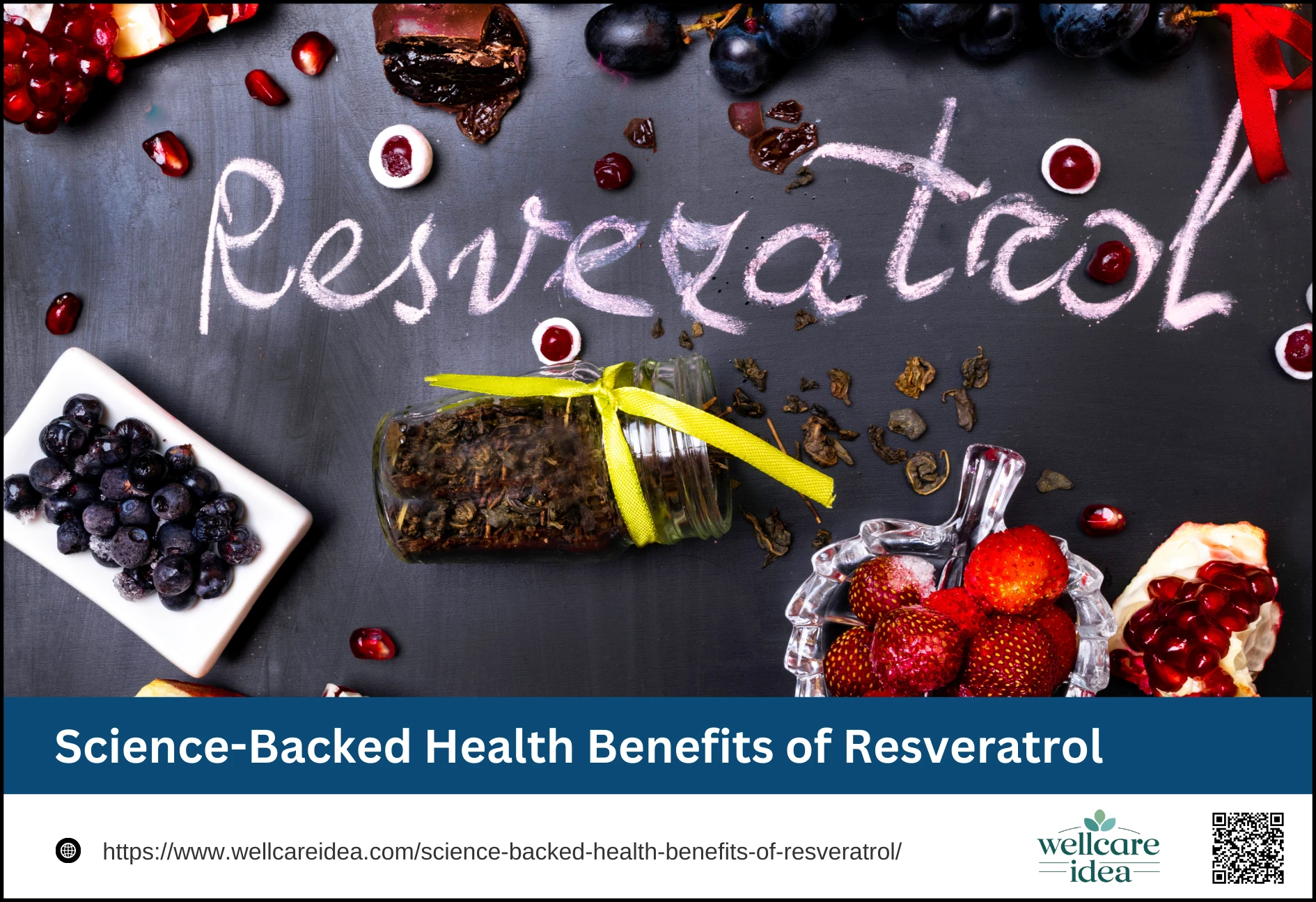
What is Resveratrol?
Found naturally in the skin of red grapes, berries, peanuts, and Japanese knotweed, resveratrol is a naturally occurring plant compound categorized as a polyphenol. Plants produce this substance as a protective response to environmental stresses, such as injury or fungal infection 1 Beyond its role in plant defense, it has gained significant attention in the scientific community for its potential to promote human health by interacting with multiple cellular pathways associated with aging and disease 2
Science-Backed Health Benefits of Resveratrol
1. Potent Antioxidant and Anti-Inflammatory Properties
Chronic inflammation and oxidative stress are often cited as root causes for many modern diseases. Resveratrol acts as a powerful antioxidant by neutralizing harmful free radicals—unstable molecules that damage cells and contribute to aging and disease 3 Research indicates that it does not just scavenge these damaging molecules directly but also stimulates the body’s own antioxidant defense enzymes 4 Furthermore, it works to suppress the production of pro-inflammatory substances in the body, potentially mitigating conditions driven by chronic immune activation 3
2. Cardiovascular Health and Blood Pressure Regulation
Heart health is a primary area of interest for resveratrol researchers, particularly regarding its ability to improve circulation and vessel function. Studies suggest that this compound may help lower blood pressure by influencing the production of nitric oxide, a molecule that signals blood vessels to relax 5 Additionally, animal models have shown that resveratrol can improve blood flow to the heart muscle even in the presence of high cholesterol, suggesting a protective effect against arterial damage 6 These vascular benefits are critical for reducing the strain on the cardiovascular system and preventing hypertension-related complications 5
3. Neuroprotection and Cognitive Function
Preserving brain function as we age is a major public health priority, and polyphenols like resveratrol show promise in this domain. Evidence indicates that resveratrol may protect brain cells from damage and reduce the toxicity associated with beta-amyloid plaques, which are hallmarks of Alzheimer’s disease 7 By reducing neuroinflammation and oxidative stress in the brain, it supports the survival of neurons and may help maintain cognitive abilities 8 Some research has even linked it to activating specific proteins called sirtuins, which play a key role in protecting neurons from age-related degeneration 7
4. Insulin Sensitivity and Diabetes Management
For individuals managing blood sugar levels, resveratrol may offer metabolic advantages. Clinical trials have demonstrated that it can improve insulin sensitivity, allowing the body to use glucose more effectively 9 In studies involving patients with Type 2 diabetes, supplementation led to reduced fasting glucose levels and better overall insulin control compared to placebo groups 10 This effect is thought to be mediated partly by reducing oxidative stress and activating pathways that mimic the metabolic benefits of calorie restriction 9
5. Joint Health and Arthritis Pain Relief
Joint degradation and pain are significant quality-of-life issues, often driven by inflammation in cartilage. Resveratrol has been observed to protect cartilage cells from inflammatory damage and reduce the production of enzymes that break down joint tissue 11 In animal studies mimicking osteoarthritis, treatment with resveratrol significantly improved clinical scores and reduced swelling by inhibiting specific inflammatory signaling pathways https://pmc.ncbi.nlm.nih.gov/articles/PMC5780088/} This suggests it could serve as a complementary approach to managing joint discomfort and slowing the progression of degenerative joint diseases 12
6. Potential Anti-Cancer Effects
While more human research is needed, laboratory studies have highlighted resveratrol’s capacity to interfere with cancer cell development at various stages. It appears to modulate glucose metabolism in tumor cells, potentially starving them of the energy they need to grow and spread 13 Furthermore, it acts as a “multi-targeting” agent that can suppress cell proliferation and induce apoptosis, or programmed cell death, in abnormal cells 14 Research has explored its efficacy against gastric, breast, lung, and liver cancer cells, showing that it can enhance the sensitivity of these cells to conventional treatments 15
7. Longevity and Anti-Aging Potential
The concept of extending lifespan through diet is a cornerstone of resveratrol research. The compound is widely studied for its ability to activate SIRT1, a gene associated with longevity and delayed aging processes 16 Although initial excitement stemmed from studies in yeast and simple organisms, subsequent research in mammals suggests it promotes healthspan—the period of life spent in good health—by protecting against metabolic stress and age-related diseases 17 It effectively mimics some of the physiological benefits of calorie restriction, which is the most established method for extending lifespan in animals 16
8. Protection Against Metabolic Syndrome
Metabolic syndrome involves a cluster of conditions—such as high blood pressure, high blood sugar, and excess body fat—that increase the risk of heart disease and stroke. Resveratrol has shown the ability to reverse several features of this syndrome in animal models, including improving lipid profiles and reducing insulin resistance without weight loss 18 Reviews of existing data suggest it serves as a reprogramming agent for metabolism, helping to normalize physiological functions disrupted by poor diet and lifestyle 19