
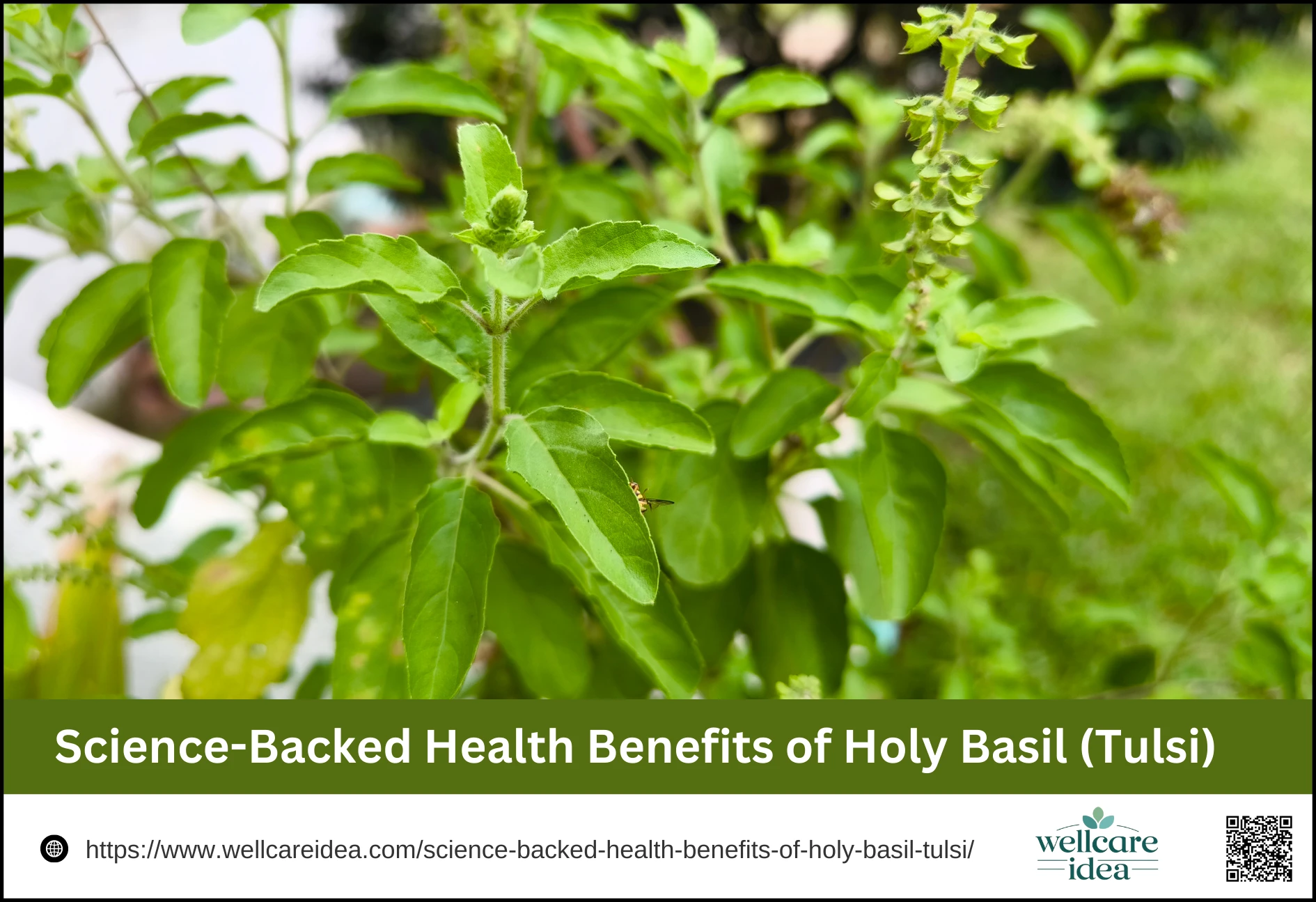
What is Holy Basil (Tulsi)?
Holy Basil, scientifically known as Ocimum sanctum or Ocimum tenuiflorum, is a leafy herb native to Southeast Asia. Unlike the sweet basil commonly used in Italian cooking, Holy Basil has a spicier, peppery flavor and is often referred to as the “Queen of Herbs” or an “Elixir of Life” in traditional healing systems. Modern science classifies it as an “adaptogen,” a unique type of plant that helps the body adapt to stress and restore balance 1 While it has been used for centuries in Ayurveda, recent clinical studies have begun to confirm its powerful role in supporting modern health needs, from reducing anxiety to lowering blood sugar.
Science-Backed Health Benefits of Holy Basil (Tulsi)
1 . Psychological & Cognitive Benefits
Modern life is often filled with various forms of stress, and Holy Basil is increasingly recognized for its ability to help the mind cope. Research indicates that the herb acts as a powerful adaptogen, meaning it helps the body manage physical, chemical, and psychological stress (2 In controlled human trials, participants who took Holy Basil extract reported significantly lower levels of stress and anxiety compared to those who took a placebo. Furthermore, studies suggest it may improve cognitive functions such as memory and reaction time, making it a potential natural aid for mental clarity 3
2. Metabolic & Cardiovascular Health
Maintaining healthy blood sugar and cholesterol levels is critical for heart health, and Holy Basil shows promise in this area. Several studies have demonstrated that the leaves can help lower blood sugar levels in individuals with type 2 diabetes (https://pmc.ncbi.nlm.nih.gov/articles/PMC6542390/} The herb appears to work by improving how the body uses insulin. Additionally, research indicates that Holy Basil can positively influence cholesterol profiles by reducing “bad” cholesterol (LDL) and triglycerides while supporting “good” cholesterol (HDL), which contributes to overall cardiovascular protection (https://pmc.ncbi.nlm.nih.gov/articles/PMC4310851/}
3. Immune & Respiratory Support
A strong immune system is the body’s first line of defense, and Holy Basil has been shown to enhance this protective barrier. Scientific reviews highlight that the herb acts as an immunomodulator, meaning it helps balance and strengthen the immune system’s response to threats 4 It increases the activity of specific immune cells, such as natural killer cells and T-helper cells, which fight off infections. Because of these properties, it is frequently studied for its ability to support respiratory health, offering relief from conditions like asthma and bronchitis by reducing mucus and inflammation in the airways 5
4. Anti-Inflammatory & Antioxidant Actions
Chronic inflammation and oxidative stress are root causes of many long-term diseases, but Holy Basil is rich in compounds that fight these processes. The herb contains phenolic compounds and flavonoids that act as strong antioxidants, protecting cells from damage caused by free radicals 6 Furthermore, its oil has been found to inhibit enzymes that trigger inflammation in the body, similar to how non-steroidal anti-inflammatory drugs work but without the same side effects. This dual action helps protect vital organs and tissues from daily wear and tear 7
5. Dermatological & Oral Health
Beyond internal health, Holy Basil has proven effective for oral hygiene and skin care. Clinical trials comparing Holy Basil mouthwash to standard chemical rinses (like chlorhexidine) found it to be equally effective at reducing dental plaque and gingivitis without the harsh side effects (https://pmc.ncbi.nlm.nih.gov/articles/PMC4061585/). Its antibacterial properties combat the specific bacteria responsible for gum disease and bad breath. Additionally, its ability to speed up wound healing and fight skin infections makes it a versatile remedy for external health issues 8
Conclusion
Holy Basil (Tulsi) is more than just a traditional remedy; it is a scientifically validated herb with diverse benefits for the mind and body. From reducing stress and enhancing memory to supporting heart health and boosting immunity, the evidence supports its status as a powerful tool for wellness. Integrating this herb into a daily routine—whether through tea, supplements, or oral care products—offers a natural, research-backed way to promote overall health.