
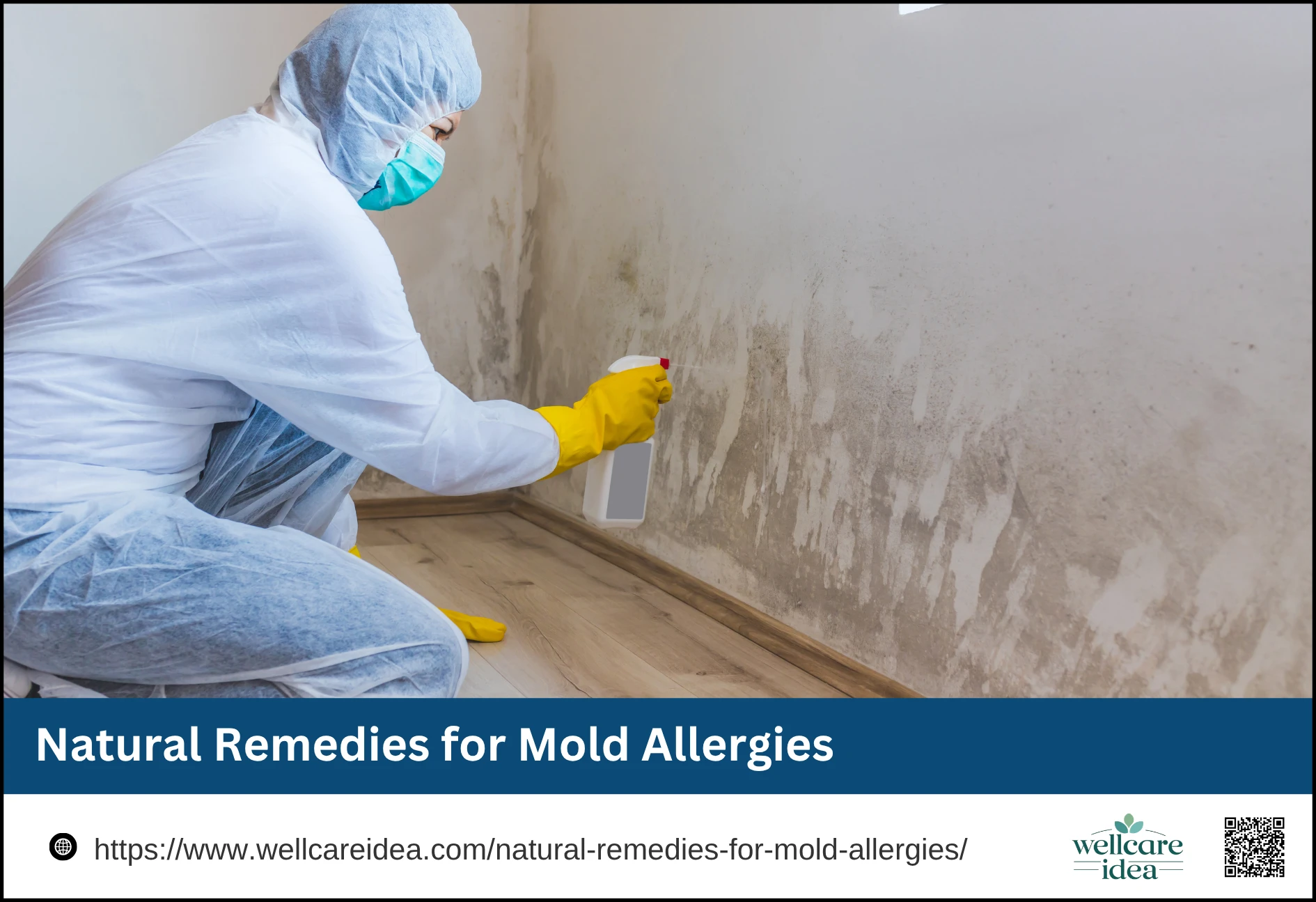
Imagine you are walking into a room that has been closed up for a while, and you immediately notice a heavy, earthy scent that feels like it is coating the back of your throat. This “musty” smell is often the first warning sign that you are sharing your space with mold, a type of fungus that has existed on Earth for millions of years 1. While these organisms play a vital role in nature by breaking down dead leaves and trees, they become a significant health burden when they decide to move into your home or workplace 2. If you have a mold allergy, your immune system essentially views these tiny, airborne spores as dangerous invaders rather than harmless particles 3.
Every time you take a breath in a damp environment, you might be inhaling hundreds of microscopic “seeds” called spores that are completely invisible to your naked eye 4. For most people, these spores cause no trouble, but if your body is overly sensitive, it starts producing specialized antibodies to fight them off 3. This biological overreaction is what leads to the sneezing, itching, and congestion that can make your daily life feel like a constant struggle 5.
You may find it helpful to think of mold as a biological hitchhiker that enters your home through open windows, vents, or even on your own shoes and pets 1. Once these spores find a spot with enough moisture and oxygen, they begin to grow on surfaces like wood, paper, or drywall, eventually forming colonies that can be seen as fuzzy spots of many different colors https://www.niehs.nih.gov/health/topics/agents/mold}. The real trouble begins when these colonies release more spores back into the air you breathe 2. Because you likely spend about 90% of your time indoors, the quality of your indoor air becomes the most important factor in managing your allergy symptoms 6.
Major Environmental Conditions That Trigger Mold Allergies
1. Excessive Indoor Humidity
If you keep your home’s humidity level above 60 percent, you are essentially providing the perfect “soup” for mold to grow on your walls and furniture 3. High humidity allows moisture to settle on organic materials, giving mold the water it needs to survive without a direct leak 2.
2. Leaking Roofs and Windows
When rain seeps through a compromised roof or a poorly sealed window, it saturates the insulation and drywall hidden behind your walls 1. These damp, dark cavities become prime real estate for mold colonies that you might not even see until the infestation is severe 2.
3. Poor Ventilation in Bathrooms and Kitchens
Every time you take a hot shower or boil water without using an exhaust fan, the steam creates condensation on your walls and ceilings 2. Without proper airflow to dry these surfaces, mold can quickly take root in the grout, corners, and behind your shower curtain 3.
4. Flooding and Standing Water
If your basement has ever flooded, you have likely learned that any material remaining wet for more than 48 hours is at extreme risk for mold growth 7. Standing water provides a continuous source of moisture that can ruin carpets and upholstery, making them impossible to clean once spores have moved in 2.
5. Condensation on Cold Surfaces
You might notice water droplets forming on cold water pipes or windowpanes during the winter, which is a sign that the warm air in your home is meeting a cold surface 2. This constant source of localized water can support mold growth in hidden areas like window tracks or under sinks 3.
6. Clogged Air Conditioning Drip Pans
Your HVAC system is designed to remove moisture, but if the drain lines are blocked, that water sits in a pan and becomes a breeding ground for fungi 2. Once the fan turns on, it can distribute mold spores throughout every room in your house 1.
7. Bare Earth Crawl Spaces
If your home is built over a crawl space with an exposed dirt floor, the moisture from the soil naturally evaporates and rises into your living areas 8. This constant upward wicking of moisture can rot your floor joists and sustain massive mold colonies that you rarely see 2.
8. Improperly Vented Appliances
If you have a clothes dryer or a gas stove that doesn’t vent directly to the outside, you are pumping gallons of water vapor into your indoor air every week 2. This accumulated moisture can eventually lead to mold growth in laundry rooms and kitchens 1.
9. Tightly Sealed Building Envelopes
Modern homes are often built to be “airtight” for energy efficiency, but this can trap moisture inside if there isn’t a mechanical ventilation system 8. Without a regular exchange of fresh air, everyday activities like breathing and cooking can raise humidity to levels that promote mold 3.
10. Landscaping and Gutters
If your gutters are full of leaves or your lawn slopes toward your house, rain water will collect around your foundation 2. This water can seep through the concrete and keep your basement or crawl space perpetually damp 1.
Mold Allergy Clinical Facts
| Common Symptoms | • Persistent sneezing and runny or stuffy nose 3.
• Itchy eyes, nose, and throat accompanied by watering eyes 4. • Coughing, wheezing, and chest tightness, especially in those with asthma 9. • Dry, itchy skin or red rashes and hives 10. • Chronic fatigue and headaches caused by sinus congestion 11. • Postnasal drip leading to a persistent sore throat 4. |
| Primary Causes | • Overly sensitive immune system reacting to airborne fungal spores 3.
• Inhalation of microscopic particles that the body recognizes as foreign invaders 5. • Genetic predisposition or family history of allergies and asthma 10. |
| Types of Reactions | • Mold-Induced Asthma: Where breathing in spores triggers a severe asthma flare-up 3.
• Allergic Fungal Sinusitis: An inflammatory reaction to fungi lodged in the sinus cavities 3. • Hypersensitivity Pneumonitis: A rare condition where lung tissue becomes inflamed after exposure to moldy dust 9. • Allergic Bronchopulmonary Aspergillosis: A serious reaction occurring in people with existing lung conditions like cystic fibrosis 3. |
| How Mold Spreads | • Spores act like seeds that travel through air currents to new locations 4.
• Attachment to pets, shoes, and clothing allows spores to move between indoor and outdoor spaces 1. • Rapid colonization occurs whenever spores land on organic matter that is wet or damp 2. |
| Affected Age Groups | • Children are at the highest risk for developing allergies and asthma from early exposure 12.
• Adults in certain occupations like farming or carpentry experience high exposure rates 3. • Seniors are more likely to experience severe respiratory complications or medication-related reactions 13. |
| High Risk Factors | • Working in high-moisture jobs like dairy work, logging, or winemaking 3.
• Living in a home with poor ventilation or high indoor humidity 1. • Residing in a building that has sustained significant water damage from leaks or floods 7. |
| Diagnostic Methods | • Skin Prick Test: Where doctors apply small amounts of mold to your skin to check for a hive-like reaction 14.
• RAST Blood Test: Measuring the specific IgE antibodies in your blood to identify mold sensitivities 15. • Visual Inspections: Identifying musty odors or visible colonies in your environment 16. |
| Natural Remedies | • Nasal saline irrigation with a neti pot or squeeze bottle 17.
• Herbal supports like Butterbur, Stinging Nettle, and Quercetin 18. • Environmental controls including HEPA purifiers and dehumidifiers 19. |
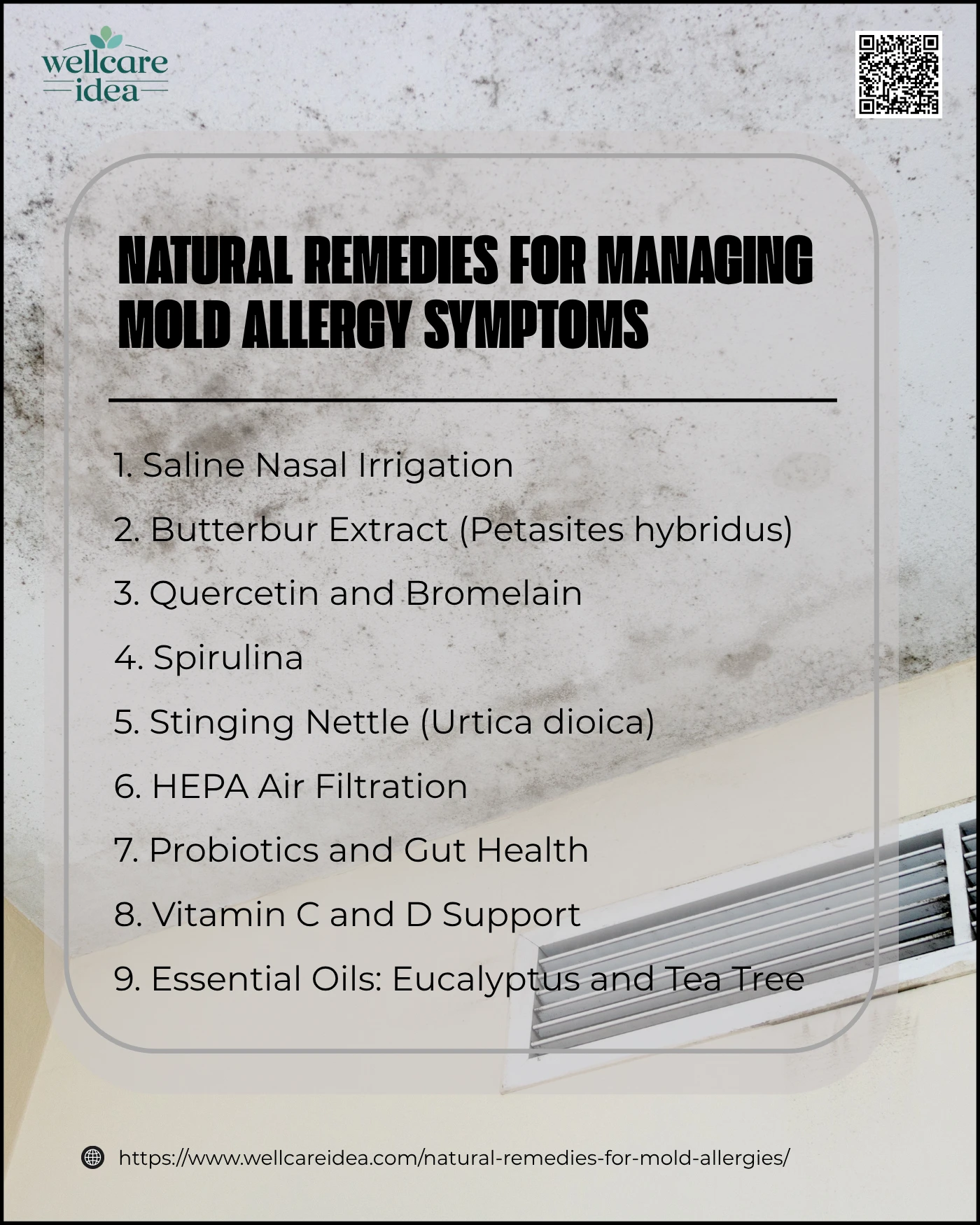 Natural Remedies for Managing Mold Allergy Symptoms
You do not always have to rely on pharmaceutical drugs to find relief from the congestion and itching that mold causes. Many people are turning to natural substances that can help stabilize your immune system and physically clear the allergens from your body 18. These remedies often target the same biological pathways as medications but with a lower risk of side effects like drowsiness 19.
1. Saline Nasal Irrigation
One of the most immediate ways you can find relief is by physically washing the mold spores out of your nasal passages using a salt-water solution 17. By using a neti pot or a squeeze bottle, you help thin out thick mucus and reduce the swelling in your nose 20. Regular rinsing has been shown to significantly improve your quality of life by removing irritants before they can trigger an immune response 18.
2. Butterbur Extract (Petasites hybridus)
Butterbur is a plant-based remedy that has been researched extensively for its ability to block the chemicals that cause allergic inflammation 18. Taking 50 to 75 mg of standardized extract twice a day has been found to be as effective as some common antihistamines in reducing nasal symptoms 19. It is particularly helpful because it doesn’t cause the sleepiness that many over-the-counter drugs do 21.
3. Quercetin and Bromelain
Quercetin is a powerful antioxidant found in apples, onions, and berries that acts as a natural “stabilizer” for your mast cells 18. By keeping these cells from releasing histamine, it prevents the allergic reaction from starting in the first place. When you take it with bromelain—an enzyme found in pineapples—your body absorbs it much better, and the combination helps reduce the swelling in your sinuses 17.
4. Spirulina
This blue-green algae is a nutrient-dense supplement that has been shown to modulate your immune system’s response to environmental triggers 22. Research results indicate that taking 2,000 mg of spirulina daily can reduce the levels of interleukin-4, a chemical that promotes allergic reactions, by up to 32 percent 23. Many people find it helps specifically with the sneezing and nasal congestion that mold causes 24.
5. Stinging Nettle (Urtica dioica)
Stinging nettle is a traditional herb that contains active compounds that block histamine receptors in your body 21. By drinking nettle tea or taking a supplement of 300 to 600 mg daily, you can help reduce the redness and itching in your nose and throat 18. It is considered one of the faster-acting herbal remedies, with many people seeing results within a week of use 19.
6. HEPA Air Filtration
You can dramatically lower the number of mold spores you breathe in by using a High-Efficiency Particulate Air (HEPA) purifier in your bedroom 19. These filters are designed to trap 99.97 percent of tiny particles, including the mold spores that are floating through your indoor air 18. Keeping a purifier running while you sleep can help you wake up with clearer sinuses and less congestion 20.
7. Probiotics and Gut Health
Because a large part of your immune system is located in your gut, taking probiotics can help balance your body’s response to allergens 21. Studies suggest that certain healthy bacteria found in yogurt or supplements can reduce the severity of your hay fever symptoms 17. By strengthening your gut health, you are essentially training your immune system not to overreact to harmless particles like mold 18.
8. Vitamin C and D Support
Vitamin C acts as a natural antihistamine by helping your body break down histamine more quickly and preventing its release 18. Simultaneously, Vitamin D is crucial for overall immune regulation, and having sufficient levels has been linked to fewer allergy and asthma symptoms in children 6. You should aim for a combination of diet and supplements to ensure your immune system has the nutrients it needs to function correctly 21.
9. Essential Oils: Eucalyptus and Tea Tree
If you struggle with a stuffy nose, inhaling eucalyptus oil can help open your airways because it contains 1,8-cineole, a compound with anti-inflammatory properties 25. Tea tree oil is another powerful tool that you can use to clean moldy surfaces because it has strong antifungal effects (https://pmc.ncbi.nlm.nih.gov/articles/PMC10317738/}. These oils can be used in diffusers to help freshen the air or mixed with water to scrub away small spots of mold on hard surfaces 20.
Critical Precautions for Using Natural Remedies
You must be careful about the quality of the water you use in a neti pot, as using tap water that has not been treated can lead to rare but life-threatening infections 14. It is essential that you only use distilled, sterile, or previously boiled and cooled water for any nasal rinsing 26. Furthermore, you should always wash your irrigation device after each use and leave it open to air-dry so that it does not become a new home for mold itself 14.
If you are considering butterbur, you have to ensure the product is labeled “PA-free” (pyrrolizidine alkaloid free).The natural form of the plant contains chemicals that can cause severe liver damage, so only standardized, high-quality supplements are safe for long-term use. You should also be aware that herbal remedies can take a few weeks to build up in your system, so they are better for long-term management than for treating a sudden, severe reaction 19.
You should never use natural remedies to treat anaphylaxis, which is a life-threatening allergic reaction that requires emergency medical care. If you experience severe shortness of breath, swelling of your throat, or a rapid pulse, you need to seek help immediately 10. It is always a good idea to talk to your doctor before starting new supplements, especially if you have other health conditions like heart disease or high blood pressure 26.
The Biological Link Between Mold and Behavioral Health
Walking into a damp home can affect more than just your lungs; it can actually impact your brain and your mood. You may be surprised to learn that research has linked living in a mold-infested building with higher rates of anxiety, depression, and irritability 27. In some cases, the inflammation caused by breathing in mold spores can affect your central nervous system, leading to what many call “brain fog” or memory loss 11.
If you feel a sense of doom or persistent sadness after moving into a new place, you might want to check the walls for hidden leaks. Some toxic molds produce compounds called mycotoxins that can interfere with the way your brain’s chemical messengers work. There is also the psychological stress of living in an unhealthy environment, which can make you feel like you have lost control over your own home. Addressing the mold problem through remediation can often lead to a significant improvement in your emotional well-being 28.