
When you or a loved one are facing a measles diagnosis, it is completely natural to feel overwhelmed and look for ways to ease the discomfort. Measles is a challenging illness, and while modern medicine relies heavily on prevention through vaccination, managing the active viral infection requires a dedicated approach to symptom relief. There is no specific antiviral medication that cures the measles virus once you have it 1 Instead, the goal of treatment—both medical and at-home—is to support your immune system, prevent complications, and keep you as comfortable as possible while your body fights off the infection.
This guide will walk you through what measles is, essential facts you need to know, and evidence-based supportive home remedies to help manage the symptoms effectively.
Section 1: What is Measles?
Measles, also known as rubeola, is a highly contagious respiratory infection caused by a virus belonging to the paramyxovirus family 2 If you are exposed to the measles virus and lack immunity, the virus rapidly multiplies in the back of your throat and lungs before spreading throughout your entire body.
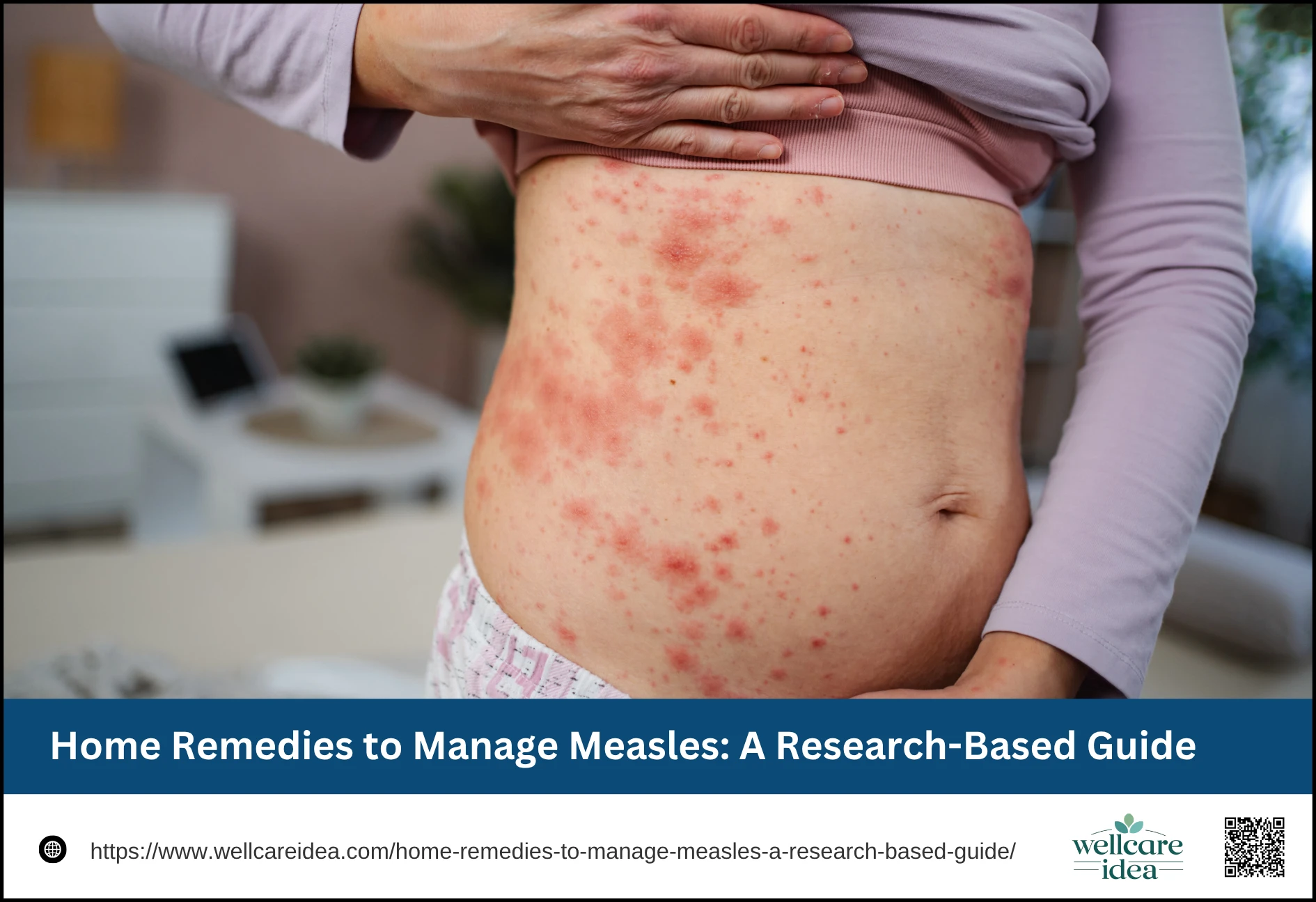
You might initially mistake measles for a severe cold or the flu, as the early stages bring a high fever, a persistent hacking cough, a runny nose (coryza), and red, watery eyes (conjunctivitis) 3 However, a few days into the illness, a characteristic symptom appears: tiny white spots inside the mouth, known as Koplik spots { Shortly after, a distinct, flat, red rash erupts, usually starting on the face at the hairline and slowly making its way downward to cover the neck, trunk, arms, legs, and feet 4
Because it is one of the most easily transmitted human viruses known to science, understanding its progression and knowing how to support the body through the healing process is absolutely critical for your recovery.
Section 2: Essential Measles Facts
To manage measles effectively, you need a clear understanding of the disease’s profile. The table below outlines the critical clinical and epidemiological facts.
| Category | Details & Clinical Facts |
| Symptoms | Early (Days 10-14 post-exposure): High fever (up to 104°F or 40°C), dry cough, runny nose, sore throat, inflamed eyes (conjunctivitis) 5
Later: Koplik spots (white spots inside the cheeks), followed by a spreading maculopapular rash lasting 5-6 days 6 |
| Causes | The highly contagious Measles morbillivirus. It lives in the mucus of the nose and throat of an infected person 7 |
| Types | Standard Measles (Rubeola): The classic, most common form.
Atypical Measles: Occurs rarely in people who received a killed-virus vaccine between 1963 and 1967 and are subsequently exposed to the wild virus 8 |
| How it Spreads | Airborne transmission via respiratory droplets when an infected person coughs, sneezes, or talks. The virus can remain active and contagious in the air or on infected surfaces for up to 2 hours 2 |
| Endemic Regions | While found globally, outbreaks frequently occur in areas with low vaccination coverage. It remains endemic in parts of Sub-Saharan Africa, the Middle East, and South Asia, making awareness crucial if you live in or travel to these regions 9 |
| Higher Risk Factors | You are at a higher risk if you are unvaccinated, travel internationally to endemic areas, or suffer from a Vitamin A deficiency (10 Severe complications are most common in children under 5 and adults over 20. |
| How Doctors Diagnose | Primarily through clinical observation of the classic rash and Koplik spots. Confirmed via blood tests checking for measles-specific IgM antibodies, or a throat/nasopharyngeal swab for viral RNA 11 |
| Treatment Protocol | No specific antiviral therapy exists. Medical care involves supportive measures: fever reducers (acetaminophen/ibuprofen), hydration, and critically, Vitamin A supplementation to prevent severe eye damage and mortality 12 |
| Methods of Prevention | The MMR (Measles, Mumps, Rubella) vaccine is safe, highly effective, and the only proven method of prevention. Two doses provide 97% effectiveness against the virus 13 |
Section 3: Evidence-Based Home Remedies & Supportive Care
While the measles virus must run its course, you can take active steps at home to soothe the symptoms, support immune function, and create an environment conducive to healing. It is vital to note that these remedies do not “cure” measles; they manage the physical toll it takes on your body.
1. The Protocol for Fever and Hydration
Fever is your body’s natural response to fighting the virus, but a measles fever can spike dangerously high.
- Aggressive Hydration: When you have a high fever and are sweating, fluid loss is significant. Dehydration exacerbates fatigue and thickens respiratory secretions. Drink plenty of purified water, oral rehydration solutions, and clear broths. Herbal teas, particularly chamomile or peppermint, can soothe a raw throat while providing necessary fluids 14
- Cool Compresses: Apply a damp, cool washcloth to your forehead, back of the neck, and wrists to help regulate your body temperature gently.
2. Vitamin A: The Critical Nutrient
From a clinical standpoint, severe measles cases are heavily linked to Vitamin A deficiency. The World Health Organization strongly recommends Vitamin A supplementation for all children diagnosed with measles, as it significantly reduces the risk of complications like blindness and pneumonia 15
- What you can do: While you should follow a doctor’s exact dosage for oral Vitamin A drops, you can also support your body by consuming foods rich in beta-carotene (which the body converts to Vitamin A), such as sweet potatoes, carrots, spinach, and butternut squash 16
3. Soothing the Skin Rash
The measles rash can be hot, itchy, and deeply uncomfortable. Supporting the skin barrier naturally can provide immense relief.
- Oatmeal Baths: Colloidal oatmeal binds to the skin and forms a protective barrier, holding in moisture and easing inflammation. Soaking in a lukewarm bath with a cup of finely ground oats can significantly reduce itching 17
- Aloe Vera: Known for its profound skin-soothing properties, pure aloe vera gel can be gently applied to the most irritated patches of the rash. Aloe contains vitamins, enzymes, minerals, and salicylic acids that act as natural anti-inflammatories, cooling the epidermal layer and reducing redness 18
4. Immune System Support and Gut Health
Your immune system is working overtime. Supporting it with specific compounds and maintaining your microbiome can aid your recovery, especially if your doctor has prescribed antibiotics to treat a secondary bacterial infection (like an ear infection or pneumonia) caused by the measles weakening your defenses.
- Probiotics: A robust percentage of your immune system resides in your gut. Incorporating probiotics—whether through supplements or fermented foods—helps maintain a healthy balance of gut flora. This is particularly important for modulating your immune response and preventing gastrointestinal distress during a severe viral illness 19
- Antioxidant-Rich Compounds: Foods rich in antioxidants help combat the oxidative stress caused by the viral infection.
- Quercetin: Found abundantly in foods like onions, apples, and certain berries, quercetin is a flavonoid noted for its antioxidant and anti-inflammatory effects, helping to stabilize cells against the inflammatory cascade triggered by the virus 20
- Aged Black Garlic: Known for having a higher concentration of antioxidants than raw garlic, aged black garlic contains compounds like S-allylcysteine (SAC) which have been studied for their immune-modulating properties and ability to support macrophage activity 21
5. Respiratory and Eye Relief
The cough and conjunctivitis associated with measles are often the most frustrating symptoms.
- Humidification: Use a cool-mist humidifier in your room. Measles causes a dry, hacking cough; adding moisture to the air helps soothe irritated airways and thins mucus, making it easier to breathe 22
- Honey (For those over 1 year old): For a persistent cough, a teaspoon of raw honey is a proven, natural cough suppressant that coats the throat. Note: Never give honey to infants under 12 months due to the risk of botulism 23
- Eye Care: Because your eyes will be extremely sensitive to light (photophobia), dim the lights in your room or wear sunglasses even indoors. Gently clean crusty eyelids with a cotton ball dipped in warm, sterile water 24
Section 4: Precautions Before Using Natural Remedies
While home remedies can offer significant comfort, measles is a serious, reportable medical condition that requires professional medical oversight. You must exercise extreme caution and adhere to the following medical guidelines.
1. Measles Cannot Be Managed Exclusively at Home
You must consult a healthcare provider if you suspect measles. The virus suppresses the immune system for weeks to months after the infection, making you highly susceptible to severe secondary infections. Complications occur in about 30% of cases and can include severe pneumonia, ear infections leading to permanent hearing loss, and encephalitis (swelling of the brain) which can cause permanent neurological damage or death 25
2. The Danger of Aspirin
Never give aspirin or medications containing aspirin to children or teenagers who have a viral illness like measles. Doing so is linked to Reye’s syndrome, a rare but potentially life-threatening condition that causes massive swelling in the liver and brain 26 Always use acetaminophen or ibuprofen instead, and consult your pediatrician for the correct dosage.
3. Herb-Drug Interactions
If you are incorporating herbal remedies, be aware that highly concentrated plant extracts can interact with over-the-counter medications or prescription drugs. For example, high doses of certain antioxidant supplements can interfere with how your liver metabolizes other medications 27 Always disclose any natural remedies, teas, or extracts you are using to your doctor.
4. Isolation is Mandatory
Home management means strictly staying at home. Measles is so contagious that if one p erson has it, up to 90% of the people close to that person who are not immune will also become infected 2 You must isolate yourself from anyone who is unvaccinated, pregnant women, infants under 12 months, and immunocompromised individuals until your doctor clears you—typically four days after the rash first appears.
By combining the symptom-relieving power of natural, supportive care with vigilant medical oversight, you can manage the impact of measles and safely support your body’s journey back to health.