
What are the Health Risks of Traditional Smoking?
Traditional smoking involves the inhalation of smoke from burning tobacco products, primarily cigarettes, cigars, and pipes. This habit introduces thousands of harmful chemicals into the body, many of which are toxic and carcinogenic. The health risks associated with smoking are extensive, affecting nearly every organ system in the human body and serving as a leading cause of preventable death worldwide 1 While many individuals are aware of the dangers to the lungs, the impact of tobacco smoke extends far beyond the respiratory system, compromising heart health, reproductive function, oral hygiene, and the well-being of those exposed to secondhand smoke. Understanding these risks is crucial for making informed decisions about personal health and cessation.
 Health Risks of Traditional Smoking
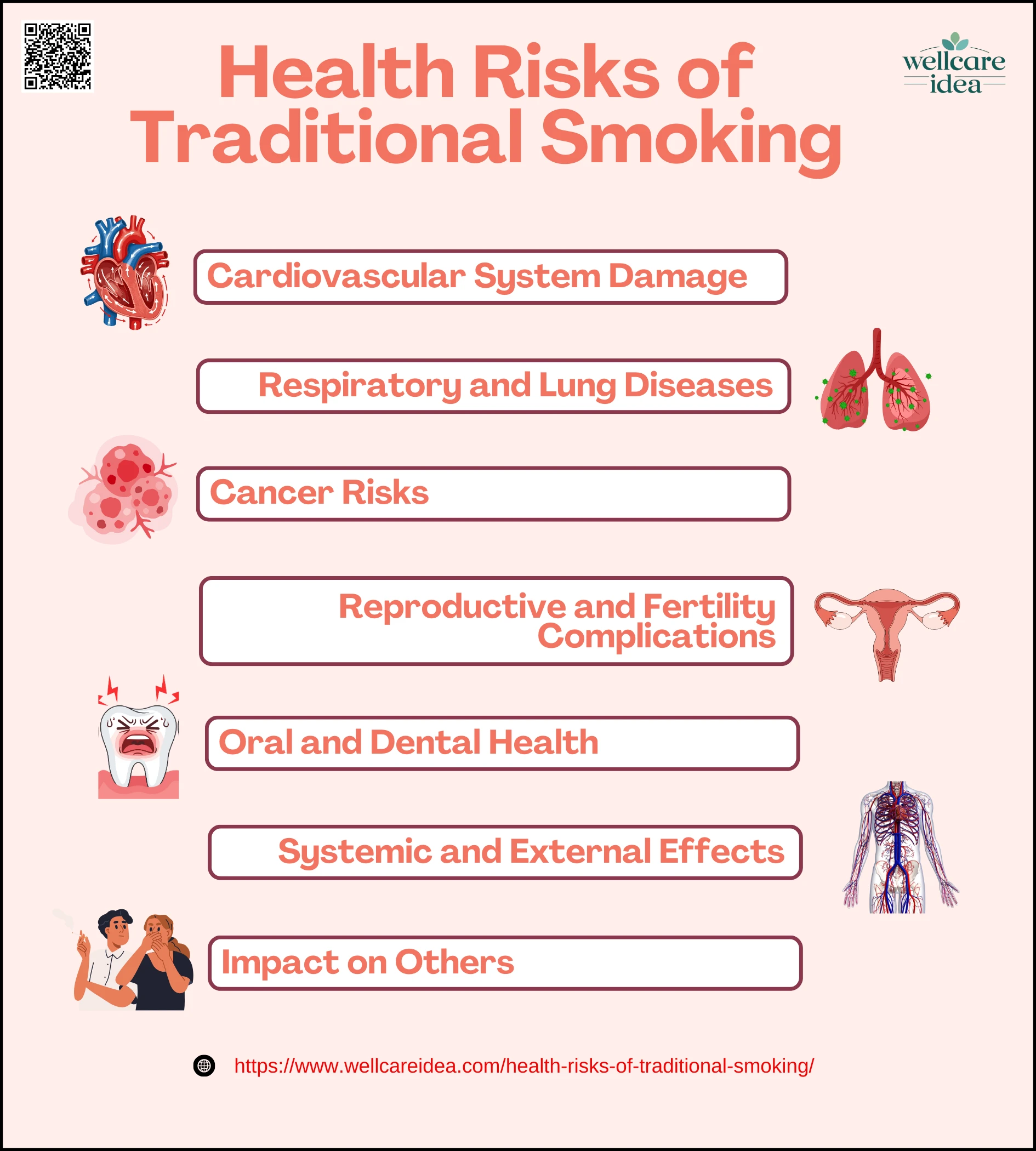
1. Cardiovascular System Damage
The heart and blood vessels are among the first areas of the body to suffer from the toxic effects of tobacco. Chemicals in smoke damage the lining of the blood vessels, which can lead to a condition called atherosclerosis, where plaque builds up and narrows the arteries 1 This narrowing restricts blood flow and significantly increases the likelihood of blood clots, which can block the flow to the heart or brain. Consequently, smokers face a much higher risk of suffering from heart attacks and strokes compared to non-smokers. Furthermore, smoking is a major cause of peripheral arterial disease, a condition that reduces blood flow to the limbs 2
2. Respiratory and Lung Diseases
Inhaling smoke directly assaults the delicate tissues of the lungs, leading to severe chronic conditions. Chronic obstructive pulmonary disease (COPD), which includes emphysema and chronic bronchitis, is one of the most common long-term effects found in smokers 3 These diseases physically destroy the air sacs in the lungs or cause permanent inflammation in the airways, making breathing increasingly difficult over time. Research indicates that the decline in lung function is accelerated in smokers, often leading to debilitating breathlessness that affects daily life activities. Aside from chronic diseases, smokers are also more susceptible to respiratory infections like pneumonia because smoking weakens the immune system’s ability to clear bacteria and viruses from the lungs 4
3. Cancer Risks
Tobacco smoke contains dozens of chemicals known to cause cancer, and the risk is not limited to the lungs. While lung cancer is the most well-known consequence, smoking is also firmly linked to cancers of the mouth, throat, esophagus, bladder, kidney, and pancreas 5 The carcinogens in smoke enter the bloodstream and travel throughout the body, damaging DNA in various cells and preventing the body from repairing this damage. For instance, the risk of developing bladder cancer is significantly elevated in smokers because cancer-causing chemicals are filtered out of the blood by the kidneys and concentrate in the urine. Evidence also suggests a causal relationship between smoking and acute myeloid leukemia, a type of blood cancer 5
4. Reproductive and Fertility Complications
Both men and women experience reduced fertility and reproductive health issues due to smoking. For women, smoking can make it more difficult to conceive and is associated with a higher risk of pregnancy complications, such as placenta previa and placental abruption, which can be dangerous for both the mother and the baby 6 Additionally, smoking during pregnancy is a known cause of low birth weight and can lead to premature birth. Men are not immune to these effects; smoking can damage sperm DNA and reduce sperm count, which directly impacts fertility potential. Some studies also indicate that women who smoke may experience menopause at a younger age compared to non-smokers 7
5. Oral and Dental Health
The mouth is the entry point for smoke, and as a result, it suffers immediate and long-term damage. Gum disease, or periodontal disease, is a major risk for smokers because smoking restricts blood flow to the gums and affects the attachment of bone and soft tissue to the teeth 8 This can eventually lead to tooth loss if left untreated. Beyond the gums, smoking stains teeth, causes bad breath, and significantly increases the risk of oral cancers, including cancer of the lip and tongue. Dentists often find that treatments for gum disease are less successful in smokers because the mouth heals more slowly due to the reduced blood supply caused by nicotine and other chemicals 9
6. Systemic and External Effects
The visible effects of smoking are often apparent on the skin and body exterior, reflecting the internal damage. Smokers frequently develop premature wrinkles and older-looking skin because tobacco smoke narrows the small blood vessels in the outer layers of the skin, impairing blood flow and depleting oxygen 10 This process damages collagen and elastin, the fibers that give skin its strength and elasticity. Additionally, smoking is linked to a higher risk of developing type 2 diabetes, with smokers being 30 to 40 percent more likely to develop the disease than non-smokers. The habit also weakens the immune system, making the body less successful at fighting off common illnesses and infections 11
7. Impact on Others
The dangers of smoking are not confined to the smoker alone; secondhand smoke poses serious health risks to those nearby. Adults exposed to secondhand smoke are at an increased risk for stroke, coronary heart disease, and lung cancer, even if they have never smoked a cigarette themselves 11 Children are particularly vulnerable; exposure to secondhand smoke can cause sudden infant death syndrome (SIDS), severe asthma attacks, ear infections, and respiratory infections like bronchitis. There is no safe level of exposure to secondhand smoke, and ensuring a smoke-free environment is the only way to fully protect non-smokers from these associated health hazards 12