
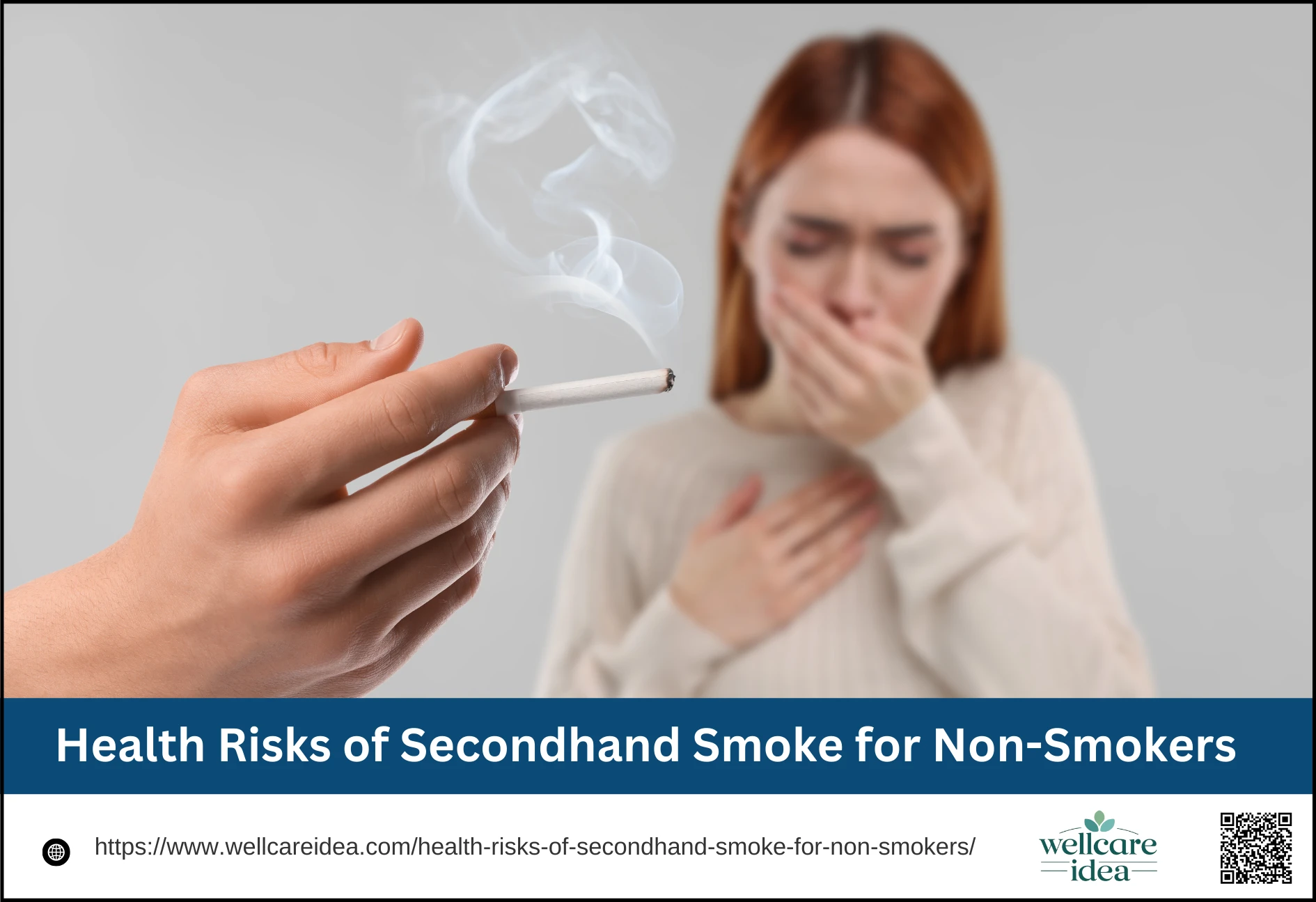
What is Secondhand Smoke?
Exposure to tobacco smoke remains a critical health hazard even for individuals who have never smoked a cigarette. Secondhand smoke consists of two distinct parts: “mainstream smoke,” which is exhaled by the smoker, and “sidestream smoke,” which drifts from the burning end of a cigarette, pipe, or cigar 1 While both contain toxic chemicals, sidestream smoke is often more hazardous because it is released at a lower temperature, resulting in higher concentrations of carcinogens and toxins that are not filtered before entering the air 2 Health authorities emphasize that there is no safe level of exposure; breathing even small amounts can trigger immediate biological changes and lead to severe long-term diseases 3 , 4
1. Immediate Effects on the Cardiovascular System
Damage to the heart and blood vessels begins almost instantly upon inhalation of smoke-filled air. Within minutes of exposure, the chemicals in secondhand smoke cause blood platelets to become sticky, which increases the likelihood of clotting 5 This immediate reaction can damage the lining of blood vessels, causing them to constrict and restricting normal blood flow, potentially triggering a heart attack in individuals with underlying conditions 3
2. Increased Risk of Coronary Heart Disease
Consistent exposure significantly elevates the probability of developing heart disease among non-smokers. Research indicates that adults who do not smoke but are regularly exposed to secondhand smoke face a 25% to 30% higher risk of developing coronary heart disease compared to those who are not exposed 4 This statistic highlights that the cardiovascular system is extremely sensitive to tobacco toxins, meaning that passive exposure can rival the heart disease risks associated with light active smoking 5
3. Stroke Risk in Non-Smokers
The toxins inhaled from the environment also compromise the blood vessels supplying the brain. Non-smokers exposed to secondhand smoke have a 20% to 30% increased risk of suffering a stroke 6 Studies suggest that the mechanisms driving this risk include inflammation, atherosclerosis (hardening of the arteries), and increased clot formation, all of which are direct results of inhaling smoke byproducts 7
4. Lung Cancer Susceptibility in Non-Smokers
While commonly associated with active smokers, lung cancer is a proven fatal consequence for those breathing shared air. Non-smokers exposed to secondhand smoke at home or work increase their risk of developing lung cancer by 20% to 30% 1
In the United States alone, secondhand smoke is responsible for approximately 7,300 lung cancer deaths annually among adult non-smokers, confirming that the carcinogens in tobacco smoke are potent enough to cause mutations without direct inhalation from a cigarette 3
5. Respiratory Infections and Reduced Lung Function
Adults and children alike experience immediate respiratory distress when subjected to smoke. Exposure is causally linked to coughing, phlegm production, and a measurable reduction in lung function, making breathing more difficult 4 For individuals with existing conditions like Chronic Obstructive Pulmonary Disease (COPD), avoiding smoke is medically critical, as passive inhalation exacerbates symptoms and accelerates the decline of lung health 5
6. Impact on Infants: Sudden Infant Death Syndrome (SIDS)
One of the most tragic consequences of passive smoke is its link to fatal outcomes in newborns. Infants exposed to secondhand smoke after birth are at a significantly higher risk of Sudden Infant Death Syndrome (SIDS), as the chemicals interfere with the brain’s regulation of breathing during sleep 8 This risk is compounded if the mother was exposed to smoke during pregnancy, disrupting fetal development and increasing susceptibility to SIDS after birth 3
7. Pediatric Risks: Asthma, Bronchitis, and Pneumonia
Children’s developing lungs are particularly vulnerable to the irritants found in tobacco smoke. Estimates suggest that secondhand smoke causes between 150,000 and 300,000 lower respiratory tract infections, such as bronchitis and pneumonia, in infants and young children annually 4 Furthermore, for children already diagnosed with asthma, exposure leads to more frequent and severe attacks, often requiring emergency medical intervention 3
8. Ear Infections and Hearing Loss in Children
Beyond the lungs, smoke exposure can cause physical blockages and infections in the ear canals of young children. Research demonstrates that secondhand smoke irritates the eustachian tube, causing fluid to build up in the middle ear, a condition often referred to as “glue ear” 9 Recent studies have even identified a link between passive smoke exposure and sensorineural hearing loss in adolescents, with exposed individuals showing a 1.8-fold increased risk of unilateral low-frequency hearing loss 10
9. Complications During Pregnancy and Low Birth Weight
Pregnant women exposed to secondhand smoke face serious reproductive health risks that directly affect the unborn child. The toxic chemicals in the smoke restrict oxygen delivery to the fetus, which is causally linked to low birth weight and preterm delivery 11 12 Infants born with low birth weight are at a disadvantage, facing higher risks of health complications and developmental delays shortly after birth 3
10. Long-term Chronic Disease Risks
The inflammation caused by inhaling smoke toxins can contribute to systemic chronic diseases beyond the respiratory and cardiovascular systems. Emerging evidence suggests a link between secondhand smoke exposure and the development of type 2 diabetes, as the toxins may induce insulin resistance and chronic inflammation 13 This indicates that the harm of involuntary smoking is systemic, potentially altering metabolic health over decades of exposure 14