
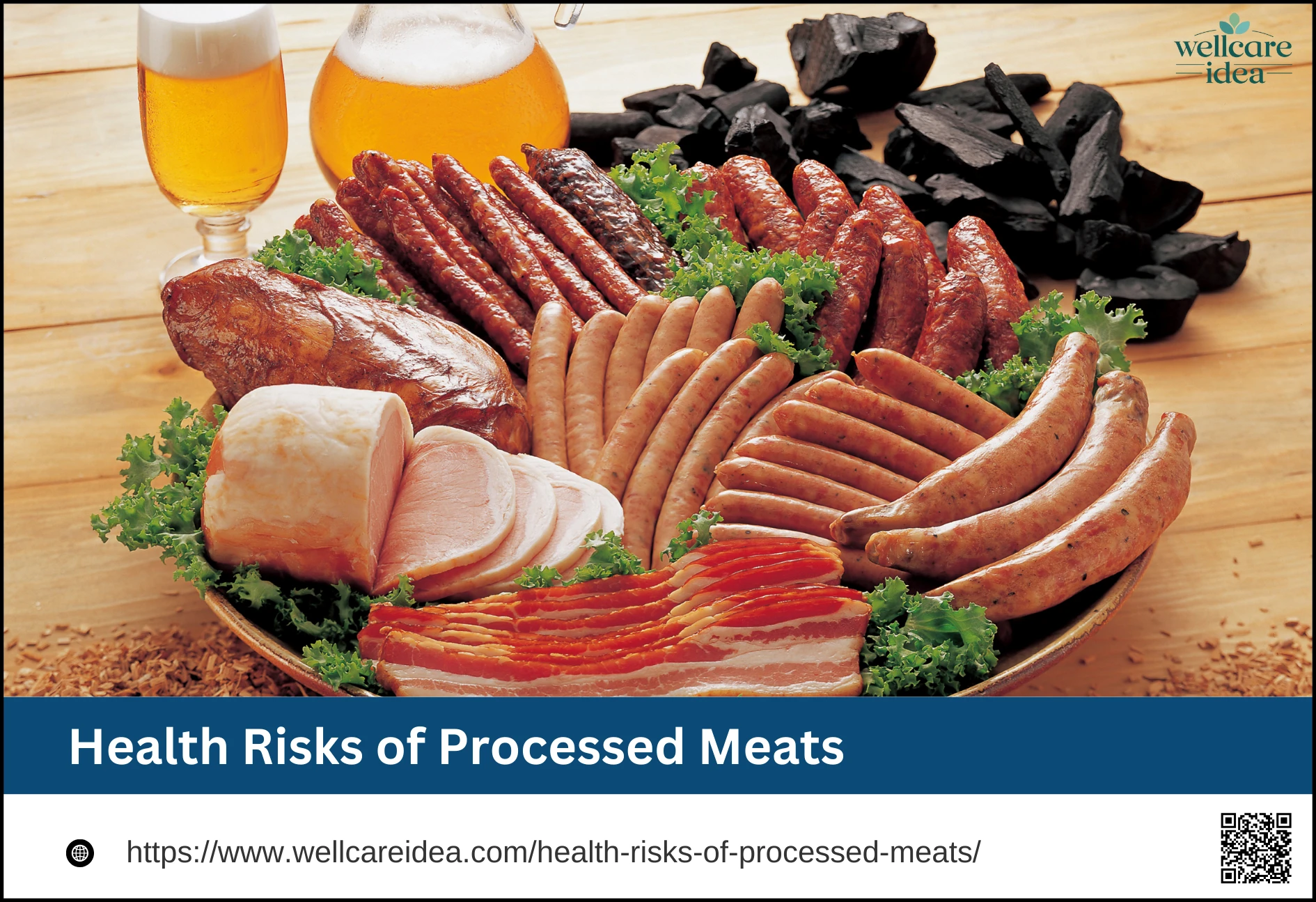
What is Processed Meat?
Processed meat refers to any meat that has been modified to improve its flavor or extend its shelf life. This transformation typically involves methods such as smoking, curing, salting, or the addition of chemical preservatives. Common examples found in many diets include bacon, sausages, hot dogs, salami, corned beef, and canned meats 1 Unlike fresh meat, which is cooked from its raw state, processed varieties often contain non-meat ingredients and additives that can significantly alter their nutritional profile and health effects.
Health Risks of Processed Meats
1. Colorectal Cancer Risk
The link between processed meat consumption and cancer is one of the most well-established health concerns in nutritional science. The World Health Organization (WHO) and its International Agency for Research on Cancer (IARC) have classified processed meat as a Group 1 carcinogen, meaning there is convincing evidence that it causes cancer in humans. Research indicates that eating just 50 grams of processed meat daily—roughly equivalent to four strips of bacon or one hot dog—can increase the risk of colorectal cancer by approximately 18% 2 Large-scale meta-analyses have consistently shown a dose-response relationship, where higher intake correlates directly with increased cancer incidence 3 ,4
2. Impact on Cardiovascular Health and Heart Disease
Beyond cancer, these meats pose a severe threat to heart health. A comprehensive study conducted by researchers at the Harvard School of Public Health found that consuming processed meats was associated with a 42% higher risk of developing heart disease 5 This risk is significantly elevated compared to unprocessed red meats, suggesting that the preservatives and sodium added during processing are major contributors to cardiovascular damage. The high intake of these products is strongly linked to increased cardiovascular mortality 6
3. Connection to Type 2 Diabetes
Metabolic health is also compromised by the regular ingestion of cured and smoked meats. Scientific reviews have highlighted that daily consumption of processed meat is associated with a 19% increase in the risk of developing type 2 diabetes 5 Other studies place this risk even higher, suggesting a relative risk increase of up to 37% for those with the highest consumption levels compared to the lowest 7 This correlation persists even after adjusting for other lifestyle factors, indicating a direct link between the constituents of processed meat and insulin resistance 8
4. The Role of Nitrates, Nitrites, and Nitrosamines
Chemical preservatives are central to the health risks associated with these foods. Manufacturers commonly add nitrates and nitrites to processed meats to preserve color and prevent bacterial growth. However, when these compounds are exposed to high heat during cooking or subjected to the acidic environment of the stomach, they can convert into N-nitroso compounds, also known as nitrosamines 9 These compounds are potent carcinogens that have been shown to damage the DNA in the lining of the gut, directly contributing to the development of cancer 10
5. High Sodium Content and Hypertension
The excessive salt content in processed meats is a primary driver of high blood pressure. Sodium is used liberally not just for flavor, but as a critical preservative. The World Health Organization warns that high sodium intake is a leading risk factor for hypertension, which in turn increases the risk of stroke and heart failure 11 Processed meats often contain four times more sodium than unprocessed meats, making them a significant contributor to daily salt intake and subsequent blood pressure elevation 5 , 12
6. Saturated Fats and Cholesterol Levels
While preservatives are a major concern, the fat profile of many processed meats also plays a detrimental role. These products are frequently high in saturated fats, which can raise low-density lipoprotein (LDL) cholesterol levels in the blood. Elevated LDL cholesterol is a well-known precursor to atherosclerosis, the buildup of plaque in arteries that leads to heart attacks and strokes 1 The combination of high saturated fat and high sodium creates a “double burden” on the cardiovascular system.
7. Inflammation and Oxidative Stress
Chronic inflammation is a biological mechanism underlying many of the diseases linked to processed meat. The compounds formed during the processing and cooking of meat, including advanced glycation end products (AGEs) and nitrosamines, can trigger oxidative stress and inflammation in the body 10 This systemic inflammation damages tissues over time and is a key pathway in the progression of chronic conditions such as diabetes and cancer.
8. Impact on All-Cause Mortality
The cumulative effect of these risks leads to a higher probability of premature death. Large cohort studies analyzing long-term health data have found that high consumption of processed meat is associated with an increased risk of all-cause mortality 13 Research involving thousands of participants has shown that individuals who eat the most processed meat have a significantly higher rate of death from any cause compared to those who eat the least, primarily driven by cardiovascular disease and cancer 14
9. Dietary Recommendations and Safe Limits
Given the substantial evidence of harm, health authorities advise strict limitations on intake. Experts from Harvard T.H. Chan School of Public Health suggest that processed meat should be eaten sparingly, if at all—potentially as little as once or twice a month 1 The consensus among researchers is that there is no completely “safe” level of intake for processed meats regarding cancer risk, and reduction is key for disease prevention.
10. Healthier Alternatives to Processed Meats
Replacing processed meats with nutritious whole foods can drastically improve health outcomes. Excellent protein alternatives include fresh poultry, fish, and plant-based sources such as beans, lentils, and nuts 15 These options provide essential nutrients without the carcinogenic preservatives and excessive sodium found in processed varieties. For those seeking flavor, using herbs and spices instead of salt and curing agents can provide culinary satisfaction without the associated health risks 6