

What is Excessive Screen Time
The modern digital landscape has normalized prolonged periods of device usage, yet defining “excessive” remains a critical first step in understanding its impact. While guidelines vary by age, authoritative bodies like the American Academy of Pediatrics (AAP) and World Health Organization generally suggest that recreational screen time for children aged 2 to 5 should be limited to one hour per day, while adults often face risks when sedentary screen time displaces physical activity1 Broadly, excessive screen time is characterized by duration that interferes with essential daily functions, such as sleep, physical movement, and face-to-face interaction. The accumulation of hours spent on smartphones, computers, and tablets has created a new category of sedentary behavior that health experts strongly advise monitoring to prevent long-term complications 2
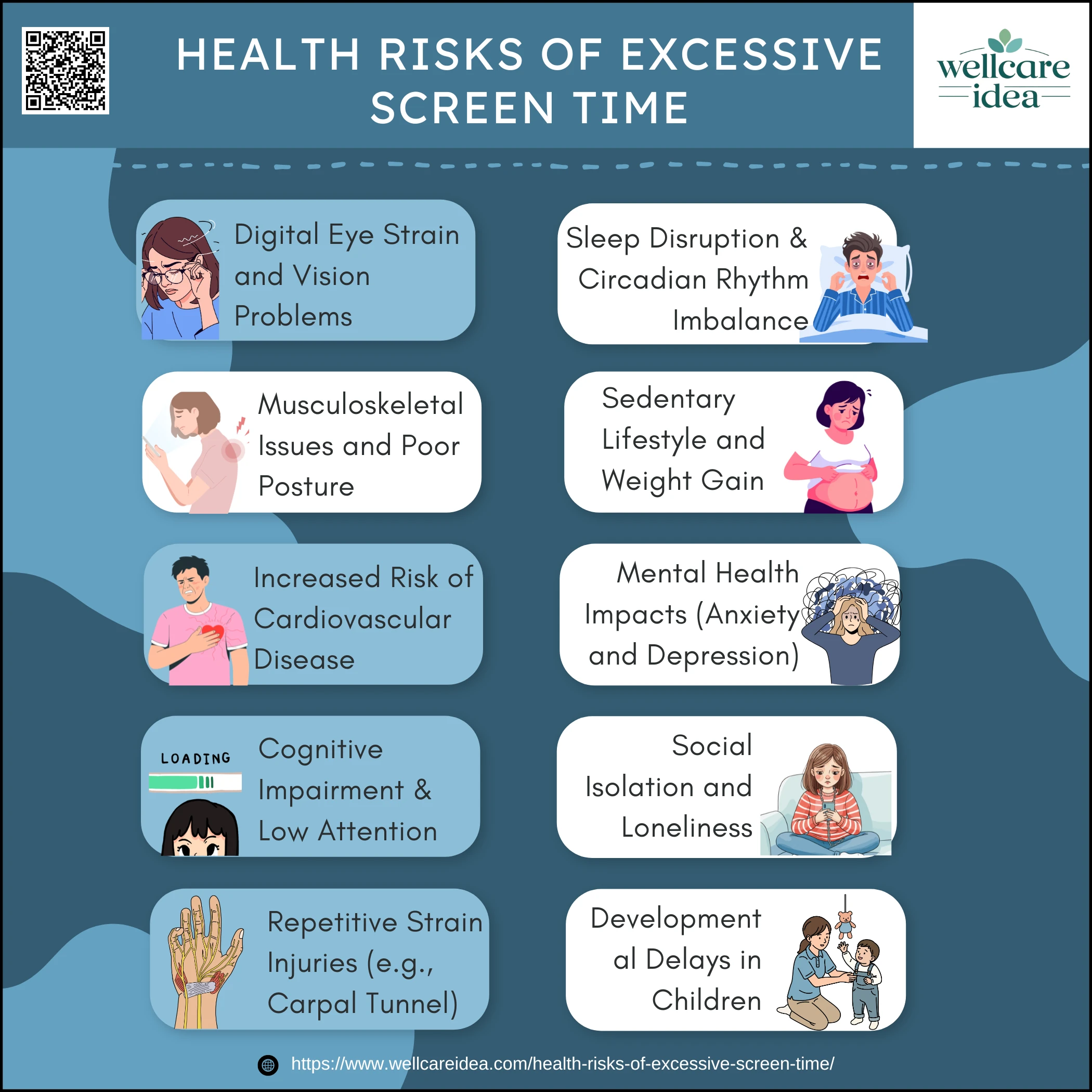 Health Risks of Excessive Screen Time
1. Digital Eye Strain and Vision Problems
Prolonged focus on digital screens forces the eyes to work harder than usual, leading to a cluster of symptoms often referred to as Computer Vision Syndrome (CVS). Individuals who spend two or more continuous hours at a computer or digital device are at the greatest risk of developing these symptoms, which include dry eyes, blurred vision, and headaches 3 To mitigate this, experts often recommend the “20-20-20 rule,” suggesting that for every 20 minutes of screen time, one should look at something 20 feet away for 20 seconds to relax the eye muscles.
2. Sleep Disruption and Circadian Rhythm Imbalance
The quality of sleep is significantly compromised by the artificial light emitted from electronic devices, specifically blue light. Exposure to this high-energy visible light in the evening suppresses the body’s release of melatonin, a hormone that is essential for regulating sleep-wake cycles and making us feel drowsy 4 Consequently, using devices like smartphones or tablets within an hour of bedtime can trick the brain into thinking it is still daytime, leading to insomnia and chronic sleep deprivation 5
3. Musculoskeletal Issues and Poor Posture (“Tech Neck”)
Maintaining a hunched position over handheld devices for extended periods places immense stress on the cervical spine, a condition increasingly known as “text neck.” Research indicates that the weight of the head on the spine increases dramatically as it tilts forward, potentially leading to early spinal degeneration and chronic pain in the neck and shoulders 6 This specific type of repetitive stress injury is becoming more prevalent in younger populations who spend hours daily looking down at smartphones, often resulting in long-term postural deformities 1
4. Sedentary Lifestyle and Weight Gain
There is a well-established correlation between high levels of screen time and an increase in body mass index (BMI), largely due to the displacement of physical activity. Studies show that for every additional hour of daily screen time, the likelihood of obesity increases, as screen-based activities are typically sedentary and often accompanied by mindless snacking 7 This sedentary behavior creates a calorie surplus that the body cannot expend, establishing a direct link between recreational device use and long-term weight management issues 8
5. Increased Risk of Cardiovascular Disease
Beyond simple weight gain, the lack of movement associated with binge-watching TV or gaming has serious implications for heart health. A systematic review of prospective studies found that high levels of sedentary behavior, such as sitting for long periods to watch screens, are associated with a significantly increased risk of cardiovascular disease and mortality 9 Furthermore, screen time has been linked to specific cardiometabolic risks in youth, such as higher blood pressure and insulin resistance, which can set the stage for heart problems later in adulthood 8
6. Mental Health Impacts (Anxiety and Depression)
The relationship between heavy digital consumption and psychological well-being is complex, yet evidence suggests a concerning link to mood disorders. Studies have observed that increased screen time is associated with higher rates of depression and anxiety, particularly when the usage involves social media comparison or displacing social activities 10 While the direction of this relationship can be bidirectional, excessive consumption of digital media often correlates with lower emotional stability and increased internalizing symptoms in adolescents 7
7. Cognitive Impairment and Reduced Attention Span
Rapid-fire content consumption may be reshaping how the brain processes information, particularly regarding focus and attention. Systematic reviews indicate that excessive passive screen time, such as watching entertainment for more than two hours a day, can reduce task-switching ability and negatively impact selective attention 11 Furthermore, frequent media multitasking has been linked to structural changes in the brain areas responsible for cognitive control, potentially leading to difficulties in filtering out distractions 12
8. Social Isolation and Loneliness
Paradoxically, platforms designed to connect people often contribute to feelings of isolation when used excessively. Research suggests that people who use social media heavily to maintain relationships often report feeling lonelier than those who use it less, possibly due to the superficial nature of online interactions replacing meaningful in-person connection 13 The “displacement hypothesis” argues that time spent online occupies hours that could otherwise be spent engaging in face-to-face social contact, which is more effective at reducing loneliness 14
9. Repetitive Strain Injuries (e.g., Carpal Tunnel)
The physical act of holding devices and repetitive swiping or typing can lead to painful overuse injuries in the hands and wrists. Heavy smartphone users have been shown to experience higher levels of wrist pain and reduced hand strength, with studies identifying a significant association between excessive usage and conditions like carpal tunnel syndrome 15 The sustained elevation of fluid pressure inside the carpal tunnel during long hours of typing or texting can compress the median nerve, resulting in numbness and long-term nerve damage 16
10. Developmental Delays in Children
Young children are particularly vulnerable to the effects of screen exposure during critical windows of brain development. Longitudinal studies have demonstrated that higher levels of screen time at age one are significantly associated with developmental delays in communication and problem-solving skills by ages two and four 17 Furthermore, excessive screen exposure has been linked to lower scores on developmental screening tests, suggesting that it may interfere with the crucial interactions and play required for healthy growth 18