
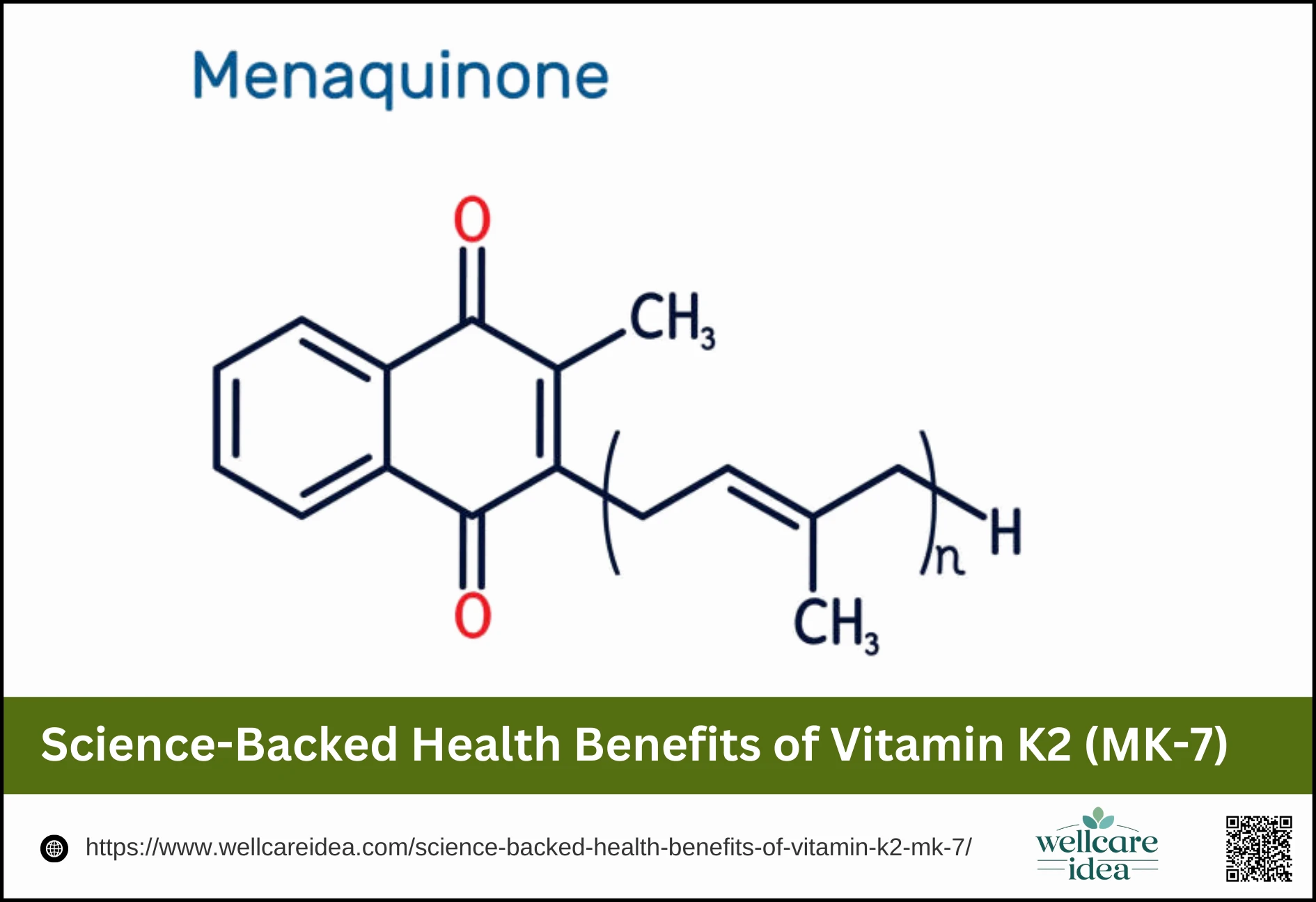
What is Vitamin K2 (MK-7)?
Vitamin K is not a single compound but a group of fat-soluble vitamins essential for the body’s ability to utilize calcium and clot blood. While Vitamin K1 (phylloquinone) is abundant in leafy greens, Vitamin K2 (menaquinone) i s primarily found in fermented foods and animal products. Among the various forms of Vitamin K2, MK-7 (menaquinone-7) is distinct due to its biological structure and origin. It is naturally derived from the fermentation of chickpeas or soybeans, most not ably in the Japanese dish natto. Research indicates that MK-7 possesses a unique molecular side chain that allows it to remain active in the human body significantly longer than other forms, such as MK-4. 1 This extended half-life ensures that the vitamin reaches peripheral tissues beyond the liver, making it highly effective for systemic health applications like bone and cardiovascular support.
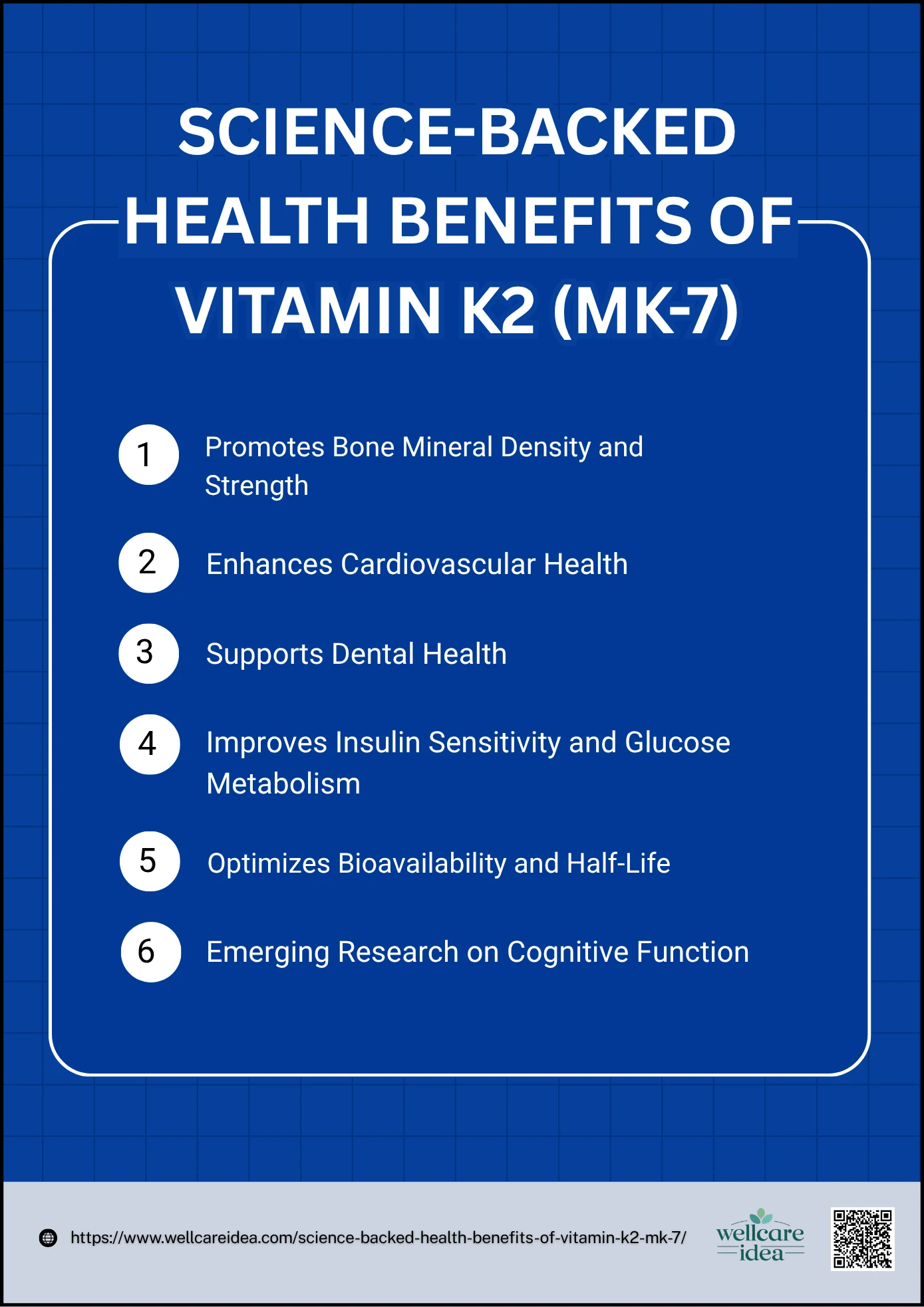 Science-Backed Health Benefits of Vitamin K2 (MK-7)
1. Promotes Bone Mineral Density and S trength
The skeletal system relies heavily on the regulation of calcium, a process largely governed by specific proteins that require activation. Vitamin K2 acts as a necessary cofactor for the carboxylation of osteocalcin, a protein responsible for binding calcium to the bone matrix. Without adequate K2, osteocalcin remains inactive, leading to poor calcium integration and weaker bones. A pivotal three-year study involving postmenopausal women demonstrated that supplementation with MK-7 significantly decreased the age-related decline in bone mineral density (BMD) at the lumbar spine and femoral neck. 2 Furthermore, research highlights that MK-7 helps preserve trabecular bone microarchitecture, which is often the first structure to deteriorate during aging. 3 By ensuring calcium is properly deposited into the skeleton rather than soft tissues, MK-7 plays a critical role in preventing osteoporosis and fractures.
2. Enhances Cardiovascular Health
Arterial calcification, the hardening of arteries due to calcium buildup, is a significant risk factor for heart disease. Vitamin K2, specifically the MK-7 form, activates Matrix Gla Protein (MGP), which is recognized as the most potent inhibitor of vascular calcification known to science. 1 When MGP is activated (carboxylated), it actively prevents calcium from depositing in vessel walls and soft tissues. The landmark Rotterdam Study revealed that high dietary intake of Vitamin K2 was associated with a 50% reduction in arterial calcification and a 50% reduction in cardiovascular death risk 4 Clinical interventions using MK-7 have further confirmed these observational findings, showing that consistent supplementation can improve arterial elasticity and reduce stiffness in healthy women. 5
3. Supports Dental Health
The mechanisms that protect skeletal bone density appear to function similarly within the oral cavity. The protein osteocalcin is not only found in bones but is also expressed in the dental pulp and is essential for the mineralization of teeth. Research suggests that Vitamin K2 enhances the accumulation of osteocalcin in the extracellular matrix, which facilitates the formation of secondary dentin—a vital process for tooth repair and structural integrity 6 By activating osteocalcin, Vitamin K2 ensures that calcium is effectively utilized to harden tooth enamel and support the jawbone, potentially reducing the risk of cavities and periodontal disease.
4. Improves Insulin Sensitivity and Glucose Metabolism
Beyond its structural roles, Vitamin K2 functions as a metabolic regulator. The skeleton is now understood to be an endocrine organ, releasing osteocalcin which influences glucose homeostasis. Studies indicate that Vitamin K2 supplementation can increase the ratio of carboxylated osteocalcin, which has been linked to improved insulin sensitivity 7 In a randomized, placebo-controlled trial, young men who received Vitamin K2 for four weeks exhibited significantly improved insulin indices compared to the placebo group 7 This suggests that MK-7 may serve as a valuable nutrient for managing metabolic health and reducing the risk of type 2 diabetes by optimizing how the body processes sugar.
5. Optimizes Bioavailability and Half-Life
Not all forms of Vitamin K2 offer the same therapeutic value, largely due to differences in absorption and retention. MK-7 is superior to the synthetic MK-4 form because of its lipophilic nature and longer half-life. While MK-4 is cleared from the bloodstream in a matter of hours, MK-7 exhibits a half-life of approximately 72 hours, allowing it to accumulate to effective levels in the blood with once-daily dosing. 1 A comparative study on bioavailability found that MK-7 was well-absorbed and detectable in serum up to 48 hours after intake, whereas MK-4 was undetectable in all subjects at any time point following standard nutritional doses. 8 This sustained presence enables MK-7 to continuously activate Vitamin K-dependent proteins throughout the body.
6. Emerging Research on Cognitive Function
New frontiers in Vitamin K research are exploring its impact on the brain and nervous system. Vitamin K is involved in the synthesis of sphingolipids, a class of fats that are essential components of brain cell membranes and are crucial for cellular signaling. Deficiencies in Vitamin K have been linked to alterations in brain sphingolipids and cognitive perturbations in animal models {https://www.frontiersin.org/journals/aging-neuroscience/articles/10.3389/fnagi.2018.00213/full Although human clinical trials are still evolving, existing data suggests that Vitamin K status may influence cognitive performance and behavior, particularly in aging populations, by protecting neuronal integrity 9
Conclusion
Vitamin K2 (MK-7) has emerged as a critical nutrient for systemic health, extending its benefits far beyond blood clotting. By activating essential proteins like osteocalcin and Matrix Gla Protein, MK-7 ensures that calcium is directed toward bones and teeth where it is needed, and away from arteries where it can be harmful. Its superior bioavailability compared to other forms makes it the preferred choice for supplementation. As research continues to uncover its roles in metabolism and brain health, MK-7 stands out as a vital component of a science-based approach to longevity and wellness.