
What is Astaxanthin?
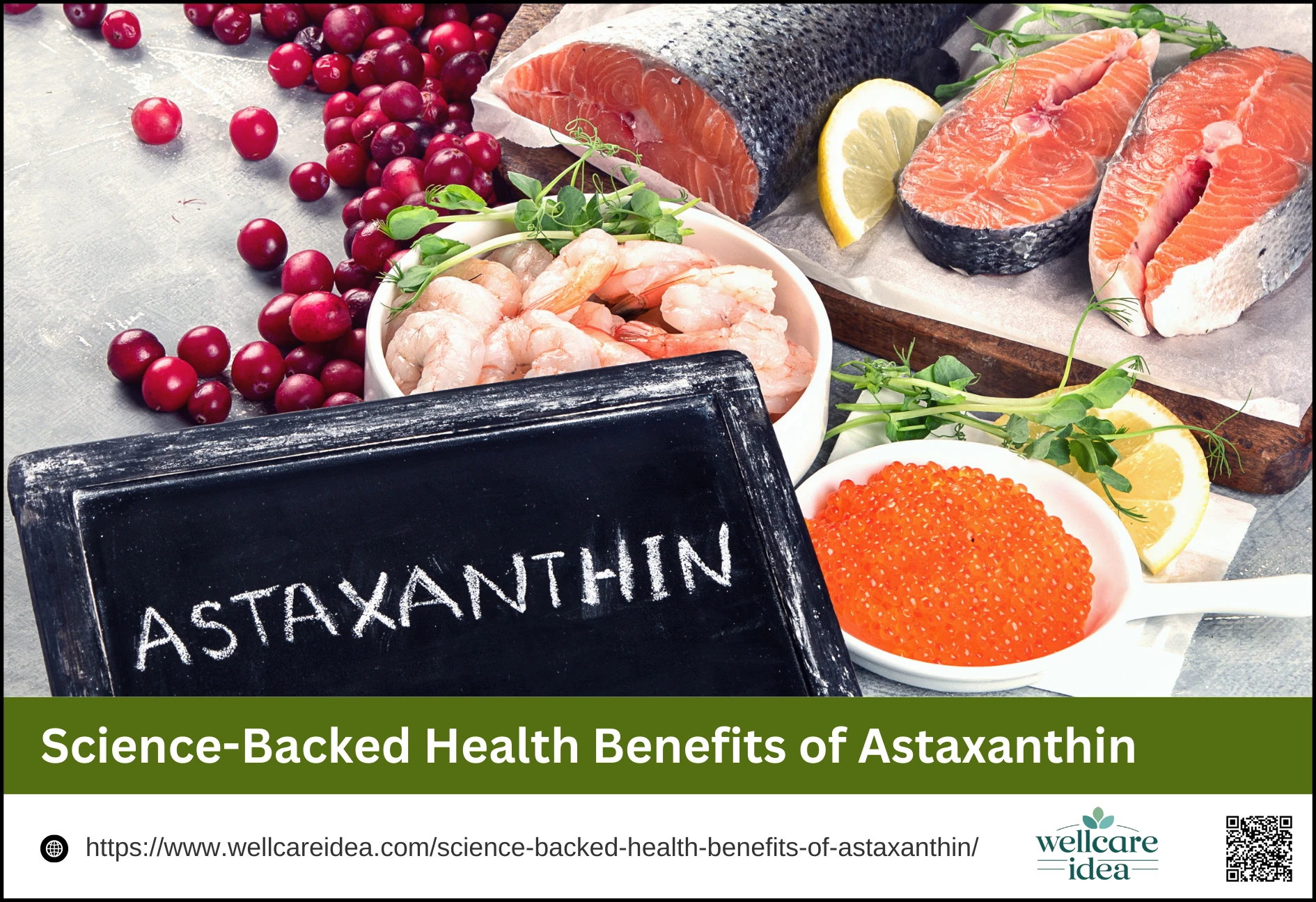
Nature often signals the presence of powerful nutrients through vibrant colors, and Astaxanthin is one of the most striking examples. This naturally occurring pigment is a carotenoid, specifically a xanthophyll, which gives salmon, shrimp, lobster, and flamingoes their distinctive pinkish-red hue 1 Unlike many other antioxidants, it is primarily derived from the microalgae Haematococcus pluvialis, which produces the compound as a protective mechanism against environmental stress 2 Its unique molecular structure allows it to span across cell membranes, providing protection to both the inner and outer layers of cells, a feature that distinguishes it from other well-known nutrients 3
 Science-Backed Health Benefits of Astaxanthin
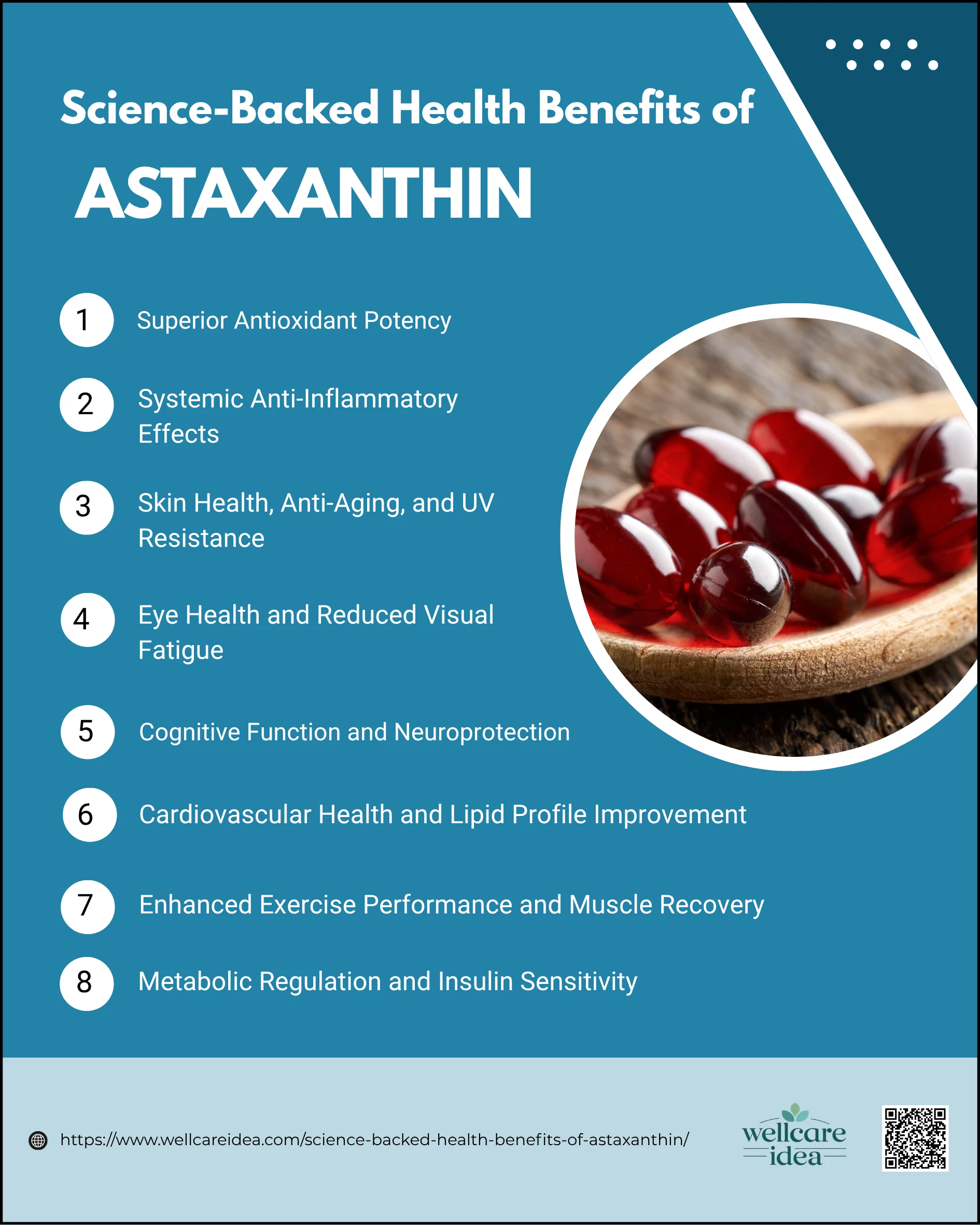
1. Superior Antioxidant Potency
Free radicals are unstable molecules that damage cells, and neutralizing them is the primary job of an antioxidant. Research has consistently highlighted that Astaxanthin possesses a unique chemical structure that allows it to quench free radicals more effectively than other well-known antioxidants 1 Studies suggest that its antioxidant capacity can be significantly stronger than Vitamin C, Vitamin E, and beta-carotene, making it a highly efficient scavenger of dangerous reactive oxygen species (ROS) 2 , 4 This exceptional potency helps maintain the integrity of mitochondrial membranes, which are crucial for cellular energy production and overall vitality 5
2. Systemic Anti-Inflammatory Effects
Chronic inflammation is a root cause of many modern health issues, and controlling it is essential for long-term wellness. Clinical investigations have demonstrated that Astaxanthin functions as a potent anti-inflammatory agent by inhibiting specific biological pathways that trigger swelling and pain 6 Specifically, it has been shown to block the activation of NF-kB, a protein complex that controls the transcription of DNA and cytokine production, thereby reducing the release of inflammatory markers like IL-6 and TNF-alpha 7 , https://pubmed.ncbi.nlm.nih.gov/30308382/} By mitigating these inflammatory storms, it offers potential therapeutic benefits for conditions ranging from arthritis to cardiovascular stress 3
3. Skin Health, Anti-Aging, and UV Resistance
The skin is constantly exposed to environmental aggressors, particularly ultraviolet (UV) radiation from the sun, which leads to premature aging. Scientific reviews indicate that Astaxanthin can act as an internal sunscreen, protecting skin layers from UV-induced oxidative damage and preventing the degradation of collagen 2 Supplementation has been linked to visible improvements in skin moisture, elasticity, and texture, effectively reducing the appearance of fine lines and wrinkles 8 Furthermore, its ability to scavenge free radicals helps prevent the formation of age spots and supports the skin’s natural repair processes 2 , 6
4. Eye Health and Reduced Visual Fatigue
Digital eye strain is an increasing concern in our screen-centric world, often resulting in fatigue and blurred vision. Research validates that Astaxanthin is capable of improving the accommodation ability of the eye—the ability to change focus from near to far objects—by enhancing blood flow to the retinal capillaries 9 , 4 Clinical trials involving children and adults have shown that daily intake can significantly reduce symptoms of eye strain and visual fatigue caused by prolonged use of digital devices 9 Additionally, it provides a protective shield against oxidative stress within the eye, which is beneficial for long-term visual health 10
5. Cognitive Function and Neuroprotection
The brain is highly susceptible to oxidative stress due to its high oxygen consumption, making neuroprotection a critical area of health. Astaxanthin is one of the few antioxidants that can cross the blood-brain barrier, allowing it to deliver its protective benefits directly to brain tissue 11 Studies have observed that it helps combat neuroinflammation and may slow down age-related cognitive decline, potentially improving memory and mental acuity 12 By reducing oxidative damage in neurons, it supports overall brain plasticity and resilience against neurodegenerative conditions 1 , 11
6. Cardiovascular Health and Lipid Profile Improvement
Heart health is closely tied to the management of cholesterol levels and the flexibility of blood vessels. Evidence suggests that Astaxanthin can positively influence lipid profiles by reducing the oxidation of LDL (bad) cholesterol, a key factor in the development of atherosclerosis 3 Simultaneously, it has been associated with increases in HDL (good) cholesterol and adiponectin, a hormone that regulates glucose levels and fatty acid breakdown 13 , 14 These combined effects contribute to better blood flow, reduced arterial plaque buildup, and improved overall cardiovascular function 3
7. Enhanced Exercise Performance and Muscle Recovery
Physical activity generates a significant amount of free radicals, which can lead to muscle fatigue and soreness. Athletes and active individuals may benefit from Astaxanthin’s ability to reduce the buildup of lactic acid and prevent exercise-induced muscle damage https://pmc.ncbi.nlm.nih.gov/articles/PMC12440312/} Research on mice and humans indicates that it improves endurance by promoting the use of fatty acids as an energy source, thereby sparing glycogen stores for later use 15 This metabolic shift not only boosts stamina but also accelerates recovery times after intense workout sessions 16 , 5
8. Metabolic Regulation and Insulin Sensitivity
Metabolic syndrome and insulin resistance are precursors to type 2 diabetes, often driven by oxidative stress and inflammation. Studies have found that Astaxanthin can enhance insulin sensitivity, helping the body manage blood sugar levels more effectively 17 It appears to work by activating specific signaling pathways that improve glucose uptake in muscles and suppress the production of glucose in the liver 18 These properties make it a promising natural compound for supporting metabolic health and reducing the risk of diabetes-related complications 17 , 1
Conclusion
Astaxanthin stands out as a unique and versatile nutrient, backed by a growing body of scientific evidence. Its ability to act as a powerful antioxidant and anti-inflammatory agent offers broad benefits, from protecting the skin and eyes to supporting brain and heart health. While it is naturally found in marine life, high-quality supplementation derived from microalgae provides a practical way to access its therapeutic potential. As research continues to unfold, Astaxanthin remains a compelling option for those seeking a science-based approach to long-term health and wellness.