
What is Zinc Carnosine?
This unique compound is a chelate, meaning it chemically bonds a mineral (zinc) with a dipeptide (L-carnosine) to create a stable structure that survives the harsh acidic environment of the stomach. While simple zinc supplements often dissolve quickly and pass through the digestive tract, the bonding in Zinc Carnosine allows it to adhere directly to the stomach wall, delivering healing agents precisely where they are needed most 1 This “mucosal adherence” characteristic is responsible for its potent ability to support gastrointestinal health and repair tissue at a cellular level.
b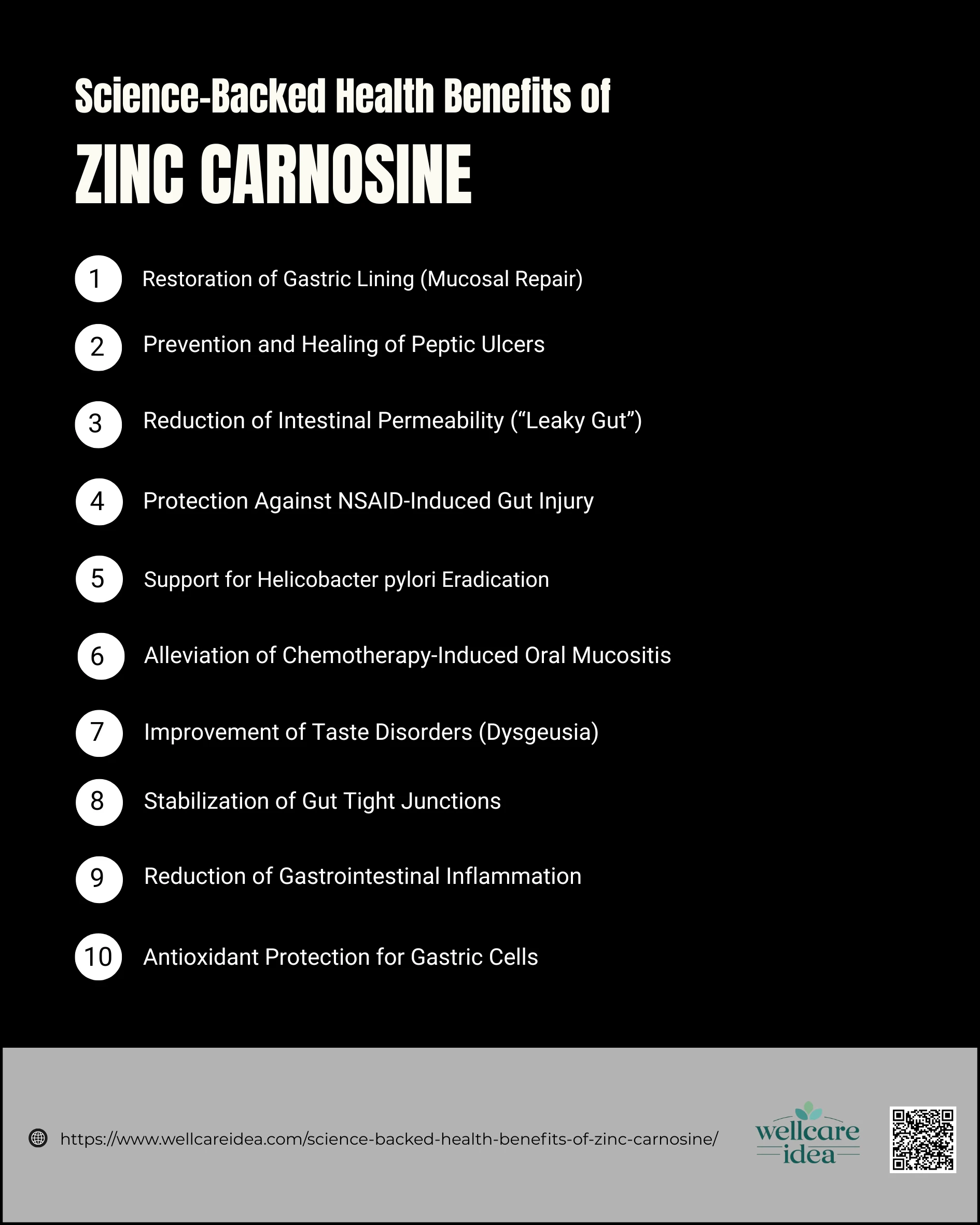 Science-Backed Health Benefits of Zinc Carnosine
1. Restoration of Gastric Lining (Mucosal Repair)
The stomach possesses a natural protective layer known as the mucosa, which defends the organ against its own digestive acids. Research indicates that Zinc Carnosine significantly accelerates the natural wound-healing process of this lining. In laboratory studies involving intestinal cells, the compound caused a threefold increase in cell migration and proliferation, which are the biological markers of active tissue repair 2 , 3 By stimulating these repair mechanisms, the supplement helps re-establish the structural integrity of the stomach wall after injury.
2. Prevention and Healing of Peptic Ulcers
Clinical applications in Japan, where this compound is a prescription drug known as Polaprezinc, have demonstrated its efficacy in treating open sores in the stomach lining. Scientific reviews highlight that it is as effective as other mucoprotective agents in healing gastric ulcers, regardless of the underlying cause 4 The mechanism involves coating the ulcer site to protect it from further acid damage while simultaneously promoting the growth of healthy new cells to close the wound.
3. Reduction of Intestinal Permeability (“Leaky Gut”)
The intestinal barrier acts as a gatekeeper, allowing nutrients to pass while blocking harmful toxins; when this barrier is compromised, it is often referred to as “leaky gut.” A randomized crossover trial showed that Zinc Carnosine stabilized the gut mucosa and prevented the rise in permeability that typically follows gut injury 5 Further research supports its role in tightening these barriers in patients with inflammatory conditions, helping to resolve permeability alterations 2
4. Protection Against NSAID-Induced Gut Injury
Common pain relievers, specifically Non-Steroidal Anti-Inflammatory Drugs (NSAIDs) like aspirin and indomethacin, are known to damage the small intestine. Studies have found that co-administration of Zinc Carnosine can reduce this specific type of small-intestinal injury by approximately 50% 2 In human volunteers, taking the supplement alongside indomethacin prevented the significant increase in gut leakiness that occurred in the placebo group, suggesting a strong protective effect against drug-induced damage 6
5. Support for Helicobacter pylori Eradication
Helicobacter pylori is a bacterium heavily linked to chronic gastritis and ulcers. While antibiotics are the standard treatment, adding Zinc Carnosine to the regimen has been shown to improve eradication rates significantly 7 The compound works synergistically with antibiotics by inhibiting the bacteria’s urease activity—an enzyme the bacteria need to survive in stomach acid—and by interfering with their ability to attach to the stomach lining 8
6. Alleviation of Chemotherapy-Induced Oral Mucositis
Cancer treatments often destroy rapidly dividing cells, leading to painful mouth sores known as oral mucositis. A meta-analysis of clinical studies concluded that zinc supplementation effectively decreases the incidence of this debilitating condition in patients undergoing chemotherapy and radiation 9 By protecting the epithelial cells in the mouth and throat, Zinc Carnosine helps patients maintain their ability to eat and drink during aggressive cancer therapies.
7. Improvement of Taste Disorders (Dysgeusia)
Many patients undergoing chemotherapy experience a distortion or loss of taste, a condition often linked to zinc deficiency caused by the drugs. Research published in Anticancer Research suggests that supplementation with Polaprezinc can improve these taste disorders by replenishing essential zinc levels required for the regeneration of taste bud cells 10 , 11 Correcting this deficiency helps restore normal gustatory function, which is vital for maintaining appetite and nutritional status 12
8. Stabilization of Gut Tight Junctions
The microscopic connections between intestinal cells, called tight junctions, are responsible for maintaining a sealed barrier. Experimental models have demonstrated that Zinc Carnosine enhances the formation and stabilization of these junctions by preventing the degradation of key structural proteins like occludin 13 This stabilization is crucial for preventing paracellular leak, where unwanted substances slip between cells into the bloodstream 1
9. Reduction of Gastrointestinal Inflammation
Chronic inflammation is a driver of many digestive disorders. Zinc Carnosine exerts a demonstrated anti-inflammatory effect by suppressing the release of pro-inflammatory cytokines, which are signaling molecules that worsen inflammation 4 By lowering levels of these inflammatory markers, the compound helps soothe irritated tissue and prevents the progression of gastritis and colitis.
10. Antioxidant Protection for Gastric Cells
Oxidative stress caused by free radicals can severely damage the cells of the stomach lining. Zinc Carnosine functions as a potent antioxidant, scavenging these harmful free radicals and reducing cellular damage 12 This antioxidant activity is particularly beneficial in protecting cells from the oxidative burst associated with acute inflammation and environmental toxins.
Conclusion
The scientific literature supports Zinc Carnosine as a robust therapeutic agent for gastrointestinal health. By adhering to mucosal linings, it offers a multi-faceted approach to wellness: repairing tissue, stabilizing the gut barrier, fighting infection, and reducing inflammation. Its validation in clinical settings, particularly for conditions like ulcers and chemotherapy-induced side effects, highlights its value beyond a simple dietary supplement.