
N-acetyl cysteine (NAC) is a modified form of the amino acid cysteine and has been recognized as an essential medicine by the World Health Organization 1 It is a versatile compound with a long history of clinical use, primarily known for its role as the antidote for acetaminophen (Tylenol) overdose 2 and as a mucolytic agent to loosen mucus in respiratory diseases. Beyond these established uses, a growing body of scientific research highlights its broader therapeutic potential, largely linked to its powerful antioxidant and anti-inflammatory properties 3
What is NAC (N-Acetyl Cysteine)?
NAC is a precursor to L-cysteine, a building block for glutathione 4 Glutathione is often called the body’s “master antioxidant” because it is crucial for defending cells against oxidative stress and maintaining overall cellular health. While you cannot effectively supplement with glutathione directly, NAC effectively raises the body’s own glutathione levels by providing the necessary raw material. It can be administered orally, intravenously, or by inhalation and has a well-established safety profile, with side effects typically being mild, such as gastrointestinal discomfort 5 Importantly, NAC is not merely a direct antioxidant; it functions more as a pro-drug. Its benefits are largely dependent on its conversion inside cells into glutathione or other protective sulfur species like hydrogen sulfide (https://pubmed.ncbi.nlm.nih.gov/19575525/}
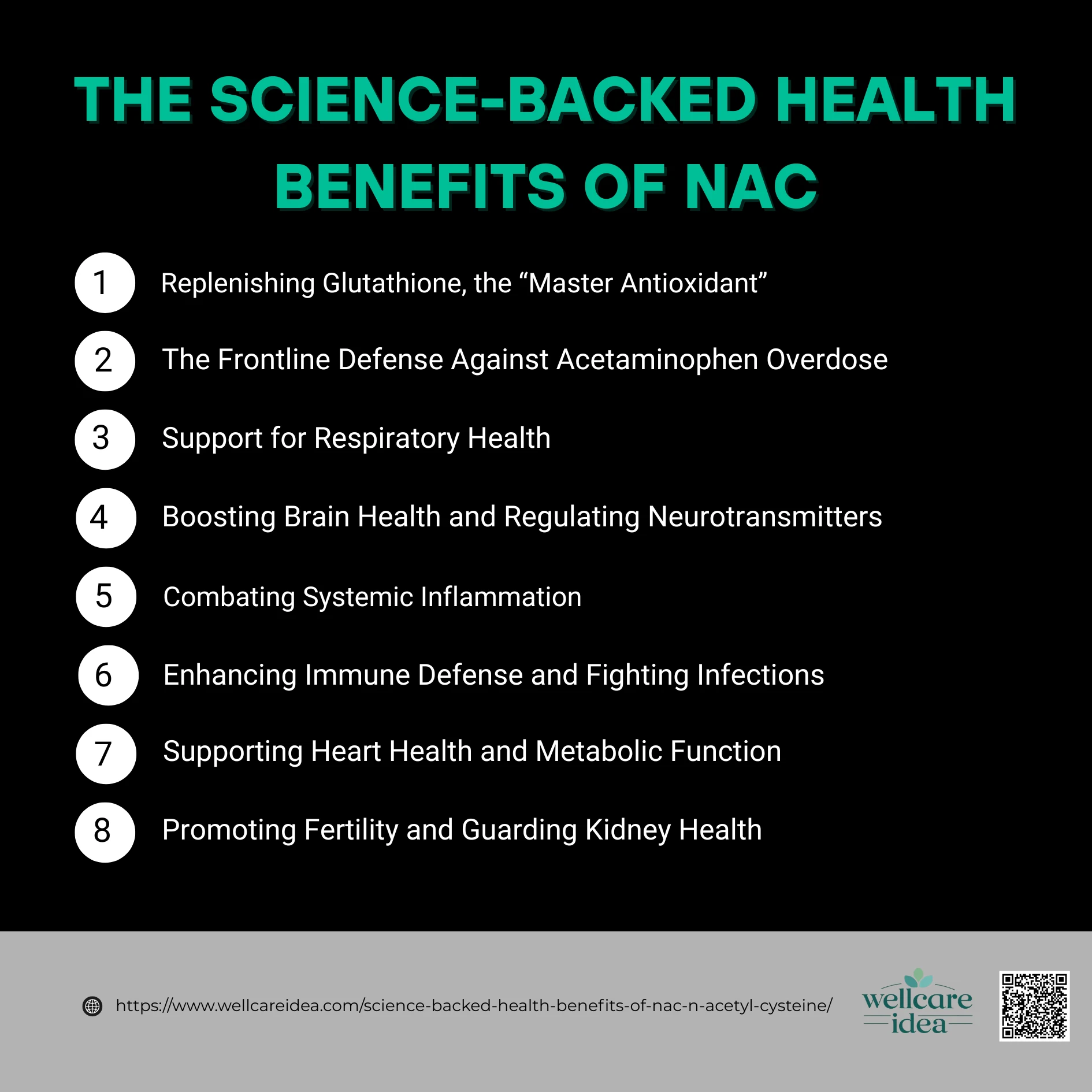 The Science-Backed Health Benefits of NAC
1. Replenishing Glutathione, the “Master Antioxidant”
The primary mechanism behind many of NAC’s benefits is its ability to replenish intracellular glutathione. Glutathione is our most crucial endogenous antioxidant, neutralizing harmful free radicals and reactive oxygen species that damage cells 6 By boosting glutathione levels, NAC helps restore the cellular redox balance, which is a foundation for managing conditions linked to oxidative stress.
2. The Frontline Defense Against Acetaminophen Overdose
This is NAC’s most critical and life-saving application. An overdose of acetaminophen depletes liver glutathione, leading to the accumulation of a toxic metabolite that causes severe liver damage 7 NAC works by replenishing glutathione reserves, allowing the body to safely neutralize the toxin. It is the standard FDA-approved antidote and is nearly 100% effective in preventing liver damage if administered within about 8-10 hours of overdose 2
3. Support for Respiratory Health
NAC has been used for decades to help manage respiratory conditions like chronic obstructive pulmonary disease (COPD) and chronic bronchitis. It acts as a mucolytic, meaning it breaks the disulfide bonds in thick, viscous mucus, making it easier to clear from the airways 8 Furthermore, its antioxidant and anti-inflammatory actions in lung tissue can help reduce the frequency and severity of exacerbations in these chronic conditions 9
4. Boosting Brain Health and Regulating Neurotransmitters
Emerging research highlights NAC’s significant potential for brain health. It can modulate levels of glutamate, the brain’s primary excitatory neurotransmitter. Dysregulated glutamate is implicated in several psychiatric and neurological conditions 10 For instance, a study using magnetic resonance spectroscopy found that a single dose of NAC lowered glutamate levels in the anterior cingulate cortex of patients with schizophrenia 11 By helping to regulate this system, NAC is being investigated as an adjunct therapy for conditions including addiction, bipolar disorder, and depression {https://pubmed.ncbi.nlm.nih.gov/24284464/} , 12
5. Combating Systemic Inflammation
Chronic, low-grade inflammation is a driver of many modern diseases. NAC demonstrates anti-inflammatory effects by reducing key inflammatory signaling molecules, such as tumor necrosis factor-alpha (TNF-α) and interleukins (IL-6 and IL-1β) 3 For example, a study on patients with type 2 diabetes found that while NAC did not improve blood vessel function in that specific trial, it did significantly reduce levels of C-reactive protein (CRP), a major marker of systemic inflammation 13
6. Enhancing Immune Defense and Fighting Infections
NAC’s role in immune function is multifaceted. By supporting antioxidant defenses, it helps immune cells function optimally 4 Notably, its ability to break down disulfide bonds gives it a unique capacity to disrupt bacterial biofilms. Biofilms are protective, slimy matrices that bacteria form on surfaces (like mucous membranes or medical implants), making them highly resistant to antibiotics. NAC’s mucolytic action can help break apart these structures, aiding the body and medications in fighting persistent infections 14
7. Supporting Heart Health and Metabolic Function
Oxidative damage and inflammation are key contributors to cardiovascular disease. NAC’s foundational actions directly counter these processes. Although results can vary by population, its capacity to reduce oxidative stress and inflammatory markers like CRP suggests a protective role for vascular health. Furthermore, by reducing inflammation in fat cells and improving insulin sensitivity, NAC may also help in stabilizing blood sugar levels, offering indirect support for metabolic health 13
8. Promoting Fertility and Guarding Kidney Health
While the search results focus on clinical and mechanistic studies, the principle of reducing oxidative stress has clear implications for fertility. In both men and women, oxidative damage can impair reproductive cell quality and function 15 By bolstering the body’s antioxidant defenses, NAC may help create a more favorable environment for fertility. Similarly, its detoxifying properties are used clinically to help prevent kidney damagefrom certain toxins and contrast dyes used in medical imaging, protecting these vital organs 16
Conclusion
NAC is far more than a simple supplement or an antidote for Tylenol overdose. It is a well-researched therapeutic agent with a fundamental role in supporting the body’s most essential antioxidant system. From protecting the liver and lungs to supporting the brain, heart, and immune system, its benefits are wide-ranging. The scientific evidence underscores that many of these effects stem from its core ability to raise glutathione levels, reduce inflammation, and break down disruptive bonds in proteins and biofilms. While it is generally safe, consulting with a healthcare provider is essential to determine if NAC is appropriate for your individual health goals and circumstances.