
What is Nattokinase?
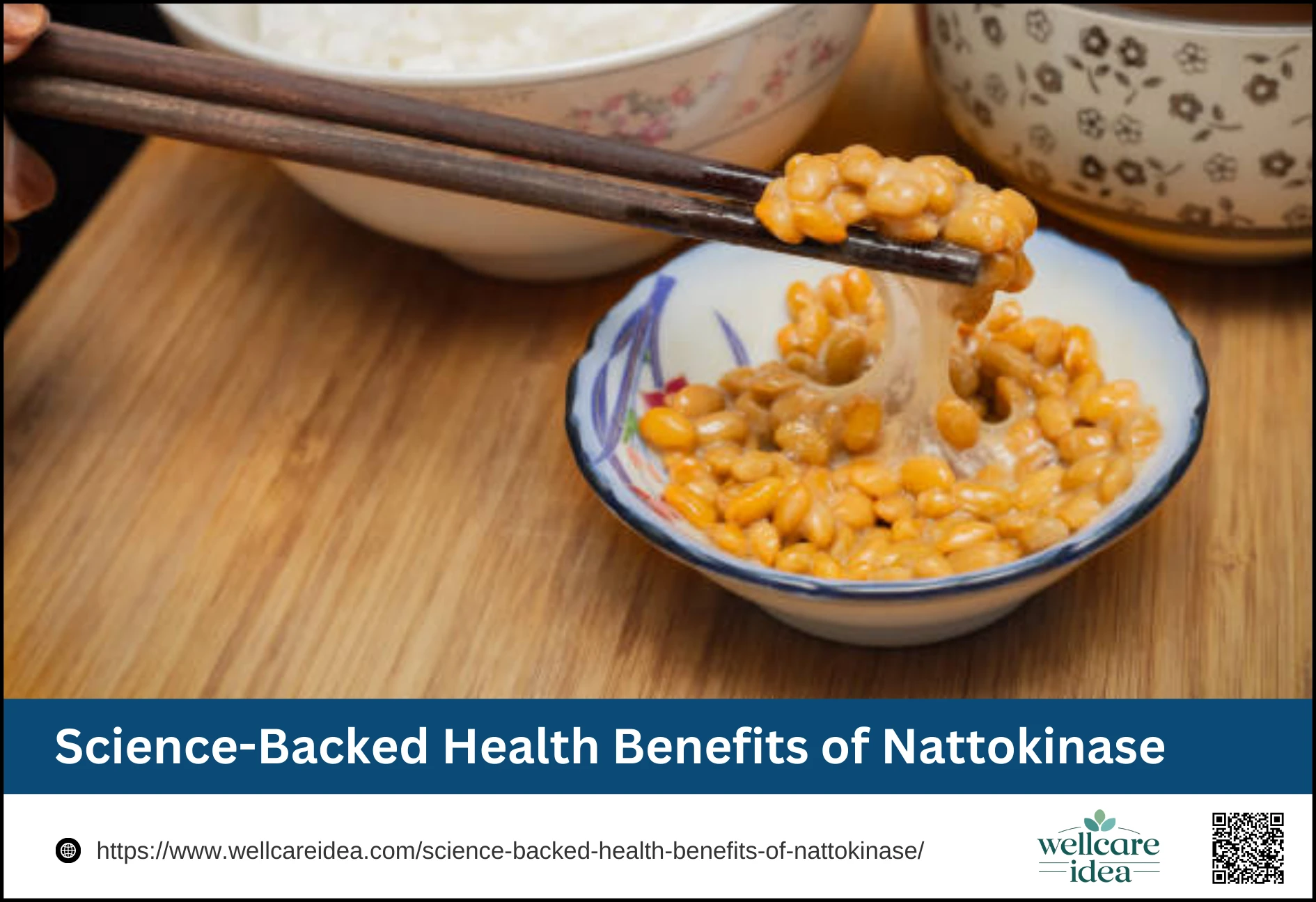
Derived from a traditional Japanese breakfast food known as natto, this enzyme is produced during the fermentation of soybeans by the bacterium Bacillus subtilis var. natto. It was first discovered in 1980 by researcher Hiroyuki Sumi, who was searching for natural agents capable of dissolving blood clots 1 Unlike many other enzymes that break down proteins, this specific protease demonstrates a unique ability to survive the digestive tract and enter the bloodstream intact 2 While natto has been consumed for centuries for its medicinal properties, modern science has isolated this active compound to understand its specific impacts on human physiology, particularly within the cardiovascular system.
 Science-Backed Health Benefits of Nattokinase
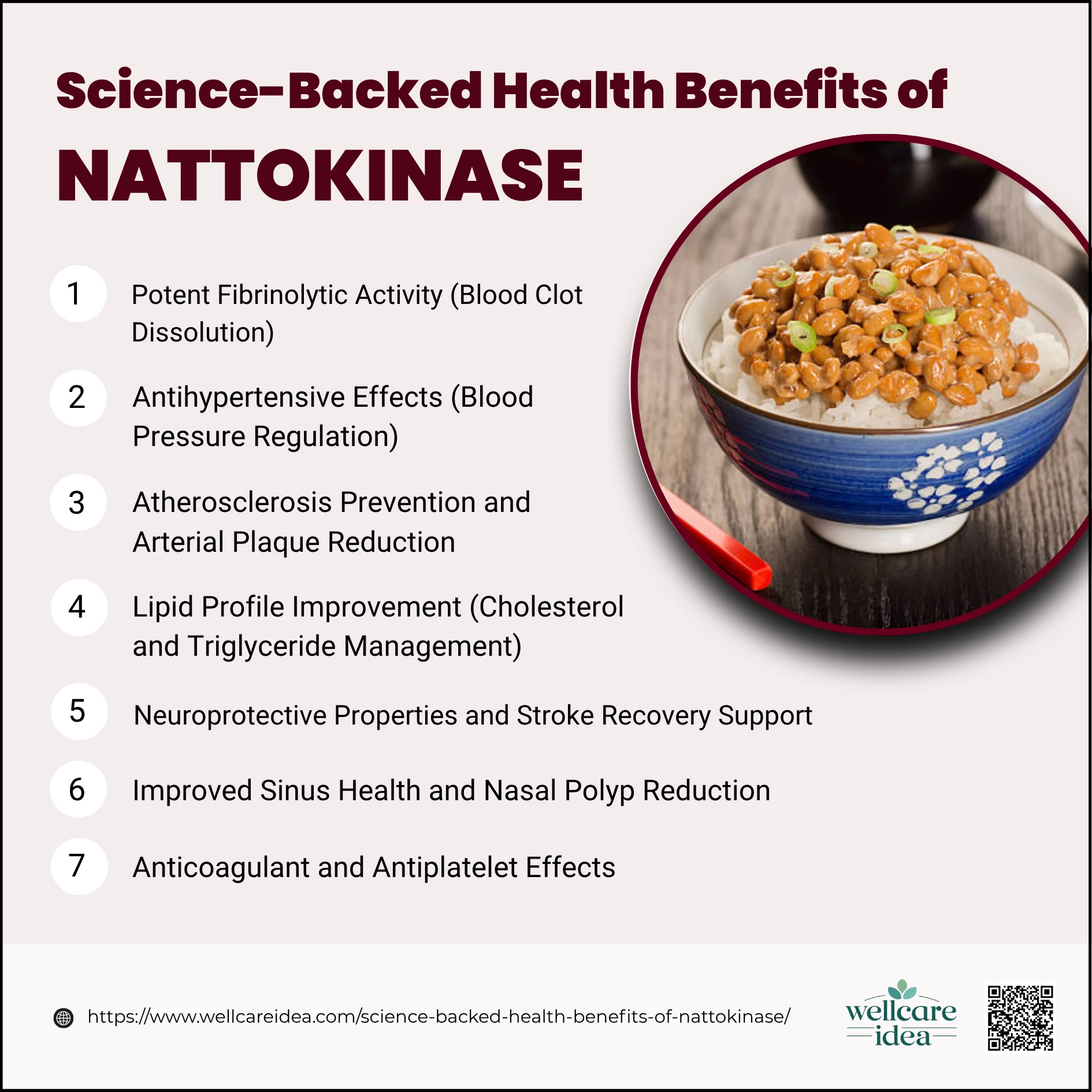
1. Potent Fibrinolytic Activity (Blood Clot Dissolution)
The primary mechanism by which this enzyme supports cardiovascular health involves the breakdown of fibrin, a protein fiber that forms the mesh structure of blood clots 1 It acts directly on fibrin and also enhances the body’s natural production of plasmin and urokinase, which are endogenous clot-dissolving agents 3 By degrading plasminogen activator inhibitor-1 (PAI-1), a molecule that normally prevents clot breakdown, it ensures that the body maintains a healthy balance between bleeding and clotting 1 This “fibrinolytic” capability makes it a subject of intense study for preventing thrombosis without the severe bleeding risks often associated with synthetic drugs.
2. Antihypertensive Effects (Blood Pressure Regulation)
High blood pressure, or hypertension, is a silent contributor to heart disease, but clinical trials suggest this enzyme can effectively lower both systolic and diastolic pressure 4 In a randomized, double-blind study involving human participants, supplementation over eight weeks resulted in a significant net reduction in blood pressure compared to a placebo group 4 The mechanism appears to involve the inhibition of angiotensin-converting enzyme (ACE), a substance that narrows blood vessels, thereby allowing arteries to relax and blood to flow more freely 3
3. Atherosclerosis Prevention and Arterial Plaque Reduction
Atherosclerosis involves the hardening of arteries due to the buildup of plaque, which restricts blood flow and increases the risk of heart attacks 5 Research indicates that daily supplementation at higher doses (such as 10,800 fibrinolytic units) can significantly decrease the thickness of the carotid artery intima-media and reduce the size of existing plaques 5 This reduction is likely due to a combination of its lipid-lowering properties and its antioxidant effects, which prevent the oxidation of LDL cholesterol within the arterial walls. https://pubmed.ncbi.nlm.nih.gov/19786378/, 5
4. Lipid Profile Improvement (Cholesterol and Triglyceride Management)
Managing cholesterol levels is critical for long-term heart health, and studies show that this enzyme can favorably alter lipid profiles in humans. When combined with other natural agents like red yeast rice, it has been shown to reduce total cholesterol, LDL (bad) cholesterol, and triglycerides while potentially increasing HDL (good) cholesterol 6 Even as a standalone supplement, specific dosage regimens have demonstrated efficacy in lowering blood lipids, providing a natural alternative for individuals managing hyperlipidemia 5
5. Neuroprotective Properties and Stroke Recovery Support
Beyond heart health, emerging research suggests significant benefits for the brain, particularly in the context of ischemic stroke recovery 7 Animal studies have demonstrated that the enzyme can promote neurogenesis—the growth of new neurons—and improve cognitive function after a stroke by increasing the levels of circulating irisin 7 Furthermore, its ability to improve blood flow and dissolve micro-thrombi may offer protection against neuronal injury caused by restricted blood supply to the brain. 3
6. Improved Sinus Health and Nasal Polyp Reduction
Chronic rhinosinusitis with nasal polyps is often characterized by excessive fibrin deposition in the nasal tissue, leading to congestion and breathing difficulties 8 Researchers have found that this enzyme can effectively shrink nasal polyp tissue by degrading these fibrin deposits 8 Additionally, it has been shown to reduce the viscosity of nasal mucus and sputum, making it easier for patients to clear their airways and improving overall respiratory symptoms 8
7. Anticoagulant and Antiplatelet Effects
Excessive platelet aggregation can lead to dangerous blockages in the bloodstream, but this enzyme exhibits natural antiplatelet properties similar to aspirin 1 Experimental models have shown that it inhibits chemically induced thrombosis and platelet aggregation, thereby maintaining smooth blood circulation. 3 Unlike standard pharmaceutical blood thinners that may cause gastric ulcers or severe bleeding, this natural alternative appears to improve blood flow with a more favorable safety profile 1 , 3
Conclusion
Nattokinase represents a compelling intersection between traditional food medicine and modern cardiovascular science. By targeting fibrin to dissolve clots, regulating blood pressure, and improving lipid profiles, it offers a multi-faceted approach to heart and vascular health. As research continues to uncover its potential in neuroprotection and respiratory health, it stands out as a potent, science-backed supplement for those seeking to maintain optimal circulation and overall wellness.