
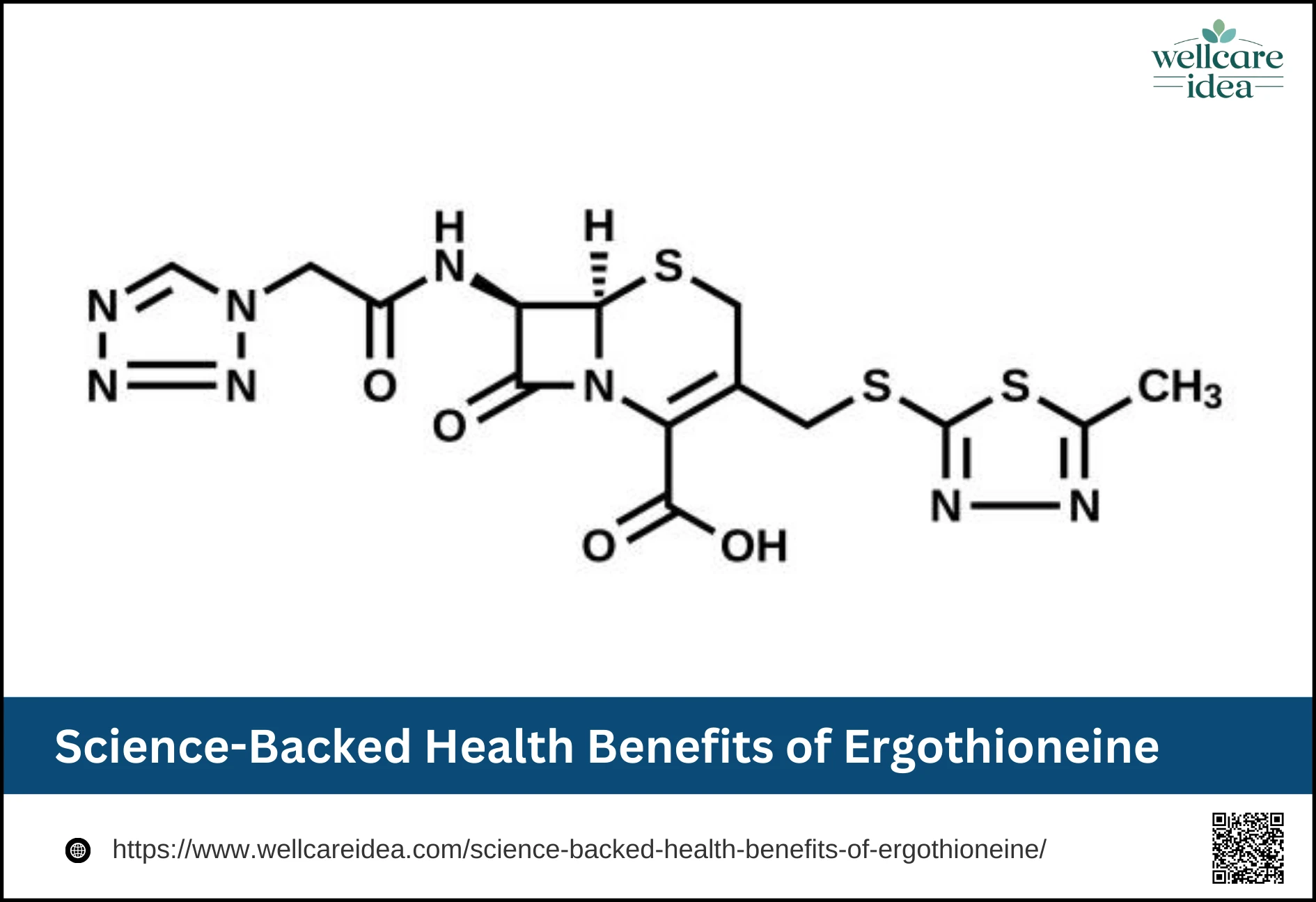
What is Ergothioneine?
Often referred to as the “longevity vitamin,” ergothioneine (ERGO) is a naturally occurring amino acid derivative that has captured the attention of the scientific community for its unique cellular protective properties. Unlike other antioxidants, the human body has a specific transporter protein designated as OCTN1, which is genetically encoded to pull ergothioneine from our diet and distribute it to tissues protecting them from oxidative damage 1 Because humans cannot synthesize this compound internally, it must be obtained exclusively through dietary sources, primarily fungi and certain bacteria. Its accumulation in vital organs such as the liver, kidneys, and brain suggests it plays a fundamental biological role in maintaining human health 2
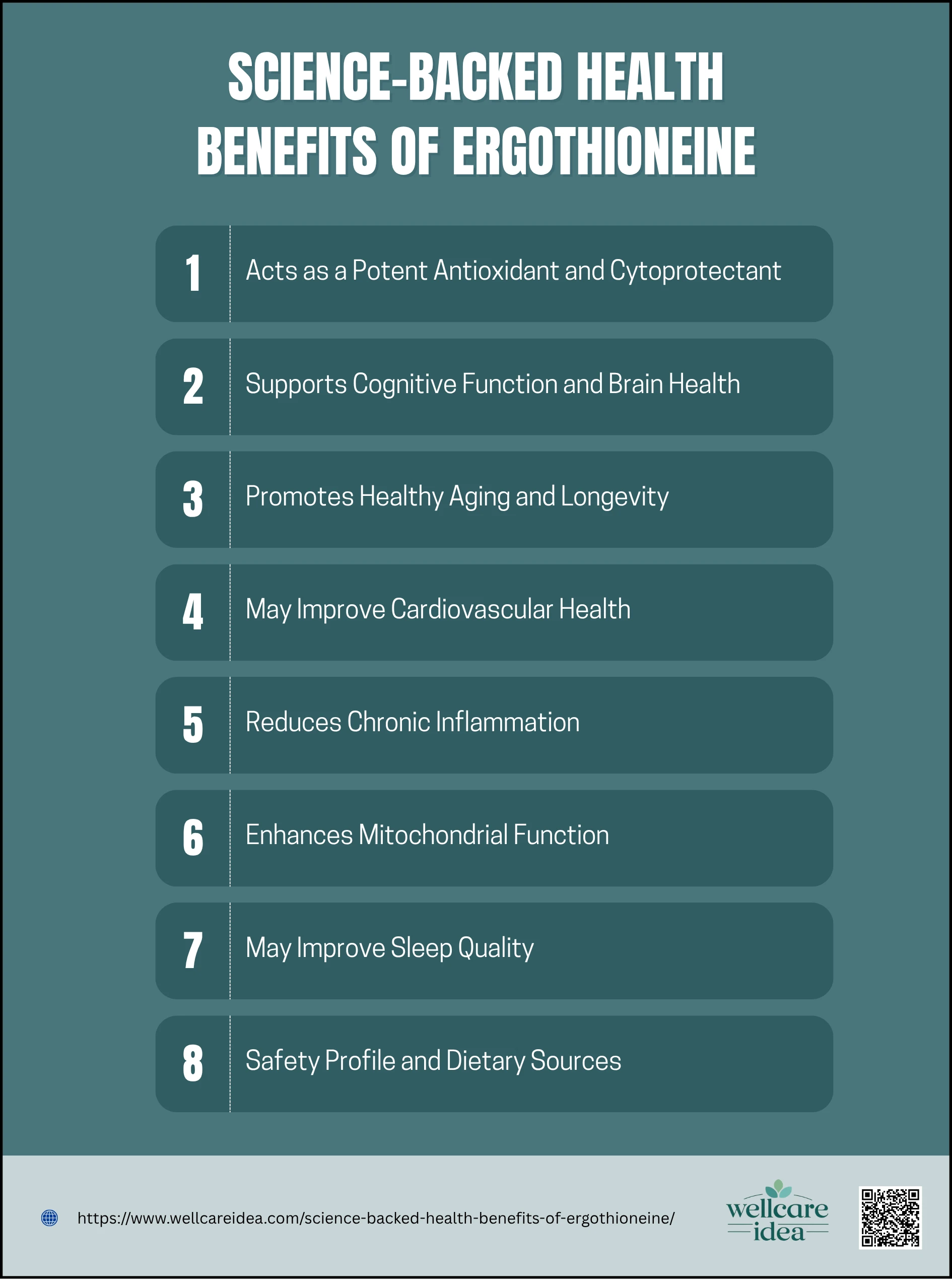 Science-Backed Health Benefits of Ergothioneine
1 . Acts as a Potent Antioxidant and Cytoprotectant
Cellular damage caused by oxidative stress is a primary driver of disease, and ergothioneine serves as a highly specialized defense mechanism against this threat. It concentrates in cells that are most exposed to oxidative stress, such as erythrocytes and ocular tissues, where it neutralizes reactive oxygen species (ROS) and protects DNA from damage 3 Research indicates that its antioxidant capacity helps preserve cellular integrity even under harsh environmental conditions, acting as a “cytoprotectant” that shields cells from toxins and UV radiation 4
2. Supports Cognitive Function and Brain Health
Emerging research suggests a strong link between low levels of ergothioneine and the progression of neurodegenerative disorders. Studies have found that individuals with mild cognitive impairment often exhibit significantly lower blood plasma levels of ergothioneine compared to healthy age-matched controls 5 Furthermore, preclinical models demonstrate that ergothioneine may help clear amyloid-beta plaques—protein accumulations associated with Alzheimer’s disease—suggesting it may offer neuroprotective benefits for the aging brain [[https://www.ncbi.nlm.nih.gov/pmc/articles/PMC8623727/}
3. Promotes Healthy Aging and Longevity
The concentration of ergothioneine in the human body naturally tends to decline as we age, leading researchers to investigate its potential role in the aging process itself. A landmark observational study identified that higher plasma levels of ergothioneine were associated with lower risks of frailty and all-cause mortality, reinforcing its nickname as a “longevity vitamin” 6 By mitigating oxidative damage over time, it may help preserve the functional lifespan of tissues and organs, contributing to a longer healthspan.
4. May Improve Cardiovascular Health
Heart health relies heavily on the stability of blood vessels and the management of oxidative stress within the cardiovascular system. Large-scale epidemiological studies have shown that higher dietary intake and plasma levels of ergothioneine are independently associated with a reduced risk of cardiovascular disease and cardiometabolic mortality 6 Additionally, it has been shown to protect endothelial cells—the cells lining blood vessels—from damage caused by oxidized LDL cholesterol and inflammation, which are key factors in the development of atherosclerosis 7
5. Reduces Chronic Inflammation
Chronic inflammation is a root cause of many modern chronic diseases, and ergothioneine appears to modulate inflammatory pathways. Research indicates that it can inhibit the upregulation of adhesion molecules and pro-inflammatory cytokines, such as Interleukin-1 beta (IL-1β), in response to stressors 8 By dampening these inflammatory signals, it helps prevent the systemic tissue damage often seen in conditions like metabolic syndrome and type 2 diabetes 9
6. Enhances Mitochondrial Function
Mitochondria are the power plants of our cells, and their dysfunction is a hallmark of aging and fatigue. Recent investigations reveal that ergothioneine accumulates in mitochondria, where it helps maintain membrane potential and protects against oxidative injury during energy production. This protection allows for more efficient energy metabolism and may aid in recovery from exercise-induced stress by preserving mitochondrial respiration rates in muscle tissue 10
7. May Improve Sleep Quality
While research in this specific area is newer, initial human clinical trials have yielded promising results regarding sleep improvement. A study involving older adults found that supplementation with ergothioneine significantly improved sleep quality and reduced sleep difficulties after four weeks of use 11 The mechanism is thought to involve the modulation of neuronal activity and the reduction of neuroinflammation, promoting a more restful and restorative sleep cycle 12
8. Safety Profile and Dietary Sources
Ergothioneine is considered safe for human consumption, with regulatory bodies in the United States and Europe granting it “Generally Recognized as Safe” (GRAS) status for use in foods and supplements 13 The most abundant dietary sources are culinary mushrooms, particularly Porcini, Golden Oyster, Shiitake, and Maitake varieties, which contain significantly higher concentrations than other foods 14 Lesser amounts can be found in kidney beans, black beans, and oat bran, making it accessible through a varied, plant-forward diet.
Conclusion
Ergothioneine stands out as a unique and powerful cytoprotectant with a specific biological transport system in the human body. From protecting the brain and heart to potentially slowing the aging process and improving sleep, the scientific evidence supporting its health benefits continues to grow. Incorporating ergothioneine-rich foods like mushrooms into one’s diet offers a practical strategy for leveraging these benefits for long-term wellness.