

What is Noise Pollution?
Environmental noise, often defined as unwanted or disturbing sound, is a pervasive pollutant that receives significantly less attention than air or water contamination because it is invisible. Despite its lack of visual presence, this form of pollution poses a serious threat to public health and well-being. The World Health Organization (WHO) estimates that at least one million healthy life-years are lost annually in Western Europe alone due to traffic-related noise 1 Unlike other pollutants that may linger for years, noise stops the moment the source is turned off, yet its impact on the human body can be long-lasting and severe.
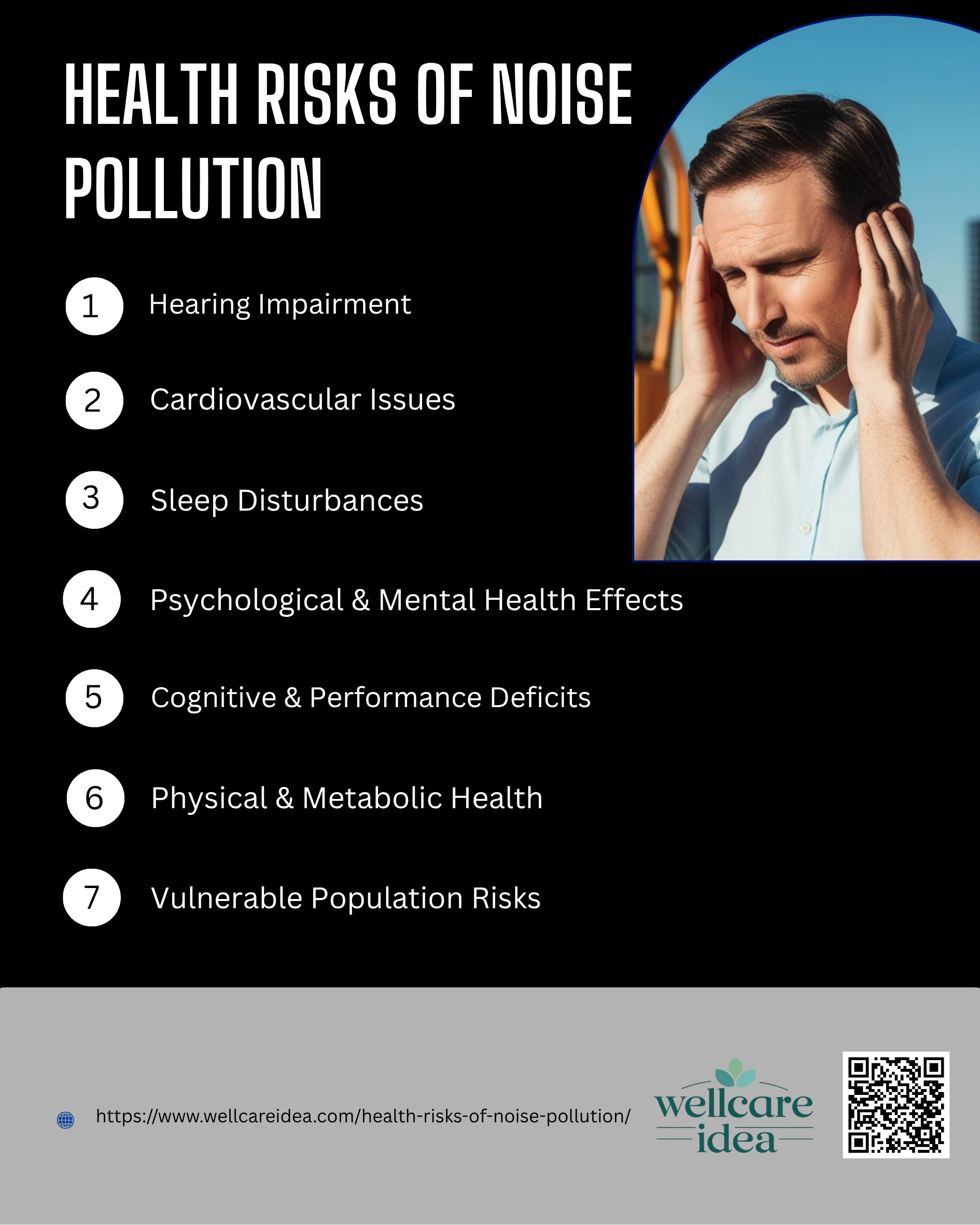 Health Risks of Noise Pollution
1. Hearing Impairment
Exposure to loud sounds is the most direct and well-known consequence of acoustic pollution, potentially leading to permanent damage. This damage often manifests as Noise-Induced Hearing Loss (NIHL) or tinnitus, a condition characterized by a persistent ringing or buzzing in the ears. Current data suggests that approximately 10 million adults and over 5 million children in the United States suffer from permanent hearing damage caused by excessive noise exposure 2 The delicate hair cells within the ear can be destroyed by a single traumatic sound or by continuous exposure to elevated decibel levels over time, impairing the ability to hear and communicate effectively.
2. Cardiovascular Issues
Beyond the ears, noise acts as a significant physiological stressor that can harm the heart and blood vessels. Research indicates that noise pollution ranks second only to air pollution as the environmental exposure most harmful to public health, contributing to conditions such as high blood pressure and heart disease 3 When an individual is subjected to loud or irritating noises, the body’s stress response is triggered, flooding the system with hormones like cortisol. This reaction causes blood vessels to constrict and heart rates to rise, which can lead to long-term cardiovascular damage even if the person feels they have “tuned out” the background noise 4
3. Sleep Disturbances
Quality sleep is essential for physical and mental restoration, yet environmental noise is a leading cause of sleep fragmentation and insomnia. Studies show that nighttime noise pollution can disrupt sleep architecture, preventing the body from entering deep, restorative stages of rest 5 Even while asleep, the brain continues to process sounds, and sudden noises can trigger a “fight or flight” response that elevates heart rate and blood pressure without waking the individual fully. This chronic interruption is associated with next-day fatigue, mood swings, and a weakened immune system, creating a cycle of poor health 6
4. Psychological & Mental Health Effects
Living in consistently noisy environments often leads to heightened annoyance, which is a precursor to more serious psychological conditions. There is a strong correlation between high levels of noise annoyance and an increased risk of anxiety and depression 7 The persistent inability to find quiet can create a sense of helplessness and chronic stress, which significantly impacts overall mental well-being. Individuals who report being highly annoyed by noise are found to be at a substantially higher risk for developing depression compared to those in quieter settings 8
5. Cognitive & Performance Deficits
The brain’s ability to focus, learn, and retain information is heavily compromised by intrusive sounds. This is particularly evident in children, where noise pollution has been linked to reading deficits and impaired memory https://pmc.ncbi.nlm.nih.gov/articles/PMC9832265/} In academic and work settings, constant background noise forces the brain to allocate extra resources to filter out distractions, leaving less mental energy for complex tasks. Research highlights that tens of thousands of healthy life-years are lost annually due to cognitive impairment in children caused by environmental noise 9
6. Physical & Metabolic Health
Emerging scientific evidence has connected chronic noise exposure to metabolic disorders, including type 2 diabetes. The biological mechanism involves the body’s stress response; elevated cortisol levels interfere with how the body regulates blood sugar and insulin 10 Studies indicate that long-term exposure to road traffic noise is associated with an increased incidence of diabetes, independent of air pollution levels 11 This suggests that the physiological stress caused by noise can disrupt the body’s metabolism, leading to weight gain and insulin resistance over time.
7. Vulnerable Population Risks
Certain groups, specifically children and the elderly, are disproportionately affected by the adverse effects of noise. Older adults often experience age-related sleep fragmentation, which is easily exacerbated by environmental sounds, while children are in a critical developmental stage where noise can permanently hinder cognitive growth 12 These populations may lack the resources or ability to control their acoustic environment, making them more susceptible to the cumulative stress and health damage caused by continuous noise exposure.
Conclusion
While modern life often equates bustling activity with progress, the scientific consensus is clear: silence is essential for health. Noise pollution is not merely a nuisance bu t a systemic environmental stressor that degrades physical and mental well-being over time. Addressing this invisible threat requires both personal awareness—such as using ear protection and creating quiet zones—and broader societal changes in urban planning. By recognizing the severity of noise pollution, individuals can take proactive steps to protect their hearing, heart, and peace of mind, ultimately reducing the burden of disease associated with environmental noise 13