
What Are Heavy Metals in Cheap Cosmetics?
The unseen presence of toxic heavy metals in beauty products constitutes a significant health hazard that frequently escapes the notice of general consumers. Rather than being added intentionally, dangerous elements like lead, arsenic, mercury, cadmium, and nickel usually contaminate products as impurities within raw mineral pigments and earth-based ingredients. While strict regulations exist in some nations, low-cost or counterfeit cosmetics—often sourced from areas with limited oversight—regularly contain unsafe concentrations of these toxicants. Analysis has shown that items ranging from lipsticks to skin creams can possess metal levels surpassing safety limits, presenting dangers that go well beyond simple skin irritation 1 These substances are especially hazardous due to their persistence; the human body struggles to eliminate them, resulting in a dangerous buildup over time.
 Health Risks of Heavy Metals in Cheap Cosmetics
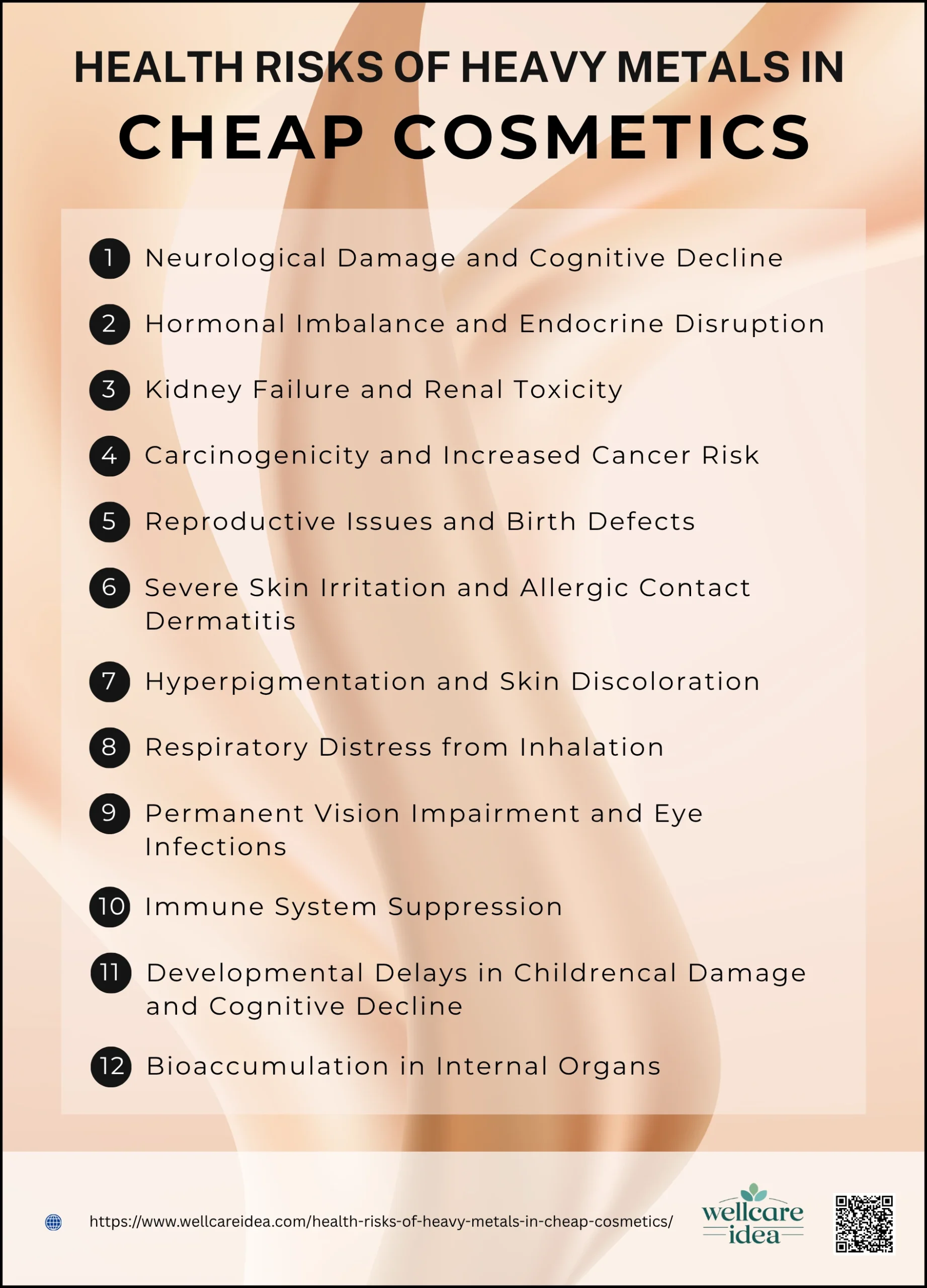
1. Neurological Damage and Cognitive Decline
The nervous system is highly vulnerable to neurotoxic metals often found in substandard beauty products. Lead and mercury are the primary threats; when these are absorbed through the skin or ingested—a common occurrence with lip products—they can cross the protective blood-brain barrier. Chronic exposure to mercury, frequently detected in illicit skin-lightening creams, is associated with tremors, memory loss, and irritability 2 Similarly, lead acts as a potent neurotoxin capable of degrading cognitive function and motor skills, particularly in those who apply these products daily over extended periods 3
2. Hormonal Imbalance and Endocrine Disruption
Certain heavy metals have the capacity to mimic or obstruct the body’s natural hormones, functioning as endocrine disruptors. Cadmium and lead, often found in pigmented cosmetics, can interfere with the body’s estrogenic systems. Scientific literature suggests that these “metalloestrogens” may disrupt menstrual cycles and alter hormone levels, which is a critical issue for women using multiple cosmetic products every day {https://www.ncbi.nlm.nih.gov/pmc/articles/PMC3044161/, https://pubmed.ncbi.nlm.nih.gov/22727514/} This interference confuses the body’s hormonal signaling, leading to systemic imbalances that impact overall well-being.
3. Kidney Failure and Renal Toxicity
As the body’s primary filtration system, kidneys are exceptionally prone to damage from toxins circulating in the bloodstream. Mercury is notoriously nephrotoxic (damaging to kidneys) and is frequently added illegally to skin-bleaching creams to suppress melanin production. Extended use of such products can result in nephrotic syndrome, a condition marked by high protein levels in urine and swelling, which may advance to kidney failure if exposure persists 4 Cadmium accumulation also threatens renal function, as it concentrates in kidney tissues and causes irreversible tubular damage.
4. Carcinogenicity and Increased Cancer Risk
Several heavy metals discovered in unregulated cosmetics are classified as Group 1 carcinogens by international research organizations. Arsenic, cadmium, and chromium are known to damage DNA and inhibit the body’s cellular repair mechanisms, leading to mutations. Studies highlight that long-term dermal exposure to these carcinogenic metals—such as arsenic in eyeshadows or cadmium in foundations—substantially raises the risk of developing various cancers, including skin and internal organ malignancies 5
5. Reproductive Issues and Birth Defects
Fertility and pregnancy outcomes can be severely compromised by heavy metal toxicity. Metals like lead and cadmium can cross the placental barrier, impacting the developing fetus and potentially resulting in miscarriage, stillbirth, or low birth weight. Furthermore, research has identified a correlation between elevated levels of urinary arsenic and cadmium and higher rates of infertility in women, suggesting that cosmetic exposure could be a contributing factor to reproductive challenges 6
6. Severe Skin Irritation and Allergic Contact Dermatitis
Direct application of metallic impurities frequently provokes adverse skin reactions. Nickel and chromium are among the most prevalent allergens found in cosmetics like eyeshadows and powders. Sensitization to these metals leads to allergic contact dermatitis, manifesting as redness, intense itching, swelling, and eczema-like rashes at the application site 7 Once an individual is sensitized, even trace amounts can trigger a severe inflammatory response.
7. Hyperpigmentation and Skin Discoloration
Paradoxically, products designed to improve skin tone can cause permanent disfigurement. While mercury is initially used to lighten skin, chronic use often leads to a condition where the skin turns a gray or slate-blue color, known as paradoxical hyperpigmentation. Additionally, arsenic exposure through cosmetics can cause keratosis and pigment changes, leaving the skin blotchy and uneven 8 These effects are often challenging to reverse even after the toxic product is discontinued.
8. Respiratory Distress from Inhalation
Powder-based cosmetics, such as talcum powder, blush, and loose setting powders, present a risk of inhalation during application. If these powders contain heavy metal contaminants like chromium or lead, inhaling the fine particulate matter can irritate the respiratory tract. Continuous inhalation exposure contributes to chronic coughing, wheezing, and damage to the lung’s mucous membranes, and in severe cases, may facilitate systemic toxicity 9
9. Permanent Vision Impairment and Eye Infections
Traditional eye cosmetics, such as Kohl, Kajal, or Surma, are widely utilized in some cultures but are frequently contaminated with high concentrations of lead. The FDA has warned that the use of these lead-laden products is linked to lead poisoning and can cause serious eye infections. In extreme instances, chemical irritation and the potential for infection can lead to corneal damage and permanent vision impairment 10 11
10. Immune System Suppression
Heavy metals can function as immunosuppressants, weakening the body’s natural defense mechanisms against infections. Exposure to metals like arsenic and lead has been shown to alter immune system signaling pathways, making individuals more susceptible to autoimmune diseases and frequent infections. By disrupting the normal function of immune cells, these toxins compromise overall health and resilience against disease 12
11. Developmental Delays in Children
Children are uniquely vulnerable to heavy metal toxicity, even if they are not the primary users of the cosmetics. Indirect exposure—such as a child kissing a parent wearing lead-contaminated lipstick or playing with makeup products—can be hazardous. Lead exposure in young children is notoriously linked to developmental delays, lower IQ scores, and behavioral problems, as their developing brains are far more sensitive to neurotoxins than adult brains 13
12. Bioaccumulation in Internal Organs
Perhaps the most insidious risk is the body’s inability to efficiently excrete these metals. Heavy metals bioaccumulate, meaning they build up in body tissues faster than they are eliminated. Over years of using cosmetic products containing trace amounts of lead, cadmium, or mercury, these toxins deposit in the bones, liver, and kidneys, creating a “body burden” that can result in chronic organ failure and systemic toxicity later in life.