
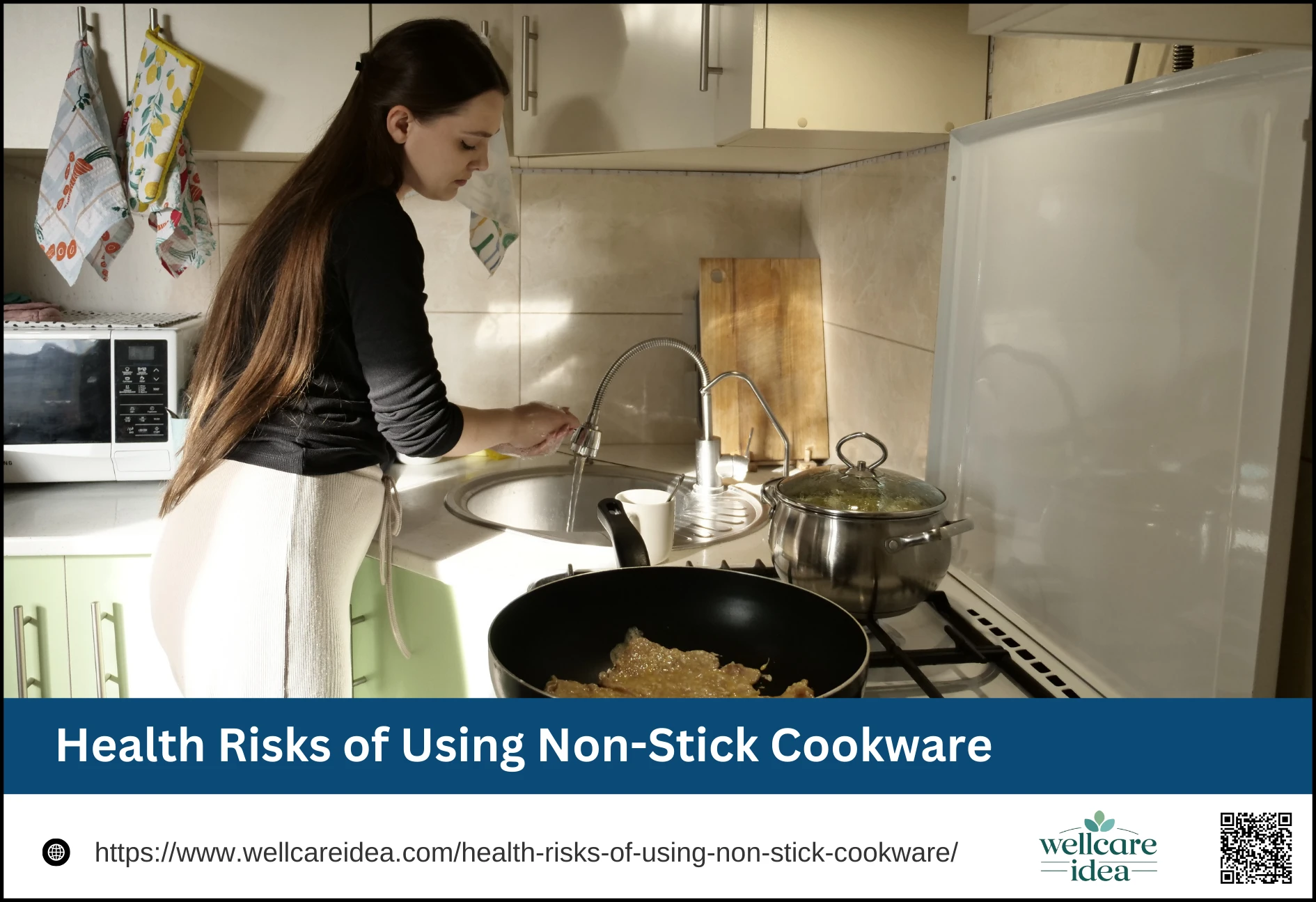
What is Using Non-Stick Cookware
Non-stick cookware refers to frying pans, saucepans, and bakeware coated with a synthetic polymer that prevents food from adhering to the surface. The most common coating is polytetrafluoroethylene (PTFE), widely known by the brand name Teflon. This material is valued for its ability to repel water and oil, allowing for easy cleaning and low-fat cooking. While the coating itself is generally chemically inert at lower temperatures, the manufacturing process and degradation of these pans involve substances belonging to a class of chemicals known as per- and polyfluoroalkyl substances (PFAS). Historically, a chemical called perfluorooctanoic acid (PFOA) was used to make these coatings, though it has largely been phased out in favor of newer, albeit still scrutinized, alternatives. 1 , 2
Health Risks of Using Non-Stick Cookware
1. Respiratory Hazards & Air Quality
One of the most immediate risks associated with non-stick cookware occurs when the pans are overheated. When PTFE-coated pans reach high temperatures—typically above 500°F (260°C)—the coating begins to degrade and release toxic fumes. Inhaling these fumes can lead to a condition known as “polymer fume fever,” often informally called the “Teflon flu.” Symptoms mimic a standard viral illness and include fever, chest tightness, shortness of breath, headache, and coughing, which typically appear a few hours after exposure 3 Unlike a biological virus, this condition is caused directly by chemical irritation of the lungs. While recovery is usually rapid once the individual is removed from the fumes, repeated exposure can cause cumulative lung damage. 4 , 5
2. Chemical Toxicity & Systemic Effects
The chemicals involved in non-stick coatings have been the subject of extensive toxicological research due to their potential to disrupt bodily systems. PFOA, the chemical historically used to manufacture Teflon, has been classified as a potential human carcinogen. Epidemiological studies have linked elevated levels of PFOA in the blood to an increased risk of specific cancers, particularly kidney and testicular cancer. 6 , 7 Furthermore, exposure to these fluorinated chemicals has been associated with non-cancerous systemic effects, including liver damage, thyroid disease, and decreased fertility 8 Although manufacturers have shifted to “GenX” chemicals as a replacement for PFOA, emerging research suggests these newer substances may share similar toxicity profiles, raising ongoing concerns about their safety. 2
3. Physical Ingestion Risks
As non-stick cookware ages, the coating can scratch, flake, or peel, leading to the direct ingestion of coating particles. While eating a single flake of PTFE is often considered chemically inert and likely to pass through the digestive tract unchanged, the long-term ingestion of microplastics and chemical residues poses a different set of risks. Research indicates that scratched pans can release millions of microplastic particles and nanoplastics into food during cooking. 9 The concern is that these microscopic particles may facilitate the leaching of chemical additives into the body, potentially contributing to the bioaccumulation of toxins in human tissues over time.
4. Environmental & Biological Persistence
The chemicals used in non-stick cookware are often referred to as “forever chemicals” because they do not break down easily in the environment or the human body. Due to the strength of the carbon-fluorine bond, substances like PFAS can persist in the soil and water for decades, eventually making their way into the food chain. https://www.ncbi.nlm.nih.gov/pmc/articles/PMC7906952/} , 10 Once ingested, these chemicals have a long half-life in humans, meaning they remain in the body for years before being eliminated. This biological persistence means that even low-level daily exposure from cookware and other sources can accumulate over a lifetime, potentially leading to adverse health outcomes such as immune system suppression and hormonal disruption 11
Conclusion
The convenience of non-stick surfaces must be carefully weighed against the potential cumulative health effects of exposure to fluorinated compounds. Scientific consensus increasingly indicates that reducing exposure to these “forever chemicals” is crucial for long-term wellness, as they are strongly linked to various systemic health issues and environmental persistence. 10 To minimize immediate risks, health experts recommend strictly avoiding high-heat cooking with coated pans and immediately discarding any cookware that shows signs of scratching or peeling 2 Ultimately, transitioning to alternative materials such as stainless steel, cast iron, or glass can significantly reduce the daily burden of environmental toxins entering the body, promoting a safer kitchen environment.