
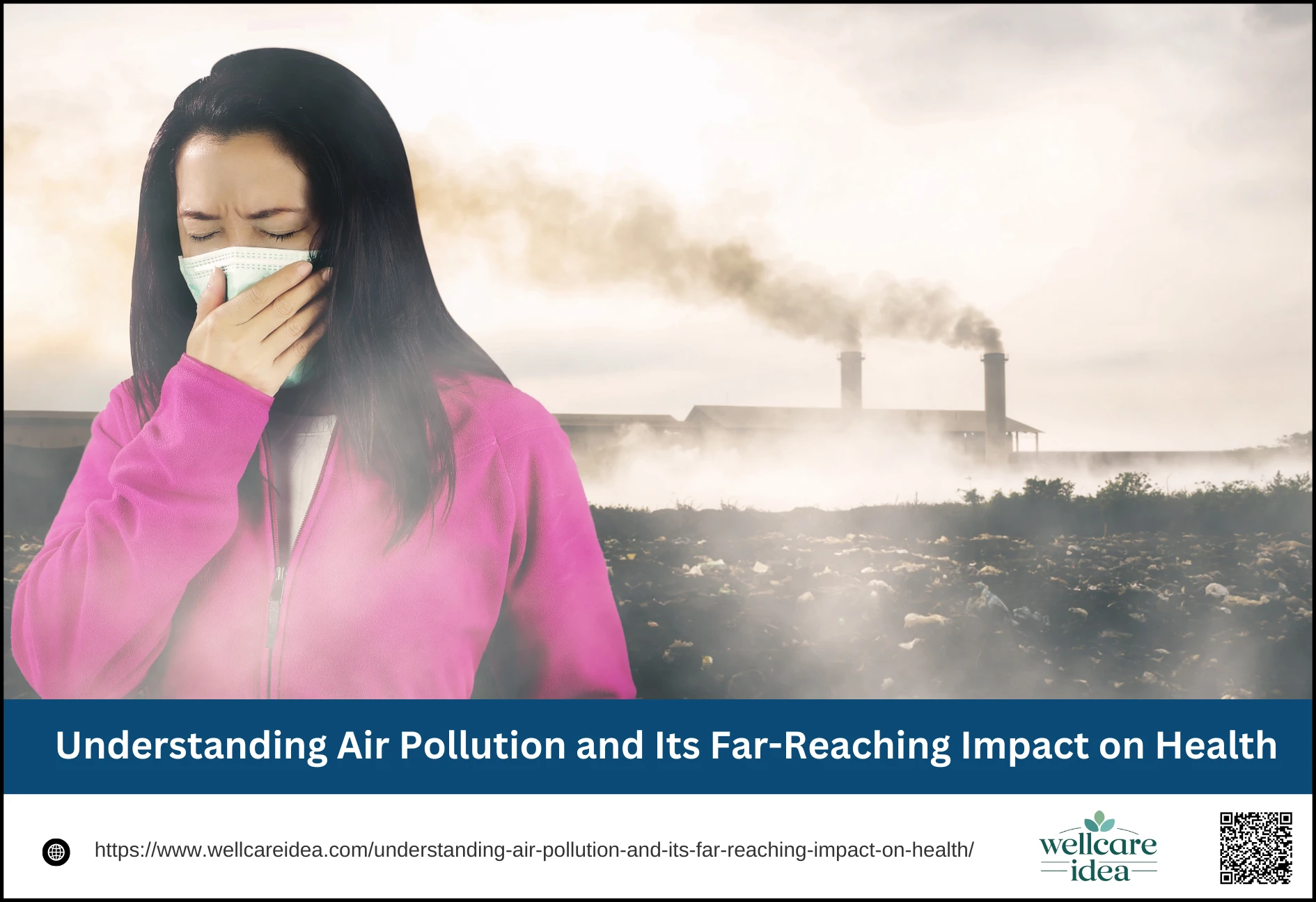
Air pollution refers to the presence of harmful substances in the atmosphere—ranging from microscopic chemicals to physical particles—that interfere with the health of humans and the environment. These pollutants primarily include particulate matter ($PM_{2.5}$ and $PM_{10}$), nitrogen dioxide, and ozone, which are often the result of industrial processes, vehicle emissions, and natural sources like wildfires. Research indicates that even at low levels, these pollutants can penetrate deep into the human body, triggering a cascade of biological damage 1 Unlike visible dust, the most dangerous pollutants are often invisible, yet they contribute to millions of premature deaths globally each year 2
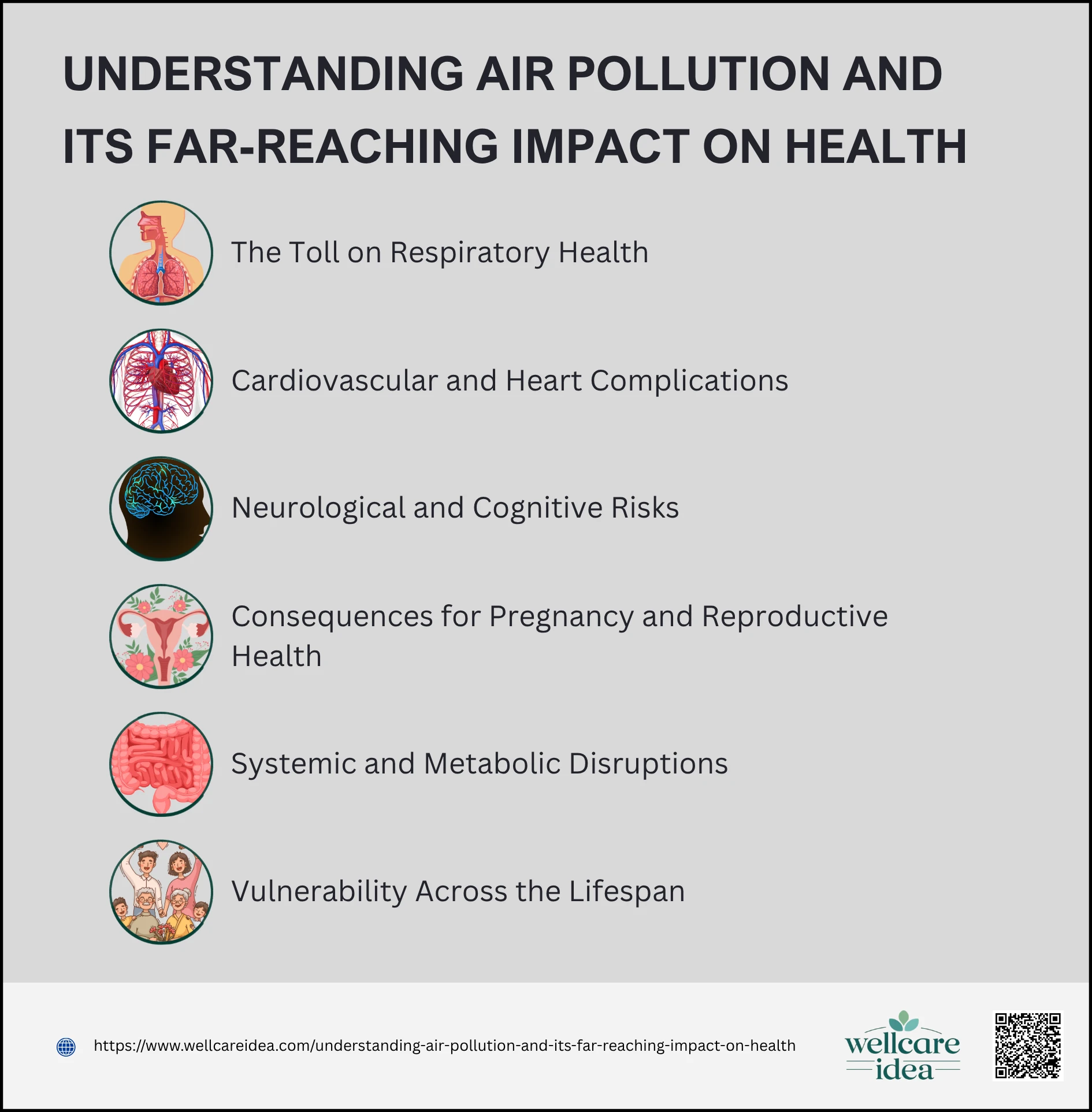 1. The Toll on Respiratory Health
The lungs are the primary gateway for airborne toxins, making the respiratory system the first line of impact. When we breathe in contaminated air, fine particles can cause immediate irritation and long-term inflammation of the airways. This chronic inflammation is a major driver of conditions like asthma and chronic obstructive pulmonary disease (COPD) 3 Furthermore, long-term exposure to outdoor pollutants is significantly linked to an increased risk of developing lung cancer, even in individuals who have never smoked 4
2. Cardiovascular and Heart Complications
Beyond the lungs, air pollution poses a severe threat to the heart and circulatory system. Once fine particulate matter enters the bloodstream, it can cause the hardening of arteries and increase the risk of blood clots. Studies have shown a direct correlation between high levels of air pollution and an increased incidence of heart attacks and strokes 5 These pollutants can also disrupt the heart’s natural rhythm and elevate blood pressure, placing immense strain on the cardiovascular system over time 6
3. Neurological and Cognitive Risks
Emerging scientific evidence suggests that the brain is not immune to the effects of poor air quality. Ultrafine particles may travel from the nose directly to the brain or reach it via the bloodstream, leading to neuroinflammation. Research has linked long-term exposure to air pollution with an accelerated decline in cognitive function and a higher risk of developing neurodegenerative diseases such as Alzheimer’s and Parkinson’s 7 In younger populations, exposure has even been associated with changes in brain structure and impaired learning abilities 8
4. Consequences for Pregnancy and Reproductive Health
The biological stress caused by air pollution extends to reproductive health and fetal development. Pregnant individuals exposed to high levels of nitrogen dioxide and particulate matter face higher risks of complications, including preeclampsia. Furthermore, air pollution is a known risk factor for adverse birth outcomes such as preterm birth and low birth weight 9 Some studies also suggest that exposure can impact fertility in both men and women by disrupting hormonal balance and decreasing sperm quality 10
5. Systemic and Metabolic Disruptions
Air pollution does not just affect specific organs; it triggers a systemic inflammatory response that can alter metabolism. There is a growing body of research connecting air pollution to the development of Type 2 diabetes and obesity. Pollutants can interfere with the body’s ability to regulate insulin and process glucose effectively 11 This systemic stress can weaken the immune system, making the body less capable of defending itself against infections and other chronic illnesses 1
6. Vulnerability Across the Lifespan
While air pollution affects everyone, certain groups are significantly more vulnerable to its toxic effects. Children are at high risk because their lungs are still developing, and they breathe more rapidly than adults, inhaling more pollutants relative to their body weight 12 Similarly, the elderly and individuals with pre-existing heart or lung conditions experience more severe symptoms and higher hospitalization rates during periods of poor air quality 13
Short-Term vs. Long-Term Exposure
The hazards of air pollution can be categorized by the duration of exposure, both of which carry distinct dangers. Short-term exposure—even for just a few hours or days—can trigger acute episodes like asthma attacks, bronchitis, and increased susceptibility to respiratory infections 14 Conversely, long-term exposure over years acts as a “silent killer,” gradually causing permanent damage to vital organs, reducing overall life expectancy, and increasing the prevalence of chronic diseases within entire communities 15