
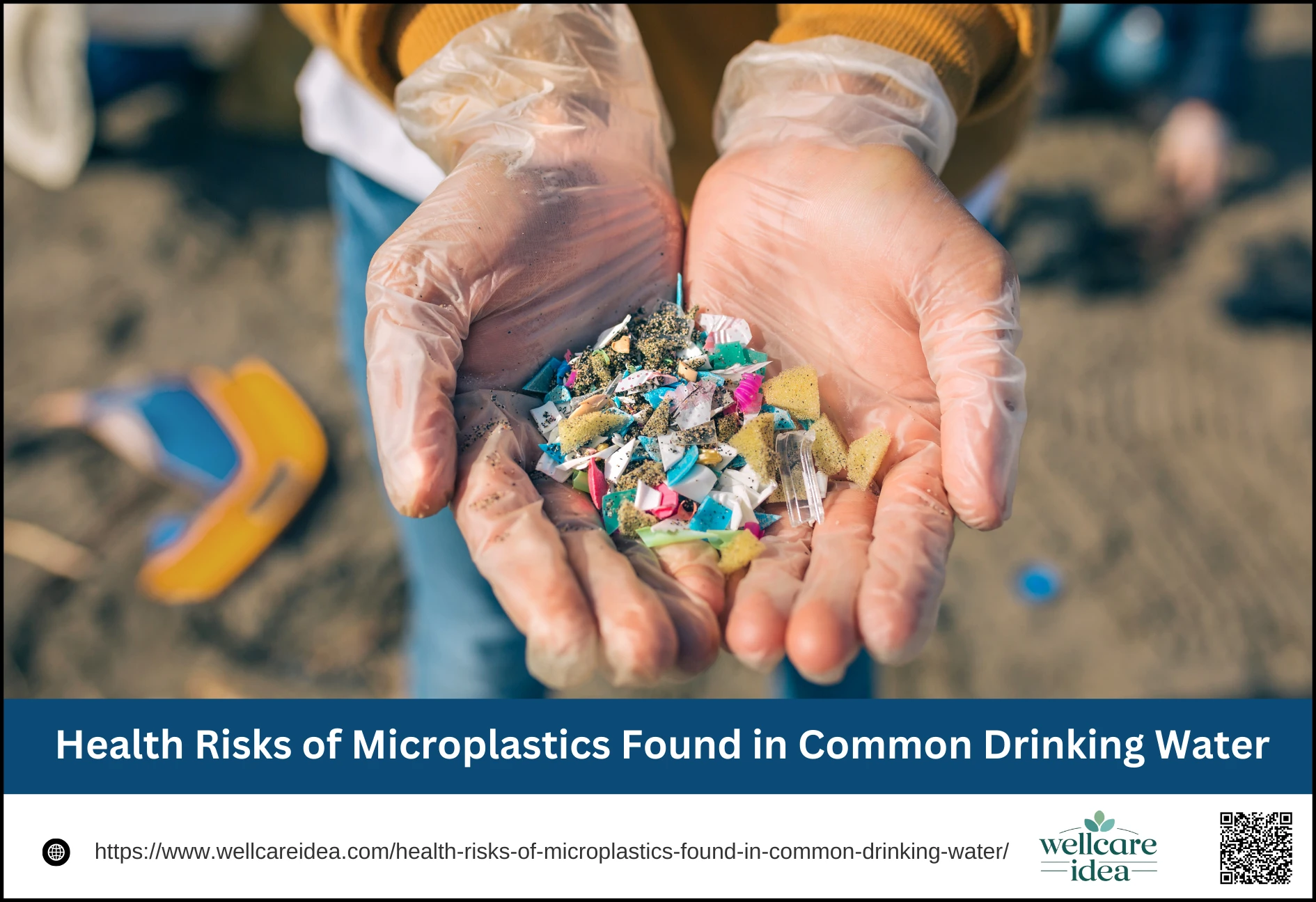
What are Microplastics in Drinking Water?
Microplastics are tiny plastic fragments measuring less than 5 millimeters in length, originating from the breakdown of larger plastic products or commercial manufacturing. These particles have become a pervasive contaminant in global water supplies, found in both tap water systems and commercially bottled water 1 Research indicates that individuals may ingest tens of thousands of these particles annually through drinking water alone, raising significant concerns about their long-term biological impact 1
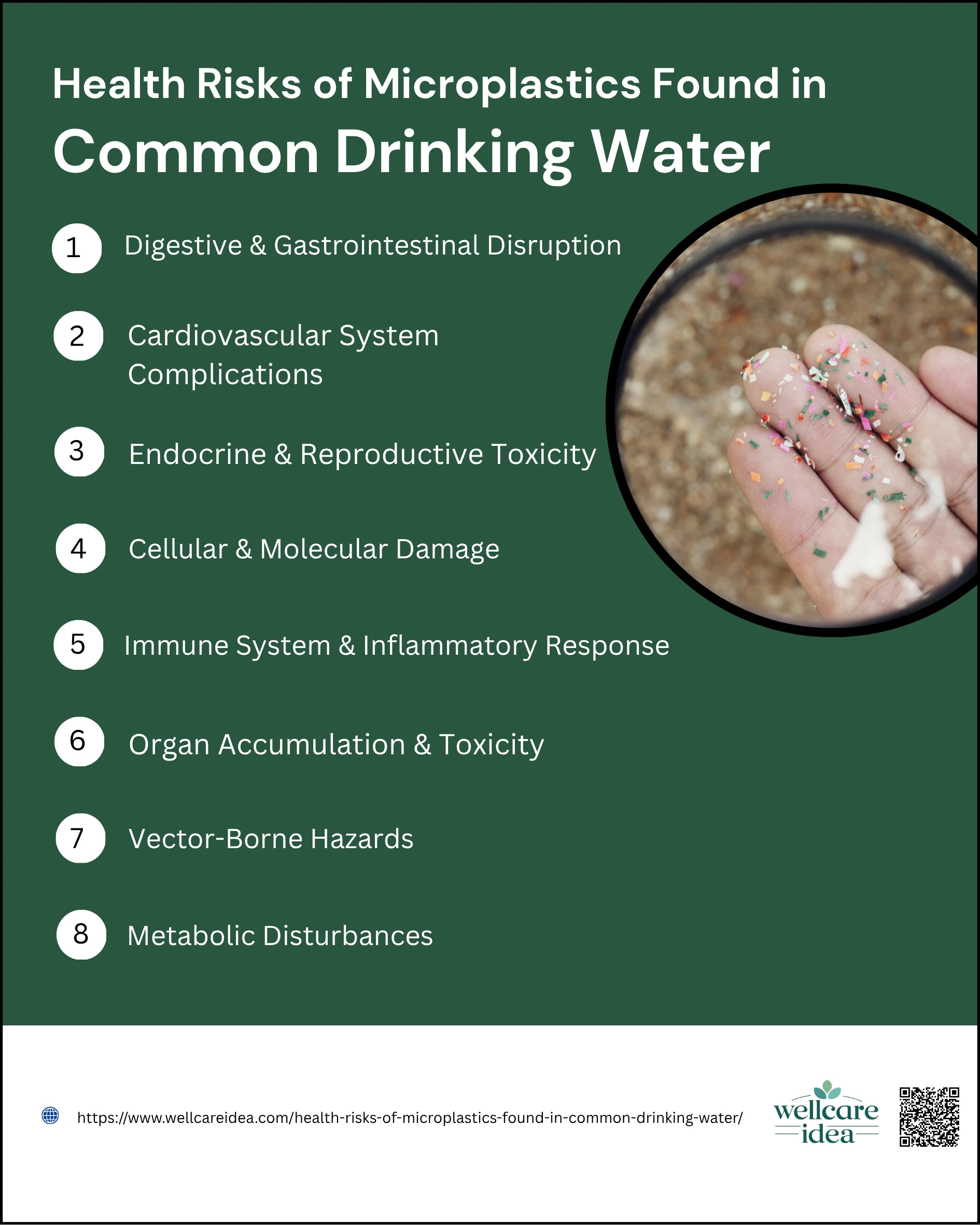 Health Risks of Microplastics Found in Common Drinking Water
1. Digestive & Gastrointestinal Disruption
Ingesting plastic particles significantly impacts the stomach and intestines, acting as a physical irritant to the delicate lining of the gut. Recent studies suggest these particles can linger in the digestive tract, where they may disrupt the natural balance of beneficial bacteria, a condition often linked to wider health issues 2 This bacterial imbalance can compromise the gut’s ability to act as a barrier, potentially allowing harmful substances to leak into the bloodstream 3
2. Cardiovascular System Complications
Tiny plastic particles have been detected within the plaque that builds up in human arteries, suggesting they may directly contribute to heart disease. A major study found that patients with microplastics embedded in their arterial plaque had a significantly higher risk of experiencing heart attacks, strokes, or death compared to those without 4 Further research links specific plastics, such as polyvinyl chloride (PVC), to elevated inflammation markers and adverse cardiac events 5
3. Endocrine & Reproductive Toxicity
Chemicals leached from plastics can interfere with the body’s hormonal systems, mimicking or blocking natural hormones essential for reproduction and development. These “endocrine disruptors” are known to affect fertility and have been linked to developmental issues in animal studies 1 The presence of these particles in drinking water introduces a continuous, low-level exposure to chemicals that may alter long-term reproductive health.
4. Cellular & Molecular Damage
At the microscopic level, plastic particles can cause physical stress to individual cells, leading to damage known as oxidative stress. This process occurs when the presence of plastics triggers an overproduction of unstable molecules that harm cell structures, including DNA and proteins 6 Such cellular damage is often a precursor to chronic inflammation and tissue degeneration 1
5. Immune System & Inflammatory Response
The human immune system identifies microplastics as foreign invaders, launching a defensive response that can lead to chronic inflammation. White blood cells, specifically neutrophils, have been observed engulfing plastic particles, which can cause the immune cells to die prematurely and release inflammatory signals 7 This persistent state of alertness and inflammation can wear down the body’s defenses over time {https://pubmed.ncbi.nlm.nih.gov/39900298/
6. Organ Accumulation & Toxicity
Research has demonstrated that the smallest plastic particles, known as nanoplastics, can cross biological barriers and accumulate in vital organs beyond the gut. Particles have been detected in the liver, kidneys, and even the brain, where they may impair organ function 1 The liver, responsible for filtering toxins, is particularly vulnerable to overload from these accumulating contaminants 8
7. Vector-Borne Hazards
Microplastics in water often act as a “Trojan horse,” carrying other dangerous substances into the body on their surfaces. Pathogens like bacteria and viruses, as well as toxic heavy metals and persistent organic pollutants, can adhere to the plastic surface and be released once ingested 9 This mechanism allows harmful agents to bypass initial body defenses and reach deeper tissues 2
8. Metabolic Disturbances
Emerging evidence suggests a link between plastic exposure and metabolic disorders, potentially influencing how the body processes energy and fat. Exposure to plastic-associated chemicals may contribute to an increased risk of obesity and diabetes by disrupting lipid metabolism 1 These metabolic shifts can compound the risks of cardiovascular and other chronic diseases 6