

What is Smartphone Addiction?
In the modern digital era, smartphones have become indispensable tools for communication and productivity, yet their compulsive overuse has given rise to a condition increasingly recognized by health professionals. Often referred to clinically as “problematic smartphone use” (PSU) or mobile phone dependence, this condition mirrors the patterns of behavioral addictions such as gambling. It is characterized by a loss of control over usage, withdrawal symptoms when the device is inaccessible, and continued use despite negative consequences to one’s daily life 1 Research indicates that this dependency is often driven by a fear of missing out (FOMO) and can lead to significant psychological and physiological impairments, affecting a growing demographic globally 2
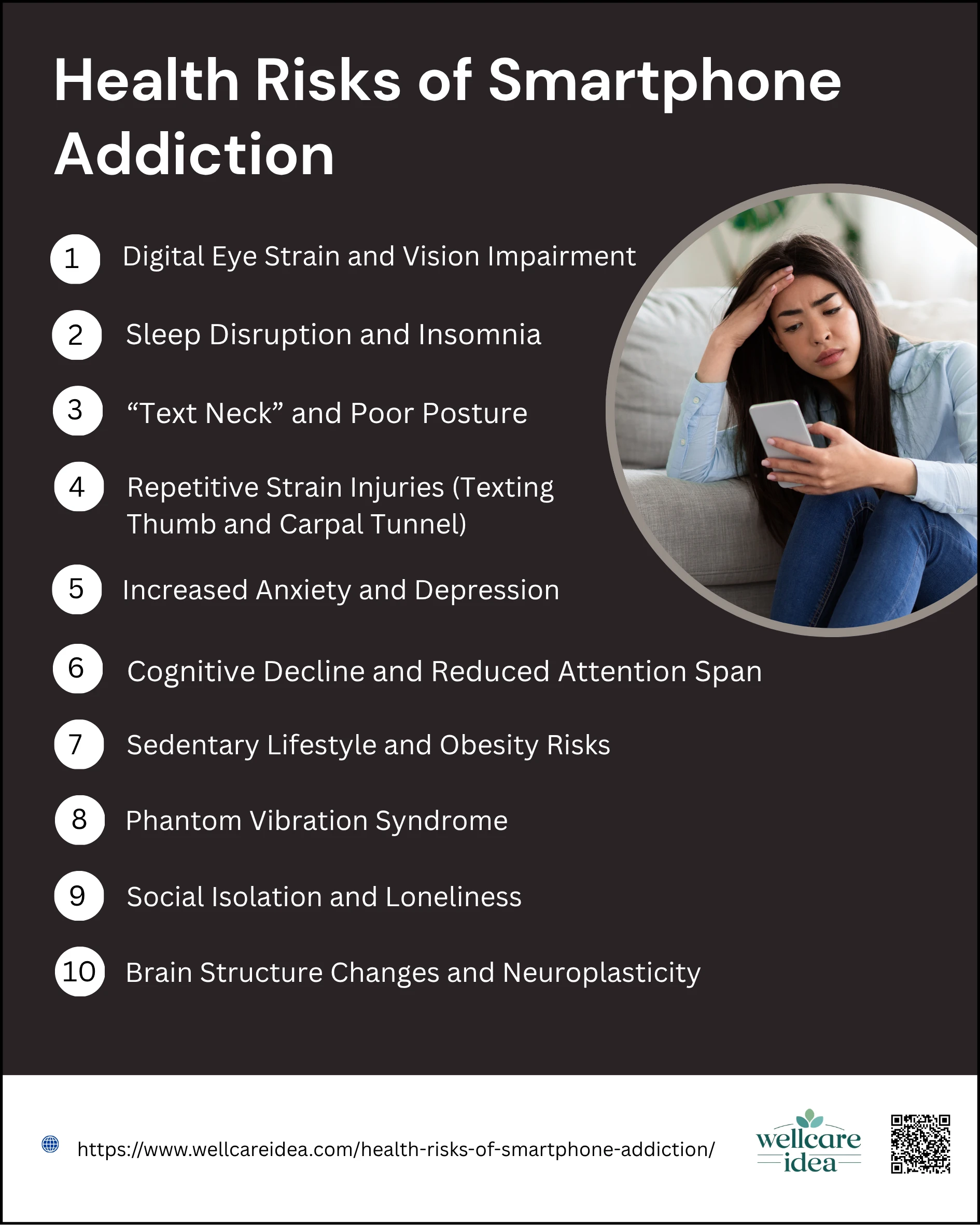 Health Risks of Smartphone Addiction
1. Digital Eye Strain and Vision Impairment
Prolonged exposure to the backlit screens of mobile devices forces the eyes to work harder than they do when reading printed text, leading to a cluster of symptoms known as Computer Vision Syndrome. Users often blink significantly less frequently while staring at screens, causing dry eyes, blurred vision, and headaches. The high-energy blue light emitted by these devices can penetrate deep into the eye, potentially contributing to long-term retinal damage and cumulative strain that affects daily visual comfort 3
2. Sleep Disruption and Insomnia
The use of smartphones late at night acts as a potent disruptor of the body’s natural circadian rhythms. Screens emit blue light which the brain interprets as daylight, subsequently suppressing the production of melatonin, the hormone responsible for signaling that it is time to sleep. This suppression can delay sleep onset and reduce the quality of Deep REM sleep, which is essential for cognitive processing and memory consolidation 4 Experts recommend removing electronic devices from the bedroom entirely to prevent this “blue-out” effect and allow the brain to wind down naturally 5
3. “Text Neck” and Poor Posture
Looking down at a smartphone for extended periods creates immense pressure on the cervical spine, a condition now widely termed “text neck.” The human head weighs approximately 10-12 pounds in a neutral position, but tilting it forward to view a screen can increase the effective force on the neck to as much as 60 pounds. This sustained stress leads to muscle imbalances, chronic neck pain, and even early spinal degeneration, requiring physical therapy interventions to correct posture and alleviate pain 6
4. Repetitive Strain Injuries (Texting Thumb and Carpal Tunnel)
Frequent typing, swiping, and scrolling can strain the tendons and muscles in the hands and wrists, resulting in repetitive strain injuries (RSI). One specific condition, often called “texting thumb” or De Quervain’s tenosynovitis, involves inflammation of the tendons on the thumb side of the wrist. Research has linked excessive smartphone usage to mild-to-moderate wrist and hand pain, which can exacerbate existing conditions like carpal tunnel syndrome due to the repetitive micro-movements required by touchscreens 3
5. Increased Anxiety and Depression
There is a strong, bidirectional relationship between compulsive smartphone use and mental health disorders. Excessive reliance on devices is often associated with higher levels of stress, anxiety, and depression, particularly among young adults and students. The constant connectivity can create a feedback loop where individuals use phones to escape negative feelings, only to find that the device reinforces their anxiety and isolation 7
6. Cognitive Decline and Reduced Attention Span
Constant notifications and the habit of rapid scrolling can fragment the brain’s ability to focus, leading to a reduction in attention span and “vigilant attention.” The brain’s capacity to filter distractions is compromised by the “impoverished” stimulation provided by screens compared to real-world interactions. This constant switching of attention prevents the deep cognitive engagement necessary for complex problem-solving and memory retention 8
7. Sedentary Lifestyle and Obesity Risks
As individuals spend more time glued to their screens, physical activity levels naturally decline, contributing to a sedentary lifestyle that is a major risk factor for obesity. Studies have observed that smartphone-addicted individuals are less likely to engage in regular exercise, which in turn increases the risk of metabolic and cardiovascular diseases. This behavioral shift creates a cycle of inactivity where screen time replaces time that would otherwise be spent moving or exercising 1
8. Phantom Vibration Syndrome
A psychological phenomenon specific to heavy mobile users is the hallucination that one’s phone is vibrating or ringing when it is not. Known as Phantom Vibration Syndrome, this occurs because the brain becomes hyper-sensitized to the sensory input of a phone, misinterpreting varied itchiness or muscle twitches as incoming notifications. Studies have shown this prevalence is particularly high among populations under high stress, such as medical interns, indicating a link between anxiety and this sensory hallucination 9
9. Social Isolation and Loneliness
While smartphones are designed to connect people, their overuse often leads to “phubbing” (phone snubbing)—the act of ignoring those physically present in favor of a device. This behavior degrades the quality of face-to-face interactions and can lead to a sense of social exclusion for both the “phubber” and the person being ignored. Research suggests a vicious cycle where loneliness drives smartphone use, which in turn increases feelings of social isolation and decreases satisfaction with real-life relationships 10
10. Brain Structure Changes and Neuroplasticity
Neuroimaging studies have revealed that chronic, excessive smartphone use may alter the physical structure of the brain. Specifically, researchers have observed reduced gray matter volume in areas of the brain responsible for emotional regulation and decision-making, such as the orbitofrontal cortex and anterior cingulate cortex. These structural changes are similar to those seen in substance addiction, suggesting that digital dependency can physically reshape neural pathways related to reward and control 11