
Understanding Chronic Sleep Deprivation
Sleep is a fundamental biological necessity, yet it is often the first sacrifice made in a busy lifestyle. Chronic sleep deprivation is defined as a consistent lack of sufficient sleep or a prolonged period of sleeplessness that impairs an individual’s ability to function. Unlike acute sleep loss, which might occur after a single restless night, chronic deprivation involves routinely sleeping less than the recommended amount—typically seven or more hours for adults—over an extended period 1 This sustained deficit prevents the body from completing critical restorative cycles, leading to cumulative damage across nearly every biological system.
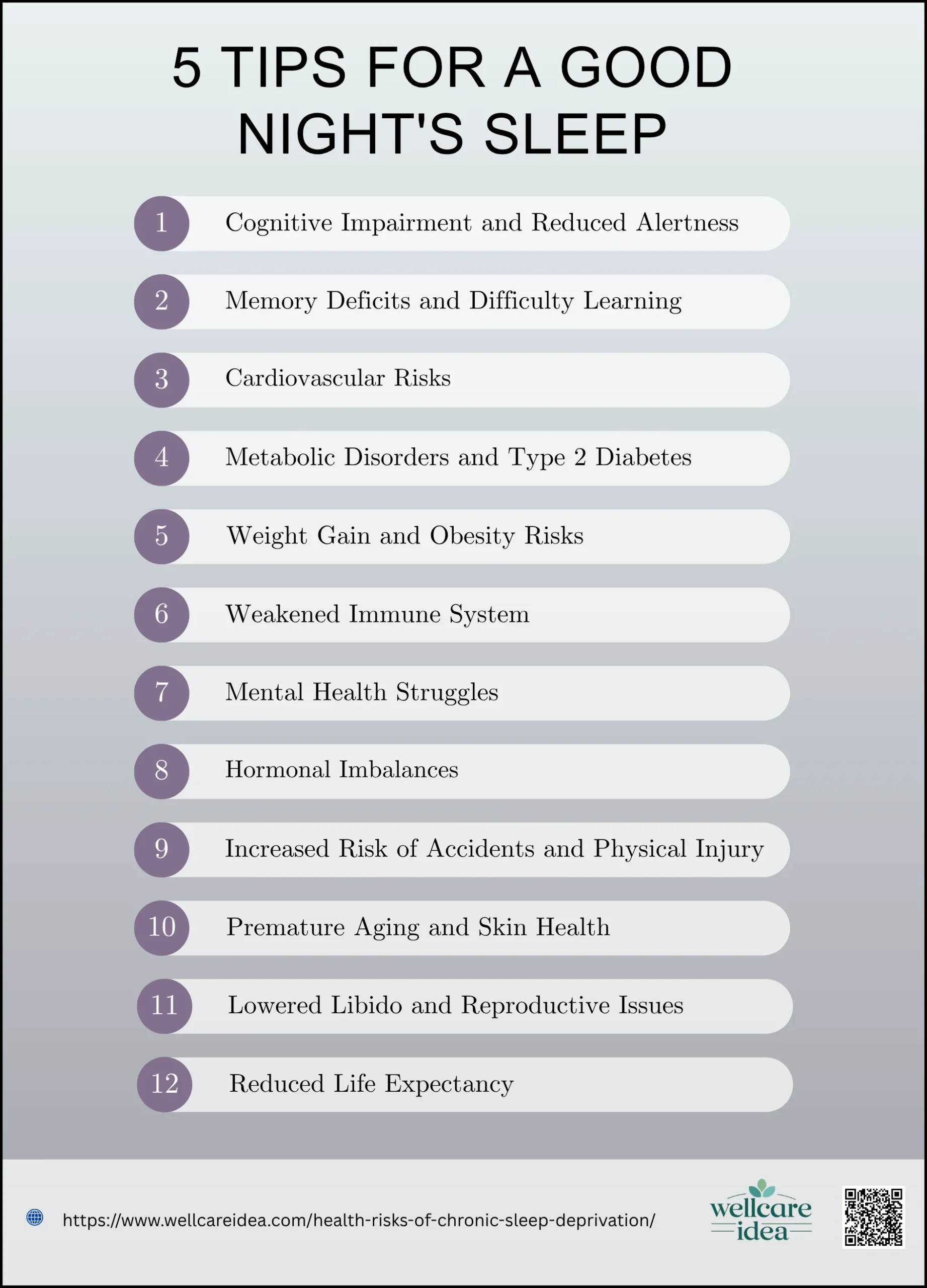 1. Cognitive Impairment and Reduced Alertness
The brain relies on sleep to clear out metabolic waste products that accumulate during waking hours. When this process is interrupted, cognitive functions such as attention, alertness, and decision-making suffer almost immediately. Research indicates that lack of sleep slows reaction times and impairs the ability to focus, creating a state of mental fog similar to intoxication 2 Furthermore, studies have shown that without adequate rest, the brain struggles to filter information, leading to significant lapses in judgment and an inability to maintain sustained attention on complex tasks 3
2. Memory Deficits and Difficulty Learning
Sleep is essential for the consolidation of memory—the process by which short-term memories are transformed into long-term storage. During deep sleep phases, the brain processes new information and strengthens neural connections. A study involving students found that those who were sleep-deprived performed significantly worse on memory tasks, with the hippocampus—the brain’s memory center—showing reduced activity 4 Consequently, chronic lack of sleep hampers the ability to learn new skills or retain information effectively, as the brain cannot properly “save” what it has experienced during the day.
3. Cardiovascular Risks
The heart and blood vessels undergo vital repair processes during sleep. When we sleep, blood pressure naturally dips, giving the cardiovascular system a necessary break. Chronic sleep deprivation disrupts this cycle, keeping blood pressure elevated for longer periods and increasing the strain on the heart 1 Over time, this contributes to plaque buildup in the arteries and chronic inflammation, significantly raising the risk of hypertension, stroke, and heart disease 5
4. Metabolic Disorders and Type 2 Diabetes
Sleep plays a major role in regulating how the body processes glucose (sugar) for energy. Insufficient sleep can lead to insulin resistance, a condition where the body’s cells fail to respond properly to insulin, causing blood sugar levels to rise. Research has identified a direct link between short sleep duration and an increased risk of developing Type 2 diabetes, as the body’s metabolic control weakens “6 Even a few nights of poor sleep can alter glucose metabolism, mimicking the pre-diabetic state in otherwise healthy individuals.
5. Weight Gain and Obesity Risks
The urge to eat is controlled by two key hormones: ghrelin, which signals hunger, and leptin, which signals fullness. Sleep deprivation disrupts this delicate balance, causing ghrelin levels to spike and leptin levels to plummet 7 This hormonal imbalance creates intense cravings for high-calorie, carbohydrate-rich foods, leading to overeating. Consequently, individuals who do not get enough sleep are at a significantly higher risk of obesity due to both increased calorie intake and altered metabolism.
6. Weakened Immune System
During sleep, the immune system releases proteins called cytokines, some of which help promote sleep and others that fight off infection and inflammation. Sleep deprivation may decrease production of these protective cytokines, leaving the body more susceptible to the common cold, flu, and other infections 8 Furthermore, a lack of sleep reduces the effectiveness of vaccines, as the body struggles to build the necessary antibody response to create long-term immunity 9
7. Mental Health Struggles
The relationship between sleep and mental health is bidirectional; anxiety can cause sleep loss, but sleep loss can also drive anxiety and depression. Chronic sleep deficiency is strongly associated with mood swings, irritability, and an increased risk of developing mood disorders 10 The brain’s emotional centers become hyperactive when tired, making it difficult to cope with stress and regulate negative emotions effectively 11
8. Hormonal Imbalances
Beyond appetite regulation, sleep influences the production of cortisol, the body’s primary stress hormone. Chronic sleep restriction leads to elevated cortisol levels in the evening, which can keep the body in a state of high alert and further disrupt sleep cycles 12 Additionally, sleep loss can affect the release of growth hormones and other regulatory chemicals, disrupting the body’s internal clock and overall hormonal harmony 13
9. Increased Risk of Accidents and Physical Injury
Drowsiness slows reaction time as much as driving while intoxicated. The National Heart, Lung, and Blood Institute notes that sleep deficiency is a leading cause of tragic accidents, including car crashes and workplace injuries 1 The inability to focus and delayed physical responses make sleep-deprived individuals a danger to themselves and others when operating machinery or navigating daily hazards.
10. Premature Aging and Skin Health
Restorative sleep is often referred to as “beauty sleep” because the skin repairs itself from UV damage and other environmental stressors during the night. Research suggests that poor sleep quality is associated with increased signs of intrinsic aging, such as fine lines, uneven pigmentation, and reduced skin elasticity 14 Without adequate rest, the skin’s barrier function is compromised, leading to a dull appearance and slower recovery from irritation.
11. Lowered Libido and Reproductive Issues
Reproductive health is heavily influenced by sleep-dependent hormone secretion. In men, sleep apnea and chronic sleep loss have been linked to significantly lower testosterone levels, which can reduce libido and energy 15 Similarly, women may experience disruptions in reproductive hormones that affect fertility and menstrual regularity, as the body perceives the lack of sleep as a physiological stressor 16
12. Reduced Life Expectancy
Ultimately, the cumulative effect of these health risks is a shorter lifespan. Large-scale studies have consistently found that sleeping fewer than six hours per night is associated with a higher risk of premature death from all causes 3 By undermining cardiovascular health, metabolic function, and immune defense, chronic sleep deprivation accelerates biological decline and significantly lowers life expectancy.