
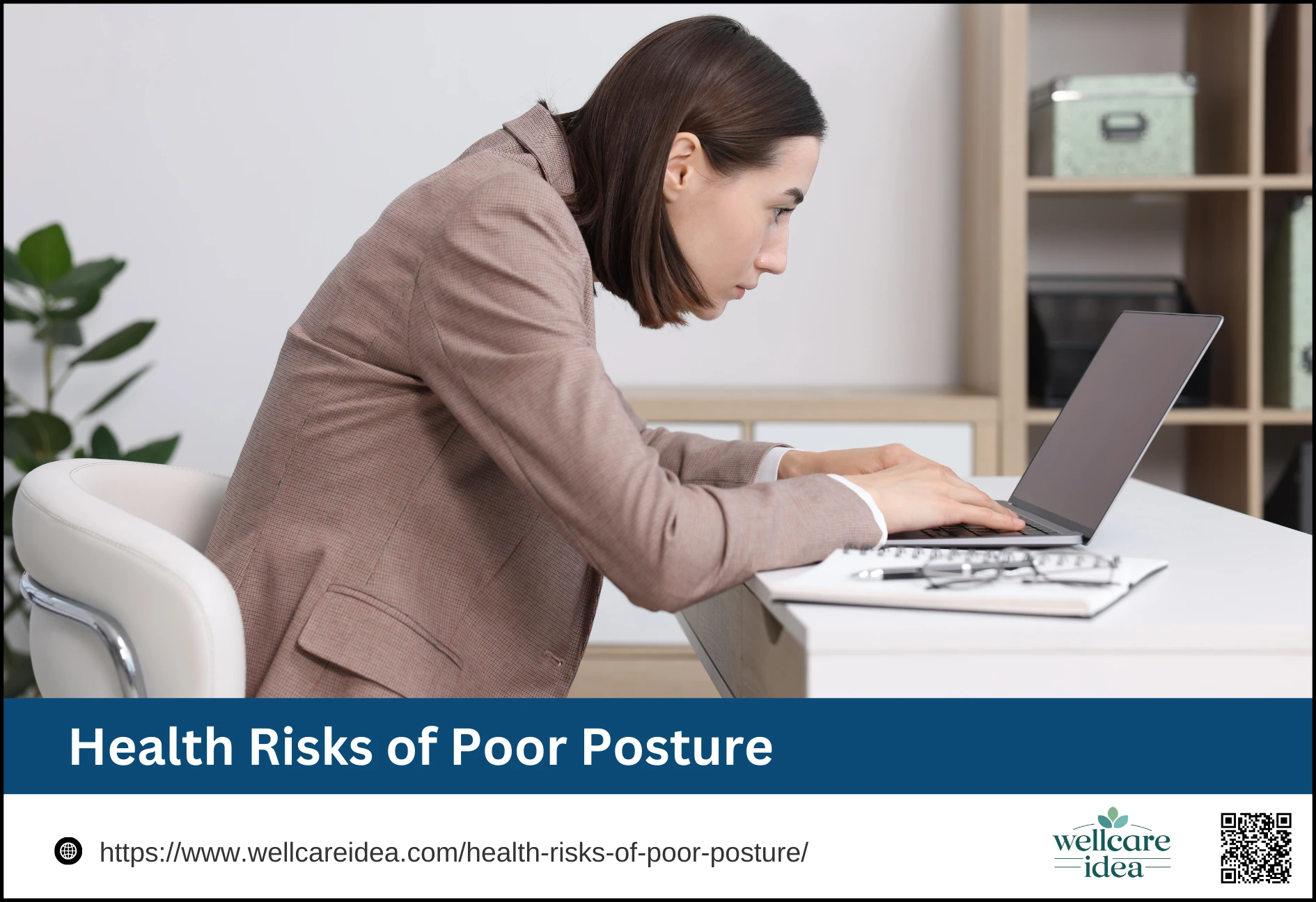
What is Poor Posture?
Poor posture is scientifically defined as a deviation from the spine’s neutral alignment, where the body’s muscles and skeleton are positioned asymmetrically or inefficiently. In a neutral spine, the body is balanced with minimal stress on tissues, but poor posture forces the body to overcompensate to maintain balance against gravity. Common examples include “forward head posture,” where the neck slants anteriorly, and “kyphosis,” or excessive rounding of the upper back. According to research, this misalignment places significant mechanical stress on the spine, leading to long-term structural changes rather than just temporary discomfort. Reference: 1 , 2 , 3 , 4
Health Risks of Poor Posture
1. Musculoskeletal System
The most immediate impact of poor posture is on the musculoskeletal system, particularly the spine, muscles, and joints. When the body slouches, the spine loses its natural curve, forcing muscles to work harder to hold the body upright, which eventually causes them to tire and tighten. Over time, this chronic misalignment can wear away the spinal structure, making it more fragile and prone to injury. For instance, sitting with slumped shoulders or bending incorrectly places excessive load on the back muscles and vertebrae, which is a primary contributor to chronic lower back and neck pain. Reference: 5 , 6 , 7 , 8
Additionally, specific postural deviations like forward head posture significantly increase the weight of the head on the cervical spine. This added pressure can lead to degenerative changes in the intervertebral discs and joints. Studies have shown that prolonged poor posture is strongly associated with the development of muscle fatigue and pain syndromes, particularly in the upper back and neck regions. Reference: 9 , 10 , 11
2. Nervous System
The spine protects the central nervous system, so when spinal alignment is compromised, nerve function can be directly affected. Poor posture can lead to the compression of nerves surrounding the spinal column, resulting in symptoms such as numbness, tingling, or radiation of pain into the arms and legs. This physical stress on the upper neck caused by slouching or forward head carriage is frequently linked to tension-type headaches. Research indicates that the muscle tension resulting from poor posture can irritate the nerves in the upper neck, triggering pain that spreads to the head. Reference: 12 , 12 , 6 , 13
3. Respiratory & Circulatory Systems
Slouching does not just affect the back; it compresses the chest cavity, restricting the space available for the lungs to expand. This compression limits the movement of the diaphragm, the primary muscle used for breathing, which forces the body to take shallower breaths. Scientific evidence suggests that poor sitting posture can significantly decrease lung capacity, reducing the amount of oxygen that enters the bloodstream. Reference: 14 , 15
Furthermore, the circulatory system relies on proper alignment for optimal blood flow. When the body is hunched, it can impede circulation to various organs and tissues. Studies on sitting postures have demonstrated that upright sitting allows for better expansion of the chest and improved respiratory function compared to slumped positions. This reduction in oxygen intake and circulation can contribute to overall fatigue and reduced physical performance. Reference: 16 , 17
4. Digestive System
The digestive organs located in the abdomen require space to function correctly, particularly for the movement of food through the intestines. When a person slouches, they compress the abdominal cavity, which creates pressure on the stomach and intestines. This physical compression can slow down digestion, leading to issues such as bloating, gas, and constipation. Research has highlighted that poor posture can impair the gastrointestinal system by altering the pressure within the abdomen. Reference: 18 , 19 , 20 , 21
Moreover, this compression can affect the valve between the stomach and the esophagus, known as the lower esophageal sphincter. When this area is under pressure from a hunched posture, stomach acid can be forced upwards, causing heartburn or acid reflux. Evidence suggests that maintaining an upright posture after eating significantly reduces the risk of these digestive discomforts compared to slouching. Reference: 22
5. General Health & Well-being
Beyond physical health, posture has a documented connection to mental state and energy levels. People with poor posture often report higher levels of fatigue because the body must expend more energy to hold itself up against gravity when it is misaligned. Furthermore, there is a psychological component; studies have found a link between upright posture and positive mood, whereas slumped posture is often associated with feelings of depression and lower self-esteem. Reference: 23
The feedback loop between the body and brain means that physical alignment can influence emotional resilience. Maintaining a strong, upright posture has been shown to improve confidence and reduce the production of stress hormones. Conversely, the shallow breathing and muscle tension associated with poor posture can mimic the body’s physical response to anxiety, potentially worsening stress levels. Reference: 24 , 25 , 24