
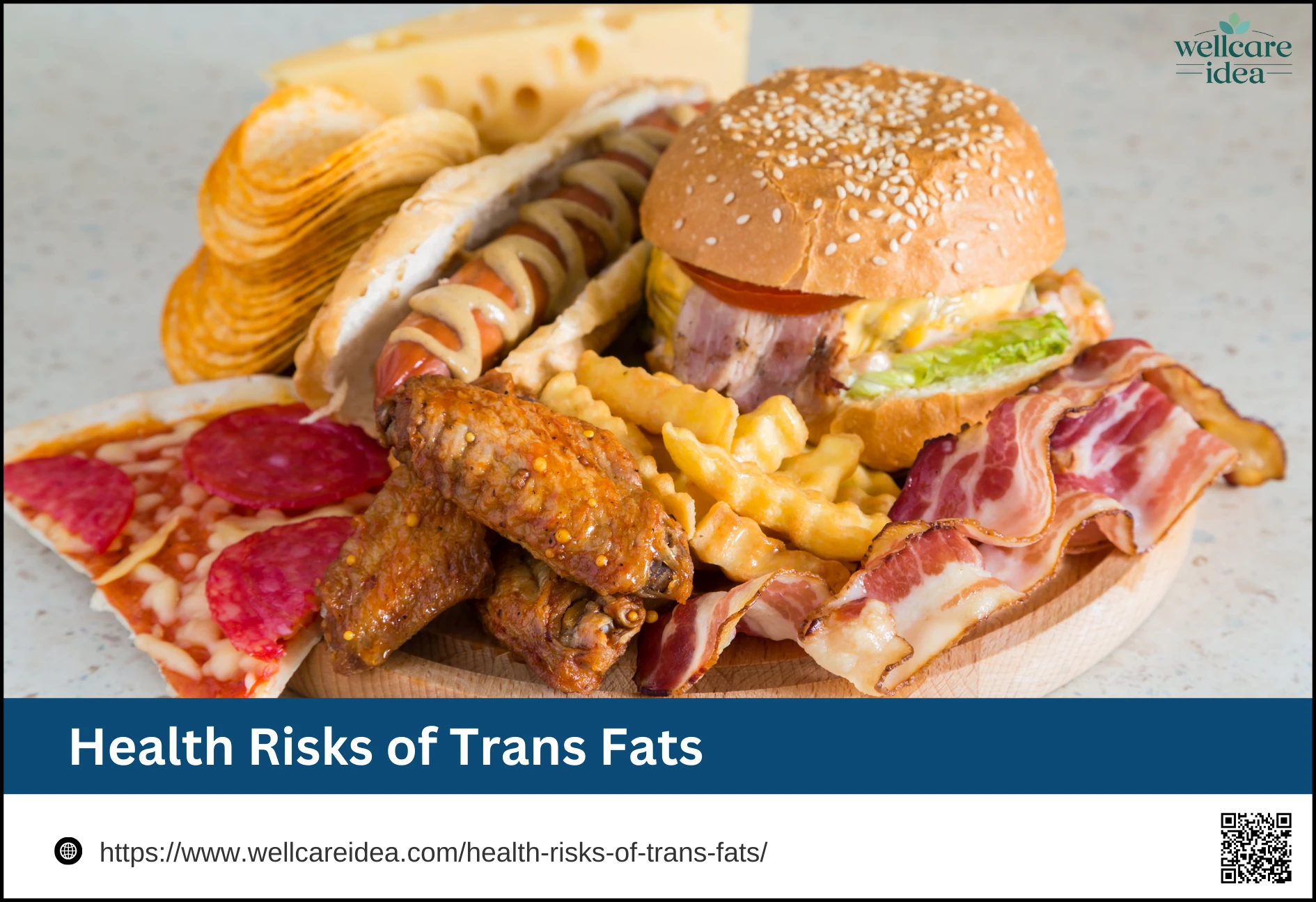
Trans fats, or trans-unsaturated fatty acids, are a form of dietary fat that occurs in both natural and artificial forms. While small amounts exist naturally in meat and dairy products, the most concerning type for human health is the artificial variety, created through an industrial process that adds hydrogen to liquid vegetable oils to make them more solid 1 These artificial fats, often listed as “partially hydrogenated oils” on food labels, were historically favored by manufacturers for their ability to extend the shelf life of processed foods and improve texture. However, extensive scientific research has since revealed that these fats provide no nutritional benefit and pose significant threats to human health 2
Health Risks of Trans Fats
1. Increased Risk of Heart Disease
Scientific consensus identifies the consumption of industrially produced trans fats as a primary dietary risk factor for cardiovascular conditions. Studies indicate that individuals with a higher intake of these fats experience a significantly elevated risk of developing coronary heart disease compared to those who consume unsaturated fats 3 Research suggests that on a per-calorie basis, trans fats increase the risk of heart disease more than any other macronutrient 2
2. Adverse Impact on Cholesterol Levels (High LDL, Low HDL)
Dietary trans fats create a “double trouble” effect on blood lipid profiles by simultaneously altering two critical types of cholesterol. They raise levels of Low-Density Lipoprotein (LDL), often referred to as “bad” cholesterol, which contributes to plaque buildup in arteries 4 Concurrently, they lower High-Density Lipoprotein (HDL), the “good” cholesterol responsible for removing excess cholesterol from the bloodstream 5 This unfavorable ratio is a potent predictor of future cardiovascular events 3
3. Development of Type 2 Diabetes & Insulin Resistance
Emerging evidence links the intake of these fats to metabolic disruptions that may precede diabetes. Research indicates that trans fatty acids can impair the function of cell membranes, making cells less responsive to insulin, a condition known as insulin resistance. Data from large observational studies, such as the Nurses’ Health Study, have shown a correlation between high trans fat consumption and an increased risk of developing Type 2 diabetes 3
4. Systemic Inflammation
Chronic low-grade inflammation is a root cause of many chronic diseases, and trans fats appear to fuel this process. Clinical studies have demonstrated that higher intake levels are associated with elevated markers of systemic inflammation, such as C-reactive protein (CRP), interleukin-6 (IL-6), and tumor necrosis factor-alpha 6 This inflammatory response contributes to the progression of atherosclerosis and may exacerbate other metabolic conditions 7
5. Higher Risk of Stroke
The vascular damage promoted by trans fats extends beyond the heart to the brain’s blood supply. Observational studies have associated the consumption of industrially produced trans fatty acids with increased mortality rates from stroke and myocardial infarction 8 By promoting atherosclerosis and hardening of the arteries, these fats increase the likelihood of blockages that can lead to ischemic strokes 9
6. Damage to Blood Vessel Lining (Endothelial Dysfunction)
Healthy blood vessels rely on a flexible inner lining, known as the endothelium, to regulate blood flow and pressure. Trans fats have been shown to directly impair endothelial function, reducing the blood vessels’ ability to dilate effectively 10 This dysfunction is often an early marker of atherosclerosis and is linked to reduced bioavailability of nitric oxide, a molecule essential for vascular health 7
7. Weight Gain and Abdominal Fat Accumulation
While excess calories from any source can lead to weight gain, trans fats may specifically influence where fat is stored in the body. Animal studies have observed that diets high in trans fats lead to greater abdominal fat deposition compared to diets high in other fats, even when calorie intake is controlled 11This visceral fat accumulation is particularly dangerous as it is metabolically active and strongly linked to metabolic syndrome 12
8. Potential Link to Certain Cancers
Some epidemiological research has investigated associations between trans fat intake and various types of cancer. Reviews of scientific literature have suggested potential links between high consumption of these fats and an increased risk of breast and colon cancers, potentially due to their pro-inflammatory effects and impact on cell membranes 13 While results across all studies are not uniform, the biological mechanisms suggest a plausible connection that warrants caution 14
9. Pregnancy Complications (e.g., Preeclampsia)
Dietary choices during pregnancy can significantly influence maternal health outcomes. High intake of trans fatty acids has been investigated as a risk factor for preeclampsia, a serious condition characterized by high blood pressure and organ damage. Randomized controlled trials have indicated that reducing trans fat intake during pregnancy can significantly lower the risk of developing this condition 15
10. Negative Effects on Fetal Development
Trans fats can cross the placenta and have been detected in fetal circulation, raising concerns about their impact on development. Research reviews suggest that maternal consumption of these fats may interfere with the metabolism of essential fatty acids required for fetal growth, potentially leading to lower birth weights or developmental issues 16 Animal models have further demonstrated that in utero exposure to trans fats can retard early growth and adversely affect glucose metabolism in offspring 12
11. Increased Risk of Liver Dysfunction
The liver plays a central role in processing dietary fats, making it vulnerable to the effects of poor diet. The accumulation of trans fats has been linked to liver stress and may contribute to the development of Non-Alcoholic Fatty Liver Disease (NAFLD) by promoting fat storage in liver cells and inducing inflammation 13 This hepatic strain further complicates metabolic health, exacerbating issues like insulin resistance and dyslipidemia 17