
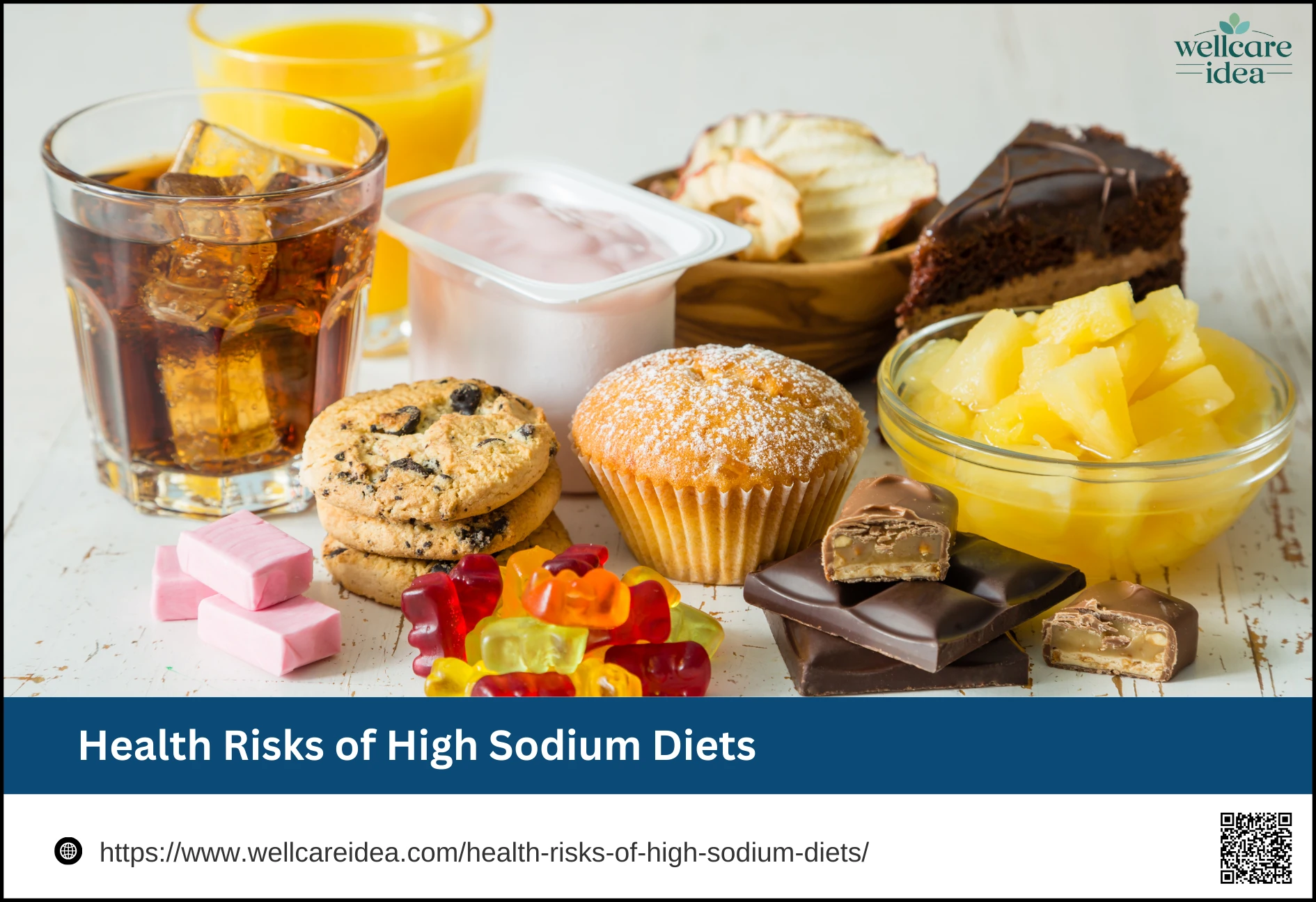
What is a High Sodium Diet?
A high sodium diet typically refers to a daily consumption of salt that exceeds the recommended dietary limits established by health organizations. The Centers for Disease Control and Prevention (CDC) and other major health authorities recommend that healthy adults limit their sodium intake to less than 2,300 milligrams per day, roughly equivalent to one teaspoon of table salt 1 However, the average intake for many individuals often surpasses 3,400 milligrams daily, largely due to the prevalence of processed and restaurant-prepared foods 2 Consuming sodium at these elevated levels disrupts the body’s natural fluid balance and puts significant strain on critical organ systems.3
Health Risks of High Sodium Diets
1. Cardiovascular Impact: Hypertension and Blood Pressure Regulation
Excess sodium in the bloodstream pulls water into the blood vessels, increasing the total volume of blood flowing through the circulatory system. This increased volume exerts extra pressure on the walls of the arteries, a condition widely known as high blood pressure or hypertension 4 Over time, this mechanical stress can damage the delicate inner lining of the arteries, making them less elastic and more prone to plaque buildup. Research consistently demonstrates that reducing sodium intake can lead to significant drops in blood pressure, confirming the direct link between salt consumption and cardiovascular strain 5
2. Increased Risk of Heart Disease and Heart Failure
When the heart is forced to pump against higher pressure due to sodium-induced hypertension, the heart muscle must work harder than normal. This increased workload can lead to the thickening of the heart’s left ventricle, a condition that significantly raises the risk of heart failure 6 Furthermore, studies have identified a strong, independent association between high sodium intake and cardiovascular disease mortality, particularly in overweight individuals 7 The consistent strain on the heart reduces its ability to pump blood efficiently, creating a cycle of vascular damage and cardiac stress.
3. Stroke Susceptibility and Cerebrovascular Health
Elevated blood pressure is the single most significant risk factor for stroke, and high sodium consumption acts as a primary driver for this condition. By increasing blood pressure, excessive salt intake weakens the blood vessels in the brain, making them more susceptible to either bursting (hemorrhagic stroke) or becoming blocked by clots (ischemic stroke) 1 Reducing daily salt intake is considered a critical public health strategy to lower stroke incidence rates globally 2
4. Kidney Strain: Chronic Kidney Disease (CKD) and Kidney Stones
The kidneys play a vital role in filtering excess fluids and waste from the blood, a process that relies on a precise balance of sodium and potassium. High sodium intake disrupts this balance, reducing the kidneys’ ability to remove water and forcing them to work under higher pressure 8 Additionally, excessive sodium increases the amount of calcium excreted in the urine, which is a primary building block for kidney stones 9 Prolonged strain can eventually lead to a gradual decline in kidney function and the development of Chronic Kidney Disease.10
5. Bone Health: Calcium Leaching and Osteoporosis
Sodium and calcium share a transport mechanism in the body, meaning that when the kidneys excrete excess sodium, calcium is often expelled along with it. This process, known as calcium leaching, can deplete the body’s calcium stores, forcing the body to take calcium from the bones to maintain blood levels 11 Over time, this demineralization weakens bone structure and density, significantly increasing the risk of osteoporosis and fractures, particularly in postmenopausal women 12
6. Gastric Risks: Stomach Cancer and Mucosal Damage
Diets high in salted and preserved foods have been linked to an increased risk of gastric complications. High salt concentrations can damage the protective mucosal lining of the stomach, making it more susceptible to inflammation and infection by Helicobacter pylori bacteria, a known carcinogen 13 Systematic reviews of prospective studies have shown that high salt intake is associated with a significantly greater risk of developing gastric cancer compared to lower intake levels 14
7. Fluid Retention, Edema, and Bloating
One of the most immediate physical signs of excess sodium consumption is the body’s retention of water. To maintain a safe concentration of sodium in the bloodstream, the body holds onto fluid, leading to swelling in the hands, feet, and ankles, a condition known as edema 15 This fluid retention also manifests as abdominal bloating and general puffiness, which are direct results of the kidneys’ response to elevated sodium levels 16
8. Impact on Cognitive Function and Vascular Dementia
Emerging research suggests that the negative effects of salt extend to the brain’s vascular system. High sodium intake can impair the function of the endothelial cells lining the blood vessels in the brain, leading to reduced cerebral blood flow 17 This reduction in blood supply and the associated vascular damage are linked to cognitive impairment and may increase the risk of vascular dementia later in life 18
9. Headaches and Migraine Triggers
Fluctuations in blood pressure and fluid volume caused by sodium intake can trigger neurological responses in sensitive individuals. While the relationship is complex, sudden changes in sodium levels can lead to dehydration or vascular expansion, both of which are potential triggers for tension headaches and migraines 19 Some observational studies also suggest a link between dietary choices involving high sodium and the frequency of headache symptoms 20
10. Metabolic Effects: Obesity and Insulin Resistance
Beyond cardiovascular health, sodium appears to play a role in metabolic efficiency and weight management. High sodium excretion has been positively associated with increased body fat percentage, insulin resistance, and metabolic syndrome 25 Research indicates that salt sensitivity may be linked to the body’s ability to process insulin, suggesting that a high-salt diet could be a significant risk factor for developing metabolic disorders independent of total calorie intake 26