
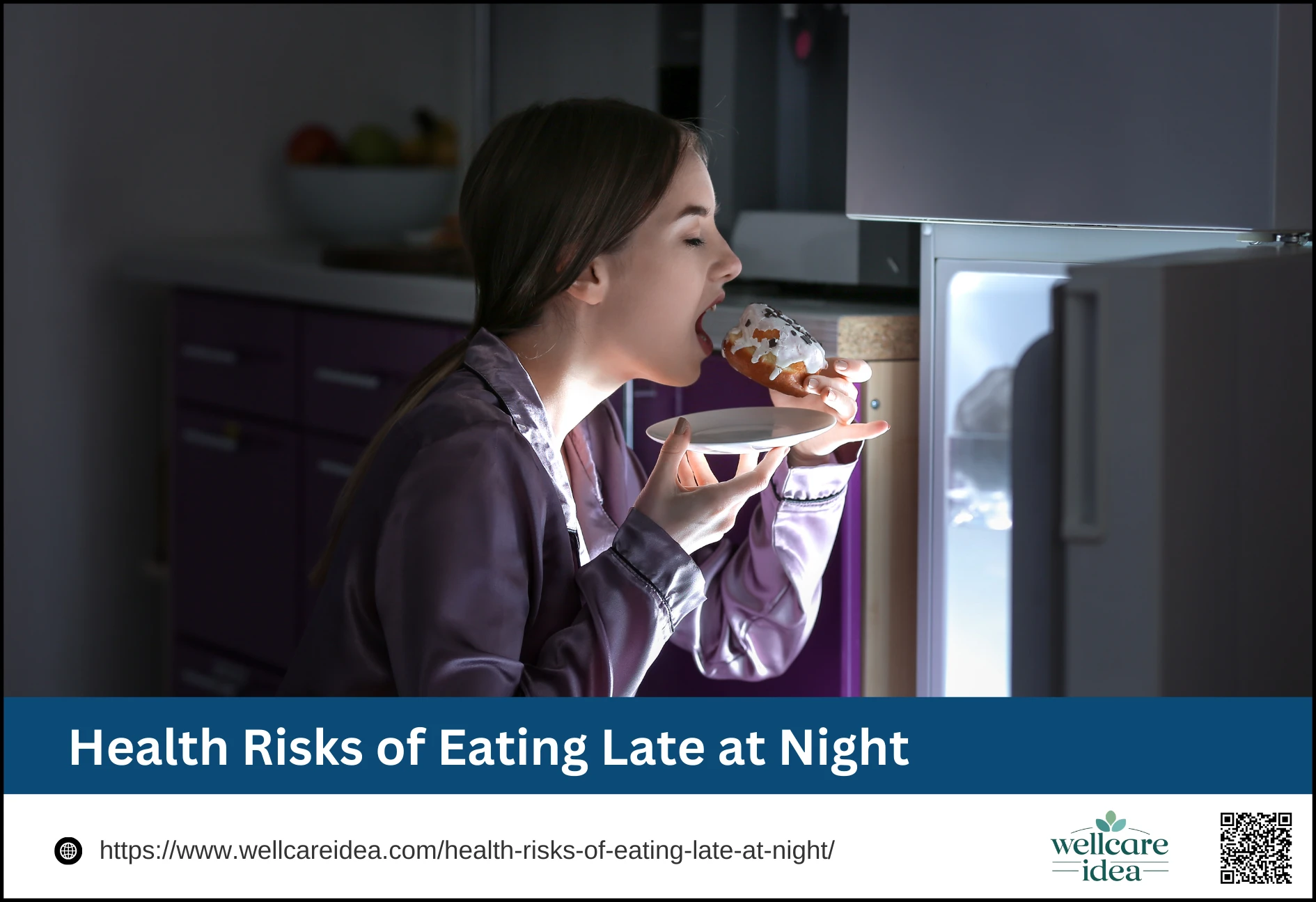
What is Eating Late at Night
Eating late at night generally refers to consuming food within the three-hour window before sleep, a habit that has become increasingly common in modern society due to work schedules and lifestyle shifts. While an occasional late-night snack might seem harmless, consistent nighttime eating can desynchronize the body’s internal biological clocks. The human body is designed to process nutrients most efficiently during daylight hours, meaning that caloric intake late in the evening forces digestion during a time biologically reserved for rest and repair.
Health Risks of Eating Late at Night
1. Disruption of Circadian Rhythms
The body operates on a 24-hour cycle known as the circadian rhythm, which governs sleep, hormone release, and metabolism. Introducing food late at night can severely misalign these internal clocks, leading to a state often described as “metabolic jet lag.” Research indicates that this misalignment between behavioral cycles (eating) and endogenous circadian physiology is associated with adverse outcomes, including decreased energy metabolism and impaired glucose handling. Reference: 1 , 2
2. Increased Risk of Weight Gain and Obesity
One of the most well-documented consequences of nighttime eating is significant weight gain. Biological mechanisms explain that late eating alters the way fat tissue functions, promoting fat storage rather than breakdown. A controlled study by Harvard researchers found that eating four hours later than usual significantly decreased the number of calories burned and increased the expression of genes responsible for fat growth (adipogenesis) 3 , 4
3. Negative Impact on Metabolic Health
Metabolic health refers to the body’s ability to process and utilize energy without developing disorders like metabolic syndrome. Consuming meals late in the evening has been shown to decrease resting energy expenditure, meaning the body burns fewer calories at rest compared to when meals are eaten earlier in the day. This shift can lead to higher triglyceride levels and a reduced ability to oxidize fat 4
4. Elevated Blood Sugar Levels and Insulin Resistance
Insulin sensitivity naturally drops in the evening as the body prepares for sleep, making it harder to clear sugar from the blood. Eating during this period of natural insulin resistance can cause prolonged spikes in blood glucose. Studies involving children and adolescents have even found that a “late-infrequent” meal pattern is associated with higher insulin resistance scores, suggesting that the timing of food intake is critical for glucose regulation across all age groups 5
5. Gastroesophageal Reflux Disease (GERD) and Acid Reflux
Lying down shortly after a meal removes the assistance of gravity in keeping stomach acid down, often leading to painful reflux symptoms. The interval between dinner and bedtime is a crucial predictor of this condition; research has shown that a dinner-to-bed time of less than three hours significantly increases the odds of developing Gastroesophageal Reflux Disease (GERD). Patients who eat late often experience more severe nocturnal acid exposure, which can damage the esophageal lining 6 , 7
6. Poor Sleep Quality and Insomnia
Digestive activity requires energy and increases body temperature, both of which conflict with the body’s need to cool down and relax for sleep. Complex interactions between the gut and brain mean that late meals can disrupt sleep architecture, leading to fragmented rest. Evidence suggests that time-restricted eating, where food intake is limited to earlier hours, is positively associated with better sleep quality and reduced insomnia symptoms. 8 , 9
7. Increased Risk of Cardiovascular Disease
The timing of meals appears to play a role in heart health, with late eating linked to unfavorable cardiovascular profiles. Data from large-scale cohort studies, such as NutriNet-Santé, have demonstrated that having a later first and last meal of the day is associated with a higher risk of cardiovascular disease, particularly in women. This suggests that earlier eating patterns may be protective for the heart 10
8. Hormonal Imbalances (Ghrelin and Leptin)
Appetite is regulated by two key hormones: ghrelin, which signals hunger, and leptin, which signals fullness. Late-night eating has been found to disrupt the natural rhythm of these hormones, specifically decreasing leptin levels across the 24-hour cycle and increasing the drive to eat. This hormonal dysregulation can create a cycle of increased hunger and overeating, further complicating weight management 11 , 12
9. Impaired Digestion and Gut Health
The gut microbiome—the community of bacteria living in the digestive tract—also follows a circadian rhythm. When food is introduced at night, it can alter the composition and function of these microbes. Studies suggest that “mistimed” eating can lead to dysbiosis, an imbalance in gut bacteria that may contribute to inflammation and metabolic disorders 13 , 8
10. Potential Effects on Memory and Cognitive Function
Emerging research highlights a connection between meal timing and brain health. Irregular eating patterns and late-night consumption may negatively impact cognitive performance. Some studies indicate that specific eating frequencies and timing are associated with variations in cognitive scores, suggesting that consistent, earlier meal patterns may support better long-term brain function 14
11. Higher Risk of Eating Disorders
Night Eating Syndrome (NES) is a specific disorder characterized by a lack of appetite in the morning, overeating at night, and sleep disruptions. It is often linked to psychological stress and depression. Understanding the distinction between occasional late snacking and NES is vital, as the latter involves a significant portion of daily calories being consumed after dinner and is recognized as a clinical issue requiring intervention 15
12. Elevated Blood Pressure
Blood pressure typically dips at night, a phenomenon known as “nocturnal dipping,” which is essential for cardiovascular health. Late eating keeps the body in a state of high alert and digestion, which can prevent this necessary drop in blood pressure. Research has shown that early time-restricted eating can improve blood pressure readings, whereas erratic late eating patterns may hinder blood pressure control 16