
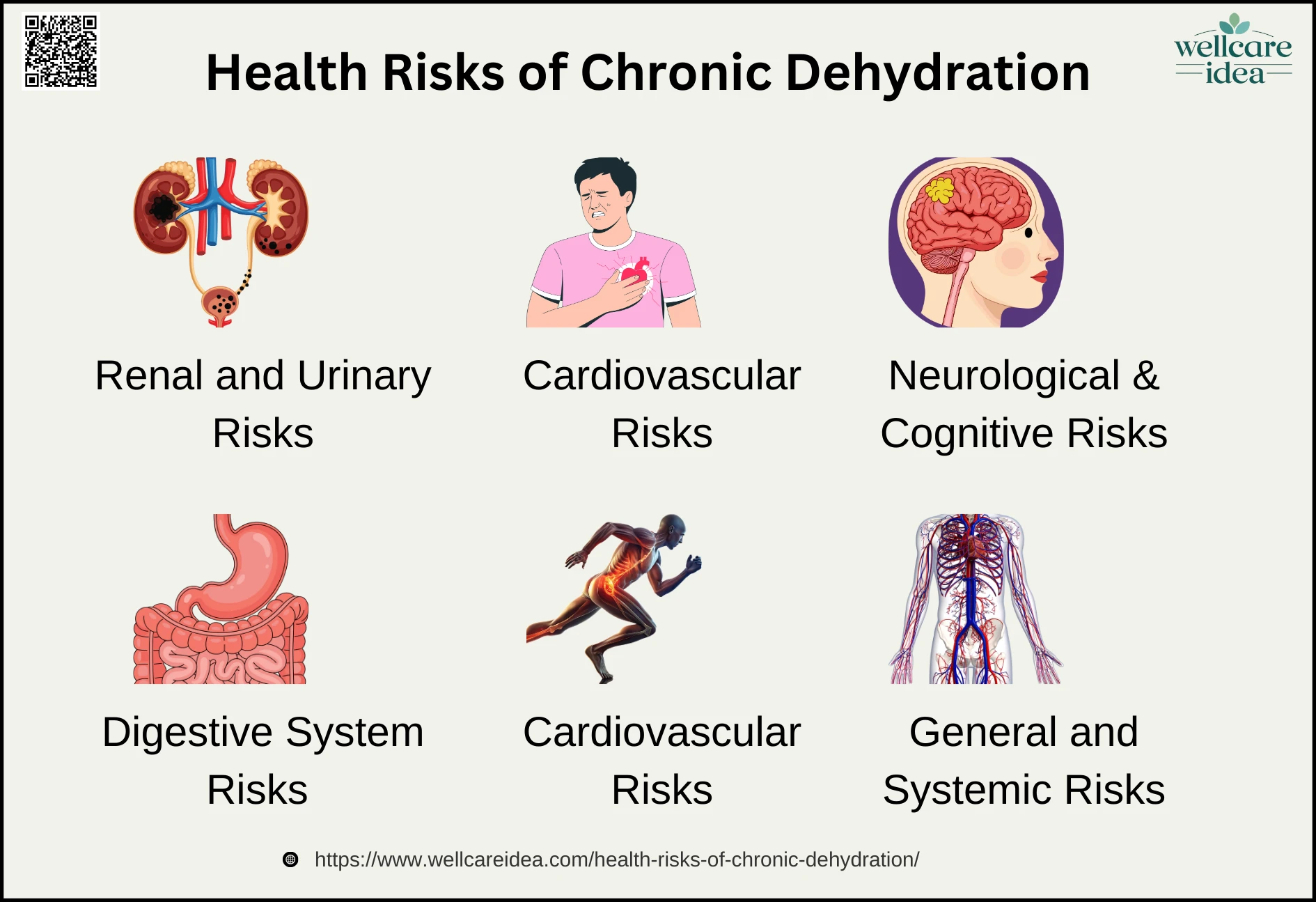
When you intentionally or unintentionally does not consume fluids Chronic dehydration start occurs. This leads to a persistent fluid deficit that forces the body to ration water, prioritizing essential organs like the brain and heart while drawing moisture from other tissues. Research indicates that even mild dehydration, defined as a fluid loss of 1–2% of body mass, can significantly impair cognitive performance and physical endurance [https://www.ncbi.nlm.nih.gov/pmc/articles/PMC2908954/} Over time, this constant state of “thirst” at the cellular level can alter metabolic processes and increase the risk of developing various chronic diseases.
Health Risks of Chronic Dehydration
1. Renal and Urinary Risks
The kidneys are the primary regulators of fluid balance, and they are among the first organs to suffer from insufficient water intake. When the body is dehydrated, kidneys concentrate urine to conserve water, which increases the concentration of minerals that can crystallize into kidney stones. Studies have consistently shown that low fluid intake is a major risk factor for nephrolithiasis (kidney stones), and increasing water intake is an effective preventative measure 1 Furthermore, chronic dehydration can lead to recurrent urinary tract infections (UTIs) because reduced urine flow limits the flushing of bacteria from the urinary tract 2 In severe cases, prolonged strain on the kidneys can contribute to chronic kidney disease (CKD), as the organs must work harder to filter toxins from a smaller volume of blood 3
2. Cardiovascular Risks
Blood volume is heavily dependent on hydration status; when fluid levels drop, blood volume decreases, causing the blood to become thicker and more viscous. This forces the heart to pump harder to circulate blood, which can lead to hypertension (high blood pressure). Research suggests a link between chronic mild dehydration and endothelial dysfunction, a precursor to atherosclerosis and other cardiovascular diseases 4 Additionally, dehydration hinders the body’s ability to regulate blood pressure during position changes, potentially leading to orthostatic hypotension—dizziness upon standing 5
3. Neurological and Cognitive Risks
The brain is approximately 75% water, making it highly sensitive to changes in hydration. Chronic dehydration has been linked to impairments in short-term memory, attention, and psychomotor speed. A study published by the National Institutes of Health noted that dehydration negatively impacts mood and cognitive performance, leading to increased fatigue and anxiety 6 In older adults, even mild dehydration is associated with confusion and a higher risk of delirium, emphasizing the importance of hydration for maintaining cognitive acuity 7
4. Digestive System Risks
Water is essential for digestion and the movement of food through the intestines. Chronic lack of fluids causes the large intestine to absorb more water from food waste to maintain body hydration, resulting in hard, dry stools and constipation. Evidence supports that adequate fluid intake, particularly in combination with fiber, is crucial for preventing and treating functional constipation 8 Furthermore, dehydration may exacerbate symptoms of acid reflux, as water helps maintain the proper acidity balance in the stomach and protects the mucosal lining.
5. Musculoskeletal Risks
Cartilage, which cushions joints, contains about 80% water. Chronic dehydration can reduce the shock-absorbing ability of cartilage, leading to joint pain and potentially accelerating the degeneration seen in conditions like osteoarthritis. Muscles also rely on proper electrolyte and fluid balance to function; without it, individuals may experience frequent cramping and muscle fatigue. Research in sports medicine highlights that hypohydration (insufficient water) significantly reduces muscle endurance and strength 9
6. General and Systemic Risks
Beyond specific organ systems, chronic dehydration affects the body’s overall homeostasis. It can disrupt thermoregulation, making the body more susceptible to heat exhaustion and heat stroke, especially during physical activity 10 There are also metabolic implications; some studies suggest that chronic dehydration may be associated with obesity and type 2 diabetes, as water intake plays a role in glucose metabolism and energy expenditure. Lastly, the skin, the body’s largest organ, loses elasticity and becomes dry, potentially impairing its barrier function against pathogens.