Imagine a single molecule in your body responsible for relaxing blood vessels, lowering blood pressure, and delivering vital nutrients to every organ. This molecule isn’t a prescription drug but nitric oxide (NO), a natural gas produced by your own cells. Essential for efficient circulation, heart health, and sustained energy, nitric oxide is a cornerstone of vitality 1 However, factors like aging, stress, poor diet, and inactivity can silently deplete its levels. The good news is that you can naturally support your body’s production. This article details five science-backed strategies, from dietary changes to lifestyle habits, to help you optimize nitric oxide for better blood flow and overall wellness.
The Vital Role of Nitric Oxide in Your Body
Nitric oxide is a simple signaling molecule, consisting of just one nitrogen and one oxygen atom, but its role in human health is profound. Its primary and most celebrated function is vasodilation—the relaxation and widening of blood vessels 2 This process is crucial for regulating blood pressure, ensuring efficient circulation, and allowing oxygen and nutrients to reach your muscles, brain, and other tissues. The benefits of optimal NO levels are extensive, including improved exercise performance and recovery, enhanced cognitive function, and support for the immune system.
The body’s ability to produce nitric oxide can be compromised by several common factors. Natural aging is associated with a decline in NO bioavailability 3 Lifestyle choices play a significant role as well; smoking, chronic stress, physical inactivity, and a diet lacking in specific nutrients can all impair NO synthesis 4 Understanding these challenges makes the proactive strategies to support NO production even more valuable for long-term health.
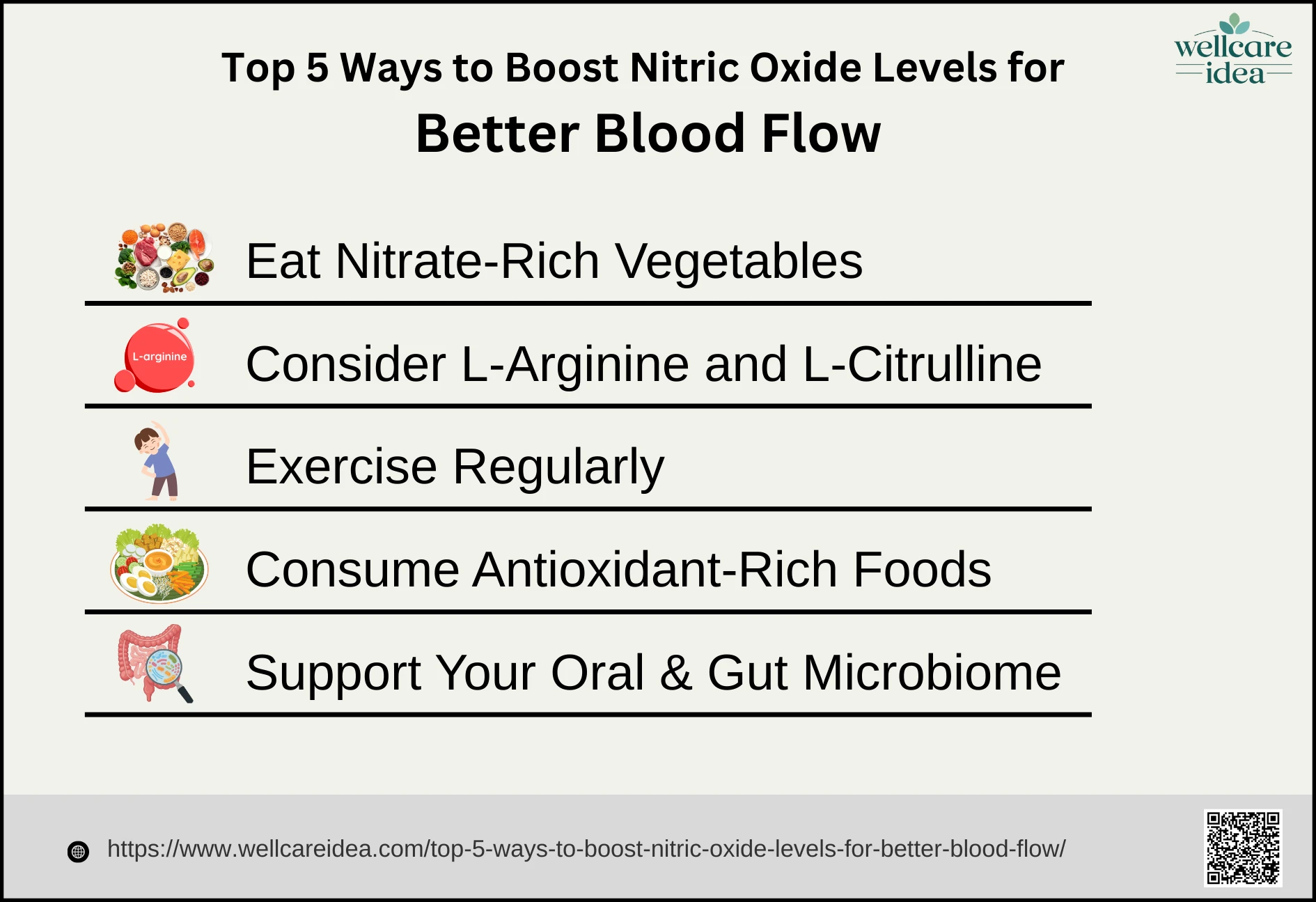
1. Eat Nitrate-Rich Vegetables
The journey to boosting nitric oxide can begin on your plate. Certain vegetables are rich in dietary nitrates, which your body converts into nitrite and then into nitric oxide. This conversion is a key alternative pathway for NO production 5 The best sources include beetroot, spinach, arugula, kale, and lettuce.
Consuming these foods is linked to tangible health benefits. Studies indicate that nitrate-rich vegetables, particularly beetroot, can lower blood pressure and significantly improve endurance and stamina during exercise 6 , 7 It is critical to distinguish between nitrates from vegetables and those in processed meats like bacon and deli meats. While vegetables come packaged with protective antioxidants like vitamin C, processed meats do not, which can lead to the formation of potentially harmful compounds. Therefore, for boosting NO, the focus should firmly be on consuming whole, nitrate-rich vegetables, perhaps as a daily green salad or a glass of beetroot juice before a workout.
2. Consider L-Arginine and L-Citrulline
Your body also produces nitric oxide from the amino acids L-arginine and L-citrulline through an enzyme-driven pathway. L-arginine is directly used by enzymes to create NO 8 Interestingly, L-citrulline, which is produced as a byproduct when L-arginine is converted to NO, can be recycled back into L-arginine in the kidneys. Research suggests that supplementing with L-citrulline may be more efficient at raising blood levels of L-arginine than taking L-arginine itself, because it avoids early breakdown in the liver 9
You can find these amino acids in foods such as watermelon (a great source of citrulline), nuts, chickpeas, fish, and dairy. For general health and circulation support, supplements are also widely used. Clinical studies note that supplementation can aid exercise performance in moderately trained individuals, support healthy blood pressure, and contribute to overall circulatory health 10 A typical supplemental dosage for L-citrulline often ranges from 3 to 6 grams daily, but it is always advisable to consult a healthcare provider before starting any new supplement regimen.
3. Exercise Regularly
Physical activity is a powerful, natural stimulant for your cardiovascular system and nitric oxide production. When you exercise, the friction of blood flow against vessel walls (shear stress) signals the endothelium—the thin lining of blood vessels—to release more nitric oxide. This not only improves blood flow during the activity but, with consistency, helps keep blood vessels flexible and healthy.
The best types of exercise for stimulating NO are those that get your heart pumping. This includes aerobic activities like brisk walking, cycling, and swimming, as well as high-intensity interval training (HIIT). The benefits are accessible to everyone; studies show that regular physical activity increases blood vessel dilation in people with high blood pressure and healthy individuals alike 11 The key is consistency. Engaging in at least 30 minutes of moderate-intensity exercise most days of the week can lead to measurable improvements in endothelial function and NO bioavailability in as little as 10 weeks.
4. Consume Antioxidant-Rich Foods
Nitric oxide is an unstable molecule that breaks down quickly when it encounters free radicals in the bloodstream. This is where antioxidants become essential. By neutralizing free radicals, antioxidants protect nitric oxide, prolonging its beneficial effects in your body 12
To safeguard your NO, incorporate a variety of antioxidant-rich foods into your diet:
1. Vitamin C: Found in citrus fruits, berries, and bell peppers.
2. Polyphenols: Abundant in berries, pomegranates, dark chocolate, and green tea.
3. Vitamin E: Present in nuts, seeds, and leafy greens.
Many nitrate-rich vegetables, like spinach and beets, naturally contain both nitrates and antioxidants, making them a dual-purpose food for supporting nitric oxide levels. A simple dietary approach is to ensure every meal contains colorful fruits or vegetables, which are typically high in these protective compounds.
5. Support Your Oral and Gut Microbiome
The conversion of dietary nitrate from vegetables into nitric oxide relies on a surprising ally: the bacteria in your mouth. These beneficial bacteria perform the first crucial step of reducing nitrate to nitrite 13 Using harsh antibacterial mouthwash can disrupt this process by killing these bacteria, which studies have shown can reduce nitric oxide production and may even lead to slight increases in blood pressure 14 For this reason, it may be beneficial to use mouthwash sparingly.
A healthy gut microbiome also plays a supportive role in overall metabolic health and nutrient absorption. A balanced gut environment, fostered by eating fermented foods (like yogurt and kimchi) and prebiotic fibers (found in onions, garlic, and whole grains), contributes to your body’s overall wellness, creating an internal environment where processes like NO synthesis can function optimally [https://www.nature.com/articles/s41575-019-0173-3].
Bonus Daily Support Strategies
In addition to the five core strategies, simple daily habits can further enhance your nitric oxide levels:
1. Get Safe Sunlight Exposure: Research shows that ultraviolet A (UV-A) rays from sunlight can trigger the release of nitric oxide from stores in the skin, contributing to healthy blood pressure levels [https://www.sciencedirect.com/science/article/pii/S1011134416300281]. Aim for brief, sensible exposure without burning.
2. Stay Hydrated: Proper hydration is fundamental for all bodily processes, including maintaining healthy blood volume and circulation.
3. Actively Manage Stress: Chronic stress damages blood vessels and impairs endothelial function. Techniques like deep breathing, meditation, and regular exercise can mitigate these effects.
4. Limit Harmful Habits: Avoid smoking and limit your intake of processed foods to reduce oxidative stress and inflammation, which degrade nitric oxide.
Conclusion
Optimizing your nitric oxide levels is a holistic endeavor rooted in science and accessible through daily choices. You can effectively support your body’s production of this vital molecule by prioritizing nitrate-rich vegetables, considering amino acid precursors like citrulline, engaging in regular exercise, protecting NO with antioxidants, and caring for your microbiome. When combined with sensible sunlight, hydration, and stress management, these strategies form a powerful, natural approach to enhancing your circulation. By embracing these habits, you are investing in the health of your blood vessels, which is a fundamental step toward sustaining energy, vitality, and long-term wellness.