
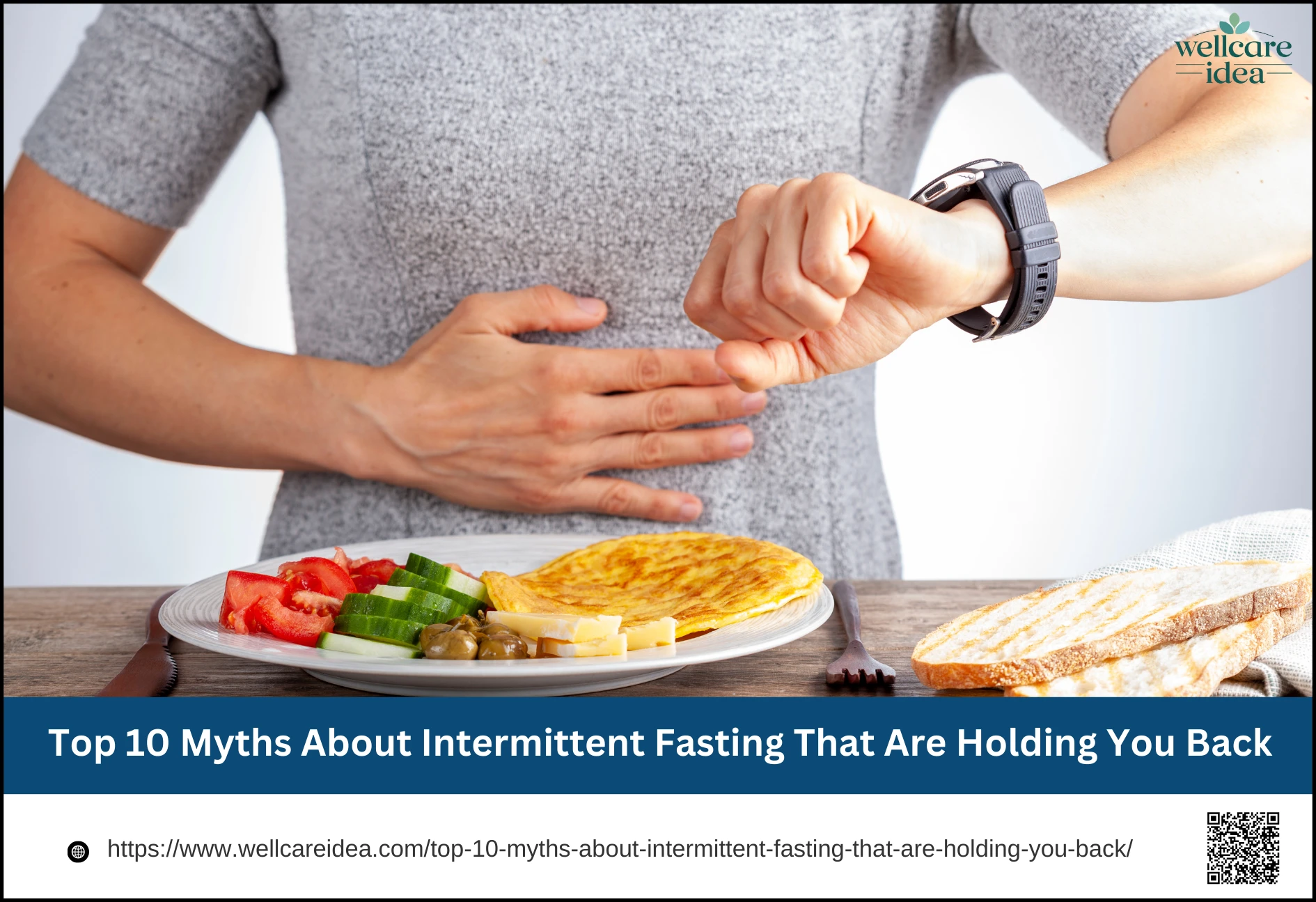
Intermittent fasting (IF), an eating pattern that alternates between periods of fasting and eating, has surged in popularity as a tool for weight management and overall health 1 However, its rise has been accompanied by widespread misconceptions and misinformation, which often deter people from exploring its potential benefits 2 Many hesitate to start, fearing negative consequences like starvation, muscle loss, or metabolic damage. The purpose of this article is to cut through this noise by examining ten of the most common myths about intermittent fasting. We will debunk each one with clarity, relying on explanations grounded in scientific evidence from authoritative research institutions to empower you with accurate information 1
1. “Intermittent Fasting Starves Your Body”
A prevalent fear is that fasting is synonymous with starvation, triggering a harmful stress response. This belief stems from confusing short-term, voluntary fasting with prolonged, involuntary nutrient deprivation. Scientifically, they are distinct processes. During a typical 16-hour fast, the body undergoes a planned metabolic switch. After exhausting the glucose from your last meal, it begins to efficiently burn stored fat for energy, a state known as ketosis 3 This process is a natural, evolved adaptation for periods without food. Research indicates that short-term fasting does not send the body into a starvation mode; instead, it can improve metabolic health. Studies have shown that intermittent fasting enhances insulin sensitivity, allowing for better blood sugar control, and can lower blood pressure 4 Therefore, the controlled restriction of an IF schedule is a calculated metabolic strategy, not a state of starvation.
2. “You Must Skip Breakfast to Do IF”
Many assume that practicing intermittent fasting inevitably means skipping the “most important meal of the day.” This is a restrictive view of what is actually a highly flexible approach. Intermittent fasting is defined by the timing of your eating window, not by which meal you omit. Popular schedules like 16:8 (fasting for 16 hours, eating within 8) can be adapted to any lifestyle 1 Your eating window could be from 8 a.m. to 4 p.m., which includes breakfast and lunch but skips dinner. Alternatively, it could be from 12 p.m. to 8 p.m., which skips breakfast but includes lunch and dinner. Other methods, like the 5:2 diet (eating normally for five days and significantly reducing calories for two), offer even more flexibility 1 The pattern should depend on personal preference, chronotype, and social commitments, debunking the idea that breakfast skipping is obligatory.
3. “Intermittent Fasting Slows Down Your Metabolism”
This myth arises from conflating short-term fasting with chronic, severe calorie restriction. Long-term, low-calorie diets can indeed lead to metabolic adaptation, where the body conserves energy by slowing its metabolic rate. However, intermittent fasting operates differently. Short fasting periods, particularly those under 48 hours, can have the opposite effect. The body responds to the fasting signal by increasing the release of hormones like norepinephrine, which can slightly boost metabolic rate to help access energy stores 5 The key distinction is that IF often leads to reduced calorie intake over time without the constant, daily deprivation that characterizes traditional dieting. Research comparing IF to continuous calorie restriction shows similar weight loss results, suggesting no inherent metabolic slowdown from the intermittent approach 4 The body’s energy systems remain active, simply switching fuel sources from food to stored fat.
4. “You’ll Lose Muscle Instead of Fat”
A major concern, especially for those who are physically active, is that fasting will cause the body to break down muscle protein for energy. Human biology, however, has protective mechanisms against this. During fasting, levels of human growth hormone (HGH) increase significantly. One study noted a 5- to 14-fold rise in HGH during a 24-hour fast 5 This hormone plays a key role in fat metabolism and helps preserve lean muscle mass 1 Furthermore, the process of autophagy—where the body cleans out damaged cells and regenerates new ones—is stimulated during fasting periods. This cellular “housekeeping” can actually support muscle tissue quality over time 1 Of course, consuming adequate protein during your eating windows and engaging in regular resistance training are essential complementary practices to ensure muscle maintenance and growth.
5. “Intermittent Fasting Is Only for Weight Loss”
While weight loss is a common and well-documented outcome, it is just one facet of intermittent fasting’s potential impact on health. The metabolic switch triggered by fasting initiates a cascade of broader benefits. Research has consistently shown that IF can improve insulin sensitivity and lower fasting blood glucose and HbA1c levels, which are crucial for preventing and managing type 2 diabetes 1 It also contributes to reduced inflammation, as evidenced by lower levels of markers like IL-6, and decreases oxidative stress, a key driver of cell damage 3 Other benefits observed in studies include improved blood pressure, better cardiovascular health markers, enhanced brain function, and support for cellular repair processes 4 Therefore, viewing IF solely as a weight-loss tool overlooks its significant role in promoting overall metabolic and cellular health.
6. “Fasting Causes Low Energy and Brain Fog”
It is true that when first starting intermittent fasting, some people experience fatigue, irritability, or difficulty concentrating as their bodies adapt to a new fuel schedule. This initial adjustment period, which can last two to four weeks, is often mistaken for a permanent side effect 2 Once adapted, many people report the opposite experience: sustained mental clarity and stable energy levels. This is linked to the metabolic state of ketosis. When glucose stores are low, the liver produces ketone bodies from fat, which provide a stable and efficient energy source for the brain 3 Unlike the energy spikes and crashes associated with high-carbohydrate meals, ketones offer a “cleaner” fuel that can enhance cognitive function and focus for many individuals after the adaptation phase.
7. “You Can Eat Anything During the Eating Window”
Some interpret the time-based rules of IF as a license to overconsume ultra-processed foods, sugary snacks, and high-calorie meals during their eating window. This is a critical misunderstanding. Intermittent fasting is not a calorie-free pass; it is a pattern of eating. The quality of the food you consume remains paramount. For optimal health benefits, IF should be paired with balanced, nutrient-dense food choices 1 Binging on junk food can lead to poor nutrition, counteract the metabolic benefits, and hinder weight management goals. A balanced diet rich in whole foods—like vegetables, lean proteins, healthy fats, and complex carbohydrates—during your eating periods ensures you receive essential nutrients and maximizes the positive effects of the fasting regimen on your health 2
8. “Intermittent Fasting Is Dangerous for Women”
This myth contains a kernel of caution but is an overgeneralization. Women’s hormonal systems, particularly the hypothalamus-pituitary-ovarian axis, can be sensitive to significant energy deficits. Some early studies and anecdotal reports suggested that very strict fasting could disrupt menstrual cycles in some women. However, the conclusion is not that IF is inherently dangerous, but that it may need to be modified for female physiology. Many women successfully practice IF with gentler approaches, such as shorter fasting windows (e.g., 14:10 instead of 16:8), avoiding fasting during the luteal phase of their cycle, or focusing on nutrient density. The key principles are cycle-aware fasting, listening to the body’s signals, and prioritizing overall nourishment rather than adhering to rigid, one-size-fits-all protocols 2 When practiced with this mindful flexibility, IF can be a safe and effective tool for women.
9. “Intermittent Fasting Is Too Hard to Maintain Long-Term”
The perception of difficulty often comes from viewing IF as another restrictive diet. In practice, many find it simpler to maintain than daily calorie counting because it provides clear, time-based rules: you simply don’t eat during a set period. This eliminates the need for constant food tracking and can simplify daily decision-making 2 Furthermore, the flexibility of IF allows for seamless integration into different lifestyles. You can adjust your eating window for social dinners, holidays, or changes in your work schedule. Experts note that benefits can be seen even when the pattern is followed for five days a week, allowing for “break” days that improve long-term adherence 1 Over time, the eating pattern can become a sustainable habit rather than a temporary diet.
10. “Fasting Gives No Real Health Benefits”
This final myth stands in direct opposition to a growing body of scientific literature. The health benefits of intermittent fasting are well-documented in peer-reviewed research. As outlined in a systematic review, these benefits include significant improvements in insulin regulation (lowering HOMA-IR, fasting glucose, and HbA1c), reductions in “bad” LDL cholesterol, and decreased inflammation 1 These changes contribute to a lower risk of metabolic syndrome, type 2 diabetes, and cardiovascular disease 4 Beyond metrics, consistent practice is linked to real-life positive outcomes like sustained weight management, improved energy, and better metabolic health markers. While more long-term human studies are always welcomed, the current evidence firmly establishes that intermittent fasting, when practiced safely, offers a range of tangible health benefits.
Conclusion
Navigating the world of intermittent fasting requires separating evidence-based science from pervasive myths. As we have seen, common fears about starvation, muscle loss, and metabolic harm are not supported by research when IF is practiced correctly. Instead, a flexible and mindful approach to intermittent fasting can offer a powerful strategy for improving metabolic health, enhancing cellular repair, and supporting sustainable weight management. We encourage you to explore intermittent fasting with this informed perspective, consulting with a healthcare professional if you have pre-existing conditions. Ultimately, making decisions based on scientific evidence, rather than fear or misinformation, is the key to unlocking a beneficial and sustainable health practice.