In modern life, prolonged sitting has become the default state for many, creating what experts describe as a public health concern. Research consistently links excessive sedentary y time—defined as sitting or reclining while awake with minimal energy expenditure—to increased risks for type 2 diabetes, heart disease, stroke, and premature death, even among individuals who exercise regularly. Western populations spend an alarming average of over eight hours a day in sedentary behaviors 1 The human body is designed for movement, and when we sit for extended periods, our posture suffers, metabolism slows, and circulation becomes sluggish. Fortunately, a powerful and accessible counter-strategy exists: incorporating short bursts of activity, or “movement snacks,” throughout the day to break these prolonged sedentary patterns.
What Are “Movement Snacks” and Why Do They Matter?
“Movement snacks,” also called “exercise snacks” or “activity microbursts,” are brief, intentional bouts of physical activity that last from 30 seconds to five minutes. Unlike a formal workout at a gym, these snacks are designed to be done anywhere—at your desk, in a hallway, or at home—without special equipment or clothing. The concept is rooted in the science of non-exercise activity thermogenesis (NEAT), which is the energy expended for everything we do that is not sleeping, eating, or structured exercise 2 The core idea is to frequently interrupt sitting with movement.
The benefits of this approach are well-documented. Research shows that replacing just one hour of daily sitting with light-intensity activity is associated with an 18% lower mortality risk for less active adults. 3 These short bursts improve circulation, boost energy, combat muscle stiffness, and enhance mental focus. Critically, they offer a feasible starting point. The biggest health gains occur when someone transitions from being completely inactive to just a little bit active. For the many people who feel they lack the time or motivation for long workouts, movement snacks provide a manageable and effective alternative.
Your Menu of Movement Snacks
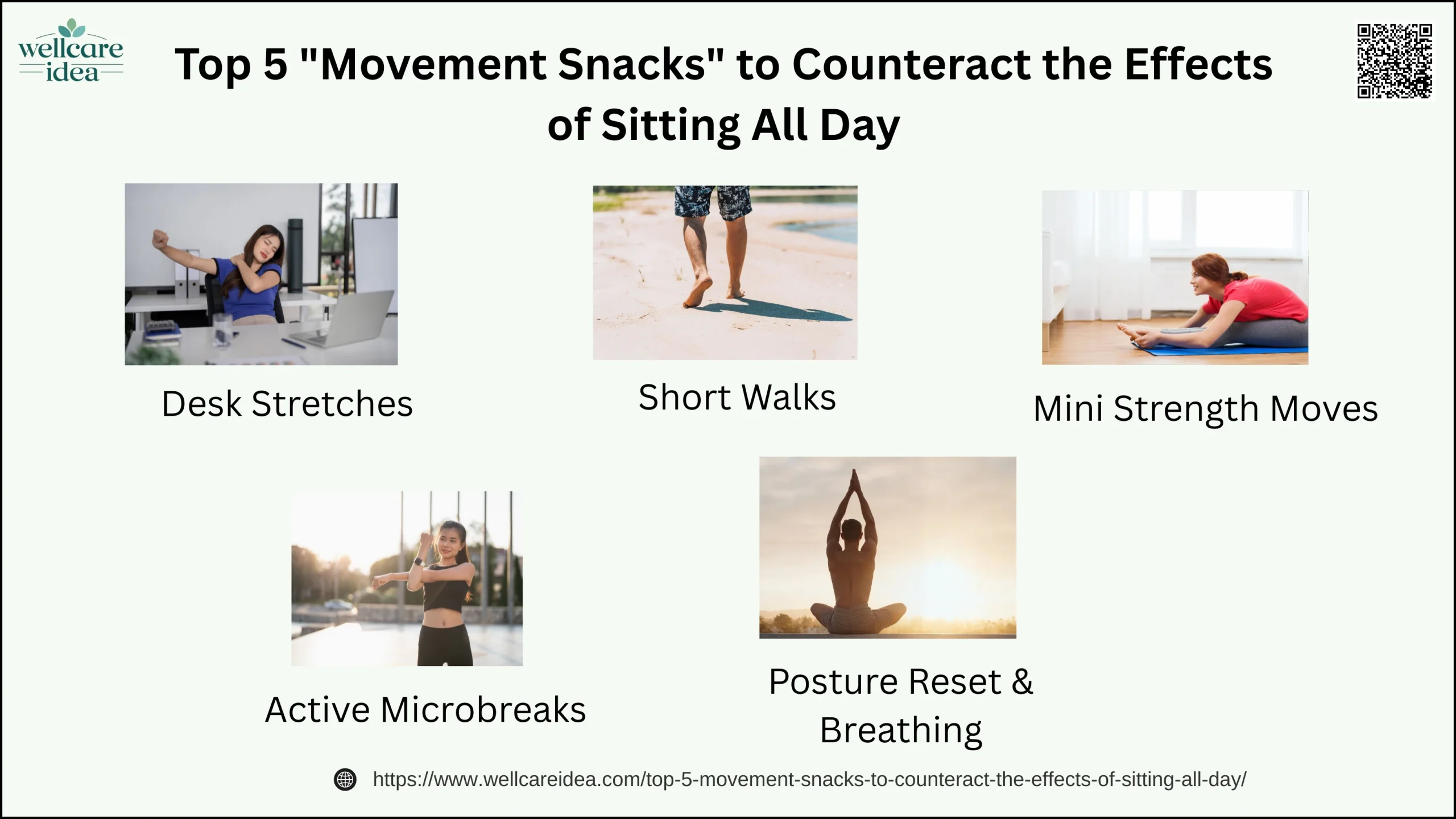
The following table outlines five practical categories of movement snacks you can integrate into your daily routine.
| Movement Snack Category | Primary Benefits | Key Examples & Tips |
| 1. Desk Stretches | Reduces stiffness, improves posture, prevents back pain. | Neck rolls, shoulder shrugs, seated spinal twists. Set hourly reminders. |
| 2. Short Walks | Boosts circulation, energy, and mood. | 5-minute walk breaks; walk during calls; take the stairs. |
| 3. Mini Strength Moves | Strengthens muscles, supports joints, improves metabolism. | Bodyweight squats, calf raises, wall push-ups. |
| 4. Active Microbreaks | Elevates heart rate, increases energy through cardio. | Marching in place, jumping jacks, torso twists. Do every 60-90 minutes. |
| 5. Posture Reset & Breathing | Reduces stress and tension, encourages mindfulness and alignment. | Chest openers, seated cat-cow stretches paired with deep breathing. |
1. Desk Stretches
Sitting for long periods leads to tight hip flexors, rounded shoulders, and a strained neck. Desk stretches are a direct antidote. Simple movements like gentle neck rolls, shoulder shrugs (lifting shoulders toward ears and releasing), and seated spinal twists can be done in one to two minutes. To perform a seated twist, sit upright, place your right hand on your left knee, and gently rotate your torso to the left, holding for 15-30 seconds before repeating on the other side. The benefits are immediate: reduced stiffness, improved posture, and prevention of chronic back pain 4 For consistency, set a silent hourly reminder on your phone or computer as a cue to pause and stretch. This habit disrupts the static posture and sends a signal to your muscles and joints.
2. Short Walks
Never underestimate the power of a five-minute walk. A short walking break is one of the most effective tools to boost circulation, clear your mind, and elevate your energy. You don’t need to go outside; laps around your office, home, or even a long hallway are perfectly effective. The goal is to get your blood flowing. Research on “vigorous intermittent lifestyle physical activity” (VILPA)—which includes brisk walking—finds that just three to four one-minute bouts per day are associated with a substantially lower risk of premature death 5 Integrate walks by taking a call on your feet, walking to a bathroom on a different floor, or committing to a “walking meeting” with a colleague. As Harvard epidemiologist I-Min Lee advises, find automatic ways to incorporate movement, like taking the stairs instead of the elevator.
3. Mini Strength Moves
Building strength doesn’t require heavy weights. Bodyweight exercises that can be performed in a small space are excellent movement snacks. Try doing 10-15 bodyweight squats (lowering as if sitting back into a chair), 20 calf raises (lifting your heels off the ground), or 5-10 wall push-ups. These moves engage major muscle groups, which helps support joint health, maintain muscle mass, and give your metabolism a slight boost. A study on exercise snacks found that for adults 65 and older, such brief bouts significantly improved muscular endurance 6 These snacks counteract the muscle weakening that accompanies all-day sitting and make daily tasks like carrying groceries easier.
4. Active Microbreaks
When you need a quick energy lift, an active microbreak is the perfect choice. These are short, dynamic movements that raise your heart rate. Examples include marching in place for one minute, doing 20-30 seconds of jumping jacks, or performing rapid torso twists. The objective is to create a “microburst” of cardio activity. Studies show these bursts drive beneficial biochemical responses that help your body metabolize fats and glucose more effectively. Aim to take an active microbreak every 60 to 90 minutes. This practice not only breaks sedentary time but can also serve as a foundation for more intense exercise later, as your body adapts to increased activity.
5. Posture Reset & Breathing
This snack combines gentle physical movement with mindful breathing to address both physical tension and mental stress. Prolonged sitting often leads to a collapsed chest and shallow breathing. A simple “chest opener” can help: sit tall, interlace your fingers behind your back, gently squeeze your shoulder blades together, and hold for 3-5 deep breaths. Another excellent sequence is the “seated cat-cow“: round your spine while exhaling (cat), then arch it gently while inhaling (cow). This practice encourages mindfulness—a non-judgmental awareness of the present moment—which is linked to reduced anxiety and a greater motivation to make healthy choices. 7 Research also indicates that mindfulness is associated with enhanced body awareness and postural control, making you more attuned to slouching so you can correct it.
Making Movement Snacks a Daily Habit
The key to reaping the long-term benefits of movement snacks is consistency. Start by pairing them with existing daily routines, such as doing two stretches after checking your morning email or taking a walk right after lunch. Use technology to your advantage: set phone alarms or smartwatch reminders to get up every hour. Most importantly, celebrate small wins. Adherence to these brief activities is remarkably high—studies show over 80% of participants stick with them—because they are so manageable 8 Tracking your progress in a notebook or app can provide visual proof of your commitment and motivate you to maintain the habit.
Small Moves, Big Impact
The evidence is clear: frequently breaking up sitting time with short bouts of movement can significantly improve your health and well-being. You don’t need to find extra hours in your day; you just need to use the minutes you already have more dynamically. By sampling from these five movement snacks—stretches, walks, strength moves, active breaks, and posture resets—you can create a personalized strategy to counteract the effects of a sedentary lifestyle. Begin with one or two that appeal to you, and remember the core message supported by a growing body of research: when it comes to movement, small, consistent efforts truly do yield a substantial positive impact.