
Have you ever woken up with a puffy face, or felt your rings tighten on your fingers by the afternoon? This common experience of fluid retention is often a sign that your lymphatic system—a key part of your body’s natural waste-removal network—could use a little support. Unlike the circulatory system with its powerful heart pump, the lymphatic system relies on muscle movement and gentle pressure to transport lymph fluid. This fluid carries away cellular waste, toxins, and excess water. When this system becomes sluggish due to a sedentary lifestyle, dehydration, or stress, it can lead to puffiness, bloating, fatigue, and dull skin 1 The good news is that by understanding and gently assisting this system, you can help your body maintain its efficient, natural detoxification processes.
Recognizing Signs Your Lymphatic System Needs Support
Your body often sends clear signals when lymphatic flow is not optimal. Common signs include frequent, unexplained puffiness, particularly in the face, hands, ankles, or legs, that seems worse in the morning. You might feel a general sense of heaviness or sluggishness, as if your body is weighed down. A weakened immune system, leading to more frequent colds or minor illnesses, can also indicate that infection-fighting lymph is not circulating effectively 2 Other signs include skin that looks congested or lacks its usual glow, and sensations of poor circulation, such as cold hands and feet or bloating. It is important to note that these symptoms can be associated with many conditions; they do not confirm a medical problem but are commonly reported when lymphatic flow is stagnant. If symptoms are severe or persistent, consulting a healthcare provider is always the best first step.
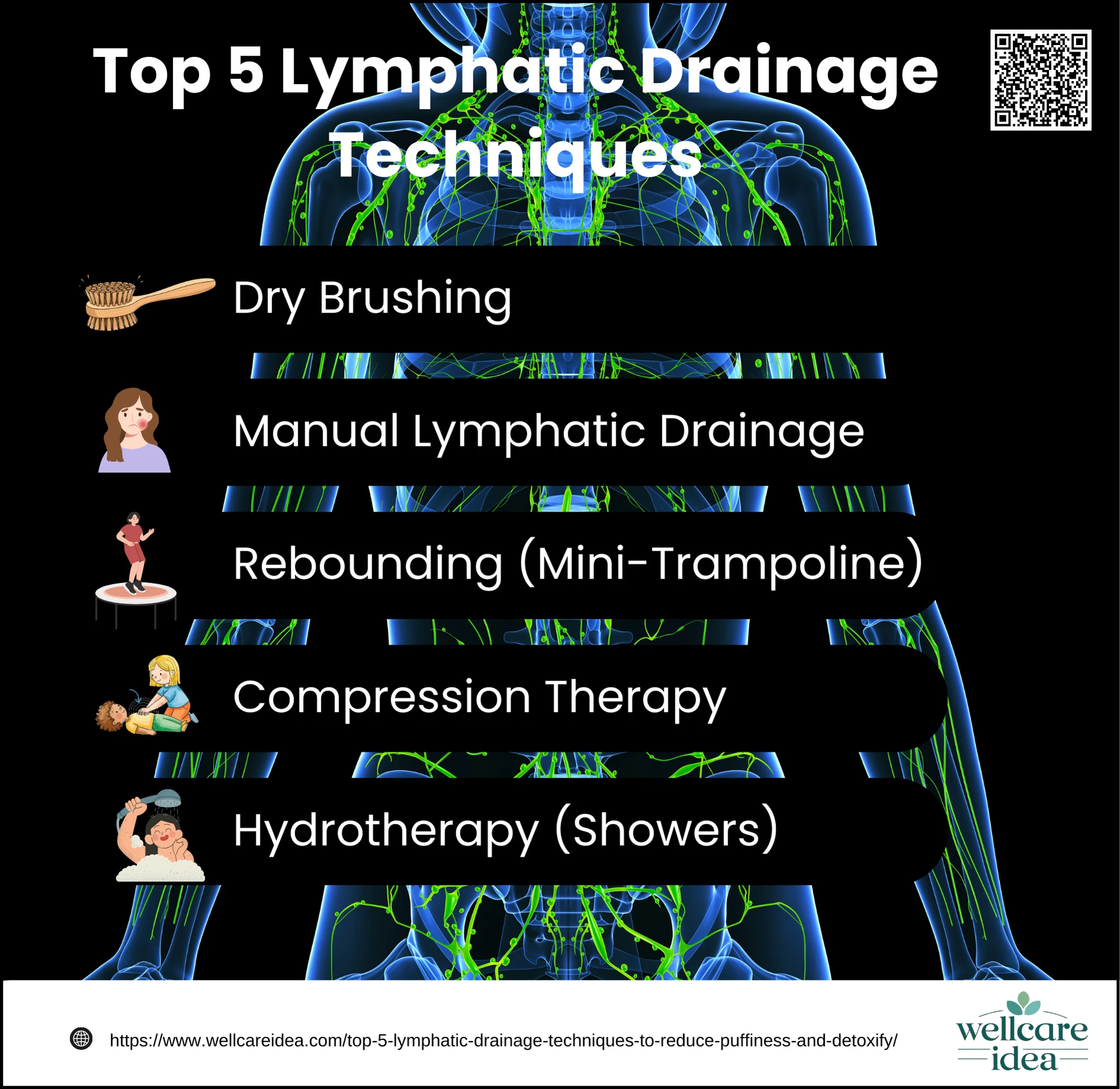
Top 5 Lymphatic Drainage Techniques
Supporting your lymphatic system doesn’t require extreme measures. In fact, gentle, consistent practices are most effective. The following five techniques are designed to stimulate lymph flow, reduce fluid retention, and support your body’s innate wellness.
1. Dry Brushing
Dry brushing involves using a brush with natural, firm bristles on dry skin. The technique is believed to stimulate the lymphatic system by applying light pressure to the skin, which houses a network of superficial lymphatic vessels. By brushing toward the heart, you follow the direction of lymph flow, potentially aiding the movement of fluid. To practice, start at your feet using long, gentle strokes upward along your legs. Move to your hands and brush up your arms toward your armpits. On your torso, brush upward on the sides and use circular, clockwise motions on your abdomen. The best time is before a morning shower, 2-3 times per week. Always follow with hydration by drinking water and applying a natural moisturizer.
2. Manual Lymphatic Drainage (Self-Massage)
Manual Lymphatic Drainage (MLD) is a specialized, gentle massage technique designed to encourage the movement of lymph fluid. While professional treatment is available, you can perform a basic version on yourself. The key is extremely light pressure—imagine only stretching the skin, not pressing into muscles. Focus on areas with high concentrations of lymph nodes, which act as filtration stations: the neck, behind the ears, under the jaw, the underarms, the inner elbows, the abdomen, and the groin. For the face, use your fingertips to make small, circles starting from the center of your forehead, moving out toward the temples and down to the lymph nodes in the neck. This can be particularly effective for reducing facial puffiness 3 A daily session of just 5-10 minutes can yield noticeable benefits.
3. Rebounding (Mini-Trampoline)
Rebounding, or bouncing on a mini-trampoline, is a uniquely effective way to activate lymphatic flow. The rhythmic pull of gravity during the bounce and the gentle acceleration at the bottom of the movement are thought to open and close the one-way valves in the lymphatic vessels, pumping fluid toward the chest. This creates a pumping action that a simple jog cannot replicate. Beyond lymphatic benefits, rebounding is a low-impact exercise that can support bone density and provide an energy boost 4 A session of just 10-15 minutes, most days of the week, is sufficient. The bounce can be very gentle—keeping your feet on the mat is enough—making it accessible for most fitness levels.
4. Compression Therapy
Compression therapy involves wearing specially designed garments, like socks, sleeves, or leggings, that apply graduated pressure to your limbs. This external pressure supports the venous and lymphatic systems by helping to push fluid back toward the core, preventing it from pooling in the extremities 5 It is especially beneficial for reducing leg swelling and improving circulation for those who stand for long periods, travel on long flights, or experience chronic mild swelling. Compression garments are most effective when worn during the day and removed at night. For best results, choose medical-grade compression and ensure a proper fit, as garments that are too tight can be counterproductive.
5. Hydrotherapy (Hot & Cold Showers)
Hydrotherapy, specifically contrast therapy using hot and cold water, stimulates circulation and may encourage lymphatic movement through vasodilation and vasoconstriction. The heat causes blood vessels to expand, and the cold causes them to contract rapidly, creating a pumping effect. To try this, end your regular shower with 30 seconds of water as cold as you can tolerate, followed by 2 minutes of warm (not hot) water. Repeat this cycle 2-3 times, always finishing with cold. This practice not only invigorates circulation but can also calm the nervous system and support the body’s natural detoxification pathways. Start slowly, and avoid this technique if you have cardiovascular concerns.
Bonus Lifestyle Habits That Support Lymphatic Flow
Incorporating supportive daily habits creates a foundation for a healthy lymphatic system. Staying well-hydrated is paramount, as lymph fluid is primarily water; proper hydration aids urine and stool removal, helping your system eliminate waste 6 A diet rich in leafy greens, citrus fruits, ginger, and turmeric provides antioxidants and anti-inflammatory compounds. Specifically, sulfur-rich foods like garlic, onions, and cruciferous vegetables (broccoli, cauliflower) help produce natural chemical detoxifiers that regulate the body’s cleansing process (https://pubmed.ncbi.nlm.nih.gov/24922038/) Regular movement, even a daily walk, and stretching are essential, as muscle contraction is a primary driver of lymph flow. Deep diaphragmatic breathing acts as an internal pump for the thoracic duct, a major lymphatic vessel. Finally, reducing intake of alcohol, processed foods, and excess salt can prevent inflammation and fluid retention that burden the system.
How Often Should You Practice These Techniques?
Consistency is far more important than intensity when working with the lymphatic system. Beginners should start slowly, choosing one or two techniques to practice 2-3 times per week, allowing the body to adapt. A sample weekly schedule could include dry brushing on Monday and Thursday, a 10-minute rebounding session on Tuesday, Friday, and Sunday, and a daily 5-minute self-massage. As these practices become habit, you can gently increase frequency. Listen to your body; the goal is to feel invigorated, not exhausted. The lymphatic system responds best to gentle, regular encouragement rather than occasional, aggressive intervention.
Safety Tips and Who Should Avoid Certain Techniques
While these techniques are generally safe for most people, certain conditions require caution or avoidance. Individuals with congestive heart failure, kidney disease, a history of blood clots (deep vein thrombosis), active infections, or who are undergoing active cancer treatment should consult their healthcare provider before beginning any new lymphatic practice 1 , 2 Those with chronic illnesses should adopt an especially gentle approach. It is crucial to remember that “detox” or “cleansing” regimens sold as quick fixes can be unsafe and are not supported by scientific evidence for removing toxins 7 The safest approach is to support the body’s own sophisticated and efficient detoxification systems.
Conclusion: Small Daily Actions, Big Detox Benefits
A healthy lymphatic system is fundamental to reducing puffiness, boosting immunity, and promoting overall vitality. You can support it effectively through simple, non-invasive techniques like dry brushing, self-massage, rebounding, compression wear, and contrast showers. By starting slowly, pairing these practices with lymph-friendly lifestyle habits, and prioritizing consistency, you empower your body’s natural ability to cleanse and balance itself. The greatest benefits arise not from drastic overhauls, but from the small, mindful actions you incorporate into your daily routine.