
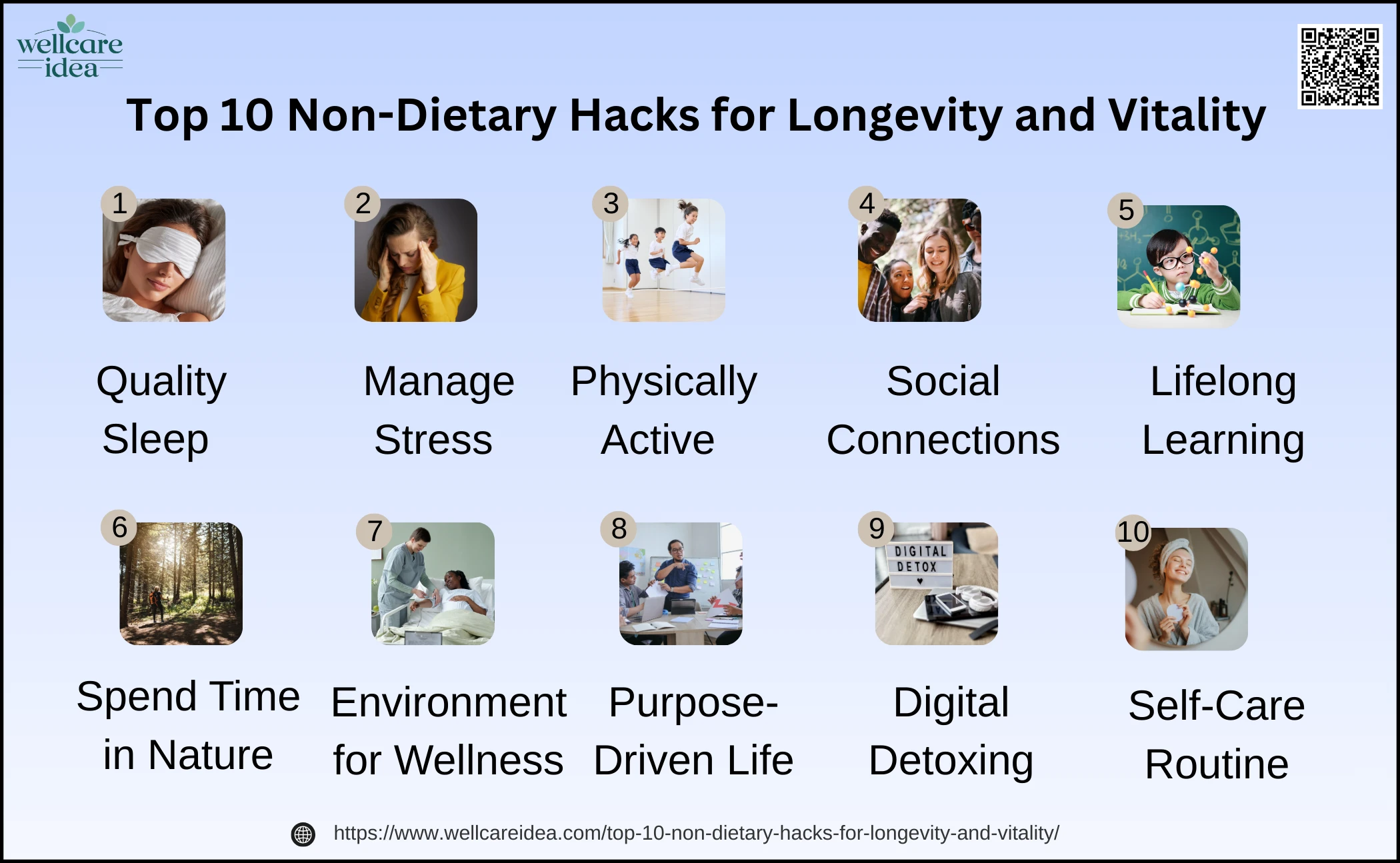
When we think about living longer, healthier lives, our minds often jump to diet and nutrition. While what we eat certainly matters, science reveals that longevity extends far beyond the dinner plate. Our daily habits, psychological well-being, social environment, and lifestyle choices play equally powerful roles in determining how long and how well we live. Research indicates that genetics account for only about 25% of the variation in human lifespan, meaning the remaining 75% is influenced by factors within our control 1 This article explores ten science-backed, non-dietary strategies that can help you enhance both your longevity and your vitality, providing actionable ways to build a foundation for lasting health without focusing solely on food.
1. Prioritize Quality Sleep for Cellular Repair
Quality sleep serves as your body’s nightly maintenance period, a time when crucial restoration processes unfold. During deep sleep, your body engages in cellular repair, hormone regulation, and memory consolidation, removing waste products from the brain and repairing damaged cells. The National Institutes of Health emphasizes that inadequate sleep disrupts these vital processes, raising the risk for chronic conditions like heart disease and cognitive decline. Adults typically require seven to nine hours of quality sleep per night for optimal functioning 2 To enhance your sleep quality, establish a consistent sleep schedule even on weekends, manage your light exposure by avoiding bright screens before bedtime, and create a cool, dark sleeping environment. These practices help regulate your circadian rhythms, ensuring you wake up refreshed and support your body’s natural longevity mechanisms.
2. Manage Stress Through Mindfulness and Breathing
Chronic stress accelerates biological aging by keeping your body in a constant state of high alert, which can damage cells and increase inflammation. Effectively managing this stress is therefore crucial for longevity. Research shows that practices like meditation, mindful breathing, and yoga can significantly counter these effects by lowering cortisol levels, reducing blood pressure, and calming the nervous system 3 Simple techniques can be integrated throughout your day: try taking five-minute breathing breaks where you focus solely on deep, abdominal breaths, or practice mindfulness by fully engaging your senses during routine activities like washing dishes or walking. The Substance Abuse and Mental Health Services Administration (SAMHSA) recognizes these practices as effective components of a self-care routine that reduces anxiety and improves emotional resilience 4 Regular practice rewires your brain’s stress response, potentially adding years to your life while improving your daily quality of life.
3. Stay Physically Active Throughout the Day
Moving consistently throughout the day may be even more crucial for longevity than relying solely on structured workouts. While formal exercise remains important, Non-Exercise Activity Thermogenesis (NEAT)—the energy you burn through daily movements like walking, gardening, or even fidgeting—plays a vital role in maintaining healthy metabolism and circulation 5 Prolonged sitting has been associated with increased risks of chronic diseases, including diabetes and cardiovascular conditions, even among those who exercise regularly 6 The 2018 Physical Activity Guidelines for Americans recommend at least 150 minutes of moderate activity weekly, but also emphasize reducing sedentary time 7 Simple strategies like taking short walking breaks every hour, using a standing desk, pacing during phone calls, or parking farther from destinations can significantly increase your daily movement. This approach to staying active supports healthy weight maintenance, strengthens cardiovascular function, and enhances cognitive health—all key factors for living a longer, more vibrant life (https://www.ncbi.nlm.nih.gov/pmc/articles/PMC5928592/}
4. Build Strong Social Connections
Meaningful relationships provide a powerful buffer against the wear and tear of daily life, directly impacting your physical health and longevity. Substantial research reveals that strong social ties can strengthen your immune system, reduce your risk of mental decline, and significantly extend your lifespan 8 A notable study tracking 28,000 individuals found that frequent social interaction was associated with dramatically improved survival rates, with the most socially active participants experiencing the greatest longevity benefits 9 To cultivate these vital connections, prioritize face-to-face meetings with friends whenever possible, engage in community activities or volunteer work and make a conscious effort to reach out regularly to family members. Crisis Text Line recommends texting someone you love just to check in as a simple but effective self-care practice that strengthens social bonds 10 These connections reduce stress and provide emotional support, creating a protective network that sustains both mental and physical health as you age.
5. Engage in Lifelong Learning
Challenging your brain regularly builds cognitive reserve—the mental resilience that helps your brain withstand age-related changes. Intellectual engagement through lifelong learning strengthens neural connections and can delay the onset of dementia by creating alternative pathways for information processing 11 A 2024 study found that cardiorespiratory fitness was linked to better brain health across multiple cognitive domains in older adults, highlighting the connection between ongoing challenge and mental longevity 12 You can promote brain plasticity by reading regularly, solving puzzles, learning new skills like languages or musical instruments, or even exploring unfamiliar subjects through podcasts or online courses. The Substance Abuse and Mental Health Services Administration identifies intellectual wellness as one of the eight dimensions of overall well-being, emphasizing its importance in a balanced approach to health. By consistently feeding your curiosity, you not only enrich your life with new knowledge but also fortify your brain against age-related decline.
6. Spend Time in Nature
Immersion in natural environments offers powerful therapeutic benefits that directly contribute to longevity and vitality. Research demonstrates that spending just 20 minutes in nature can reduce cortisol levels (your primary stress hormone) by an impressive 21 percent, while also lowering blood pressure and enhancing immune function 13 The Japanese practice of “forest bathing” has been scientifically shown to produce these beneficial effects, making time outdoors a potent health intervention 14 Natural light exposure, particularly in the morning, helps regulate circadian rhythms more effectively than artificial light, leading to improved sleep patterns and mood 15 Try swapping evening screen time for a walk in a local park, take work breaks outdoors when possible, or plan weekend hikes to immerse yourself in green spaces. These nature exposures provide a multisensory experience that reduces mental fatigue, boosts creativity, and decreases stress—all factors that support a longer, healthier life.
Table: Practical Digital Detox Strategies for Better Health
| Strategy | Implementation | Key Benefits |
| Scheduled Breaks | Designate phone-free hours, especially during morning/evening | Improved sleep, reduced stress 16 |
| Notification Management | Turn off non-essential alerts | Enhanced focus, less anxiety 17 |
| Tech-Free Zones | Keep meals and bedrooms device-free | Better relationships, improved sleep 16 |
| The 20-20-20 Rule | Every 20 minutes, look at something 20 feet away for 20 seconds | Reduced eye strain, mental refreshment 18 |
7. Improve Your Environment for Wellness
Your physical surroundings significantly influence your health behaviors and stress levels, making environmental optimization a key factor in longevity. Air quality, natural lighting, and organized spaces each contribute to your overall well-being in measurable ways. Studies show that exposure to natural light helps regulate circadian rhythms, improving sleep quality and mood, while poor ventilation can increase exposure to pollutants that trigger inflammation 19 ,20 To create a longevity-supporting environment, maximize natural light in your living and workspaces, introduce air-purifying plants or HEPA filters, declutter your spaces to reduce mental stress, and minimize noise pollution. The Substance Abuse and Mental Health Services Administration includes environmental wellness as one of the eight dimensions of overall health, emphasizing the importance of pleasant, stimulating environments that support well-being. By consciously shaping your surroundings, you create conditions that naturally support healthy habits and reduce unnecessary stress on your body’s systems.
8. Cultivate a Purpose-Driven Life
Having a clear sense of purpose provides a powerful protective effect on health, with research showing it significantly lowers mortality risk regardless of age. This concept, known as eudaimonic well-being—a sense of meaning and purposeful engagement in life—contributes to longevity by improving resilience, enhancing motivation for self-care, and buffering against stress 21 Studies have linked purpose-driven living to better emotional health in older men and increased lifespan across diverse racial and ethnic groups in women. 22 You can cultivate purpose by identifying activities that make you feel engaged and connected to something larger than yourself, whether through volunteering, mentoring others, pursuing meaningful projects, or engaging with community organizations. Crisis Text Line suggests volunteering as a way to further develop yourself while helping others, describing it as “the ultimate form of self-care”. This sense of purpose provides a compelling reason to maintain healthy habits and navigate life’s challenges with greater psychological strength.
9. Practice Regular Digital Detoxing
Intentional breaks from digital devices have demonstrated significant benefits for mental health, particularly in reducing depressive symptoms. A 2024 systematic review and meta-analysis published in the NIH’s PubMed database found that digital detox interventions resulted in a statistically significant reduction in depressive symptoms, suggesting that controlled withdrawal from digital engagement helps alleviate contributing factors to depression 23 While the same study noted no significant effects on life satisfaction, stress, or overall mental well-being, the specific benefit for depressive symptoms highlights the value of mindful technology use. Digital detox practices—defined as voluntary periods of abstinence from digital devices—offer cognitive and emotional advantages including improved attention, better emotional regulation, and enhanced self-reflection 17 Practical approaches include setting designated phone-free hours, turning off non-essential notifications, scheduling social media breaks, and keeping meals device-free. These practices help counteract the “continuous partial attention” state that researchers link to prolonged screen time, resulting in better focus, reduced mental fatigue, and improved sleep quality 16
10. Adopt a Consistent Self-Care Routine
Regular self-care practices form the foundation that supports all other longevity strategies, helping you maintain balance across life’s dimensions. The Substance Abuse and Mental Health Services Administration defines eight dimensions of wellness—emotional, spiritual, intellectual, physical, environmental, financial, occupational, and social—and emphasizes that self-care activities should address multiple areas to optimize health. Consistent self-care doesn’t require elaborate routines; rather, small daily habits like stretching, journaling, expressing gratitude, or maintaining personal hygiene can collectively sustain mental and emotional wellness. Research indicates that regular self-care reduces anxiety and depression, decreases stress levels, and increases happiness 24 To build an effective routine, set clear self-care goals, create a “no list” of activities or commitments you decline to preserve your energy and schedule specific times for practices that bring you joy and replenishment. By making self-care a consistent priority, you enhance your resilience and better equip yourself to handle life’s challenges while maintaining the vitality that supports longevity.
Conclusion
Extending your healthspan and lifespan involves much more than dietary changes alone. The science is clear: non-dietary factors including quality sleep, stress management, consistent movement, strong social ties, cognitive challenge, nature exposure, optimized environments, purposeful living, digital mindfulness, and consistent self-care collectively form a powerful foundation for longevity. Rather than attempting to implement all these strategies at once, focus on adopting one or two changes at a time, allowing them to become integrated habits before adding others. Remember that small, sustainable steps create the most lasting impact—whether it’s a ten-minute walk daily, turning off notifications during meals, or scheduling regular check-ins with friends. Each positive choice contributes to your overall vitality, helping you not just live longer, but live better throughout your years.